
I’m not mean…just a little intense!

Amy found this hat on a Group Fitness Instructor site and thought some of my participants would want one.
Originally posted 2009-05-23 16:52:53.

Amy found this hat on a Group Fitness Instructor site and thought some of my participants would want one.
Originally posted 2009-05-23 16:52:53.

John Baudhuin with Colby the office dog -photography by Michael Darter
The brand that we all know now as Spinning grew out of a partnership between endurance athlete Johnny G and cyclist / CPA John Baudhuin in the early 90's. Together they formed Mad Dogg Athletics and the rest is history!
John's bio from maddogg.com
John R. Baudhuin is the founder, President and Chief Executive Officer of Mad Dogg Athletics. Prior to founding Mad Dogg Athletics in 1994, Baudhuin worked as a certified public accountant for Los Angeles-based Duitch, Franklin & Company, where he provided a variety of consulting and strategic planning services. An active member of the Young Presidents Organization, Baudhuin received his Bachelor of Arts degree in Economics from the University of California, Santa Barbara and his MBA from Loyola Marymount University.
Listen to the interview below – or .
Are you receiving our weekly email newsletter? Click here to subscribe and receive our Top 404 Indoor Cycling Songs list
Podcast: Play in new window | Download
Originally posted 2014-06-14 13:52:11.

My friend Sally Edward is looking for a National Club Sales Manager. Her HEARTZONES Display Training system is becoming very popular – they're closing in on 400 schools using the Heart Zones System.
The Heart Zones products and services target a wide spectrum of end users, from competitive athletes to everyday health-seekers. Heart Zones’ offerings will help people seeking weight loss, renewed levels of energy, sports performance, and emotional fitness results. In the last two years, Heart Zones has transformed itself into a fitness technology company with wearable technologies coupled with its patented training methodology to create its first hero product, the Heart Zones System. The Heart Zones System is a group fitness technology designed to motivate users to get fit using wearable sensors, real-time data feedback, and custom reporting and assessment to tailor programs specifically to the needs of each individual.
https://www.indoorcyclinginstructorjobs.com/job/heartzones-national-club-sales-manager/
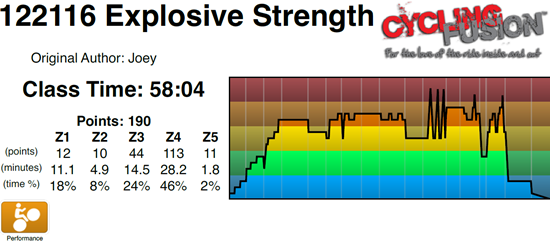

Master Instructor Joey Stabile from Cycling Fusion contributed his Christmas class profile. If you have a class or two this weekend, your participants might enjoy this structured workout featuring some Christmas tracks to celebrate the season.
Download the profile .pdf to print out here.
Joey has shared his music playlist. You'll find Explosive Strength PRO/Playlist using Apple Music or Spotify


During an office-clearing project, I found an article I wrote years ago about a book by Hirschman and Munter. They advocate 3 rules for approaching food whenever you feel like eating.[wlm_private ‘PRO-Platinum|PRO-Monthly|PRO-Gratis|PRO-Seasonal|Platinum-trial|Monthly-trial|PRO-Military|30-Days-of-PRO|90 Day PRO|Stages-Instructor|Schwinn-Instructor|Instructor-Bonus|28 Day Challenge']
Rule 1: Ask yourself if you’re hungry.
The purpose of food is to fuel us when our bodies need it. That’s signaled by physical hunger. Asking this question over and over reinforces the critical connection between hunger and eating.
Rule 2: Ask yourself what you’re hungry for, what you feel like eating.
The idea is to tune in to what your body is telling you. This assumes that the body will know what it needs nutritionally. You can then choose in accordance with that.
Rule 3: Stop eating when you’ve had enough.
This also involves tuning in to what your body is telling you and recognizing the feeling of “comfortable fullness” as the right amount of food.
Take it from a sugar addiction expert: these 3 rules could easily backfire when it comes to sugar.
Why Don’t They Work When Sugar’s Involved?
First, clients who eat sugar frequently may not get hungry. As explained in a previous post, my research hasn’t yet uncovered a solid explanation for exactly why that is. Still, too many clients have described this phenomenon for me to think it’s not real.
These clients may even get symptoms (headaches, queasiness, and so on) instead of physical hunger. The symptoms can typically be traced back to low glucose.
Second, it’s not surprising that someone who’s hooked on sugar feels like eating sugar. Frequently.
How can it be helpful to tell someone who’s going through sugar withdrawal — which may include cravings — to tune in to the body and eat what she/he wants?
Third, the comfort stopping point works well only for those who tend to eat to fuel.
It’s not always easy to stop eating sugar at the comfort point if (and when) the client’s “relationship” with sugary foods is based on satisfying a craving or an addictive urge.
Athletic Training Theories Apply To Sugar Addiction?
From my coach, I learned that the purpose of training is to bring consciousness to the process.
When athletes talked about the pain of athletic training, the coach would say that pain stimulates resistance. But through continued training — and by adding consciousness to it — our response to pain changes. We become nonreactive to it.
It doesn’t feel any better, he’d say. It just doesn’t bother us as much.
Once you remove an addictive substance, like sugar, from the diet, the body may start to display different signals. Hunger pangs may return — or show up for the first time — reflecting the body’s needs. Control over food may increase. Appetite may decrease. Awareness may increase and unconscious reactions decrease.
Significantly, over time, we become less and less reactive to external sugar triggers.
The triggers might include the sight of appetizing foods, the delicious smell of baking cookies — or even sounds that bring on cravings. For example, someone fond of candy might have been triggered in the past by the sound of someone unwrapping a candy bar. Once they’ve been “off” sugar for a while, that sound could become less automatic in triggering the desire to eat candy.
It’s not that the foods lose their appeal; it’s just that they bother us less.
These changes may take time, but staying off sugar long-term could be considered continued, long-term training.[/wlm_private]
[Part 2 will cover athletics and sugar addiction.]
SoulCycle is preparing to go public with an IPO later this year.
Indoor cycling fitness chain SoulCycle Holdings LLC has hired investment banks for a U.S. initial public offering expected to come later this year, according to people familiar with the matter.
SoulCycle's IPO preparations underscore the growing popularity of boutique chains that cater to specific workout methods such as spinning, yoga and barre. The chains, which often charge per class rather than a monthly membership fee, have been taking market share from traditional big-box gyms.
SoulCycle has more than 42 U.S. locations, and plans to open 50 to 60 studios worldwide by next year, according to its website.
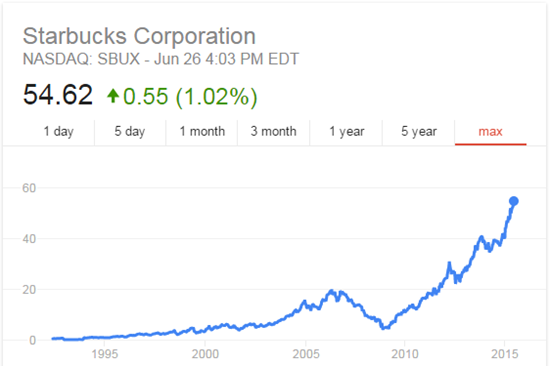
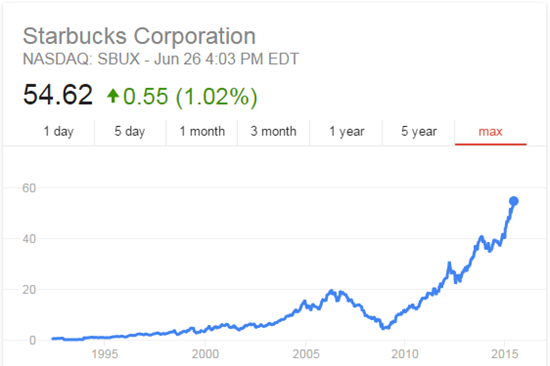
After watching SoulCycle for years and seeing what a money machine they've become, I'm thinking I will. In fact I'm going to compare them to Starbucks and predict that SoulCycle will make investors a lot of money for the same reason Starbucks has been such a solid investment* > both their customers admit to being addicted to their products.
WHAT IT'S LIKE TO BE $16,000-A-YEAR ADDICTED TO BOUTIQUE FITNESS
A few weeks ago, while mindlessly trolling Instagram, something stopped me in my tracks: My friend from high school, Michaela Miller, who is currently working on a master's degree in public administration from NYU, had screenshot her upcoming SoulCycle schedule. “475 rides in 365,” she boasted of her “SOULiversary,” the birthday of her inaugural class. “Stepping it up with an even STRONGER starting lineup.” After gawking at the fact that she was planning a Wednesday triple–as in three, 45-minute classes in a single day–I shamelessly pulled up my calculator app. Some quick math revealed that my friend's dedication to cult-loved $34 spin sessions (before the price of shoe rentals and water) could easily run her $16,000 in a single year.
Despite all the negativeness directed at SoulCycle, they have shown the rest of the Indoor Cycling industry how to be successful. Not to mention positively changing the lives of thousands of participants…
For Miller, the benefits of being die-hard include daily clear-headedness, a built-in support system, and being held accountable. “I'm definitely less flaky as a person,” she says of committing to ten or more classes a week all over Manhattan, New Jersey, and Brooklyn. “I used to be notorious for missing trains, planes, parties, dinners, but since I started doing Soul, I'm early to things. I show up on time. It sounds silly, because we all should do that, but I was late a lot.” To minimize the financial impact (she says she's only on the hook for half of the classes she takes), Miller buys packages and nabs free rides via a group of instructors who now make up her inner circle. She even gave up a pack-a-day habit. “I would never have quit smoking if it wasn't for Soul,” she says with a laugh. “It was between SoulCycle and the cigarettes.”
NOTE: This is not intended as financial advice, only to alert you to this future opportunity.