by Joan Kent | May 4, 2015 | Engage Your Students, Health and Wellness, Master Instructor Blog
Caffeine is a drug that can be used in appropriate ways, so it has definite value. This post covers a few uses of caffeine.[wlm_private ‘PRO-Platinum|PRO-Monthly|PRO-Gratis|PRO-Seasonal|Platinum-trial|Monthly-trial|PRO-Military|30-Days-of-PRO|90 Day PRO|Stages-Instructor|Schwinn-Instructor|Instructor-Bonus|28 Day Challenge']
Ergogenic Aid
Much has been written about the ergogenic benefits of caffeine, particularly for endurance athletes, so it’s unnecessary to go into detail here.
Bottom line, caffeine can help athletes work harder and generate more power, often without feeling the extra effort. They may not even realize they’re putting out more effort, although the power increase could be as much as 3%.
It’s a good idea to get accustomed to caffeine in training before using it during a performance event, whatever that may be. My advice has always been, “No surprises on race day.”
Know how caffeine affects you and how much you can safely consume without upsetting your stomach or causing anxiety, irritability, high heart rate, or insomnia.
Brain Chem and Caffeine
When we drink coffee or tea, caffeine occupies the brain receptors that are normally occupied by adenosine. Adenosine inhibits the release of dopamine and norepinephrine — two brain alertness chemicals — to prevent an over-release of them.
When caffeine ‘takes over’ the adenosine receptor, adenosine can’t inhibit dopamine and norepinephrine, so those two chemicals are disinhibited. We feel alert and may notice improvements in memory, mood, energy, reaction time and general cognitive function.
Protein can also make us feel alert.
Why Do We Need Protein When We Can Just Drink Coffee?
The two mechanisms of action are completely different. While caffeine uses (and eventually depletes) stored brain levels of dopamine and norepinephrine, protein provides the amino acids that the brain uses to make more. The amino acids are tyrosine and phenylalanine.
If you haven’t been eating much protein for a while, you might find yourself drinking more coffee. Or you might discover that you get less effect from any caffeine you have because brain stores are already depleted.
On the other hand, if you systematically and consistently eat more protein foods, you might find you don’t need or want as much coffee or tea because your brain keeps making — and releasing — dopamine and norepinephrine.
(Sleep restores dopamine, too, but that’s a separate topic.)
Health Benefits of Coffee and Tea
Recent research has shown beneficial effects of coffee consumption. Coffee contains antioxidants and has been found to reduce the risk of type 2 diabetes, endometrial cancer, skin melanoma, multiple sclerosis, Alzheimer’s, and heart disease.
The benefits of green tea have long been known. It contains powerful antioxidants, can reduce anxiety, and can improve dental health. Like coffee, it may also reduce the risk of Alzheimer’s, type 2 diabetes, heart disease, certain cancers, and Parkinson’s.
Caffeine As a Pain Reliever
It’s less frequently mentioned, but relieving pain could be considered another benefit of caffeine. Norepinephrine and dopamine both trigger an analgesic effect. Plenty of potent pain-killing substances are available, but caffeine could be seen as a more natural pain reliever, especially in light of the health benefits listed above.
Unsweetened Is Better
Do I need to mention that sugar could reverse most of the beneficial effects covered in this post? Limit fancy coffees with exotic names. Sticking with the basics is a healthier choice.[/wlm_private]
by John | May 2, 2015 | Engage Your Students, Health and Wellness, Instructor Tips and Tricks, Instructor Training, KEEPING IT FUN, New Instructor 101
Glamour Magazine recently published an article The 6 Secrets to Burning Major Calories in Spin[sic] Class written by Faith Cummings. Four of the points raised are solid. One is iffy and another is IMO boarding on BS.
Their suggestions; Don't stop moving, Make sure you have enough resistance, Push yourself and Prep your body before class (that last one is my favorite and I'll expand on the idea below) are all solid and sound advice.
These other two, not so much:
Turn up the heat.
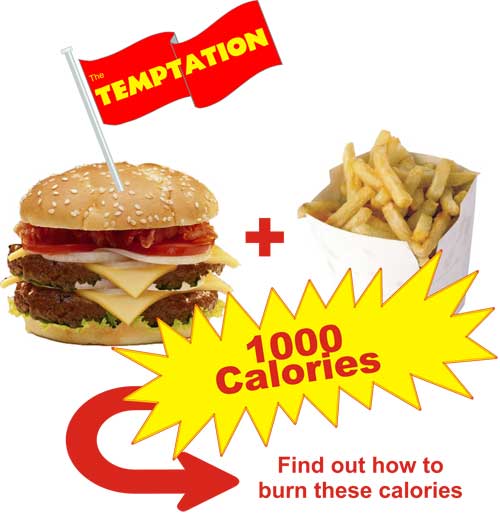
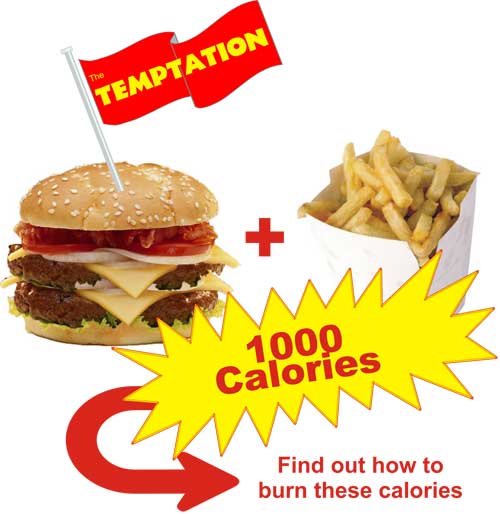
We're going to sweat while we workout anyway, so why not turn the temperature up a bit and really get it going? “Riding in a heated room torches calories,” says The Sweat Shoppe co-owner Mimi Benz. “You can burn up to 1,000 calories in 55 minutes.”
While technically accurate (yes your body expends additional calories staying cool… actually more than staying warm) what's missing is how our body's ability to create work decreases, as our core temperature increases. So if you can't work as hard because you're overheating, I find it hard to believe that a hot room has a positive effect on calories burned. I'll respond to the 1000 calories in 55 minutes BS below.
Remove the bounce.
“Bouncing stresses our joints and actually takes away from the calorie burn,” says Flywheel cofounder and creative director Ruth Zukerman. “When riding out of the saddle, hovering closer to the saddle relies on the use of your muscles more, resulting in more calories burned.”
I've love to see an actual study showing this – it's actually the first time I've ever heard it. My perception is bouncing out of the saddle is the result of improper pedaling technique – so technically she could be right > better technique could result in more muscle recruitment = more work accomplished / calories burned… or it could go the other way > better technique = more efficient, which could result in less work/calories expended. Either way I have a hard time believing that hovering will contribute to you being swimsuit ready anytime sooner.
My six secrets to Burning Major Calories in Indoor Cycling class.
[wlm_private ‘PRO-Platinum|PRO-Monthly|PRO-Gratis|PRO-Seasonal|Platinum-trial|Monthly-trial|PRO-Military|30-Days-of-PRO|90 Day PRO|Stages-Instructor|Schwinn-Instructor|Instructor-Bonus|28 Day Challenge']
#1 Dump the assumptions, they're unhelpful and potentailly destructive
No, Ms. Benz, the typical participant in one of your Indoor Cycling classes CAN NOT BURN 1,000 calories in 55 minutes. Yes there may be a few in your classes who can. But unless you're looking at a room full of very fit 200lb men in every class, burning even half that amount (500 calories) will be a huge result for most participants.
Knowingly setting unrealistic expectations (BURN up to 1,000 Calories!) for riders in a class is unethical and is sleazy marketing of the worst type.
So what happens when a rider thinks they will burn 1,000 calories (no one hears the “up to” part) in a 55 minute class? Lots of things and none of them good:
- They'll feel free to eat more post-class as a reward. This post describes what's called hedonic snacks which are those little treats we use to reward ourselves for a job well done. “I just burned 1,000 calories!” “Say, doesn't the blueberry muffin look like the perfect reward?” Congratulating folks for expending way more calories than they really did, sets up a destructive cycle of behavior that results in weight gain, not weight loss.
- They won't work as hard in class, so their actual caloric expenditure will be even less than it could be. “I'll be happy with just 600 calories today, so I'll take it easy and chat with my new friend riding next to me.”
- They're set up for failure. Consider a studio equipped with Indoor Cycles with power indication. The studio's marketing materials tell riders they can burn 700/800/1,000 calories a class. At the end of the 60 minute ride the customer hits the avg/end button and sees; ‘Total Calories = 287'. How do you think they'll feel? “What happened to 1,000 calories?” “I must be a failure” “I'm never coming back here” 🙁
- OR – consider a studio without power who tells their customers; today we burned 700/800/1,000 calories! And then one day they ride a competitor's Indoor Cycle with power and learn the truth. Whoever lied to them will have lost a customer…
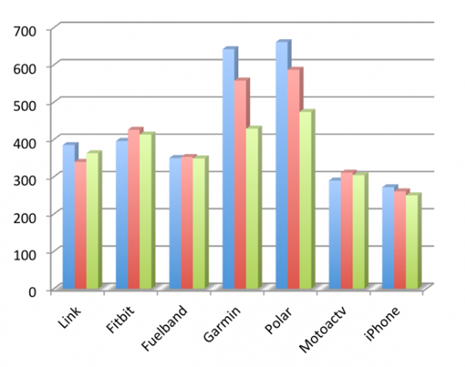
Image from http://www.wired.com/2012/08/fitness-trackers/
#2 Find some technology
I'm not talking about a wearable fitness tracker or heart rate monitor that offers estimated calories – they've been shown to display wildly optimistic calorie counts > Instead find a club or studio where you can ride an Indoor Cycle with Power/Watts indication – so you can observe a real measurement of how much work you're actually doing in class.

Indoor cycle power meters
At the risk of losing you here, there's a Law of Physics that can be applied to exercise and calorie expenditure. In layman's terms, the law; Conservation of Energy says you can't get more energy out of a machine… than what you put into it. Makes sense, right?
The power meter on an Indoor Cycle will record the the amount of energy your body expends turning the pedals x the amount of time you're working. Through some fancy math, any brand's power meter will display a reasonably accurate estimate of the amount of energy that went into powering your ride, expressed as Kilocalories (kcal), kilojoules (kJ) or both.
There are still a number of unknowns with these estimates of calories expended. The cycle doesn't know your gender, body weight or fitness level. My understanding is that the estimates used by manufacturers are based on a reasonably fit, 160 lb male.
Don't let these minor variables trip you up. The most important benefit of riding an Indoor Cycle with power/watts is how you can see today what you burned during the total class. Your next ride you'll have the chance to work a little harder and then you'll get to see your actual success!

#3 Stick with water
Nothing drives me crazier than seeing a participant, who I know is in class for weight management, with two bottles of energy drinks on her/his bike. 12 ounces of Gatorade has about 80 calories > the typical water bottle holds 20/24 = 160 calories for one and 340 calories for two bottles or more. So there's the potential to replace every calorie you've burned, and then some.
Depending on the time of your class, participants and instructors should be consuming a small meal of ~200 calories, that consists of a blend of carbs/fats and proteins. My favorite is a slice of whole wheat peanut butter toast.
Side note: Dr. Joan Kent, who's our resident nutritionist here at ICI/PRO, has been battling the addictive properties of sugar for years. She's written extensively about how you don't need sugar before, during or after exercise of any form. Endurance Nutrition Coach Ben Greenfield offers his own similar suggestions here.

Don't be left at the start
#4 Get there early… and get after it
Fitness can be expensive and if you're anything like me – you hate to waste your hard earned dollars. So with popular boutique studios charging $30 or more per class, what's the secret to ensuring you get your money's worth + maximizing your calorie burn? Don't waste your pre-class time! Instead of sitting there, slowly pedaling and chatting with your neighbor, take yourself through a purposeful, self directed warm up. The objective is to be warm and aerobic by the time class begins.
Find a comfortable pedal cadence around 80-90 RPM and quickly add resistance until you're feeling productive. Wait until you feel the workload get easier (as you warm up you'll feel stronger) and add another gear. Ride there for a few minutes and then recover until you can breath easily. That's your cue to start the process again. This isn't anything crazy. Unless this is your first class, you know what you can (and need) to do to raise your body temp and elevate your heart rate to the point where you'd rather breath, than talk. I call this working above the Chatty Zone – that's the training zone you want to stay above to burn the greatest number of calories.
Again your goal is to be warm and ready to work the moment the music starts. You'll be burning major calories, while your neighbor is still organizing her towel.

Shut up
People who chat constantly during class burn 50% fewer calories than those who don't. OK, I made that statistic up out of thin air. As far as I know it's actually closer to 80% for the simple fact that burning calories requires a lot of Oxygen (O2) and talking can only occur when you don't need the O2 in the air you're breathing for anything else.
Just how much O2? The chemical conversion of the stored fuel in your body (fats & sugars) to usable muscular energy is around 3 to 1. So to burn 1 pound of body fat, you need to consume (breath in) 3 pounds of O2. Think about that for a moment. Oxygen is a gas that's only ~14% of the air you breath. O2 doesn't really appear to weigh anything and yet you need huge amounts of it absorbed into your bloodstream, to support the chemical reactions that turn stored body fat into energy.
Anything you do, that limits your ability to breath, will reduce the amount of calories you can burn. Choosing to talk during a workout subconsciously tells your body not to work hard = you might have had fun catching up with your friend, but you just wasted 60 minutes of calorie burning time – plus you probably irritated those riding around you 🙁
Here's a fun fact: do you know how those burned calories leave your body? Through your mouth! Fats and Sugars that have been “burned” (a more accurate description would be oxidized) are long chain carbon molecules that are broken up – one carbon atom combines with two oxygen atoms, to form CO2 carbon dioxide. So that toast you had for breakfast this morning leaves your body, a little bit at a time, with each exhale.
Stay down
I call it, “bailing out” – the act of sitting up, to recover completely after an interval. If your objective is to burn the maximum # of calories, then you need to work at your highest sustainable level for as much of the class as possible. Killing yourself in a short burst, only to back way off has a negative affect on your total work accomplished during the class. Instead, to expend a larger amount of calories, try working not so hard > but for a longer period of time. Physical endurance will come over time, so stick with it. Stay down in the riding position for as long as possible, while managing your workload to you can complete each interval segment. If you need another reason to stay down… consider that everyone watching you bail out, is secretly chuckling at your lack of stamina 🙁
Come consistently
A focus on “burning calories” kind of misses the point. The objective is to reduce stored body fat, right? Just as you can't effectively train for a marathon, by randomly running across the street – reaching your weight loss and/or fitness goals requires a lot more than riding in a cycling class where you burning major calories. Weight loss will only come to those who attend fitness classes consistently.
If you're a little weak in self-discipline, I suggest finding a friend with a similar schedule and fitness objectives. Plan to meet together at a few specific classes, so someone will miss you if you're not there.[/wlm_private]
I'll often tell new riders:
The most important class you'll ever take… will be the next one.
Then I'll ask:
Will you be there?

by Joan Kent | Apr 20, 2015 | Best Practices, Engage Your Students, Health and Wellness, Promote and Build Your Class, Your Fitness Business
Do you have an elevator pitch? Mine has changed several times — all necessary. But this post is actually about the emotions that sugar generates.
I began with a standard 30-second elevator pitch. Remember that version? It was the original length years ago, but now almost nobody will listen that long.
I shortened mine to 15 seconds.
Yet people went glassy-eyed when I said “psychoactive nutrition,” even though I immediately defined it as “how foods affect brain chemistry.”[wlm_private ‘PRO-Platinum|PRO-Monthly|PRO-Gratis|PRO-Seasonal|Platinum-trial|Monthly-trial|PRO-Military|30-Days-of-PRO|90 Day PRO|Stages-Instructor|Schwinn-Instructor|Instructor-Bonus|28 Day Challenge']
Still, brain chemistry interested them, so I changed the pitch again. I started with ‘food and brain chemistry’ and left out ‘psychoactive nutrition.’
Then I heard great recommendations from speakers and marketing pros on the perfect pitch:
– Don’t explain your process, just the results.
– Keep it short.
– Avoid big words.
– Start with a question.
All sounded like good ideas. I re-crafted my pitch with a starting question and shortened it again — this time to 10 seconds.
“You know how people have diabetes, high blood pressure, or other medical problems they can’t fix because they’re stuck on sugar? Well, I help people conquer sugar addiction so they can transform their health and feel great.”
I could never finish it. Everyone would interrupt by the time I said “high blood pressure…”
“My father has both, and high cholesterol. What should he do?”
“My mother’s diabetic. Are you a doctor?”
One woman told me, “The second part interested me, but the first part didn’t.”
(Ironically enough, when I asked what she did, her answer took 45 complicated, boring seconds. I didn’t have the heart to challenge her critique of my 10-second pitch when hers was a remedy for insomnia. But I digress.)
I changed my pitch again and dropped the opening question.
“I help people conquer sugar addiction, so they can transform their health, feel better, lose their mood swings, and gain control of their eating.”
It’s 6 seconds long. And I can’t make it through the 6 seconds without being interrupted, right after ‘sugar addiction’:
“Oh, that’s so important!”
“That’s a big deal right now. Everyone’s addicted to sugar.”
“My daughter is addicted to sugar; it’s all she eats.”
“Sugar is more addictive than heroin. Don’t you agree?”
“Do you really believe it’s possible to be addicted to sugar?”
So — and I already knew this — it’s an emotional topic. If I can’t even get through a 6-second sentence, something is charging people up enough that they must speak then and there.
In past presentations, people have glowered at me when I’ve talked about the health problems linked with the granulated white stuff.
A man walked out during one talk because I answered his question that, yes, fruit is sugar.
While I was still working on my doctorate, fat was the go-to dietary demon. In a lecture I gave to fitness pros, I was discussing sugar as a factor in health issues. “I have the same degree you do,” an angry woman shouted [we had master’s degrees in exercise physiology], “and you don’t know what you’re talking about!”
With all of these food-related emotions, this past weekend was such a relief. A real estate agent asked what I do.
He gave me the full 6 seconds to finish my sentence and questioned, “Is there a market for that?”[/wlm_private]

by Joan Kent | Apr 13, 2015 | Engage Your Students, Health and Wellness, Your Fitness Business

Participant resistance was such a big part of running a weight-loss program, I didn’t even realize it was a thing to write about (if that makes any sense). It just went with the territory.
“Resist” has many synonyms: oppose, battle, combat, duel, fight back, put up a fight, defy, struggle against, stonewall. Why would someone join a weight-loss program — and pay lots of money — only to do these?
Participants resist in many ways. Below are only a few examples of actual participant behavior during the 13 years I ran a program combining athletic performance training and a robust nutrition plan geared to weight loss and ending sugar addiction.[wlm_private ‘PRO-Platinum|PRO-Monthly|PRO-Gratis|PRO-Seasonal|Platinum-trial|Monthly-trial|PRO-Military|30-Days-of-PRO|90 Day PRO|Stages-Instructor|Schwinn-Instructor|Instructor-Bonus|28 Day Challenge']
Names have been changed to protect the guilty.
Jeffrey
Jeffrey was our first participant. He got used to having my full attention and turned petulant when other participants joined. From that point on, he continually criticized the program and stopped following instructions. When I said peanut butter was okay to eat, he ate a 1-pound jar in a day.
John
John was in the program for almost a year before he lost any weight. Once his weight started dropping, he told me that, at first, he wanted to prove it wouldn’t work, so he made sure it didn’t.
Kathy
Kathy complained about hearing sugar addiction info in both a live class and a webinar, instead of realizing she heard it twice because it was key. After a private consult, she waved to me from the window of Pete’s (the coffee place) while eating. Based on Pete’s menu, draw your own conclusions about the food.
Kimberly
Kimberly was a vegetarian, miserable, touchy, and quick to anger. She masked it with a phony-soft voice but complained to management about everything (especially me). Even her doctor had told her she needed protein. I knew on Day 1 she’d never finish the first quarter. She didn’t.
Tom
Tom was an alcoholic who reacted to the rule about avoiding alcohol with a strange grin. He dropped out and rejoined over a year later. He reacted to the alcohol rule with the same grin, dropped out again and never came back.
Shelly
Shelly was in sales and said she had to drink with clients. She had many reasons she couldn’t get around drinking. She never lost weight until she did the AIDS ride from San Francisco to L.A. (without alcohol).
Kristin
Kristin’s attendance at trainings was poor. Because it was a progressive, periodized training program, not a drop-in class, she didn’t progress. She also wanted detailed menus instead of guidelines. When we didn’t supply menus right away, that became her excuse to eat pizza, drink wine, and never keep a food log.
When we developed menus, she complained they weren’t specific enough. She wanted to know precisely what SHE should eat every hour of every day. She gave me The South Beach Diet and said our nutrition program was just like it. It wasn’t, but I never understood why she didn’t just follow that diet instead of eating nachos and drinking margaritas. Or what any of this had to do with never logging her food intake as instructed.
So why do people pay lots of money and then resist? Here are a few reasons.
Alcoholism
Addiction defies rules of reason and logic. It’s a complex topic, very briefly covered in a previous post (Sweet Tooth or Sugar Addiction: What’s the Difference?). Alcohol can sabotage weight loss, as covered in another post.
Sugar Addiction
See above. People will go to extreme lengths to avoid giving up their favorite foods. Lots of blame gets thrown.
Not Taking Responsibility
They’re overweight because of a spouse’s work schedule. Or they go to restaurants frequently. Or they never learned what to eat as kids. Or… fill in the blank.
Plausible Diversion
Registering and paying for an expensive, intensive program showed their sincere desire to lose weight. If they didn’t lose, it was the fault of the program, not because they never did the work to make it happen.
[/wlm_private]
These stories aren’t pretty — and they’re crummy memories — but they’re 100% true. If you have a similar experience with your students, maybe something here can help you start them moving in the right direction.
by Joan Kent | Apr 6, 2015 | Health and Wellness

The Natural Eating Cycle is simple and straightforward: We feel hungry. We eat in response. The hunger stops. We stop eating and lose interest in food.
We could visualize those 4 steps as a circle because they form a continual, ongoing process. Eating that natural way is primal and elemental.
Babies are expert at it, although it obviously takes a parent or caretaker to feed them. The last step is one they have down cold, though. Have you ever tried to feed a baby who’s not hungry anymore? Good luck.
That’s how it’s supposed to be.[wlm_private ‘PRO-Platinum|PRO-Monthly|PRO-Gratis|PRO-Seasonal|Platinum-trial|Monthly-trial|PRO-Military|30-Days-of-PRO|90 Day PRO|Stages-Instructor|Schwinn-Instructor|Instructor-Bonus|28 Day Challenge']
Yet the natural eating cycle can go wrong, and sugar is one reason that can happen. More about sugar’s effects later.
Unnatural eating patterns could include restriction (dieting or fasting); bingeing; purging (self-induced vomiting, abuse of laxatives, excessive exercise); irregular meal timing (skipping meals, grazing all day); extremely rapid eating; or eating a lot of food when not hungry.
I once read 2 different articles, each describing a “disturbed” eating cycle. According to the first cycle, an event disturbs our equilibrium. We eat. We feel fat and resolve to diet.
The other eating cycle went like this: We diet. We feel deprived. We binge.
No doubt some of your students have experienced one or both of those cycles. What if we put the two patterns together and look at interactions among the steps?
1. An event disturbs our equilibrium.
2. We eat.
3. We feel fat and resolve to diet.
4. We diet.
5. We feel deprived.
6. We binge.
The 6 steps in sequence seem reasonable, and form a pattern to which your students might relate. Based on clinical experience, though, I say there’s more to it. Below are a few ways it might go.
Scenario A
We go all the way through steps 1-6. After we binge in Step 6, we then circle back to Step 3 — we feel fat and resolve to diet. From there, we continue through the lower part of the list, and cycle through Steps 3-6, possibly over and over.
Scenario B
We’ve binged, presumably after Steps 1-5. That takes us to Step 1 at the top of the list: bingeing is the event that disturbs our equilibrium, so we eat in response to it. We might then continue to cycle through the remaining Steps 3-6, possibly over and over.
Scenario C
This one involves only Steps 1-3: the event that disturbs us, eating, feeling fat and resolving to diet. But in this scenario, resolving to diet — just anticipating the stress of dieting and deprivation — is enough to disturb our equilibrium, so we eat. Someone could stay stuck in Steps 1-3 in this way for quite some time.
How can sugar make any or all of these 3 scenarios more likely?
We might feel deprived in Step 5 because we gave up sugar to diet and are now experiencing sugar cravings.
We might feel stressed at the anticipation of dieting in Step 3 because it will mean giving up sugar.
With sugar, we might find ourselves at Step 1 more frequently, feeling more disturbed by a greater number of events. That could simply be because the neurochemical effects of sugar make it difficult for some people to maintain equilibrium. Almost any stage of sugar addiction, including withdrawal, can make our behavior (eating behaviors and others) more impulsive.
The natural eating cycle is a delicate balance. It’s always subject to disruption, but eating sugar can disrupt it a lot more. If you have students who are struggling with unnatural eating patterns, please let them know.[/wlm_private]

by John | Apr 1, 2015 | Health and Wellness, Instructor Tips and Tricks, KEEPING IT FUN, Training With Power

Click Image to learn more!
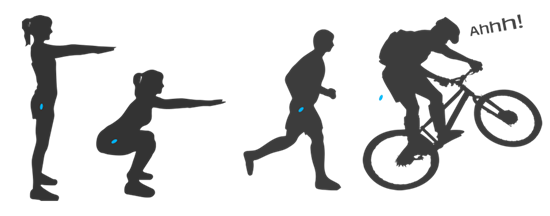
The Wahoo Fitness PLUGGR is the first ever Bluetooth 4.0 enabled suppository motion sensor. It can measure and track your heart rate, motion, body temperature, and digestive regularity.
A few common uses
Features include:
- Health metrics sent directly to your smart phone via Bluetooth 4.0 technology.
- Measure digestive health by tracking the frequency, severity, and composition of bowel movements. No more dehydration or constipation!
- Vibration alerts and electrical stimulus for call, email, and text notification. Reduce the risk of your phone falling in the toilet on bathroom breaks!
- Special “race mode” featuring BCU (bowel control unit) for pre-race load lightening and race emergency control response.
Get the Wahoo PLUGGR today and enjoy full body tracking in a sleek, soft form!*
I can imagine it would take awhile to get used to “wearing” the PLUGGR, but it sure would be convenient… don't you think?
Yes, of course; April Fools! Wahoo Fitness sent this out today. Pretty clever idea 🙂
