Scosche RHYTHM+ Heart Rate Monitor Strap works with ANT+ and BLE devices and consoles.
I'm thinking this new Scosche RHYTHM+ Heart Rate monitor strap could be the best I've ever tested – for a bunch of reasons that include removing what I feel has always been one of the biggest objections to wearing a HR strap.
Despite all of our collective efforts explaining the benefits of training in specific heart rate zones, we're lucky if we have 30% of our participants monitoring their heart rate. I know that some classes are better than that, but based on all of the surveys I've done in the past that's about where we are.
Why?
If I put on my salesman's hat, I know that people don't buy a product or service for lot's of reasons. Salespeople call these objections. If you want to make the sale, you typically need to remove or minimise the prospect's objections; who in this instance is our class participant.
So what are the often stated objections?
No interest – it's almost impossible to sell anything to someone with no interest.
Too expensive – for relatively lowpriced objects like an $80 HR monitor, the selling price objection is often masking some other issue – or – means the prospect isn't seeing enough benefit.
Too complicated – do the manufactures of HR monitors actually use their own products? Setting the typical Polar watch is needlessly complicated. I've gotten to the point where I refuse to help people set their HR watches before or after class because I can't get sucked into a 30 minute project where, more often than not, I'll fail. See #5
Too confusing – as an industry, with all of the branded zone based training systems, we've made heart rate training impossibly confusing for new participants. IMO if you're talking about anything more than three zones based on thresholds, you've lost many of your club athletes. See #5
Too stressful – It's stressful to me when I'm offered a coupon the grocery store, good for my next visit. Why? Because then I'll have to remember the coupon the next time I'm there – which I won't when the cashier asks me; “do you have any coupons?” Our members aren't any different than me or you: getting to class on time is stressful enough. I don't need the added stress of remembering my HR monitor… finding both of my shoes is tough enough. See #8 for the source of even more stress.
Willful ignorance – face it, there are people in your class who want to believe they're burning 1,000 calories in a 45 minute class, where they don't break a sweat. You'll never sell these people on any form of performance measurement (these are the peeps who cover their power console so they can't see their wattage) unless you're running a special on unicorn spit detox syrup.
Uncomfortable – the old versions of hard plastic HR chest straps were very uncomfortable. The new soft straps are an improvement – but they are still not pleasant to wear. Many women won't even think of wearing a HR strap for anatomical reasons. Then there's the other type of uncomfortable as in; “I'm not comfortable opening my shirt to put this strap on, with other people around” 🙁
Unreliable – how many times have you found yourself thinking; IS THIS THING ON? Is the strap battery dead? Maybe I need some additional spit on it? Do I need to shave a horizontal stripe across my hairy chest to get this thing to connect? Wait, who's BPM am I seeing here?
That's 8 realistic reasons why you see so few people wearing a HR strap. The new Scosche RHYTHM+ Heart Rate monitor strap addresses many of the objections I've listed above:
Not complicated – the HR watch is the source of most of the confusion. No watch = no confusion. The RHYTHM+ pairs easily with any bluetooth device (iPhone / Android) using any fitness App that has a HR function. It also pairs with ANT+ monitor consoles found on the Schwinn AC, FreeMotion S series and Spinner Blade Ion. Sorry – the RHYTHM+ doesn't connect with the Keiser M3.
Removes a little stress – It's so small that I can tuck it into my shoe. So if I find both I've also got my HR strap 🙂
Super comfortable – just slide it onto your forearm. Because it uses optical sensors it doesn't need to be moistened and it's not affected by hairy arms. And no one will feel embarrassed when they put it on.
Better reliability – there's a little red light that shines when it's on and it comes with a USB charger.
You'll find more info about the Scosche RHYTHM+ Heart Rate monitor strap here.
In a single indoor cycling class we can have a combination of beginners, cycling enthusiasts, competitive athletes, fit and unfit. We have those who are just interested in some cardio fitness, some with a focus on weight loss and others desiring cycling-specific training. There are the young, the old and everyone in-between. So with all of these different interests, expectations and age groups, how do we determine who we are talking to when we lead our classes?
As an outdoor cyclist and coach who discovered indoor cycling 16 years ago, I found the classes available at the time to resemble aerobics sessions. I was the odd-ball and a rarity in the classes I attended. I tried to imitate riding outside to supplement my winter training while others whirled their legs, jumped and bounced up and down. The instructor appeared confident, gave a few simple commands and everyone seemed to know exactly what to do (except me). As indoor cycling has evolved and now more closely resembles “cycling”, it is attracting a wider audience. Our classes are not only attracting the cardio-psychos and weight droppers, but since we are teaching rides that produce real cycling fitness and results, the charity riders, cycling enthusiasts and even competitive athletes are also joining in on the fun. Although this evolution is a positive thing, it can present a great challenge to indoor cycling instructors. With such a wide spectrum of fitness levels, interests and expectations, who are we or should we be talking to?
A few weeks ago I attended a class of highly diverse riders, led by a great instructor. The instructor had taken great effort in designing a dynamic workout and had a full room to show for their excellence. Even though, I could see the instructor struggle with this identity crisis. At one point, in a single breath, they described the desired intensity as “Let’s increase to 80 to 85% of your maximum effort, just at your lactate threshold or ventilatory threshold heart rate, approximately a rate of perceived effort of 8 to 9 out of 10. Your breathing should be challenged.” It was like spraying machine-gun fire — everyone was hit. Every cue they gave had 4 versions to it. I asked a few riders after class if they felt they were able to target their effort appropriately during class and they said “we just go as hard as we can — It’s a tough class”.
This challenge is one of the driving forces for Cycling Fusion’s level-based classes (beginner, intermediate and advanced). Although this doesn’t solve all of the issues, it does place riders into classes that will address their needs and expectations. However, like the evolution of bike-aerobics to indoor cycling, adapting the concept of level-based classes will take time. So is there anything we can do in the mean time? Well, that is a question I’d like to propose to our experienced ICI/Pro members. What have you found successful? I’ll start by throwing my approach into the hat.
What is your predominant teaching style? What types of classes or rides do you gravitate towards? Don’t assume you know, but instead ask some of your riders and other instructors that know you and persuade them to be honest. Most people peg me as a coach. My classes mostly resemble coached training sessions. Although I attract all levels, cyclists and non-cyclists, the clubs have caught on to my style and dubbed my classes as performance oriented. This designation has helped guide my language, choice of words when cueing and training concepts dramatically. Better yet, it has given me confidence to teach without sounding like an auctioneer. The clubs have labeled my classes as such so members know what to expect. It hasn’t hurt my attendance one bit.
I now open the floor to you. Let’s help each other and share wisdom from our many years of teaching and overcoming this type of challenge.
I suppose I should start this by answering your question; “what exactly is their Golden Hour, John?”
It's my description of the 60 minutes, that follows the first 30 minutes, of aerobic activity.
For you, me and many (if not most) of the students in your class, we all have a period of time where we are the strongest on the bike. Depending on your level of fitness, that period could be anywhere between 30 minutes to 3+ hours. It “begins” for most of us after about the first 20-30 minutes of activity.
Now you may be sitting there nodding your head thinking; “yea, that makes sense… I do feel much stronger and capable of higher/longer levels of work, during the second half of class.
Competitive cyclists understand the Golden Hour. If you've watched the Time Trial stages of the Tour De France you've no doubt seen the rows of cyclists on trainers, pedaling through a very specific intensity profile. The picture at the top is of the British Women's Track Cycling Team going through their warm up protocol at last year's Olympics.
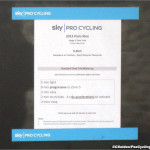
I found this at wattbike.com that shows Team Sky's preparation for last year's opening stage Time Trial for the Paris-Nice stage race. The completion of each rider's warm up is timed to coincide with their individual start time of the race.
Paris-Nice
Stage 1 Time Trial
Standard Time Trial Warm-Up
5 min light
8 min progressive to Zone 5
2 min easy
2 min to include – 3 x 6s accelerations to activate
3 mins easy
Notes:
Progressive means building to the power zone over the 8 minutes. Only in the last 1 min do you get to Z5
6 second accelerations are sprints & for a whole 6 seconds!
“Why is it an hour?” My perception is that most of our regulars could manage a 90 minute class – if we locked the doors and brought out the whips 🙂 So 30 mins + the Golden Hour = 90 minutes of achievable effort before fatigue sets in.
“But my class is only 45/60 minutes… how would this help?”
I use the Golden Hour to cultivate an abundance mentalitymindset in my class. Simply stated; you have a lot… so you can freely spend a lot. A common training technique,for time limited triathletes, is to limit your rides to just double your event distance. So on race day, when you're faced with a 20 mile bike leg, you're thinking; “I'm trained to ride 40 miles – so twenty's no big deal.” “I'll have a bunch left for the run.”
Contrast this with the scarcity mentality that many of our student's come to class with. They walk in thinking; “I need to pace myself, or I'll never be able to finish this class.” Which is the same as saying; I only have a little… so I need to be very careful when and how I spend it. You've no doubt experienced participants who appear to coast through most of class, only to give one big effort at the finish. They were “saving” some of their limited resources, so as not to “run out” before the end.
Here's a few ideas on how you can incorporate the Golden Hour into your classes.
Seek agreement
I talk frequently about the Golden Hour effect at the beginning of my classes, asking for my classes' agreement that they too feel stronger during the second half of class. Then at the 25 minute mark; ” do you feel it?” “Do you sense how you body is beginning to fire on all cylinders?” “Do you feel those early feelings of stiffness or limitations/distress in your breathing leaving you?” “Do you have new feelings of strength and confidence?” “Are you ready to take advantage of your Golden Hour?”
Make it a goal to reach the Golden Hour ASAP
It drives me crazy watching people come early to class, mount up and then spend ten or more minutes sitting there slowly turning the pedals. What are they waiting for? I make a point to commend all those making the most productive use of their time in class – and encourage the others who aren't to “get your money's worth” by independently beginning their warm up as soon as possible.
Your participants/students/riders come to your class with different objectives; burn fat, maintain/increase fitness, endorphin rush, etc… Success in any of these requires a commitment to do the work you intended for them. Coaching everyone to work at their potential is part of your role as an Instructor. Helping everyone understand that their capacity for work exceeds the length of available class time, can go a long way toward helping everyone reach their unique fitness goals.
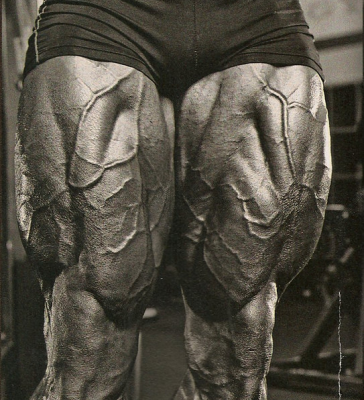
“Will indoor cycling make my legs big?” I’ve been asked this question a number of times over the years. A few people told me their personal trainers told them that. Others just made the assumption based on the fact that we are constantly using our legs (not a bad assumption). The question was always asked as if people feared they would walk out of class with bulging quadriceps, calves and glutes.
I’m sure that I may have been asked this question more than some because….well….my legs are quite big. It is rare for me to find a pair of cycling shorts that fit comfortably without cutting of the circulation to my lower legs. For the record, I didn’t get my legs from cycling. Back in the day, my primary sport was baseball. Coming out of high school, I looked to have a promising career as a ball player until I blew out my shoulder. I was a catcher. Catchers find themselves sitting in a squat for most of their lives. To make matters worse, one of my early coaches used to have me (and the 2 other catchers on our team) run around the field in a squat position. I can only image what that must have looked like. My legs were so big during my last year of baseball that I was the only player who did not have his last name on their back. The back of my uniform read “Piano Legs”.
So it is understandable that someone would walk into my class, look down at my legs, and fear they would never be able to wear a skirt again after some indoor cycling rides with me. The fact is that cycling reduced much of the bulky-ness of my legs and toned them. No joke, my legs used to be twice the size as they are now. So why did this happen? First, cycling doesn’t provide high impact on the muscles (unless you crash into something which is unlikely indoors). Impact, such as when the foot strikes the ground when running or jumping, will cause the muscle to rapidly resist force resulting in an eccentric contraction. An eccentric contraction will cause the muscle fibers to lengthen as they attempt to stabilize the joints (resist collapsing or flexing). This impact can be very traumatic on the muscle resulting in micro-tears and muscle growth. Second, indoor cycling usually does not provide consistent muscle overload which would provoke more muscle fiber recruitment. Portions of a class may have some explosive efforts or muscular strength drills, but the majority of the time will be spent at low to moderate workloads.
Cycling is predominantly a high repetition activity. In general, high repetition exercise will serve to tone muscle because it promotes increased blood flow and muscle conditioning without the overload. Using weight training as a comparison, someone lifting weights to build muscle mass will target heavy loads and sets consisting of 6 to 10 repetitions. A person interested in toning their muscles will use lighter weight and sets of 15 to 20+ repetitions. Applying this concept to indoor cycling, we are pedaling thousands of rotations (repetitions) per hour*, which is going to have an overall toning and conditioning affect on the muscles.
So the answer is no, it is highly unlikely that indoor cycling will bulk up your legs. So ride away and advertise your class as the way to a beautiful, toned and fit body (at least the legs anyway).
* An average cadence of 80 RPM for a 60 minute class will result in 4800 pedal rotations for one leg.