This Podcast is was originally published on August 18, 2013, I have updated it with our new Podcast host information and I am representing it now. I hope you enjoy it, Joey
Sport and Exercise Psychology Expert, Dr. Haley Perlus and I discuss the responses to a question I asked a while back; "What frustrates you as an Indoor Cycling Instructor?" I found that after reviewing the 80 responses I could divide the act of teaching an effective and entertaining Indoor Cycling Class into three categories:
Foundation - class profile, training zones
Presentation - communication and interpersonal skills
Media - music & videos
The majority were related to finding music and playlists. Next were frustrations on finding new class profiles and introducing real training principles into a class.
Below is a summary of an outstanding article that I read on Training Peaks. The original article published on March 28, 2019 · By Maria Simone can be found HERE.
Many slogans that you find about doing work can inspire and motivate! However, it’s only through doing the right work that you will make our big dreams a reality. We can think about doing the right work in three ways: consistency; discipline with intensity and volume; and recovery.
Consistency
Consistency is the most important element of any training plan. In order to build your fitness and prepare your body for the demands of race day, or a really hard class, you need to be able to train daily.
To train consistently, we need to plan ahead in order to balance training with other life priorities. Of course, in some cases, it may not be possible to fit the scheduled training on a particular day. If you are self-coached, review the rhythm of the plan. Consider whether it’s possible to swap days, shorten or modify a workout, or skip the session when unexpected conflicts arise. When all else fails, remember one day here and there won’t ruin your overall consistency. Try not to regularly miss key workouts or rethink the flow of the plan and/or your life schedule to set yourself up for success.
Discipline with Volume and Intensity
A second area where athletes unknowingly sabotage themselves is in their discipline sticking to intensity and volume targets. It’s important to stick to the targets for how hard or easy a workout should be (intensity) as well as how long or short a workout should be (volume). All too often athletes like pushing their endurance-based workouts into a tempo or Zone 3 effort because they feel like they aren’t working hard enough. Unfortunately, by raising the intensity, the athlete no longer reaps the endurance benefits, and they are not working hard enough to reap the benefits of a high-intensity session. We often see this in our classes. This is where we are doing work, but not the right work.
Recovery
Recovery is central
to your body’s ability to adapt to the training sessions. Training
breaks you down – recovery lets your body put itself back together.
How can we enhance recovery? The most important recovery tool is sleep. According to the National Sleep Foundation, sleep deprivation or “sleep debt” increases the production of the stress hormone cortisol while decreasing the production of glycogen. This combination means you won’t wake up feeling ready to tackle the day’s training session.
Beyond sleep, you can enhance recovery with daily nutrition, as well as properly fueling and hydrating before, during, and after workouts. If you aren’t putting the right gas in your tank, your car won’t work the way you want it to. If you aren’t incorporating a consistent recovery protocol into your training plan, then your body won’t adapt to the training stimulus.
Proper training isn’t just about doing the work. It is about doing the right
work, which includes a focus on consistency, discipline with your
intensity and volume, and recovery. Get the mix right, and you will
continue to see your body and mind working properly towards your next
big dream.
This Podcast is was originally published on November 24, 2008, I have updated it with our new Podcast host information and I am representing it now. I hope you enjoy it, Joey
My guest for this Podcast is Dr. Haley Perlus. Haley and I discuss Indoor Cycling Instructor Burnout, what it is, where it comes from and how to conquer it!
Haley is a doctor of sport and exercise psychology. She is an expert at empowering individuals to achieve peak performance.
In addition to her expertise in exercise psychology, Haley has been an indoor cycle instructor for 11 years. She's one of us and has first-hand experience teaching full classes as well as teaching a cycle class with 2 participants in a room that holds 50 bikes.
Visit www.DrHaleyPerlus.com and register to receive Dr. Perlus’s FREE monthly Mental Toughness Training articles.
Special Webinar (tele-seminar) Announcement
Dr. Perlus has offered to to hold a live consulting & training tele-seminar, specifically for my audience, this upcoming Sunday November 23rd, 8:00 pm Eastern Time.
Its worth mentioning Haley charges participants $97 per person to attend her group Mental Toughness Training calls. However, since we have on average 1,000 people downloading my Podcasts…she’s agreed to allow as a bonus to my audience that the first 25 people who download this podcast and register now at www.DrHaleyPerlus.com/cycle will get in absolutely FREE. She’s also been generous enough to allow those people who are not the first 25, attend her live consulting call for just $9.00 That’s a huge $88.00 savings.
Listen to the Podcast below for additional details or subscribe using iTunes or Zune.
Congratulations! You have decided to take the leap and open an Indoor Cycling studio…you're not alone.
Dedicated Indoor Cycling studios are growing in popularity and numbers. Owning an Indoor Cycling studio is FUN and like any other new small business adventure, not without obstacles.
Let’s assume that you've done all your research, found the perfect location, pulled permits, hired an architect, created a logo, chosen your bikes, learned new software, stayed true to your vision and spend 3X your budget. You are fully prepared to greet the new generation of Indoor Cyclists armed with state of the art equipment, and a team of instructors eager to show it all off.
Are you really ready?
Do you have what it takes to navigate “old school” customer service firedrills like a clogged toilet with a smile, as well as modern day stereo/microphone issues, also with a smile?
Are you prepared for the technology based firedrills of tomorrow that accompany power measurement, real time leader-boards, data tracking, and wireless internet? Indoor Cycling Technology(ICT) issues are common in a brand new studio. It's not a matter of if they are going to pop up. It's a matter of when.
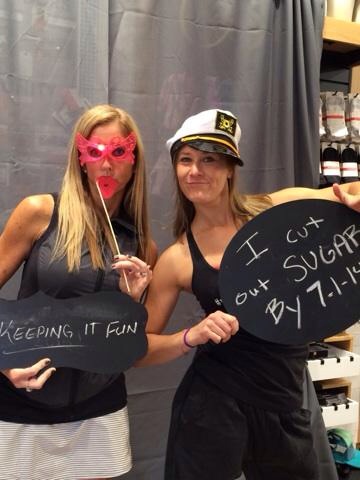
My name is Karen and I am the self proclaimed spokesperson for Keeping It FUN Indoor Cycling. I'm excited to share my Keeping It FUN approach to ICT firefighting while never losing sight of the customer and of course, always having FUN.
1. View every issue as a challenge … never a problem.
Each issue that crosses your path is nothing more than a “First World Problem,” for which you are grateful. and therefore, not a real problem at all. challenge is an opportunity for you to learn and grow. You have the power, as a studio owner, to turn any negative into a positive by how you choose to fight the fire. You also have the ability to turn a frustrated, perhaps angry customer into a lifetime customer.
2. Never let them see you sweat in a world of sweat…
In the event of a fire, customers are more likely to remember how you handled the situation and how you made them feel rather than the problem itself. View every customer complaint as an opportunity to EARN a rider's business. Upset customers need to be listened to and often become your most loyal clients.
3. In the event of a customer complaint, stick with… Keeping It FUN's 10 Commandments Of Customer Care…
Apologize
Say “Thank You” for bringing up the concern
Ask the customer to explain the issue in their own words
Listen to the customer through their eyes
Empathize…”I completely understand why you feel this way.”
Acknowledge the concern (big or small) as a legitimate concern
Explain how the issue will be resolved/handled
Assume full responsibility for the issue
Apologize (again) with sincerity
Thank the customer (again)
4. Recognize that the power may be in the palm of someone else's hand…
Be prepared for ICT issues, software glitches, and unsolved mysteries that you have no control over. Accept the fact that you are at the mercy of someone else's schedule.
5. Document, document, document…
When something breaks…document it every time.
6. Treat your ICT PowerPartners as part of your team…because they are…
It is what it is. ICT issues are likely to require third party involvement. In order to find the quickest resolution, you must be allies with your ICT PowerPartners. Provide the team with as much detailed information as possible regarding your issue. Be prepared to help them troubleshoot and provide them with well documented information. Show them respect and gratitude.
7. Adopt the Keeping it FUN Worry Scale of 1-10
Starting with 10 rate all real or hypothetical issues/problems on a scale of 1-10.
Below is an example:
10. Catastrophic loss of multiple family members
9. Loss of a child
8. Loss of spouse/family member
7. A life altering accident
6. Fill In
5. Your
4. Own
3. Blanks
2. ICT Firedrills
1. Which lululemon Pace Setter skirt will I wear, today?
The Keeping It FUN Worry Scale is fool proof and guaranteed to help you catch any ICT curveball that gets thrown your way!
I had the honor and privilege of working for, training under, and calling friend Mad Dogg Master Instructor_____________. In 2002, she taught me the power of words.
SB, from my heart to yours,
Thank you for sometimes telling me I had to do it your
way and supporting when I wanted to do things my way.
But, most of all, Thank You for teaching me to choose the
Word “resistance” over tension. Because of you, I may
Cue a Steep hill something like this…
“I invite you to let all your tension go.
Tension, weighs us down, holds us back, and makes it harder to breathe.
Resistance, both in life and on this hill makes us stronger. Close your eyes.
Relax your shoulders. Heart center forward and climb. Without changing
cadence, add reistance that makes you push back and fight harder.”
Today, 12 years later and 1500 miles away, her voice is heard in the words I choose when I teach. It’s a powerful lesson that extends beyond Indoor Cycling. The words we choose are more powerful than any ICT malfunction.
There will always be resistance, but you don’t have to have tension. Your customer’s response mirrors your response. If you smile and have FUN going over new studio speed bumps, they will too.
As you may know from reading these posts, I’ve written about motivation in several of them. I’m often asked to speak to groups about motivation, or write about it in newsletters that go out to athletes. It typically happens in January, because the expectation is that everyone has de-tuned over the holiday season and let their fitness and discipline slide. Since I don’t look at motivation or athletic training in that way, there doesn’t seem to be any reason not to write about it in July.
True, motivation probably is a good topic for the first newsletter of a new year, but I still consider it somewhat ludicrous. I’ve read too many articles about “getting started again” or “staying motivated”. In my mind, training never stops. You can be in an ICU after having open-heart surgery to repair a malfunctioning mitral valve with a congenital defect, and still train. You may not be logging miles, but you can train.
Physical training seems to me to be a natural process that incorporates conscious development and the integration of mind, body and emotions. It’s a form of human development that produces greater insight. If you approach your training in this way, it can and will enhance virtually every endeavor you undertake. You may even improve your performance as an athlete. At the very least, you’ll get more and take more (i.e., use more) from the experience.
When you understand this, training becomes an experience that engages you throughout your life regardless of circumstance. If for some reason you can’t train your body, you can still train your mind. If for some reason you can’t focus your mind, you can practice firing your emotions, or stimulating your will, or reducing your anger, or accepting what you are and are capable of doing.
Once you head down that path, there is no more stopping and starting. You may take a physical break, but, if you lose touch with what your training means to you, you’re simply exercising. Not that there’s anything wrong with that. It just has the capacity to be so much more. (See The Tao of Training, Part 1 and Part 2.)
If you tend to take a physical break during the holidays — and that could even include the long Independence Day weekend some may recently have taken — hopefully you feel rejuvenated when you return, rather than “out of it”. If you’re beginning a training cycle, you need to plan your competition phase: which races you will enter and your specific goals for each race. Decide which races are the most demanding and/or the ones in which you wish to perform best.
If you find metrics motivating, it could be worthwhile to find out where to obtain a fitness assessment that you know how to interpret, or that a coach can interpret for you. If not, begin with your base. Keep your training relaxed and comfortable and enjoy this phase.
Re-establish your drive by committing time and energy to understanding the motivation behind your training. If your motivation has not evolved, and you find yourself training for the same reasons you did last year, say hello to a plateau.
Maybe instead of turning your attention to getting back in shape, your first priority should be to determine the reasons you will log more miles — or train with greater commitment — this year.
Then do it because you know exactly why you want to.
As promised, here's Krista Leopold's Indoor Cycling Class Profile; Beat Down!
Training Type: LT Intervals
Working HR Zones: 4
Total Class Length: 55 min
Objective and Intensity
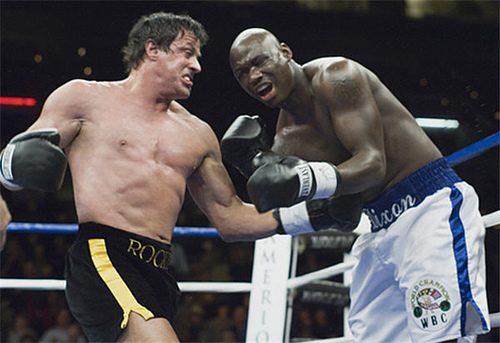
After recently being inspired by a boxing match I watched at the nail salon of all places, I decided to try to bring my riders into the ring for a full class. This ride is shaped by the structure of a boxing match. In professional boxing, boxers typically spar for 9-12 rounds of 3 minutes each with 1 minute in between each round. For our time constraints, we are going to fight for 10 rounds. Each round, we’ll use a different movement. Most of the rounds will be one movement sustained. In a couple of places, we’ll change it up.
For each round, we are going to work as close to LT as we can with opportunities to go higher than that sprinkled in. The challenge is to find that balance of intensity and restraint which will allow them to last a total of thirty working minutes. The average participant can sustain LT for 20 minutes. Since we’ll have short rest periods every 3 minutes, the ride presents an opportunity to push your limits while still being able to recover.
You can download Krista's trimmed to exact length and then fully mixed class playlist[wlm_private ‘PRO-Platinum|PRO-Monthly|PRO-Gratis|PRO-Seasonal|Platinum-trial|Monthly-trial|PRO-Military|30-Days-of-PRO|90 Day PRO|Stages-Instructor|Schwinn-Instructor|Instructor-Bonus|28 Day Challenge'] here – Right click > Save As.