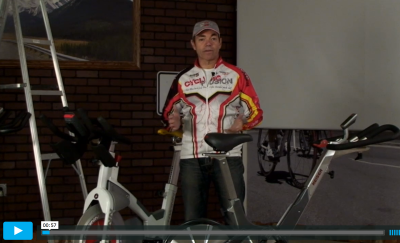
Tom Scotto from Cycling Fusion presents the second in his series of Audio PROfiles designed as the companion to Global Ride virtual cycling DVDs.
Paceline Cycling in France – DVD #2
PROFILE DESCRIPTION
A five minute warm-up and cool-down provide bookends to the perfect ride at the base of the French Alps. Two steady 20-minute efforts separated by a 5-minute recovery will provide many training scenarios and objectives with this DVD. OBJECTIVE AND INTENSITY
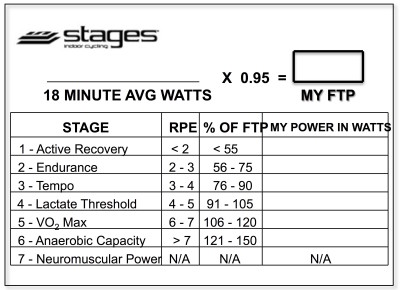
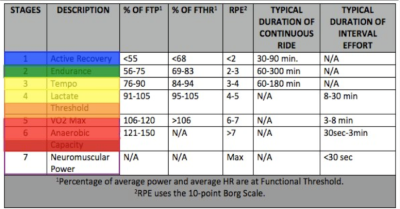
Since the structure of this DVD is based around two 20-minute steady-state efforts, one could easily approach this as a tempo ride (Zone 3) with intermediate recovery or a 2×20 threshold field test pushing the limits of Zone 4.
After watching the presidential debate last night, I remembered this post that addresses the importance of being prepared. Originally posted on Oct 9th 2014.
Many of us have been guilty of showing up for class and then just “winging it”. But are we putting forth the best YOU when you're making stuff up as you go along?
I've featured Alexa Fischer's short videos in the past and feel you just might re-think your class preparation after watching this video… and then the video that follows below.
If you appreciate Alexa's wisdom like I do, I highly recomend subscribing to her email list. Go here and fill in form in the righthand sidebar.
Winging It
Here's the video Alexa refers to where Billy Joel agrees to let an unknown student play piano for him. If you need a “day brightener” this will be it 🙂
Below, Premium Members can view and download a printable Class Profile that can be used in class, read a detailed description of the Power Based Training Zones and download a printable Power Postcard.
[wlm_private ‘PRO-Platinum|PRO-Monthly|PRO-Gratis|PRO-Seasonal|Platinum-trial|Monthly-trial|PRO-Military|30-Days-of-PRO|90 Day PRO|Stages-Instructor|Schwinn-Instructor|Instructor-Bonus|28 Day Challenge']
My last blog post was ended with this statement: “This blog represents the first in a series that will be exploring power and how we can make it more accessible, more understandable, more reliable, and more straight forward to teach with.”
To live up to those lofty goals, as an outdoor coach, an indoor instructor, and in general a man dedicated to getting the science right, the only place I can start from is one of credibility and truth. In other words, however I am going to try and lead someone to apply power and ultimately teach with it, it must be done with reliable and repeatable techniques. This is my only hope of also producing reliable and repeatable results in both indoor cycling instructors as well as our students.
The variability of how the same power levels feel on different bikes (specifically the Keiser m3 that we have used predominantly for the last 5 years) is something that has actually prevented us from doing lots of more engaging and/or fun training in groups. I don’t want to push someone to work hard only to have the fact that they chose a “hard bike” today instead of the easy one be what determines their ultimate success in any competitive or group activity.
I knew that until there was a way to objectively verify what power I was pushing on the m3 I could not know what the truth was, and so I waited for an way to implement this objective measurement. It finally was made possible when the Garmin Vector power pedals were released. This video is the initial launch of this research study.
Video Agenda
After an initial introduction as to why I took on this huge research project, I show the details as to how the Vector Power Pedals were fit on each bike and the nitty gritty steps on calibrating these pedals before I could begin testing the bike. This calibration method had to be done for each bike, and repeated each time I repeated the test.
This video also is the first in a series of video blogs that will allow you to take this journey with me as I discover what is possible and what is not in the pursuit of establishing real power levels of the Keiser m3.
Have you been teaching awhile? If you have- you know what it's like to get that ‘shot in the arm' that brings back a resurgence of energy and life to our teaching. I've experienced this over the last 23 years from conferences, workshops, inspiring podcasts, and other instructor's classes. In the last few months, I've been completely rejuvenated by bringing the fun back into my classes. I literally feel like I just woke up from a long winter's nap.
I used to be fun…and then I got real and now, I want to be real fun! Let me explain:
-I trained with Johnny G in 1996 (I know!) And back in the day we were taught to map out the ride with flats, climbs, standing flats, standing climbs and jumps. Then we were trained to add music and ‘feel the rhythm' throughout the ride with rhythm presses and tap backs. Nothing was scary, or contraindicated, and I don't remember anyone ever getting hurt.
-Then came Schwinn training in about 2000. I loved it! Bringing heart rate, cadence and load training to the table, Schwinn added a layer to Johnny's training, and gave us some metrics by which to measure exertion in our classes. Still no real mention of contraindicated movement- just more mindfulness towards leg speed, load and heart rate.
-8 years later, the ‘if you don't do it on a bike outside, you shouldn't do it inside' hit the indoor cycling instructor community. Militant in style, very few (if any) allowances were made for anything outside of flat roads and climbs. Even jumps, or lifts, were prohibited as dangerous and contraindicated. As a road rider myself, I bought into this theology and brought it into my classroom. As other instructor's classes packed out, my once full classes dwindled. Not looking back, I continued on this path of dogma for the next 5.5 years…how I wish I could get them back!
Here's why:
I like being a ‘fun' instructor! The people that stayed with me all these years tell me they missed me! Missed my singing, moving and feeling the music as a class. As an interesting side note- my music selection hasn't changed a bit, but I have people ask for my playlists now all the time! It's because we're moving and grooving to the music and having a blast.
Being a ‘fun' instructor is not for the faint of heart:
-Classes were much simpler as a ‘roadie only' instructor: I simply mapped out my road, matched great music to the cadence I wanted everyone to ride, had my class do a PTP about 15:00 minutes into class, added some good cues…and…done! Once I learned the science behind what I did, the hard part was done. I changed up my class profiles and added new music, but class was set.
-Now, I need to know all of the above plus the nuances of my music- every little nook and cranny, as we add fun and feeling to the basic framework of the class I described above.
-When does my music demand standing rhythm presses and, dare I say, tap backs?
-How will I break these movements down and coach them?
-When does the music back off and cry out for us to stay in the saddle and work endurance?
-How about jumps or lifts? Does my music push the beat enough so everyone can feel them and work together ‘tribally?'
-Do I know some words so I can sing or say the encouraging statements to my beautiful peeps?
-When is a great time to get off the bike, work the room, encourage individuals, coach and dance a little?
-How do I keep it all fun and still keep everyone mindful of their watts, rpm, heart rate zone, etc.?
A thankful spirit always promotes fun as well! I try to remind everyone to be grateful for bodies that work and respond appropriately and a great place to workout together.
Thank you for being part of the ICI/PRO instructor community. We appreciate you and wish you a very Happy Thanksgiving!
As you and your class transition into February 2017, it's often beneficial to begin adding some additional time in the saddle. Longer classes should (and often need to) be at a lower intensity.
So while a longer, endurance focused class has value, getting members to accept longer, steady state classes can be a challenge.
This week we'll be focused on the concept of “selling endurance” to your class participants.
Master Instructor Tom Scotto offered his thoughts in a previous podcast from 2012. If you haven't heard it, it will be time well spent.


 Tom Scotto from Cycling Fusion presents the second in his series of Audio PROfiles designed as the companion to Global Ride virtual cycling DVDs.