Once we understand and move past the limitations of cadence on the indoor bike, we can begin to realize how much of the focus of our class can be affected by leg speed. I’m not just talking about cadence drills and biomechanics, but actually controlling how much stress we place on the cardiovascular system and how much stress we place on the muscular system (legs). Although little scientific study has been done on the effects of cadence, there is substantial practical evidence from years of cycling, training and competition to grasp the overall impact of cadence on the body.
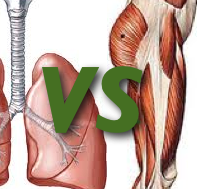
Keeping in mind that there are always exceptions, it has been generally accepted that 80 RPM is the imaginary line between cardiovascular and muscular emphasis. More specifically, a cadence of 80 RPM or higher will demand more from the cardiovascular system where a cadence less than 80 RPM will place greater focus on the musculature of the legs. Similar to how our energy systems and fuel systems work, there is not a specific “cut-over” from cardiovascular to muscular, but rather an emphasis or greater percentage of one over the other.
A more technical way to think about it is to consider the concept of force (or torque) and velocity. The more velocity (faster cadence) for the same amount of output (such as power) the less torque or stress on the leg muscles. Similarly, the same power with a slower leg speed will require more force (torque) and place a greater emphasis on muscle engagement. If you have a power meter that measures torque (in newton metres – Nm), you can see the impact of cadence as you try to hold the same power output with different leg speeds.
So what does this mean for Indoor Cycling?
Well it means a lot. An instructor can guide riders toward a certain focus by encouraging a leg speed that provokes the right physiological response. For example pushing a rider to a perceived effort of 80-85% with a 90 RPM cadence will place a great amount of stress on their cardio system. The rider will most-likely feel as if their ability to breath is being severely challenged. Pushing a rider to the same 80-85% perceived effort using a 60 RPM cadence will place a tremendous load (and emphasis) on the leg muscles. The rider will most-likely feel as if they can sustain their breathing but their legs will soon give out. The same target intensity but a totally different response.
So think about the type of training effect you are trying to promote and what you want your riders to feel during different parts of your class and make sure the suggested cadence is appropriate. This may also help guide those who are pedaling too fast during an effort focused on muscular endurance. Explain both the target cadence and how their legs should feel to entice them to decrease their leg speed and increase the resistance. Conversely, lure the pedal masher to a faster leg speed (with less resistance) to transfer the emphasis from the legs to the lungs.
Suggested Cadences:
Warm-up: 80-90 RPM
Aerobic Endurance: 80-100 RPM
Muscular Endurance: 70-80 RPM
Muscular Strength: 60-70 RPM
Threshold Training: 90-100 RPM
Climbing: 60-80 RPM
Sprinting: (See Part 4)
Cool-down: 80-90 RPM
Give Em a challenge: CLIMB LIKE A PRO CYCLIST
It is not uncommon for riders in an indoor cycling class to slow their cadence to 60 RPM with tons of resistance when simulating a climb. Instead, encourage them to climb like a pro (or maybe Tour de France) rider by maintaining an 80 RPM cadence while climbing. Many pro cyclists will climb at faster leg speeds because it produces more power (remember the force-velocity relationship). However, the reason they can maintain this is due to their aerobic ability (or capacity). When we climb at an 80 RPM cadence, in or out of the saddle, we feel our lungs beginning to burn and our natural response is to slow down the legs to ease the pain in our chests. So, bring your riders to a 80 RPM cadence either through a cadence check or music that indicates the tempo. Then have them continue to add resistance until they are barely able to maintain the leg speed. That is the baseline for the climb. You can give them the option to stand while climbing, but they must maintain their 80 RPM cadence even out of the saddle. Keep the climbs short (2-5 minutes). Ask riders if they were successful in being able to visualize the climb at the faster cadence AND if they felt the stress in their lungs even through they were climbing. This is a great way to demonstrate the power of cadence and how we can manipulate the way our body responds to intensity.
Just last Saturday I taught my regularly scheduled 7:15 am class and my faithful regular 20+ were there. We were all disappointed that it was, again, cold and rainy/snowy on April 30 and that we could not be training outside, but were thankful for our gym membership.
I yelled out my good morning greetings, popped in some pre-class music, checked in with everyone and set about preparing class. Once on my bike, I changed music and engaged the class to start. At this very moment, a class member I did not recognize turned on her i-pod and plugged in her ear buds. Seriously?!?!?!?!?!? I gave her the “instructor hairy eye ball” (you know the look), hoping she would get the clue to remove them, but, alas, she did not. Throughout the entire anaerobic threshold one hour class, she did the exact opposite of my cueing. When we were in the saddle, she was climbing ferociously out of the saddle (and not in spectacular form). When we were climbing out of the saddle, she was pedaling at 120 rpm’s in the saddle. It was like her ear buds were Bose Quiet Comfort Noise Canceling (me). In fact, every once and awhile, she would remove her ear buds and take a listen and then go back to doing whatever it was she was doing on her own. I continued to give her “the look” to no avail. She was doing her own thing regardless of what the rest of us were up to. Why in the world did she come to a class? (Please keep in mind, this was a far cry from “modifying” due to injury, or a difference in a training schedule!) Has this ever happened to you? How did you handle it? I would love your feedback on this.
As I multi-tasked (taught, “hairy eye-balled” and assessed the situation), I figured I had a few options:
1. Ignore her and her rudeness
2. Address her in front of the class (assuming I could get her attention through her sound proof ear buds)
3. Talk with her after class
4. Leave it this time, but if I see her in class again, talk with her before class starts and ask her to please be respectful of not only me, but the other 20+ people in the class that are there to work as a group. I will also mention to her that the cycling studio is available for her to use anytime there is not a class in session.
5. Ask another class member to speak with her, using peer pressure.
It’s fairly obvious I chose #4. I actually wanted to do #3, but she bolted out of class, so I had to default to #4. I will update you if she and her i-pod pop into class again anytime soon and let you know how our conversation goes.
When I cannot decide whether I like the re-make or the original song better, then I know that it is a great re-make – and this is one of those songs. I have been using this for a kick butt out of the saddle climb in my anaerobic threshold interval training class lately. We all know it and sometimes it is nice to hear an old classic with a new twist like Fergie doing “Barracuda”, or just and old classic like Ann and Nancy Wilson with Heart doing it.
Take a look/listen at both and decide which you like better:
Either way, the rpm is 68 and your class will know it, love it and easily reach and hold threshold for 4:40 with Fergie’s version and 4:23 with Heart’s. Gotta love the1970’s video! Have fun with it and have a great weekend everyone.
The cadence or speed at which we pedal has a large impact on the type of workout we will receive. Maybe larger than we think. Often times, the only thing that separates one workout from another is leg speed. This 4 part series will explore different ways cadence affects the type of workout and our body’s response.
Part 1: Extremes and Limitations
Part 2: Cardiovascular or Muscular Emphasis
Part 3: Power Output or Strength Development
Part 4: Sprinting for Maximum Power
PART 1: Extremes and Limitations
There are two things to understand as we begin to explore the full range of leg speeds in cycling, (1) what is capable on a real bike, and (2) what is appropriate on an indoor bike. Although the later may appear more to the point for the indoor cycling instructor, I’ve seen instructors lose respect from outdoor riders because of uninformed, end-all comments. Some of these comments sound like, “there is no value in pedaling faster than 110 RPM” or, “it is unsafe to pedal slower than 60 RPM — EVER!” or, “leg speed doesn’t matter, just ride as hard as you can!” Anyone who has hung around me long enough knows my thought on these comments is, “it depends”.
Why is the impact of cadence when riding indoors different than when riding outdoors? It boils down to the lack of side-to-side and forward and backward movement (limitations) of the indoor bike. This limitation of movement has both mechanical and safety implications.
Natural Movement of the Bike
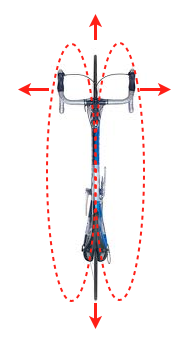
When we stand on a bike outdoors, it moves side-to-side (or should) as we apply pressure to the pedals. The bike may swing as little as 3-4 inches to greater than 10 inches. What we often don’t realizes is that the bike is also surging forward and backwards as well. The overall movement of both the side-to-side and surges results in a “Figure 8.” Keep in mind that this movement is also present when riding seated. We just don’t notice it as much because the bike moves less. So simply, a bike ridden outdoors moves much more than you may think. This “natural” movement provides leverage for power production and aligns joints to apply maximum force. The lack of natural movement of an indoor bike can limit mechanical efficiency and power.
This lack of bike movement also presents safety concerns for indoor cycling. Because the indoor bike does not move naturally, the body often needs to compensate by moving instead. Regardless of how much one moves their body to compensate for the lack of bike movement, an unnatural amount of stress will be placed on the muscles and joints. This is the reason why certain movements and extreme cadences should be avoided. Quick or explosive movements from a seated to standing position should be avoided. These include sprints that start in the saddle and then force a rider to quickly stand with heavy resistance, and jumps (Spinning®) which encourage riders to move rapidly from a seated to standing position. These movements will place unhealthy stress on the lower (lumbar) spine, because the body must compensate (not the bike) for the force.
Similarly, leg speeds faster than 110 RPM are discouraged on an indoor bike. The lack of any movement on an indoor bike will place unnecessary stress on joints at higher speeds. The addition of a fixed, weighted flywheel only adds to the risk. Conversely, pedaling slower than 55 RPM (with heavy resistance) on an indoor bike can also put a rider at risk since the bike is not able to move under the workload placing unnatural stress on joints. Understand that it is not uncommon for riders training outdoors to perform cadence drills above 120 RPM or muscular strength efforts under 50 RPM. Are these beneficial — well, it depends. More importantly, regardless of whether you are riding indoors or outside, appropriate resistance (gearing) and proper form should be maintained at all times.
NOTE: The limitations described above can also apply to “real” bikes ridden using an indoor (stationary) trainer.
In this story More observations from our students the author states that he's one of few, if any, men in the classes he attends. The classes I teach and attend appear to be an even split… except for a few of the 9:30am (forgive the expression) House Wives classes I've been to.
Even though I have been happily married for 23 years, it occurred to me that some of my favorite songs are based on the common frustrations men have in their relationships with women.
Am I alone here fellows?
This post started as a Friday Favorite, but now I think it would make a great community effort. But first I felt we needed an an anthem for the category. A song that captures the stress and anxiety many of us feel in our quest for a meaningful relationship with a women. After careful deliberation I have decided that there's really only one choice…
Some of my runner-ups included just about any song from the Gin Blossoms. Great music, but these guys must have had some really rough high school years 🙁
OK Guys. I need your help here so we can all express our feelings through music.
Feel free to add your favorites below.


 Once we understand and move past the limitations of cadence on the indoor bike, we can begin to realize how much of the focus of our class can be affected by leg speed. I’m not just talking about cadence drills and biomechanics, but actually controlling how much stress we place on the cardiovascular system and how much stress we place on the muscular system (legs). Although little scientific study has been done on the effects of cadence, there is substantial practical evidence from years of cycling, training and competition to grasp the overall impact of cadence on the body.


 “A Wolf in Wolf's Clothing”
 Buy at
  Buy at