Data Collection for the Power Accuracy Research project
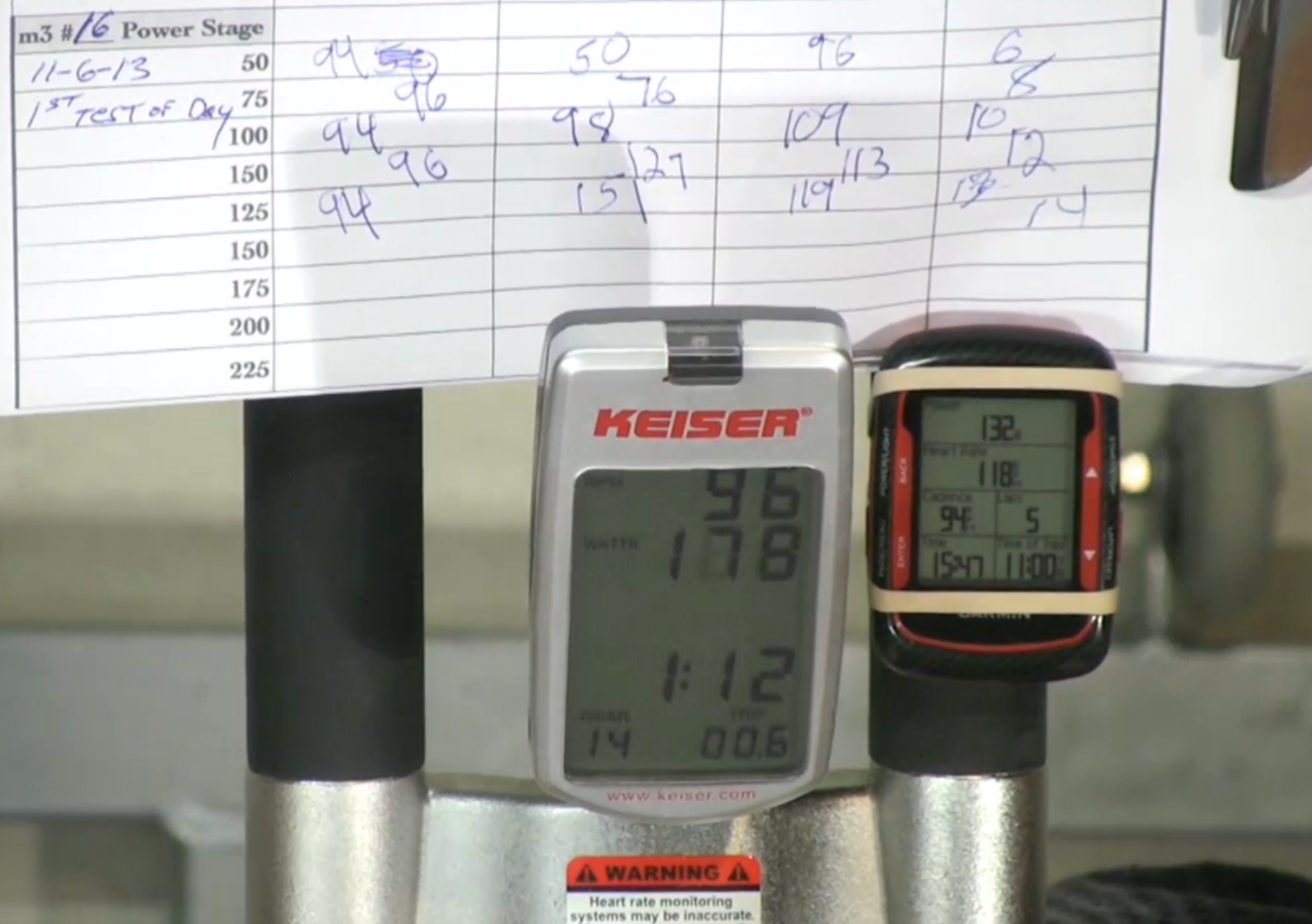
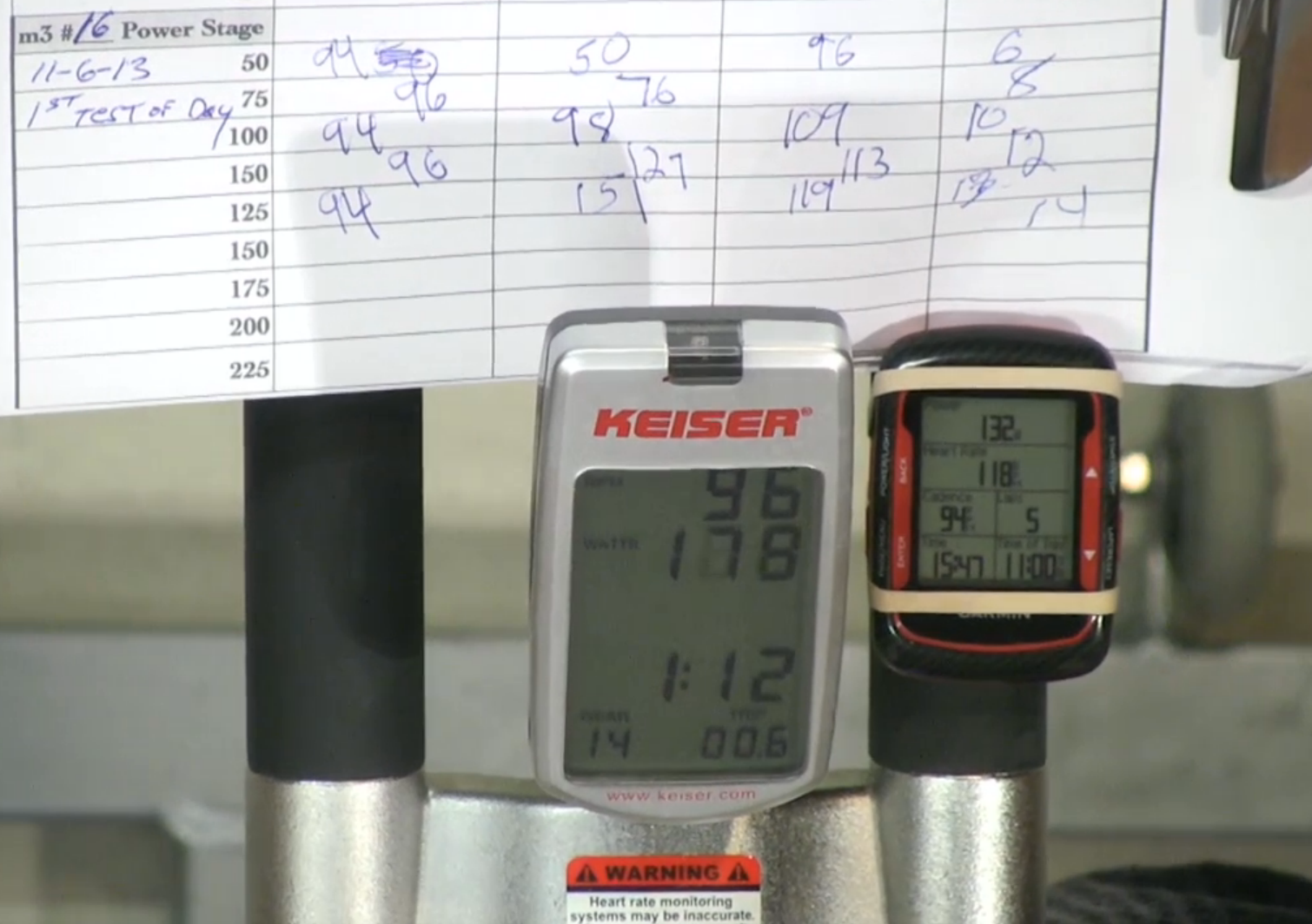
On the last blog post (8/11/17) v we spent a considerable amount of time showing how we set up the test, the equipment, calibrating the power pedals for each trial, positioning all of our data collection tools, and just preparing each test in a methodical manner. This post picks up where we left off and is the only video blog showing the entire test performed on the Keiser m3 with the Vector Power Pedals. This was done so that the reader can see the precise protocol used for all of the trials for all of the different bikes and the repeats with the same bikes.
I only recorded one full session (out of the 25 to 30 total that I performed) as a “reference” session so that the full and complete protocol can be understood and seen. You can even follow along with your own bike if you want to ride while you watch this video.
The most interesting thing to note is that you can see the power clearly as the test progresses between the Keiser and the read out on the Garmin. The variance is significant.
One significant reason for sugar cravings is withdrawal. Withdrawal can promote cravings under various circumstances.
If someone has recently stopped drinking alcohol, cravings for sugar can be strong and frequent. This involves the brain chemicals stimulated by alcohol. The same three chemicals (dopamine, beta-endorphin, and serotonin) are also stimulated by sugar.
The similarity makes sugar a short-term substitute for alcohol when cravings occur. It also explains why people in recovery from alcohol (or drugs) may crave sugar and may eat it often or in large quantities. Or both.
The phenomenon is so common that AA meetings typically feature back-of-room treats that are laden with sugar: cookies, brownies, cakes, pastries. That approach can backfire, but we’ll get to that in a moment.
If someone is addicted to sugar, quitting sugar can lead to cravings. The effect may sometimes be similar to the symptoms of alcohol withdrawal or opiate withdrawal — and also similar to the symptoms of hypoglycemia (low blood glucose).
(As a side note, I postulated years ago that hypoglycemia — especially reactive hypoglycemia, the rapid glucose drop following sugar ingestion in susceptible people — was a specific case of sugar withdrawal. Reviewing the lists below makes it seem there’s a case to be made for that.)
Research shows that cravings are highest when withdrawal is most severe. The higher the level of intake prior to abstinence, the greater the withdrawal and subsequent craving.
Anyway, let’s look at the symptoms in the different cases.
Symptoms of hypoglycemia include shakiness, nervousness, anxiety, sweating, chills, irritability, confusion, rapid heartbeat, lightheadedness, dizziness, hunger, nausea, sleepiness, blurred vision, tingling or numbness in the lips or tongue, headaches, weakness, fatigue, anger, sadness, lack of coordination, nightmares, seizures, unconsciousness, confusion, difficulty speaking, night sweats, waking up tired, irritable or confused.
Research on lab animals that have been made addicted to sugar lists withdrawal symptoms that resemble those of opiate withdrawal.
An internet search on symptoms of sugar withdrawal offers lists that include hunger and the desire for sugary foods; headaches; low energy, fatigue; mood swings, crankiness; muscle aches and pains; nausea and other gastric upsets; chills or sweating, especially at night; runny nose; yawning; insomnia.
As you can see, there is quite a bit of overlap in these various symptom lists.
So is sugar withdrawal just like withdrawal from opiates or alcohol? Some would say yes. Some would say that’s too big a stretch. After all, the body has only so many ways of expressing itself, so a similarity in symptoms doesn’t necessarily link them.
But we do know that sugar affects, either directly or indirectly, the same brain chemicals that are affected by alcohol and opiate drugs. As mentioned above, the similarity makes sugar a short-term substitute for alcohol.
However! Eating sugar when you crave either alcohol or sugar can backfire, due to a phenomenon known as priming (i.e., a little makes us want more).
Some people insist priming doesn’t apply to food, just to alcohol or drugs. Clinical experience shows that it does apply, and that avoiding possible priming cues goes a long way toward ending cravings. My advice would be to take priming seriously if you want to end sugar cravings.
[If you have students who need help dealing with sugar cravings and sugar addiction, please let me help. My new program, Last Resort Nutrition® with Joan Kent, starts soon. I also offer individual coaching.]
No more hunting for new music or counting out cues. Here is your ready to ride document, that can be displayed from your phone, or printed out onto cue cards. This ride is timed out, down to the second, to make your life as easy as possible!
No, MSP doesn’t stand for “My Secret Pal”, nor does it stand for “Mom’s Special Potion”, and I’ll stop right there before this gets really silly. MSP stands for Maximum Sustainable Power. It is the level of power once can sustain for a specific time interval. When you are referencing an hour interval (measured and estimated with 20 minute tests), most elite cyclists who train with power refer to this as FTP or Functional Threshold Power.
I prefer to reserve the term “Threshold” for that unique metabolic event that takes place with respect to the production of energy; the “cross-over” process between the aerobic and non-aerobic energy production systems. In my opinion, this term should be reserved for cardiovascular training (it has been used and researched with this term as the agreed upon nomenclature for years before power meters even existed). Therefore, to avoid confusing heart rate and power training terms, I do not refer to threshold with respect to power, but instead reserve its use solely to reference ones heart rate when this metabolic event occurs.
No more hunting for new music or counting out cues. Here is your ready to ride document, that can be displayed from your phone, or printed out onto cue cards. This ride is timed out, down to the second, to make your life as easy as possible!
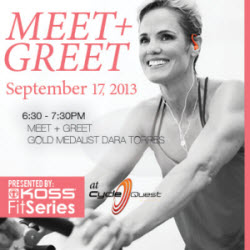
ICI/PRO member & Cycle Quest Studio owner Joe Ducosin hosted Olympic Gold Medalist Dara Torres at his studio last week – and the results were a bunch of free local media that promoted his studio.
Dara was in town to promote the new women's specific FitClips headphones she helped design for KOSS Headphones. They also seem to work just fine for men – the pair Dara gave me fit really well, that is after she showed me how to insert them properly.
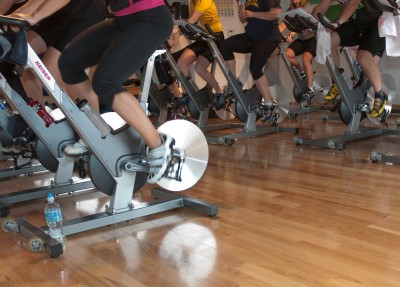
What was really unique about this promotion was how they used Joe's studio as the place to demonstrate the FitClip headphones to members of the media that included; multiple on-air personalities + a half dozen local bloggers. Each Keiser M3 was wired so each rider could experience the class through their headphones, instead of the studio's sound system.*
I met with Dara in the morning and recorded this short interview.
Then in the afternoon Dara and Joe lead a fun class for all the media folks and a number of Cycle Quest Instructors.
Cycle Quest Instructors with Dara Torres
I waited a few days, before posting this, in order to see how much promotion resulted for KOSS and Cycle Quest. Here's what I've found so far – with a few more stories not yet published.
Would something like this work for your studio? It wouldn't have to feature Dara Torres, I'll bet there's a celebrity who lives near to your studio and they're likely to be connected to some product or service that you could help them promote 🙂
I'm not sure where else KOSS and Dara plan to hold these events (they've done a few already), but I have their contact information and could forward your info on to them if you'd like to be considered. Just leave a comment below.
*This actually reminded me of the very early days of Spinning classes, at the Flagship Athletic Club where Amy taught back around 1995ish. The 25 or so Schwinn built JohnnyG Spinners were set up in a corner, but not a closed room, so music from the class would be disruptive to the other areas of the club. So instead of speakers, we all wore headsets connected to a Walkman /portable radio that was tuned in to an FM station to hear the music and Instructor's cuing. At times this was a real hassle, but riders rarely talked during class and there was something special about having the Instructor's voice right in your head 🙂


 ICI/PRO member &