by Joey Stabile | Jun 21, 2020 | Audio PROfiles, Best Practices, Class Work-Sets, Creativity Indoor Classes, Instructor Training, KEEPING IT FUN, Master Instructor Blog, PRO/Playlists, Training With Power
Welcome to the The Weekly Ride by Cycling Fusion
Welcome to our new era of The Weekly Ride, you get:
- Full Ride PDF
- Apple Music Playlist
- Spotify Playlist
- File to Download the Ride directly into My Fitness DJ (Yes, no Programming)
- The Ride will be available for purchase in the iClass Builder Store (No Programming)
- A Podcast of the ride being delivered by a master instructor.
(more…)
Originally posted 2019-01-26 10:30:41.
by Joey Stabile | Jun 9, 2020 | Audio PROfiles, Best Practices, Class Work-Sets, Creativity Indoor Classes, Instructor Training, KEEPING IT FUN, Master Instructor Blog, PRO/Playlists, Training With Power
Welcome to the The Weekly Ride by Cycling Fusion
Welcome to our new era of The Weekly Ride, you get:
- Full Ride PDF
- Apple Music Playlist
- Spotify Playlist
- File to Download the Ride directly into My Fitness DJ (Yes, no Programming)
- The Ride will be available for purchase in the iClass Builder Store (No Programming)
- A Podcast of the ride being delivered by a master instructor.
(more…)
Originally posted 2019-04-13 23:11:53.

by John | Jun 6, 2020 | Instructor Training, Master Instructor Blog, Training With Power

Besides sporting those fabulous sideburns, Tour de France leader Bradley Wiggins is demonstrating how to climb effectively using a much faster pedal cadence than the riders that surround him. I've been counting his pedal RPM during the climbs and today as I watched, Wiggins climbed the Col de Tormalet in the high 80's. Wiggins reminds me of another successful high cadence climber – Lance Armstrong. I'm going to venture a guess that this year's presumptive winner has a similarly superhuman aerobic capacity.
Climbing hills outdoor as a group requires everyone to develop the same amount of power, relative to the combined weight of the rider and bicycle. When we discuss cuing a climb in class we shouldn't give a random wattage – I want everyone at 300 watts!!!!, but rather normalize each a rider's power output as it relates to their body weight. For example you may say; for us to stay together as a group we all need to be maintaining one watt per Lb.
How a cyclist creates power can vary by changing the two components that make up power; force (pedal torque) and speed (cadence/RPM).
- The force you apply to the pedals while seated is primarily developed through muscle contractions. Yes, BIGGER muscles can create more force.
- The speed that you you apply these contractions is very dependent on the availability of oxygen, which makes high RPM pedaling more a function of your aerobic system.

Wiggins vs. Evans
When you see Bradley Wiggins standing next to other riders, it's quite obvious that he doesn't posses the large muscles of many of his competitors. You may actually say that he has “skinny” legs compared to last year's winner Cadel Evans in this picture.
NOTE: If you've got people in your class who are concerned with getting “big legs” from cycling you can show them this picture. Explain that, as a professional cyclist, if Bradley Wiggins could develop the muscular size of Evan's legs, he would… but he probably can't due to his genetic makeup.
So, for Mr. Wiggins to maintain his place at the front of the peloton, while riding alongside Mr. Evans, Mr. Wiggins needs to produce the same watts per Lb (or Kg) as Cadel. No more and no less… the exact same watts per Lb. Not able to develop the same amount of force as others… he makes up for it by applying more frequent (yet smaller) forces on his pedals = higher cadence.
So – how to bring this concept into your class?
If you're teaching with power it's easy. Create a profile that calls for specific watts per Lb at varying pedal RPMs with the intent of exploring which RPM equates to the lowest heart rate, with a fixed watts per Lb. My experience is that each RPM level needs to be maintained for 3+ minutes so your student's effort can stabilize, before making a change.
But what if you don't have power?
As part of my Wine Country Audio PROfile, I added some additional information that I feel will benefit you on days where you're encouraging faster climbing cadences… but don't want everyone's pedals running away with them.
How you cue the addition of intensity is very important in an Indoor Cycling class of any format and its different dependent on the type of Indoor Cycle you’re riding.
– With any Indoor Cycle that uses friction to create the resistance I suggest adding resistance to cadence. Class is pedaling ~ 90 RPM and then add load to reach intended intensity.
– If you are riding a FreeMotion S11, Keiser M3 or Schwinn AC with magnetic resistance you can add resistance to cadence or you can do the exact opposite, adding cadence to resistance. You’ve never heard that before, have you? It’s why I see magnetic resistance as being superior.
Here's why
My biggest struggle (besides getting people to be quiet) is how to best communicate load in class. If you have been paying attention, you have noticed that with a friction based resistance system as you slow your cadence the pedals get heavier. We have all seen the person who was supposed to be accelerating out of a climb start bouncing like they have no resistance at all. This happens because as your student pedals faster, the added centrifugal force overcomes the fixed amount of friction, making it easier and easier to pedal, until it’s like they have no load at all. Not Good 🙁 Cycling is all about endurance. We want them to endure it! The solution is to establish leg speed and then adjust load to regulate the work they are doing.
Indoor cycles with magnetic resistance (S11, M3 and AC) work very differently. As the speed of the flywheel increases, the Eddy Currents that create the load increase as well. So these Indoor Cycles actually get harder to pedal as cadence increases, just like a real bicycle. So with these types of cycles cue your students to set their load at a slower RPM and then simply increase cadence to add intensity.
Give this a try and let me know if it helps [wlm_firstname]
Originally posted 2012-07-18 16:26:11.

by Joey Stabile | Apr 25, 2020 | Audio PROfiles, Best Practices, Class Work-Sets, Creativity Indoor Classes, Instructor Training, KEEPING IT FUN, Master Instructor Blog, PRO/Playlists, Training With Power
Welcome to the The Weekly Ride by Cycling Fusion
Welcome to our new era of The Weekly Ride, you get:
- Full Ride PDF
- Apple Music Playlist
- Spotify Playlist
- File to Download the Ride directly into My Fitness DJ (Yes, no Programming)
- The Ride will be available for purchase in the iClass Builder Store (No Programming)
- A Podcast of the ride being delivered by a master instructor.
(more…)
Originally posted 2019-03-30 09:00:28.
by Joey Stabile | Apr 19, 2020 | Audio PROfiles, Best Practices, Class Work-Sets, Creativity Indoor Classes, Instructor Training, KEEPING IT FUN, Master Instructor Blog, PRO/Playlists, Training With Power
Welcome to the The Weekly Ride by Cycling Fusion
Welcome to our new era of The Weekly Ride, you get:
- Full Ride PDF
- Apple Music Playlist
- Spotify Playlist
- File to Download the Ride directly into My Fitness DJ (Yes, no Programming)
- The Ride will be available for purchase in the iClass Builder Store (No Programming)
- A Podcast of the ride being delivered by a master instructor.
(more…)
Originally posted 2018-08-08 20:03:18.
by Joey Stabile | Apr 13, 2020 | Bonus Materials, Class Work-Sets, Creativity Indoor Classes, Instructor Resources, Training With Power
This post has been adapted from an article By Selene Yeager published on June 13, 2019 which can be found HERE.
The following is excerpted from Climb! by Selene Yeager–your guide to train for, conquer, and ultimately fall in love with hills. I (Joey) have read Climb! and I recommend the book, again both for indoor and out.
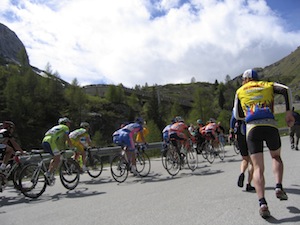
How does one train for a mountain bike stage race, a hard race where you have hour-long climbs, short grinders, and rollers all thrown into the mix, for 4 to 6 hours a day, day after day. The answer is simple, hill repeats and lots of them.
If you are not already doing hill repeats in your indoor classes, you should consider them. They are hard, they allow you to dial in your time at intensity, and they will build a stronger student. Not all repeats have to be the same, some can be level, such as 3 x 8-minute or 6 x 5-minute hill repeats where you have 24 to 30 minutes at threshold. Others can be crafted to mimic real-world conditions, where you’re hanging onto attacking riders or trying to stay away or make a break, like 8 x 3 minutes or 12 x 2 minutes, so the same time at even higher intensity.
These not only train your body to produce more power aerobically, better manage lactate, and produce more power at your threshold, but also bolster your mental reserves, because it’s just as challenging for your mind to blaze up the same lung-busting climb as it is for your muscles.
The following hill repeats are taken from an outdoor preparation plan that is designed to build climbing power. Generally, a workout like this is only done once or twice a week and on fresh legs. Also, though hill repeats are designed to be somewhat torturous, they’re not intended to bury you. These should be done at an 7-8 on a scale of 1-10, not a 9 or 10. Your speed, intensity, and/or power should be within the goal range on every repeat.
Uphill Sprint 20s:
Being able to surge and recover helps you hang with the group up climbs and gives you the reserves to power through undulating climbs that kick up into double-digit grades.
Do It: Design a ride that has a steady climb in the 10 to 15 minute range for duration. Begin the climb in HeartZone 4, climbing at your lactate threshold (LT) RPE of 7 to 8. After 2 minutes, stand up and attack at just below all-out sprint intensity, HeartZone 5, (RPE 9) for 20 pedal strokes. Sit and go right back to climbing at your LT. Repeat every 1 to 2 minutes (depending on your fitness) all the way up the hill. Perform the drill one or two more times.
Rock The Rollers:
To keep going strong through rolling terrain, practice 2-minute attacks.
Do It: Design a ride with short climbs that take about 2 minutes to crest. Wind up before you hit the climb, so you’re at LT (RPE 7 to 8) as soon as the hill starts. Climb at LT for 90 seconds, then go as fast as you can (RPE 9 to 10) for the final 30 seconds all the way to the top. Repeat four to six times.
Short Rest Repeats:
These classic climbing intervals simulate real-world climbing conditions where you often don’t have the luxury of fully recovering before you’re hit with the next incline.
Do It: Design a climb that takes about 10 minutes to climb. Roll into the climb and crank your intensity to your LT heart rate and/or power (RPE 8). Hold it there for 6 minutes. Recover for 3 minutes. Repeat for a total of four climb intervals.
Rocket Drills
As the name implies, these short intervals go from 0 to 60, like a rocket, to develop the explosive strength and power you need to punch up steep climbs without losing speed and momentum.
Do It: Design a short incline that takes about 2 minutes to crest. Begin from a standing or slow-rolling start (much as you would a race), on a count of three, explode up the hill as hard as you can (RPE 8 to 9) for 2 minutes. Recover for 3 minutes. Repeat 5 to 10 times.
I hope that this helps you in your next class design. I always try to bring a little of the outside in every time I ride......Joey
Originally posted 2019-06-17 18:55:52.