Sometimes it's just being in the right place, at the right time to move into a position as Master Trainer for a major Indoor Cycling education company.
OK, maybe you need more than that. Like having a strong passion for fitness, a bicycle racing background and (in this case anyway) an engineering mindset that helps you to understand and then communicate the true value of adding metrics to an Indoor Cycling class.
Dunte joins me to discuss how he got his start with Stages Indoor Cycling and offers his ideas on effectively communicating power training to our students.
Later this week (shooting for Friday) I'll be publishing Dunte's Race of Truth Audio PROfile. We had some audio quality issues with Skype that made take #1 unusable and plan to re-record his profile Wednesday this week.
As promised, here is part 2 of my interview with Schwinn Master Trainer Jay Blahnik – for ICI/PRO members.
In part 1 Jay briefly describes what he sees as the three different segments of people (Instructors and participants alike) that you will probably encounter when introducing Power.
I convinced him to stick around for another half hour and really drill down on his strategies for bringing all three of these groups on board – if possible.
[wlm_private ‘PRO-Platinum|PRO-Monthly|PRO-Gratis|PRO-Seasonal|Platinum-trial|Monthly-trial|PRO-Military|30-Days-of-PRO|90 Day PRO|Stages-Instructor|Schwinn-Instructor|Instructor-Bonus|28 Day Challenge']
Jay describes the three segments as:
Those that reject measurement and Power.
The 30% who are engaged, but don't know quite what to do with it.
Then there's people like me (you too?) who loved it from the start 🙂
You can listen to this interview below and you will also find it in your ICI/PRO Super Secret iTunes Feed – instructions are here if you haven't set your's up yet.
Image from http://en.wikipedia.org/wiki/Newton_metre
By Team ICG® Master Trainer Jim Karanas –
The Watt. Ten Newton Meters. Ten times the force necessary to raise 1 kg 1 meter vertical in 1 second.
Clean. Absolute. The cyclist’s preferred training statistic. Whether it’s power-to-heart rate ratio, sustainable watts per unit time, or maximum watt output, there’s no better measurement of improved cardiovascular fitness than a watt.
The watt has inspired recent interest in the indoor cycling community and generated millions of investment dollars by product manufacturers to bring it to the average fitness consumer. How good an idea is it?
A driving occupation of the fitness industry is to produce Results for our customers. Customers use our services and products to achieve results that justify the time and money spent working out: weight loss or weight gain, improved fitness, and improved health. They’re all measurable.
Other, unquantifiable, results are often attributed to fitness training — an improved sense of wellbeing, better life balance, greater happiness.
Results are more marketable when they can be measured. “Lose 10 ten pounds in 7 days!” Sustainable or not, the consumer is drawn to the promise of a measurable result.
What about the watt? It’s measurable, but does it tell most consumers what they want to hear? “Improve sustainable watts for your next FTP test in just 3 months!” That might attract some cyclists, but will it attract the general fitness consumer? The poor watt just isn’t as widely accepted as calories.
Some studios put up leader boards that display everyone’s power during class. They provide testimony that comparing participants’ watts to those of other riders in the room makes them try harder. But the comparison doesn’t make sense. It’s your power-to-weight ratio that determines if you get dropped on the next climb, not average watts. Why don’t they factor in body weight? The answer is obvious: It’s more difficult to manage, and people won’t likely weigh themselves before class. So the watt display means nothing. Why not let the watt do its job correctly?
The correct use of watts, particularly in conjunction with heart rate, will increase cardiovascular fitness exponentially in a short time. There’s no doubt. If you want to show a customer quick results, watts help — particularly if the customer has never done structured training before. But that person goes through the rapid-improvement phase only once. After their exponential stage (which could go on for months to years), the average fitness consumer will see a plateau, then a decline in performance measurements using watts. The watt loses favor.
Watts are brutally honest, and most people don’t like looking at them after a while. Ask anyone who has trained with power for 10 years and is no longer “getting stronger” how he/she feels about doing a 20-minute FTP test.
So why is the industry buzzing about whose bike measures watts, how accurately they’re measured, how consistently they’re measured from bike to bike, and whose education provides the best training for instructors to deliver to the members?
Can watts help us with our indoor cycling classes? Maybe. Teaching people to put out more effort is a good use of watts. “As we begin to climb, I want you to drop your cadence below 80 rpm. Remember, climbing requires more effort and a greater power output. Make sure your watts increase as you drop your rpm.”
The above cue uses watts to develop the experience, a good use of the measurement. But when someone feels that improvement of the metric is the motivation to train, there’s potential for dissatisfaction over time. People love watts when they’re going up; not so much when they’re going down. The poor watt can’t catch a break.
Soon all indoor cycles will measure watts. Still, I’m not convinced that watts alone will help indoor cycling.
Maybe you think this is hypocritical. Whether or not it makes sense, watts are here because the market demands it. Who created the demand? We did. By saying we can prove that your training is working. You’re making measurable progress. You want results; we can show them to you.
Up to now, the poor watt has been seen only as a measurement of performance and progress, which is great for the short term. Its use in indoor cycling will eventually lose impact. Cyclists will like the idea until it gets old. Manufacturers will continue to provide options, but how many club owners will accept the added cost over time?
Using watts to create a better experience will work long-term and open the door of understanding to what indoor cycling really brings.
Consider this: Instead of asking how many watts, ask how effortless they are. The first draws attention to measurement and performance. The second inspires deeper contemplation of the experience. The former takes a short-term view and eventually loses appeal. The latter can remain intriguing in every ride for the rest of your life, and will be understood more thoroughly as time goes on (see my recent post on Flow).
If we look at watts differently, they can help people and become a staple of indoor cycling. I like the watt because of the mystery of effortless power. Have you ever seen someone generate formidable watts without looking as if they’re working hard? Where does the power come from?
The watt has more to offer than most people think. I hope we give it a fair chance and don’t relegate it just to measuring performance.
So you've got a room full of brand new indoor cycles with Power. Now what?
How do you effectively introduce the concept of adding measurement (Power/Speed/Distance) to a class that has been taught without metrics for 15+ years?
And do so in a way that doesn't overwhelm the participants?
Or you (the Instructor) for that matter?
I posed the question to Jay Blahnik, Master Trainer with Schwinn Indoor Cycling. Jay joins me to discuss a number of steps you can follow to successfully introduce measurement in your classes.
ICI/PRO members can access Part 2 here, where Jay breaks down how to communicate with the three groups of people (participants and Instructors) you will likely encounter and how to address their specific needs/concerns.
If we hope to expand our reach as indoor cycling instructors, measurement – whether in the form of power/wattage or heart rate monitoring – is best used to add motivation to an already effective workout. In our enthusiasm, we as instructors many times end up complicating the experience when we add technology. We over-load our students with too much information and thereby narrow our audience down to an elite “hard core” group. We forget that the gift of technology is to actually make things simpler or more exciting. That’s why your preschooler is hogging your iPad, right? It’s the simplicity of riding a bike that attracts a WIDE variety of people to experience and enjoy our classes and what speaks loudest to everyone who exercises is the hope of just a little extra motivation to go longer, harder and more often. Adding measurement can do just that.
The addition of power/wattage to bikes is an amazing advancement in the indoor cycling category. We can now actually tell if someone is getting fitter, losing fitness or maintaining fitness. It’s been a long time coming and students who use cardio machines in the gym will tell you they have had measurement on the console in front of them on the treadmill, stepper and elliptical for years! For them, it feels normal to be able to measure their workout! It’s our job to now make that measurement mean something.
Many instructors began their careers as front row riders. But once we go from being a front row participant to being the instructor we sometimes forget that successful instructing is not about how scientific we can make the experience, but how addictive! Maybe you’re shaking your head and thinking, “but we have to produce RESULTS”. Yes, though I believe we create long-term results in clients by making the experience extraordinary and this includes incorporating technology in an unintimidating way.
One way to do this is to coach riders to set their individual baseline wattage for work in a class and commit to staying above it and returning to it after recoveries. We can compare our work effort objectively from hill to hill and from class to class. And, of course, measuring work is a key component in achieving stellar results. I love that we have a new way to set bench marks for our participants so they can see progress in distance ridden, our time holding wattage, versus riding a bike going no where in a dark, smelly room by “feel” alone. It’s a new day in indoor cycling and the smartest instructors in the industry are the ones that can take the really intricate stuff and translate it to the novice rider in the oversized t-shirt, baggy sweats and running shoes as well as the hot shot triathlete in the front row.
Having personally launched power on bikes in more than one club, I find success, of course, starts with education. But not education that makes class any more complicated with charts and graphs and rider homework, but education that gives instructors the cycling science on measurement and the coaching tools to layer this easily over the great rides they are already teaching.
Can I take my knowledge of power and heart rate training and make it more specific and customized? Of course! In a small group setting or with a paid-for program with a specific focus, when I know everyone is in there with the same goals and the same level of commitment…Yes. But industry wide, that’s just not the mass appeal of indoor cycling and the most successful instructors I know, know how to reach the masses.
I have been more inspired and seen more results teaching with measurement in the last 5 years than in the previous 10 without it! And I encourage all instructors to invest in the education needed to deliver measurement in the most meaningful and motivating way. It’s here to stay, so make it work for you. The most important strategy is to make sure the entire cycling team at your facility is on the same page and to then to hone the coaching skills to deliver measurement as motivation – SIMPLY – to everyone.
John's note: Thanks Shannon 🙂 I appreciate your response.
I had asked for comments from a number of Indoor Cycling education providers in response to this post that identifies some of the issues we face implementing Power based classes. Schwinn's Master Educator Jay Blahnik is scheduled to be on the Podcast at the end of the month. Our plan is to explore his strategies to helping you successfully transition from conventional Indoor Cycling classes to classes that include Power.
Cameron Chinatti excitedly emailed me about a discovery she made while reading The Power Meter Handbook: A User's Guide for Cyclists and Triathletes which is a new eBook from Endurance Coach Joe Friel. In this new ebook, Joe lays out a simple formula that you can use to “ballpark” a student's FTP Functional Threshold Power (or your own for that matter) giving everyone a little more clarity about the first step in creating Power Training Zones. Do we need a new acronym here… PTZ?
Cameron adds a bunch of additional detail during our interview and ICI/PRO members will see a link below to the spreadsheet tool Cameron created that does all the math for you 🙂
We're trying to understand the accuracy of this method and need you to add your experience if you can.
ICI/PRO is the independent resource for Instructors wanting to teach effective and entertaining power based classes. If you aren't seeing the link to the tool below click here to become an ICI/PRO member.
[ismember]Right Click > Save AsHere to download the FTP Tool. [/ismember]




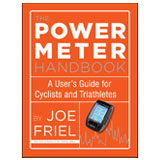
 which is a new eBook from Endurance Coach Joe Friel. In this new ebook, Joe lays out a simple formula that you can use to “ballpark” a student's FTP Functional Threshold Power (or your own for that matter) giving everyone a little more clarity about the first step in creating Power Training Zones. Do we need a new acronym here… PTZ?