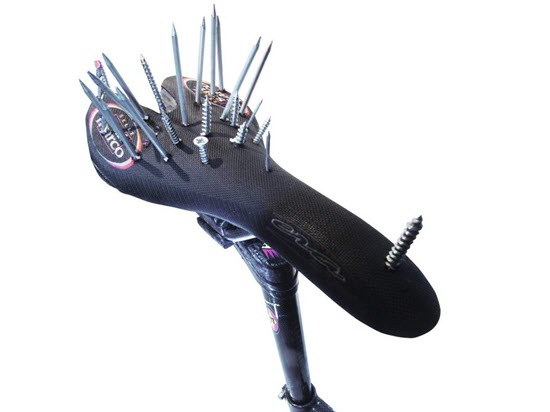
Sadly this is what some people see when they look at your Indoor Cycles. Image from www.bikeradar.com
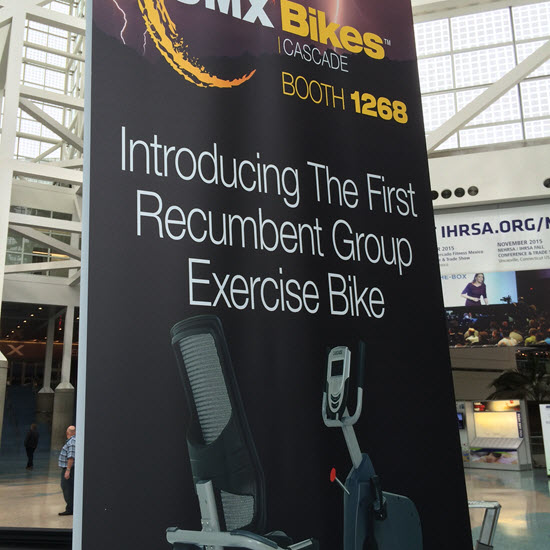
The big IHRSA convention starts tomorrow (can't wait) and as a follow up to my visit last year I wrote this article. If you visit that link and scroll down a bit, you'll see this image of a banner displayed at the entrance of the convention.
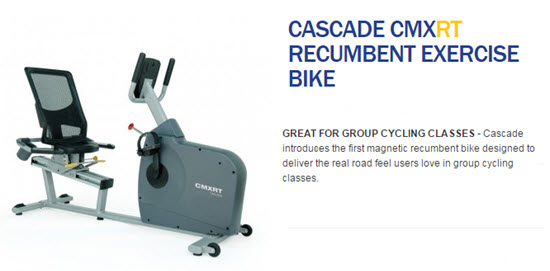
Recumbents in a Group Cycling class?
At the time I wrote:
This banner was the very first thing you saw walking into the LA convention center. My first impression was; “that’s dumb… who would ever want to ride a recumbent bicycle in an Indoor Cycling class?”
As I walked past this display I did a double take and then it hit me > there’s a huge population of people who are intimidated by the skinny, little seats on Indoor Cycles.
Obese/overweight people for starters and you can’t forget Seniors. Together they make up a sizable demographic that we are completely missing. They’re two groups who would really benefit from the comfort of riding on a recumbent, with its large seat and easy to step through design.
Despite all of the technological changes we've witnessed (Power Meters, Virtual Ride Videos & Display Training systems) + the massive increases in popularity (Thank You SoulCycle), Indoor Cycling is still failing to attract large segments of society who would really benefit from our classes.
I'll bet you can quickly describe the profiles of the typical people you do not see in your classes. They include:
Obese people of either gender.
Pregnant women.
People with a physical impairment or limitation – I group all the folks with back injuries here.
Seniors / Elderly living with everything negative that comes from aging.
People recovering from an injury.
Why is that? What's preventing (or discouraging) all the people in these groups from experiencing your awesome class? That skinny saddle for one thing. In the mind of someone 100lbs over weight, it may as well have sharp spikes sticking out… what about the person with a bad back? No way they'll even consider bending forward to reach those handlebars, no matter how high you adjust them. A common scourge of aging is limited mobility; “there's no way I could ever climb on that bicycle. My hips and knees just don't flex like they used to.”
It's the design, stupid.
The riding position of Indoor and outdoor cycles, while perfect for you and me, just doesn't appeal to the populations listed above. In fact there are many who would be terrified at the thought of mounting and riding the Indoor Cycles in your studio.
However they might be willing to join your class, if you offered them a recumbent to ride…
Again from last year's article I added;
I talked at length with the representative from Cascade Health & Fitness about helping them establish a few beta recumbent cycling locations. They are very motivated to meet with anyone who’s interested.
As it turned out there were some Instructors who were interested to experiment with adding a few recumbent Indoor Cycles to their classes. John Kennedy with Cascade Health and Fitness provided three studios each with a pair of recumbents and now, after about six months of use, we're hearing some favorable responses 🙂
Marietta Colberg Roberts is the Fitness Director at Old Town Hot Springs in Steamboat Springs CO. Listen as she describes her experiences bringing people into her classes, who otherwise wouldn't attend.
There's a new option for prospective Indoor Cycling Studio Owners to consider – purchasing a franchise license from a proven & profitable studio vs. creating a new business from scratch.
Studio owner Paul Harmeling with Full Psycle Indoor Cycling joins me to discuss the details of their new cycling studio franchise offering. I've really enjoyed the classes I've taken at his studios in Los Angles and Chicago – primarily because of how effectively those classes combined a non-traditional format, with solid performance based metrics.
Listen as Paul explains both the costs and benefits of starting and owning a Full Psycle Indoor Cycling Studio franchise – or the option for you to possibly re-brand an underperforming studio.
Paul is hosting a “discovery day” on March 23rd and 24th at his studios in LA for prospective Full Psycle franchisees. They'll be presenting the business opportunity, touring two of their studios and answering all of your questions. Please use the form below to pre-register.
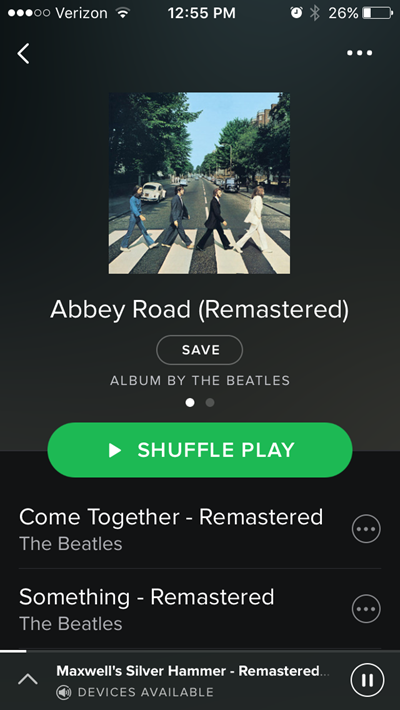
How cool is this? The complete catalog of Beatles music is now available on Spotify! Yes, it's also on iTunes Music, however Spotify continues to be my choice of a streaming service.
I cued up a long (but not) forgotten favorite: Maxwell's Silver Hammer
I'm setting Spotify to shuffle and am excited to hear what follows throughout the long weekend 🙂
Amy and I are hoping you and your family have a wonderful Christmas!
I've been in my share of Indoor Cycling studios where, by the end of class, the air is so thick with humidity that you can no longer see yourself in the mirrors. The room stinks and every breath feels like you're riding at 10,000 feet – your lungs starving for oxygen.
Are your experiences similar to mine?
I'm discovering that there's a very simple cause for poor/bad indoor air quality; insufficient ventilation that is the result of a HVAC (Heating,Ventilation & Air Conditioning) system that wasn't designed for the occupancy and activity levels of the rooms inhabitants.
Typically new small/boutique fitness studios are opening in retail spaces with HVAC designed for sedentary office workers – not 30 athletes riding below/@/above threshold for 60 minutes 🙁
The lead author of the study is PhD student Carla Alexandra Ramos from the University of Lisbon, Portugal. Carla agreed to join me to discuss her findings and offer suggestions to improving the quality indoor air in your club or studio on this addition of the Podcast.
Carla has published a number of research papers on indoor air polution that you can find them here at researchgate.net
Are you committed to the health & wellness of your participants?
Then shouldn't we all be doing something to improve the air we're breathing in class?
A good start would be completing this short survey on the quality of the air in your club or studio. Create your own user feedback survey
The music industry is figuring out that a great Indoor Cycling class is built on a fabulous playlist. Now they're making noises that they feel they should be charging fitness studios a higher rate for their commercial performance licenses…
By Andrew Sparkler, Vice President, Business Affairs & Operations
At this year’s SXSW, SoulCycle teamed up with Spotify and some of their favorite DJs at what was dubbed as “an epic music and movement experience.” While the popular fitness club’s trip to Austin underscores the importance of music to its business, it is unclear if the music business is spinning to the same beat.
SoulCycle, launched in 2006, is now filing for an IPO. Its business is primarily based on offering a high intensity spin class led by an instructor who also serves as a DJ. Take a class, glance at their website or read their S-1 filing and it is clear that music is perhaps as essential to their business as the bikes themselves.
SoulCycle’s SEC filing characterizes its product as a “carefully curated ‘cardio party’ [that] is fueled by the personalities of our instructors, their uniquely crafted musical playlists and the energy of the room” and says that “[w]ith inspirational coaching and high-energy music, SoulCycle was created to strengthen both the mind and the body.” Their instructors go as far as to claim that music “is the most important part of what we do at SoulCycle.”
Performing rights organizations like ASCAP and BMI are on constant lookout for ways to generate royalties for their songwriters and rights holders, but one publishing exec (and former ASCAP vp) argues they need to look harder — maybe even break a sweat — when dealing with your favorite fitness center.
In an op-ed for Medium, Downtown Publishing vp of business affairs Andrew Sparkler said PROs are dropping the proverbial medicine ball by classifying certain gyms under “general” licenses — the same umbrella as restaurants, bars and concert/sports venues — when music has become such an ubiquitous and personalized part of the workout experience.
To make his point, Sparkler cites the popular SoulCycle chain of spin classes, who in a recent SEC filing for an IPO called their product a “carefully curated ‘cardio party' [that] is fueled by the personalities of our instructors, their uniquely crafted musical playlists and the energy of the room.”
In its SEC filing, SoulCycle projects 2015 revenue to be around $140 million and said it hopes to expand to 250 locations (up from 36 in 2014) in the near future.
Sparkler figures each SoulCycle is currently bringing in about $3.1 million apiece for the company, but is only paying a tiny fraction of that to PROs under the “general” licenses for the music it plays. BMI, for example, charges fitness clubs a maximum of $2,123 per year per location — which would amount to .01 percent of what Sparkler estimates each SoulCycle makes. ASCAP also has a flat fee per location, but it slides depending on inflation.
According to his calculations, fitness center revenue increased over 104 percent in the U.S. between 2000 and 2014, and SoulCycle jumped 108 percent from 2012 to 2013 alone.
While noting that SoulCycle is doing nothing wrong — they’re simply paying the bills sent by PROs — it’s those rights groups that should tap into “this cultural phenomenon and increase their rates accordingly.”
So where does this lead? My guess is that ASCAP and BMI will be looking for ways to monetize (make more money) off the excitement surrounding SoulCycle/Indoor Cycling and the ease of music delivery from Spotify/iTunes Music = they'll be contacting clubs and studios with “revised” (read more expensive) license agreements.
As someone who prefers to maintain a level of fair exchange, I can't begrudge them for asking a higher rate than a sports bar or restaurant would pay. My only hope is that club/studio owners/managers recognise the value great music brings to our classes and not follow the LA Fitness path that pretends to save money by enforcing canned Muzac use by their Instructors 🙁
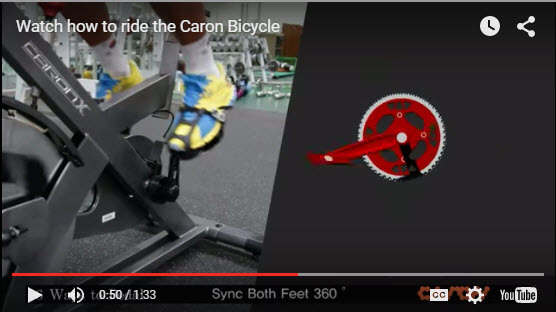
I just became aware of a new Indiegogo campaign for an innovative* method of pedaling a bicycle. Similar in functionality to a KrankCycle, the Caron Bicycle uses independent left/right crankarms that create 6 different pedalling movements.
They have their crankset installed on a conventional IC in this video. Watch and then tell me if you feel these added exercises would improve your class… or is it just a solution in search of a problem that doesn't really exist?
This animated video shows the various muscle activation from the different pedalling techniques.
*I'd be curious to know if Matrix has patents on the KrankCycle that would extend to a leg powered bicycle?
In case you haven't seen the KrankCycle in action:
Caron claims this on their campaign page:
Technology for CARON Bicycle is protected by patents worldwide, including US Pat. No. 7,544,139.
It might be cool to observe power output – especially during one legged work 🙂