ICI/PRO member Zack, a Cycling Fusion Master Instructor and routine contributor to The Weekly Ride on ICI/PRO, delivers a ride. THIS IS THE COMBINED FILE THAT INCLUDES THE MUSIC AND THE VOICE. IT IS NOT AVAILABLE ON ITUNES.
“I am very excited to be releasing an audio version with my ride this week. You get to really feel how i intended the song to be felt then. Notice the shorter than usual notes this week to really make you listen to the delivery. As always my rides can suit all riders and ill be sure to highlight that verbally. So listen up and enjoy!” Zack
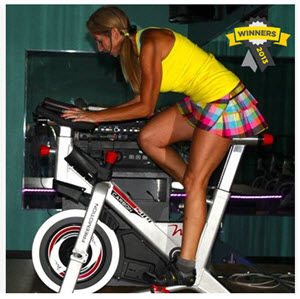
The “Barn” as it's affectionately known, is run by first time business owner / Instructor Karen Casler. Karen shares with us a number of the secrets of her success in the interview below:
Her total focus on customer service.
Using technology effectively.
Offering a diverse mix of classes to reach the broadest audience.
Recruiting and retaining instructors.
Some Instructors don't fit – what to do next…
Not all customers fit either…
Studio details:
CB Cyclebarn 372 Camino de Estrella San Clemente, CA 92672
(949)303-3112 Email: karen@cbcyclebarn.com
Indoor Cycles: FreeMotion S11.9 with Carbon belt drive
In class display system of rider performance metrics: Performance IQ
Listen to Karen's interview below or and have every new episode delivered straight to your portable device.
For years I have taught classes that were physically challenging to participants but when I started to bring more than the Physical Dimension of Wellness to my classes, MAGIC HAPPENED.
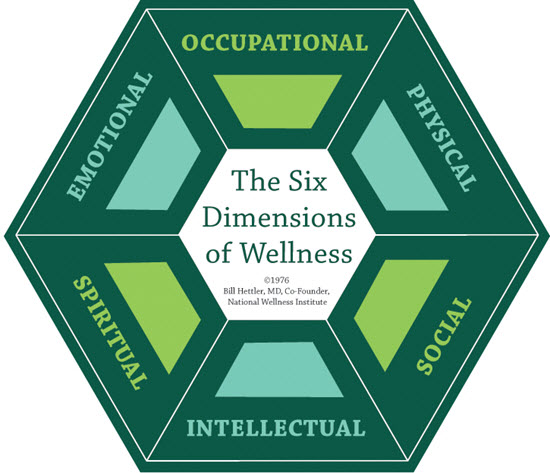
Dr. Bill Hettler, the co-founder of the National Wellness Institute (NWI), created a model named, The Six Dimensions of Wellness, in 1976. His idea of Wellness was not merely just the absence of disease, but living a life in which you become more aware and make decisions towards a more successful existence.
The dimensions from Dr. Hettler’s model are;
Physical
Social
Intellectual
Spiritual
Emotional
Occupational.
These 6 Dimensions when fully obtained can be thought of as a wheel, the more full your wheel is the better life may be, the less full the wheel is the harder life may be. Knowing this as a Fitness Professional, I made it a point to bring more than just the Physical Dimension to each of my classes and saw an improved mood and performance from members.
Below are a few ways to implement some of the Dimensions of Wellness into your classes and getting your participants to living more successful lives!
Social Wellness: I start each of my classes by having participants near one another introduce themselves and share their goals with each other, during the Warm-up. This really creates a sense of community and connection that might not be there unless you initiate it to happen.
The first time I tried this in class there was a silent pause and a look of hesitation of those in the room. I quickly followed up my request by sharing a stat that I read in Forbes Magazine, stating that those who share their goals with others, are 75% more likely to accomplish those goals than those who do not. This lit the fire and soon my classes were celebrating each other’s successes and helping hold each other accountable.
Physical Wellness: During the class it’s crucial you create a sense of connection with the body, whether it is Heart Rate, Perceived Exertion, or simple stating where and what they should be feeling. This help will get your participants engaged and understanding what’s happening PHYSICALLY rather than just going through the motions.
Whenever you get a chance during your classes, tell your participants exactly what they should be feeling so they know they are accomplishing the goals you have set.
For example, when I am teaching a Standing Attack Drill, I will prep the class by saying, “think of the word ATTACK, it’s strong, it’s powerful, and it’s aggressive! If you attack with those words in mind, your legs will start to warm, your breathing will become heavy, your heart rate will rise and when you finish this attack, you will be breathless and that much harder to beat! Let’s Roll!”
Your riders will now be able to connect with physical signs and feedback from their own bodies, which will be a great way to keep them engaged and working hard no matter if they are a beginner or a well-seasoned athlete.
Emotional Wellness: Towards the end of classes, I usually have a track where I give full control to the riders. I have a set directive for the drill and try to evoke an emotional attachment to their work effort and goals. I will ask again and again, “Is this the best you can do? Is this as hard as you can work, if so KEEP GOING, IF NOT MAKE THE CHANGE! BE BETTER!” I try to create a sense of pride and worthiness to their work and show them not just how PHYSICALLY strong they are but EMOTIONALLY.
This is all about song selection and coaching. The best example I can give that I use in my classes is the song, Breakn’ a Sweat by Skrillex & The Doors (Zedd Remix). The drill is simple; it’s a seated climb up the hill that scares you, the one you can BARLEY make it to the top of, the hill that when you get to the top, you feel victorious. The gear choices are up to you but the RPM’s must never go below 65. Ever rider will have a different idea of what this hill looks and feels like. It then becomes the instructor’s job to coach their team of riders up this hill and make them believe every second of the way that they can do it.
Spiritual Wellness: Finally at the end of class, during the Cool-Down, I always have participants turn to their neighbors and give them a good-job or some words of praise for their work. The Cool-Down to me has 2 parts to it, first to bring recovery and relief to the body through a controlled ride and stretches, and second to feel a strong sense of pride for the effort and work they did during class.
As soon as the last beat drops and the work part of the class is over, I always tell my class to turn to their neighbors and commend them for their effort during class. I also always make sure that the song or songs that I use for Cool-Down provide motivation or inspiration, like the song, I Lived, by One Republic. The lyrics talk about taking chances and, my personal favorite, OWNING EVERY SECOND! As the leader of your class, assure your team of riders that the effort they put in is one they should be proud of and feel good about.
Since the implementation of these techniques I have seen a steady retention and full classes. When you start to introduce these Dimensions into your classes, be authentic and go in wholeheartedly, and you too will see MAGIC HAPPEN!
Click image to join our Facebook Group - everyone encouraged to join!
This Podcast is was last published on Feb 23, 2010, I have updated it with our new Podcast host information and I am representing it now. I hope you enjoy it, Joey
As promised last week, here's my interview with Bill Pryor about his experiences starting his own Spinning Indoor Cycling Studio.
2014 UPDATE: This interview has launched multiple dozens of new Indoor Cycling Studios - is yours next?
The online payment and business management service we discuss is MindBody Online combined with a LiveEdit Integrated Website.
The experience of flow remains one of the least-understood phenomena in training. Yet it’s one of the richest, most memorable experiences we can help deliver to our students. Creating the circumstances though which students can experience flow in a training session is the topic of this article.
When I mention flow, people sometimes confuse it with being “in the zone”. That often relates to a brain release of beta-endorphin as a result of the activity. It’s a different phenomenon and not what I mean here. When you’re able to collapse what you’re doing down to a single moment and experience total immersion in it, you will feel flow. You’re completely involved in the ride for its own sake. There’s no ego, no awareness of time or distance. Every action follows seamlessly from the previous one.
You might be tired or in pain, but those things don’t distract you. You might not even notice them at times.
Recently, I led a five-hour ride at ICG® Academy in San Francisco. We rode an indoor 100 miles as a fall, base-building ride. The ten 30-minute segments were each built around a different 30-minute “Challenge” video on Myride®+. The plan was not to take any scheduled breaks or rest stops, and to roll from one world destination to the next. To be quick and efficient if anyone needed to get off the bike, but we were going to ride 100 miles. I calculated that, if the riders could average 85 rpm for the 5 hours, they would total 100 miles on their odometers.
I wanted to make this more challenging than an outdoor century.
There were 30-minute segments of pure hill climbing, where we would average 65-70 rpm. We had to compensate on the flat segments by turning fairly high rpm. That doesn’t sound hard until you understand that we were on belt-drive bikes with little or no momentum from the flywheel. 90+ rpm on a belt-drive bike takes a much bigger hit on your legs. We also had a heart-rate challenge. Early on, I had the participants commit to an average training heart rate that they would not go below.
I wasn’t making it hard for training purposes. I wanted to take everyone to a place where they could experience flow. This isn’t always possible in a 45- to 60-minute class.
After four hours, I looked around the room. Not one person was not experiencing flow. How did I know? I asked them if, at that time and for the first time that day, they felt as if they could ride for 10 hours. Everyone smiled and nodded. The discipline and fatigue created a state where they had to go beyond what they normally felt they could do. That’s when you experience flow: a state of non-reaction to fatigue and discomfort; a feeling of serenity; a loss of self-consciousness; a heightened awareness; a feeling of control over the situation and the outcome.
Once you’ve experienced true flow, you can feel it any time.
And that’s when you realize that flow is more than a beta-endorphin rush. You can sense it while walking on a busy street, winding your bike through traffic and stalled cars, in a conversation, in a business negotiation, in the supermarket shopping for food. Flow is working with what’s happening, as opposed to against it (see my previous post on Timing). On my road bike, I often notice that the farther away from home I go, the greater the feeling of flow. I simply stop thinking about things I have to do.
Psychologist Mihaly Csikszentmihalyi describes the mental state of flow as “being completely involved in an activity for its own sake. The ego falls away. Time flies. Every action, movement, and thought follows inevitably from the previous one, like playing jazz. Your whole being is involved, and you're using your skills to the utmost.”
Csikszentmihalyi spent time in an Italian prison camp in World War II. At age 16, he traveled to Switzerland, where he had the opportunity to listen to Carl Jung speak. The experience influenced him. He later explained, “As a child in the war, I'd seen something drastically wrong with how adults — the grown-ups I trusted — organized their thinking. I was trying to find a better system to order my life. Jung seemed to be trying to cope with some of the more positive aspects of human experience.”
Csikszentmihalyi's theory of flow has influenced people in a wide range of fields. Former U.S. President Bill Clinton and former British Prime Minister Tony Blair were reportedly influenced by his book Flow: The Psychology of Optimal Experience. Jimmy Johnson, former coach of the Dallas Cowboys, utilized Csikszentmihalyi’s ideas to prepare for the 1993 Super Bowl. His ideas have also influenced people in business, government, education and the arts.
Flow can occur in such diverse situations because it simply requires full immersion and involvement, energized focus, and enjoyment of the process. Clearly, that can apply to many activities.
Csikszentmihalyi calls flow “focused motivation”, deep focus on nothing but the activity. It works particularly well for cycling, brings consciousness to it, and can be created through the right combination of factors.

 ICI/PRO member Zack, a Cycling Fusion Master Instructor and routine contributor to The Weekly Ride on ICI/PRO, delivers a ride. THIS IS THE COMBINED FILE THAT INCLUDES THE MUSIC AND THE VOICE. IT IS NOT AVAILABLE ON ITUNES.