Are you teaching to the squeaky wheels?

Are you teaching to the squeaky wheels?

Howdy Fit Folk!

John Macgowan has so graciously invited me to contribute to the vast wealth of knowledge that is the ICI/PRO community--  woohoo!!  Lucky me. 🙂 To those of you that I had the great pleasure of meeting at the 2011 ICI/PRO conference, hello again!  To those of you that I have yet to meet, I look forward to many opportunities to open a dialog, discuss new concepts and create amazing ideas.

Speaking of ideas, I love good ones!  I know it's been a good day if I've had at least --what I consider-- one good idea. Generally speaking, my best ideas come from thought-provoking conversations with others.  With all the wonderful discussions I'm reading on the posts and forums, I'm bound to have a lot of good days moving forward.

So pull up a chair (if you dare!) and enter the head-space of Cam...  I wish you the best of luck!

Happy reading,

Cameron Chinatti

Director of Education for Stages Indoor Cycling

Here's what I've been thinking about today...[wlm_private 'PRO-Platinum|PRO-Monthly|PRO-Gratis|PRO-Seasonal|Platinum-trial|Monthly-trial|PRO-Military|30-Days-of-PRO|90 Day PRO|Stages-Instructor|Schwinn-Instructor|Instructor-Bonus|28 Day Challenge']
Cameron Chinatti Director of Education Stagesâ„¢ Indoor Cycling

Do you ever find yourself spending a disproportionate amount of your mental and perhaps physical energy trying to please or quell the “squeaky wheels”? Typically the squeaky wheels are your most loyal attendees. They sit in the front row, they have "their" special bike, they enjoy filling out lengthy complaint cards, and they dislike any of your substitute instructors. These are the squeaky wheels, always generating a low-level disturbance. More on these folks in a moment!

Recently, a friend of mine shared a link to a blog post titled "Don't Tell Me I'm Wasting My Time!"

Intrigued, I decided to check it out. The author of the post, Marjorie Clayman, is an expert in the field of enhancing the use of Social Media as it applies to the marketing world. Her frustration, as she puts it, "...is the selfishness that exists in the online world when it comes to covering topics that relate to beginners." As you'll see in her article there is a perfect parallel to the challenges that we all face as teachers of indoor cycling.

Now, back to those squeaky wheels!

We tend to teach specifically to please these individuals because we become acutely aware of their verbal tendencies. This makes it very challenging to recognize the needs of the 29 other individuals in the room. More importantly, we fail to see the hundreds if not thousands of potential participants that have never set foot in our classes.

As Marjorie puts it, "If you approach content on occasion from the perspective of someone who is brand spanking new to this space, you will get to meet people and help people whom you may not have met in any other way. What can be more valuable than that?"

So, are your squeaky wheels unconsciously (hopefully not consciously!) creating a "secret society" that makes the newcomer feel uninvited? How do we please them both? In the words of the great Bob Marley, "You can't please all the people all the time." Quite the conundrum, I know.

When you feel the pressures of oiling the squeaky wheels or as my friend and Schwinn Master Trainer Shannon Fable calls it, "teaching to the front-row frowners," take a personal inventory moment. Are you trying to please them to keep an angry person off your back or are you considering the needs of all?

In my time as a Co-Director of a group exercise schedule consisting of 120 classes per week, I fielded many squeaky wheel complaints.

Here are my Top 5 takeaways from my time spent with the dreaded comment cards box:

1. Never throw your team under the bus! It may be tempting to tell the class to fill out a comment card and cast a vote for you to have more classes on the schedule, but a) that's a bit self-serving and b) there are so many reasons why the schedule is created the way it is. Cost per head per instructor, school schedules, child care schedules, maintenance, special programming, weekly class balance, etc. Likewise, if you have a personal gripe about something at your facility, telling your participants to fill out a comment card in order to achieve your goal accomplishes one thing: The squeaky wheels learn that if they are loud enough, they'll get their way, even if it is not in the best interest of the program. This leads to my 2nd mantra...

2. Think big picture. Contrary to popular belief, the individuals that attend your classes are not actually your members. They belong to the facility and you belong to the program or programs that the facility offers. You represent a piece of a puzzle. The more you think of yourself and your fellow instructors in this manner, the more the participants will view you all as a cohesive unit. Amazingly, participant complaints become positive shout-outs when the instructors have a sense of solidarity amongst the team.

3. Stick to your guns. You and your fellow instructors are the resident experts at your facility and you are there to guide your entire class in a safe and effective workout. The squeaky wheels may think that it's cool when Jane Doe instructor takes their saddles away, but you as the professional have to step up sometimes and say what needs to be said. Of course, you must keep in mind that your position is really that of a customer service specialist. So, how can you easily stick to your guns and provide a top-notch customer-first experience? Enter the Bad News Sandwich.

4. Bad News Sandwich. Here's an example of a bad news sandwich.

"Hey Sally, I totally understand where you're coming from and I hear you. You're right. Riding an entire class without the seat is very challenging and it does make you "feel the burn." However, there are actually more effective ways to achieve the same end result and in an environment that is safe for everyone. Can you imagine how terrible it would be if someone were to fall on the seat post during our class?! I'm sure I would lose my job and I would feel awful. After all, my job is to help people achieve optimal health, not promote injury. I know you understand the predicament I'm in; I have to look after everyone's well being -- including yours. Let's discuss a plan that will work around your fitness goals. I'm sure we can come up with something that will challenge you even more."

Okay, so that was a bit on the cheesy role-play side of things, but I'm sure you've had similar conversations before. Just remember: Bad News Sandwich = Recognition of issue or compliment (Good News) + Addressing the issue (Bad News) + Recognition of issue (Good News). You can't go wrong with the Bad News Sandwich. Or ending emails with a smiley. 🙂

5. Equal attention for all. Some people may disagree with me on this one, but no one at your facility should be valued higher than anyone else. This goes for members and instructors! Even if a member has been paying dues for 20 years, the new person that just joined or just attended class for the first time should get the same kind of attention and treatment. Likewise, an instructor that packs the room and has been teaching for years is as much a part of the team as the newer instructor that supports a different set of participants (and thus increasing the number of unique users). The minute a hierarchy starts to form, problems arise. Suffice it to say, everyone plays an equally important role in developing a top-notch indoor cycling program.

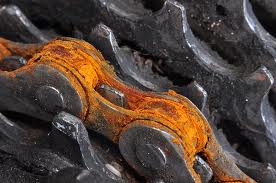
Think about your classes this week whether indoor cycling, group strength, step, etc. Ask yourself: Am I teaching to the person that looks miserable or am I teaching to everyone? Am I dividing my attention equally amongst my attendees?  Don't overdo it when it comes to greasing that squeaky wheel-- you never know when the chain might fall off.[/wlm_private]

Please share with the ICI/Pro community: How have you been addressing the "squeaky wheel" situations? Any good stories or ideas to share?

Originally posted 2011-11-10 13:22:22.

Are you teaching to the squeaky wheels?

Power Is ‘Boring’!

Of course, those of us at Stages Indoor Cycling believe the opposite to be true, (made you look, didn't I!) but we hear this all the time from people that haven't experienced a power-filled class the way it was meant to be. There exists an assumption that indoor cycling is moving away from fun and silently drifting towards a sterile, personality vacuum filled with muzak and boredom. Fortunately, it doesn't take long to convince people otherwise… just a content-rich, fun-filled ride.

In this two-part exploratory look at training with reliable metrics, we'll first discuss HOW to infuse data monitoring in your classes while keeping things fun and interesting. Then in Part 2 we will dive deeper into the physiological benefits and even the community benefits that these new tools can provide. For those of you that don't yet have immediate access to indoor cycles with data providing consoles, I think you'll find that the tips below apply to you as well.

To be fully transparent, I am the Director of Education for Stages Indoor Cycling and Foundation Fitness. Our team is responsible for the research and development behind the FreeMotion Fitness S11 series of indoor cycling bikes and power consoles. I will be approaching this specifically from the Stages Indoor Cycling methodology and in Part II will occasionally be referencing features on the FreeMotion power console.

I'm all about Super-7 lists, so… Here are my Super-7 ways to keep Power-Based classes interesting.

1.) Establish a goal and tell them why:  Talking about data for the sake of talking WILL get boring really fast. Choose one particular metric to discuss because it will aid your participants in reaching– as I like to call them– “micro-goals.” Micro-goals can be anything, for example:
“For the next 5 minutes your goal is to give me a thumbs-up at the top of each minute. No thumbs-up means you're suffering and this 5 minute segment is about remaining in a place of comfortable, sustainable effort.”

Based on that particular micro-goal, the only thing they should be concerned with on the console is the TIME. They were not asked to base their efforts on ANYTHING other than a perceived effort. And that's okay!! Which leads us to the next point…

2.) Leave the kitchen sink at home:  It's very tempting to talk about all the metrics on the console…ALL AT ONCE! Remember, no one is pressuring you to constantly speak about the numbers- this is unnecessary! In fact, it is rare that I ever focus on more than 2 pieces of data in a typical indoor cycling class, because people get easily overwhelmed. We have to warm them up to these concepts over time. Pick something that supports your micro-goal and stick to it.

3.) Luv ya, Don't ever change!:  Did that just remind you of your middle school yearbook signatures? Well, it has merit when it comes to teaching- especially if you're already successful! Don't forget to be YOU! Not only is throwing in the kitchen sink overwhelming for your riders, but it has another dreaded side-effect: instructors forget to be themselves and do what they do best. Don't neglect your charismatic side! Tell them that funny story, sing along with your music (if you dare!), ask trivia questions… Basically continue doing the things that make you the unique leader that you were obviously born to be. The data at your disposal can never replace you: it simply increases your odds for more effective communication.

4.) Reduce the filler:  60 minutes is a lot of time to talk about… nothing. With quality information we can now reduce some of the fillers that creep into indoor cycling classes. I promise you, people won't mind if you reduce the number of times you…

  • Count backwards from 8. (It ain't Sesame Street folks!)
  • “Woohoo!” (That gets old quickly)
  • “How we doing?!” (This come across as a cheap way to get them to respond. It only works once or twice before they tune you out.)
  • “Give me more!” (More what?)

Don't get me wrong, there's nothing inherently bad about these group exercise idioms, but are they really motivating people the tenth time you've said them? Probably not. Once you reduce the fluff, you give yourself valuable time to discuss the task at hand, ask them work-inducing questions and give them a reason to want to achieve those micro-goals.

5.) Lather, Rinse, Repeat: There's no easier way to feel successful on an indoor cycling bike that measures power than to have multiple chances to reach your goal. Near the conclusion of a stage or interval, ask your riders to look at one piece of information and remember it. Give them ample recovery time and let them know that they get another shot at improving upon last time's performance. For instance,
“Get ready to rumble folks because we have a 5 minute stage coming your way, but don't fret; it's nothing that you can't handle, and I'll guide you the whole way. Towards the end of your 5 minutes, before we press the Stage button, I want you to focus on your total distance for this stage.” 5 minutes later… “How did you do? Do you remember the distance you covered? Great, because we get to do that exact same 5-minute stage again. No surprises from me! However, this time I want you to find a way to go just a little further. Could you increase your distance by 1/10 of a mile? Even more? Let's find out!”

Seriously, nothing is more motivating then knowing beyond a shadow of a doubt that you are capable of besting yourself!

6) Games, games and more games!: We've all done games in our classes: front row busts a gut for 30 seconds while everyone else is recovering, then the 2nd row goes, then the 3rd row…etc, but in order to truly be playing a game there must be an objective and there has to be a way to win or at least achieve said objective. The objectivity piece was always missing prior to bikes with consoles. Let the games begin! We'll do an entire post on games in the near future, but for a few examples of games you can check out the BIG RIDE that Pam Benchley and I taught on Saturday night of the ICI/Pro conference. Just remember, competition can get overly fierce very quickly amongst your participants. For this reason, consider integrating games as team efforts first.

7) Deliver Measurable Progessâ„¢: For those of you familiar with the Stages Indoor Cycling method, it will come as no surprise that I really, I mean REALLY stand behind this mantra. At Stages Indoor Cycling we Deliver Measurable Progress via Benchmarks. By assessing where you are today, you now have a means by which to achieve where you want to be 6-weeks or 12-weeks down the road. Functional Threshold Heart Rate testing is wonderful, but what if you could compare that alongside your ability to generate Power at Threshold?! Surprisingly it's very doable even in a large group setting. Of course, FTP/FTHR testing isn't for the Day-1 newbie off the street, but there are many other initial assessments that we can provide our participants that will show them where they are today and what to shoot for tomorrow.

Once benchmark assessments become a regular part of your programming, magic takes place! Participants start planning their workouts around these benchmarks as if they were training for an event, even if participating in a race or organized outdoor event has no appeal to them personally.

This all boils down to the “Susan and Bob” conversation from a few weeks back. It's true people come to your classes for a plethora of reasons, but I think it's safe to say that NO ONE would be disappointed if by coming to your classes they were able to do more work with less effort, endure more physically and emotionally, travel farther and go faster. If this helps them achieve their weight-related goals, what a wonderful side effect! If this breathes new life into indoor cycling as we know it – PRICELESS! And that, my friends, is far from BORING.

I'm so excited for Part 2! Your feedback regarding the Super-7 reasons above will dictate the direction of ‘Power Is Boring: Part 2.” Think of it as a “Choose Your Own Adventure” novel! Speak now or forever ride in silence. 😉

Originally posted 2011-12-21 04:00:19.

The Power of the Pedal Stroke – Anatomical View

The Power of the Pedal Stroke – Anatomical View

The Power of the Pedal Stroke – Anatomical View

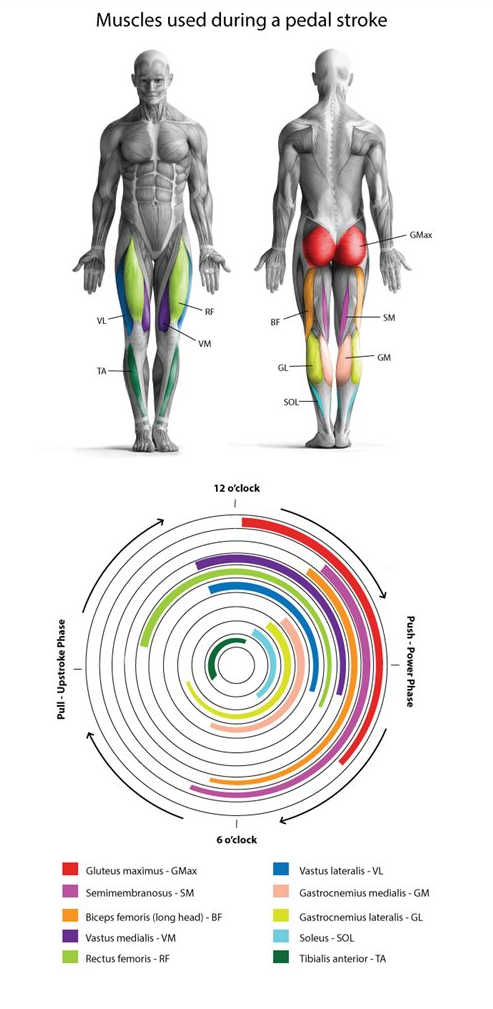
For a road cyclist pedaling while in the saddle, most of the power happens between the 12 o’clock and 5 o’clock position of the pedal stroke. This is when a majority of the primary muscles are activated. Hip and knee extension, along with hip flexion, are the main movements of a pedal stroke. Between the 6 and 12 o’clock position in the pedal revolution, there is some knee flexion to help bring the pedal back to the top, but the downward force being placed on the opposite pedal by the opposite leg is generally far greater. Lessening this negative (downward) force through the back half of the pedal stroke is accomplished through the action of the hamstrings and calves at the bottom of the stroke pulling the foot backward, to the hip flexors at the top, lifting the foot and knee back to the 12 o’clock position.

image
The power phase happens while the hip and knee extend, pressing downward on the pedal. This action starts with a combination of the gluteus and quadriceps muscles but then is joined by the hamstrings and calf muscles a quarter ways through the revolution. This shows the need for equally strong hamstrings, hips, and quadriceps. These muscles are some of the largest in the body and are the primary power producers in a pedal revolution.

A Brief on Pedal Torque

Is there such a thing as the perfect pedaling technique? And does anyone have it? The answer to both of these questions is probably ‘no' but the answer to ‘is there good technique?' is definitely ‘yes' and answering the question ‘what's the difference between good and bad technique?' is the objective of this article.

Let's consider the following four scenarios:

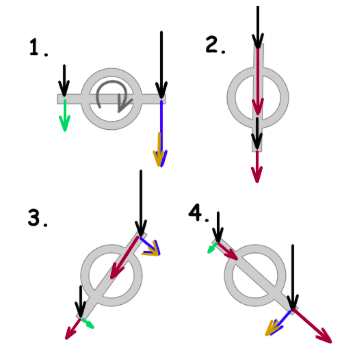
1. Cranks at 3 o'clock (horizontal). Pressing down on the front pedal will cause the cranks to rotate in the direction that we want them to go. Pressing down on the rear pedal will cause the cranks to turn in the wrong direction. If the force on the front pedal (lever) is greater than the force on the rear (lever), then we'll get some rotation in the right direction. Any downward force on the rear pedal has to be overcome by downward force on the front pedal before any effort is used to propel the bike forward. Let's keep that in mind.

2. Cranks at 6 o'clock (vertical). Theoretically pressing down on the top pedal won't cause the cranks to rotate but in practice, it will simply because the position is unstable. Whether it causes them to rotate forward (to 3) or backward is anyone's guess. Pressing down on the lower pedal will not cause the cranks to rotate – in fact, it will stop them. In addition to being 100% ineffective, a straight downward force at when pedals are positioned at 6 and 12 o’clock is also biomechanically stressful, and over time may result in pain or injury to the knee joint.

3. Cranks between 1 and 2 o'clock. Pressing down on the top pedal will cause the cranks to rotate in the direction we want them to go – but only a small part of the force will contribute to the rotation. The rest of the force is wasted. Pressing down on the bottom pedal will cause the cranks to rotate in the wrong direction – but again with only part of the force. As long as the force on the top pedal is greater than the one on the bottom rotation will be in the right direction.

4. Cranks between 4 and 5 o'clock. Similarly to 3, a proportion of the downward force applied to each pedal will affect the rotation, the remainder will have no effect.

If we look at the diagram below, we can understand why bad pedaling works (i.e. why anyone can ride a bike – or a stationary one at least). Pressing harder on one pedal than the other will result in the pedals turning in one direction or the other. It's easy to apply a large force to the front pedal through the 3 o'clock position, enough to turn the pedals to 6 o'clock. There will be enough momentum in the legs to get past the vertical after which it's easy to exert a larger downward force on the upper crank than the lower one. The momentum (energy applied to the pedal) ensures that the rotation direction remains the same.

Screen Shot 2016-09-11 at 3.49.51 PM


In the diagrams above the direction of travel is left to right (as with the animations below). The black arrow represents applied force. The colored arrows show the applied force resolved radially (in red) and tangentially (in blue and green).

Bad pedaling works because the blue arrows are longer than the green ones. The effective contribution is blue minus green, I've shown that in amber. The amber arrows represent the ‘torque'.

Bad pedaling is bad because all of the force represented by the red and green arrows is wasted.

The aim of good pedaling is to modify the direction of the black force to minimize radial forces and maximize torque.

The Ankling Technique

Deriving from the above explanation of Torque, we can conclude that the main application of force to the pedals is in the downward thrust which comes naturally to almost everyone. The technique of drawing force across the bottom of the revolution arc and upwards to the start of the downward thrust is called ankling. The action involves a lowering of the heel as the downward force of the pedals takes place, and a lifting of the heel as the pedal begins the upward movement of its revolution. Think of scraping mud off the bottom of your shoe at the bottom of the pedal stroke. Ankling enables the application of constant pressure upon the pedals throughout the revolution eliminating the dead spots at the upper and lower points. This pedal stroke requires less peak muscle contraction which spreads the load over the muscles (engaging more calf muscles) and promotes a smooth efficient style that allows the production of more power with less difficulty.

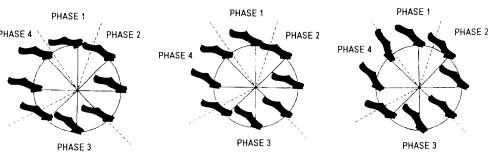
Different cyclists will vary in the position of their heel while pedaling. Depending on one's flexibility and basic biomechanics, some of us will use a high heel action and some may use a low heel action. Heel height also depends on one's cadence (see illustration bellow). One may end up injured if an attempt to change the basic heel height of the pedal stroke if it doesn’t feel natural. One should try to develop ankling within the constraints of their basic pedaling movement. A proper bike fit along with cleat positioning goes hand in hand with this and is well worth the money to optimize your pedal stroke. Because good anklng technique is dependent on proper foot placement on the pedal, it is important to remind indoor riders who do not use cleated shoes to place the BALL of the foot on the pedal before tightening the toe straps. Placing one’s foot all the way to the end of the cage can result in the arch of the foot being on the pedal and restrict ankle movement.

The faster one's cadence, the more difficult and unnecessary it will be to use the ankling technique. The downwards force on the pedals and the muscle contraction will be so quick in a sprint at 150 RPM that one won’t be able to do this effectively. However, we can observe that track sprinters will often use a high heel action when in a full sprint. Indoor riders are notorious for riding with an overly exaggerated “toe down” style, especially at high RPMs. However, unlike the outdoor sprinter, this style indoor usually reveals an inability of the rider to “keep up” with the momentum of the weighted flywheel.

Road cyclists often use a low heel action resulting from their cleat being positioned past the ball of the foot (towards the toe). The low heel technique is important in hill climbing while sitting back on the saddle and one can notice an improvement in climbing abilities upon mastering this technique. (note: keep in mind this technique most likely does NOT apply indoors, as simulation of a “hill” is simply an increase in resistance; there is no real incline to lift the front portion of the bike above the rear).

See illustration below for an example on heel action at different cadences (pay more attention to the pedal angle than the heel angle in these pictures. The heel appears to be higher than I would suggest. This will depend on the flexibility of the rider).

image-1

Understanding the role of the ankle joint is quite important; however cueing indoor riders about foot position (i.e., “point your toes,” or lift your toes up”, etc.) are NOT likely to result in better ankling technique, or more effective force generation. Instead, remind riders to keep their ankle “loose and flexible”, while seeking to apply effective force to the pedals with cues that describe the circular nature of the pedal stroke and the role of the primary force producers in the pedal stroke. This will encourage good ankling to occur naturally.

Co-authored by Stages Master Educators Paulo Stroud-Baranda and Lenita Anthony