
by John | Sep 6, 2015 | Best Practices, Big Box Instructor, Featured Instructor, Fitness Club and Studio Air Quality, Health and Wellness, Your Fitness Business

This might be a perfect space for a 25 bike cycling studio – except the HVAC system was designed to supply air for a three person travel agency.
I'm learning that many small/boutique fitness studios are located in spaces designed as offices or small retailers. Businesses with a handful of sedentary people, sitting at a desk. The building's HVAC system isn't typically optimised for all the CO2 and moisture created by a room full of heavy breathing participants = poor air quality, especially at the end of class 🙁
Does this describe your studio? Should we be looking for solutions to improve your studio's air quality, while keeping energy costs to a minimum?
UPDATE: I have this interview about studio air quality issues with a PhD student researching solutions to indoor air pollution you may enjoy.
We've created this short survey, or you'll find it below – it's only 11 questions – so please take a moment and complete it.
Create your own user feedback survey

by John | Aug 12, 2015 | iTunes, KEEPING IT FUN, Music, Spotify, Your Fitness Business

The music industry is figuring out that a great Indoor Cycling class is built on a fabulous playlist. Now they're making noises that they feel they should be charging fitness studios a higher rate for their commercial performance licenses…
By Andrew Sparkler, Vice President, Business Affairs & Operations
At this year’s SXSW, SoulCycle teamed up with Spotify and some of their favorite DJs at what was dubbed as “an epic music and movement experience.” While the popular fitness club’s trip to Austin underscores the importance of music to its business, it is unclear if the music business is spinning to the same beat.
SoulCycle, launched in 2006, is now filing for an IPO. Its business is primarily based on offering a high intensity spin class led by an instructor who also serves as a DJ. Take a class, glance at their website or read their S-1 filing and it is clear that music is perhaps as essential to their business as the bikes themselves.
SoulCycle’s SEC filing characterizes its product as a “carefully curated ‘cardio party’ [that] is fueled by the personalities of our instructors, their uniquely crafted musical playlists and the energy of the room” and says that “[w]ith inspirational coaching and high-energy music, SoulCycle was created to strengthen both the mind and the body.” Their instructors go as far as to claim that music “is the most important part of what we do at SoulCycle.”
Performing rights organizations like ASCAP and BMI are on constant lookout for ways to generate royalties for their songwriters and rights holders, but one publishing exec (and former ASCAP vp) argues they need to look harder — maybe even break a sweat — when dealing with your favorite fitness center.
In an op-ed for Medium, Downtown Publishing vp of business affairs Andrew Sparkler said PROs are dropping the proverbial medicine ball by classifying certain gyms under “general” licenses — the same umbrella as restaurants, bars and concert/sports venues — when music has become such an ubiquitous and personalized part of the workout experience.
To make his point, Sparkler cites the popular SoulCycle chain of spin classes, who in a recent SEC filing for an IPO called their product a “carefully curated ‘cardio party' [that] is fueled by the personalities of our instructors, their uniquely crafted musical playlists and the energy of the room.”
In its SEC filing, SoulCycle projects 2015 revenue to be around $140 million and said it hopes to expand to 250 locations (up from 36 in 2014) in the near future.
Sparkler figures each SoulCycle is currently bringing in about $3.1 million apiece for the company, but is only paying a tiny fraction of that to PROs under the “general” licenses for the music it plays. BMI, for example, charges fitness clubs a maximum of $2,123 per year per location — which would amount to .01 percent of what Sparkler estimates each SoulCycle makes. ASCAP also has a flat fee per location, but it slides depending on inflation.
According to his calculations, fitness center revenue increased over 104 percent in the U.S. between 2000 and 2014, and SoulCycle jumped 108 percent from 2012 to 2013 alone.
While noting that SoulCycle is doing nothing wrong — they’re simply paying the bills sent by PROs — it’s those rights groups that should tap into “this cultural phenomenon and increase their rates accordingly.”
So where does this lead? My guess is that ASCAP and BMI will be looking for ways to monetize (make more money) off the excitement surrounding SoulCycle/Indoor Cycling and the ease of music delivery from Spotify/iTunes Music = they'll be contacting clubs and studios with “revised” (read more expensive) license agreements.
As someone who prefers to maintain a level of fair exchange, I can't begrudge them for asking a higher rate than a sports bar or restaurant would pay. My only hope is that club/studio owners/managers recognise the value great music brings to our classes and not follow the LA Fitness path that pretends to save money by enforcing canned Muzac use by their Instructors 🙁
Your thoughts?

by John | Jul 19, 2015 | Engage Your Students, Instructor Training, KEEPING IT FUN, Your Fitness Business

Image from www.nytimes.com/
Understanding WHY something “is” the way it “is” is fascinating to me. Outdoor road riders tend to be predominantly men… and Indoor Cycling participants are far and away women. So why is that?
OK, I already know why – outdoor cycling has an element of risk that's more acceptable to men, than women. My wife Amy is much more comfortable at speed on the back of our tandem, than she would be piloting her own bike. And it's not just me who's figured this out. Citi Bike has too.
When Citi Bike arrived here, it promised to spread the benefits of biking to the masses, an uphill push in a city where large potholes, heedless yellow cabs and darting pedestrians can make riding on busy streets seem like an activity best left for daring messengers.
But two years in, Citi Bike’s inroads have been decidedly uneven, with men far outnumbering women in using the bike-sharing system. A little time on Eighth Avenue on a recent morning, watching the stream of Citi Bike riders heading north past Pennsylvania Station and toward Times Square, was instructive. Man after man pedaled by, some in suits, others in jeans. From time to time, a woman on a Citi Bike rode by.
Reasonable (and observant) people already understood this, so I'm not sure why this is even a question. Men are by nature more reckless and more tolerant/accepting of risk than women.
“Women are early indicators of a successful bike system,” said Sarah M. Kaufman, the assistant director for technology programming at the Rudin Center for Transportation at New York University and an author of a new report on Citi Bike. “If you have more women riders, that means it’s convenient and safe.”
Officials at Citi Bike say they are attracting a greater share of women than the citywide rate of female cyclists – about 21 percent, according to a study from Hunter College. The bike-sharing service is looking at more than just the safety concerns that seem to nag more at women than men, who insurance actuaries long ago concluded are more likely to engage in risky behavior, such as not wearing a bike helmet.
Anyone who's insured young drivers (like me), are thankful they had daughters – not sons – when they get their insurance bill. Young women are less likely to do stupid/risky stuff in a car = they crash less often = they're less of an insurance risk.
This isn't rocket science here people. And yet I'm continuously seeing instructors and studios focusing their marketing at men… who ride outside… and will probably never set foot in your class. While successful (read profitable) fitness businesses like SoulCycle cater almost exclusively to women.
My advice to Citi Bike is to accept the reality here (women don't feel safe riding in traffic) and quit coming up with stupid non issues like not having a place for their kids.
And there are other perceived obstacles, not unique to women but more commonly cited by them: They cannot ride with small children. They think the cost – $149 for an annual membership or $9.95 for a day pass – is too steep, especially on top of a subway pass. And they worry about arriving at work sweaty.
“I wouldn’t want to be gross the whole day,” said Maeve McCarthy, 21, an intern at an interior design firm in Manhattan, who has not tried Citi Bike but said she would consider taking a nice ride through Central Park, if not commuting to work from Brooklyn.
Ms. McCarthy just doesn't want to smell sweaty the rest of the day… and I don't want to sit next to her if she does 🙁
There's an old saying; “you can't fight city hall”. It points to the futility of trying to change something that just ain't going to change… no matter how hard you wish it to change.
by John | Jun 27, 2015 | Instructor Resources, Latest News, Your Fitness Business
SoulCycle is preparing to go public with an IPO later this year.
Indoor cycling fitness chain SoulCycle Holdings LLC has hired investment banks for a U.S. initial public offering expected to come later this year, according to people familiar with the matter.
SoulCycle's IPO preparations underscore the growing popularity of boutique chains that cater to specific workout methods such as spinning, yoga and barre. The chains, which often charge per class rather than a monthly membership fee, have been taking market share from traditional big-box gyms.
SoulCycle has more than 42 U.S. locations, and plans to open 50 to 60 studios worldwide by next year, according to its website.
So would you purchase shares in SoulCycle?
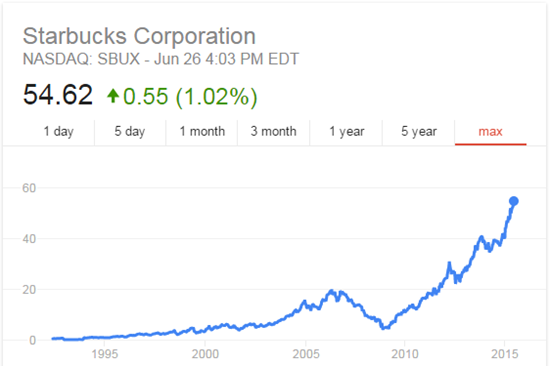
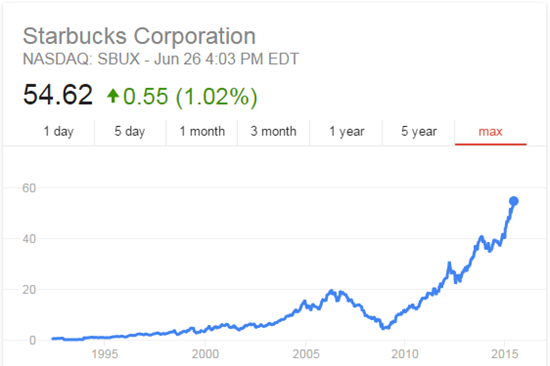
After watching SoulCycle for years and seeing what a money machine they've become, I'm thinking I will. In fact I'm going to compare them to Starbucks and predict that SoulCycle will make investors a lot of money for the same reason Starbucks has been such a solid investment* > both their customers admit to being addicted to their products.
WHAT IT'S LIKE TO BE $16,000-A-YEAR ADDICTED TO BOUTIQUE FITNESS
A few weeks ago, while mindlessly trolling Instagram, something stopped me in my tracks: My friend from high school, Michaela Miller, who is currently working on a master's degree in public administration from NYU, had screenshot her upcoming SoulCycle schedule. “475 rides in 365,” she boasted of her “SOULiversary,” the birthday of her inaugural class. “Stepping it up with an even STRONGER starting lineup.” After gawking at the fact that she was planning a Wednesday triple–as in three, 45-minute classes in a single day–I shamelessly pulled up my calculator app. Some quick math revealed that my friend's dedication to cult-loved $34 spin sessions (before the price of shoe rentals and water) could easily run her $16,000 in a single year.
Despite all the negativeness directed at SoulCycle, they have shown the rest of the Indoor Cycling industry how to be successful. Not to mention positively changing the lives of thousands of participants…
For Miller, the benefits of being die-hard include daily clear-headedness, a built-in support system, and being held accountable. “I'm definitely less flaky as a person,” she says of committing to ten or more classes a week all over Manhattan, New Jersey, and Brooklyn. “I used to be notorious for missing trains, planes, parties, dinners, but since I started doing Soul, I'm early to things. I show up on time. It sounds silly, because we all should do that, but I was late a lot.” To minimize the financial impact (she says she's only on the hook for half of the classes she takes), Miller buys packages and nabs free rides via a group of instructors who now make up her inner circle. She even gave up a pack-a-day habit. “I would never have quit smoking if it wasn't for Soul,” she says with a laugh. “It was between SoulCycle and the cigarettes.”
NOTE: This is not intended as financial advice, only to alert you to this future opportunity.
by John | Jun 23, 2015 | Instructor Training, Your Fitness Business

I'm a huge fan of Amazon Prime because it makes me feel super productive and efficient. When I realise I need something, rather then adding the item to a shopping list (I'll probably forget to bring to the store), I take 30 seconds to order it on Amazon. Then I hear my dog Maxx bark when the UPS guy delivers the package two days later.
Now they're offering business owners a similar service called Amazon Business. Similar that it offers free two day shipping… different because it's free to qualified business owners!
About Amazon Business
Amazon Business is a new marketplace on Amazon .com that gives businesses of all sizes access to hundreds of millions of products in a shopping experience built for businesses. New features include FREE Two-Day Shipping on orders of $49 or more, business-pricing on select items, multi-user accounts, and approval workflows. Businesses can now shop on Amazon and use purchase orders to improve recordkeeping. Amazon Business also makes it easy for businesses to compare multiple offers on products, and is integrated and certified for punchout with leading purchasing systems.
You can apply here for your Amazon Business account. To qualify you need a Fed ID number, which you should already have as a business owner.
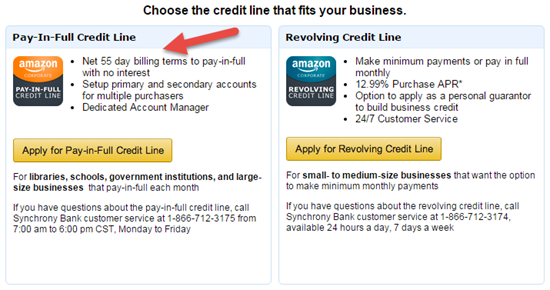
There's options to establish a line of credit directly with Amazon. Your Amex card doesn't offer 55 day net billing… but Amazon does 🙂 Why can they offer this “free” money? You're aware that credit card companies charge fees, right? By bypassing Amex, MC or Visa, Amazon's costs are lower = they'll pass on the savings to you! If you prefer to pay over time the revolving rate looks competitive to any other business card and Amazon doesn't charge any annual fees.

So, what can you purchase? Just about anything, except they don't appear to have actual IC repair parts. Here's a few that came to mind.

by Karen Casler | Jun 8, 2015 | Giving Back To Your Community, KEEPING IT FUN, Your Fitness Business

Karen & Co. at The Magic Castle
The Indoor Cycling Studio Supplier Trifecta
As an Indoor Cycling studio owner or manager, you want your supplier relationships to be a WIN/WIN/WIN where your supplier wins…your customer wins…and you win.
Find the right retail supplier and you add value to the overall customer experience and to your bottom line.
On the flip side, choosing a supplier in haste can cost your studio time and money.
Poor decisions risk creating a false brand illusion, detract from your customer’s overall experience, are expensive lessons to learn.
A new Indoor Cycling studio owner or manager lacking in retail experience is left to rely on trial and error and the test of time to determine what retail products work or don’t work. Social media advice and google searches may help you determine what works in other studios … but there is no guarantee that what works for one will work for the next.
So, once you have narrowed down your chooses of suppliers, think about choosing a partner instead of a supplier. Stay focused on WHY you offer a specific retail product and consider the following…
1. CHOOSE A BRAND NOT A PRODUCT
The way you treat a product is different than how you treat a brand
A product is something. A brand stands for something
How you feel about a brand trickles down to your customer
Products come and go. A brand is here to stay
…very similar to how one feels about a job vs. a career
2. KNOW THE PEOPLE BEHIND THE BRAND
Passion drives success
You're passionate about your small business so choose partners with passion
…FUN Fact:smart business people surround themselves with like-minded people
3. CONSULT YOUR MISSION STATEMENT
Your mission statement is the foundation of every decision you make
…if you don't have a mission statement GET ONE
4. CAN YOU WRITE A TESTIMONIAL?
A brand that parallels and magnifies your own brand is easy to write about
A brand for which words are hard to find…may need to be reconsidered and
…go back to questions 1, 2, & 3
Think of your suppliers as partners and watch the WIN/WIN/WIN MAGIC unfold.
Here’s WHY…
A supplier who is also a partner amplifies brand awareness for both brands.
A supplier who is also a partner adds value to the overall customer experience.
A supplier who is also a partner makes you and your partner $$$.
A supplier who is also a partner … well … that’s KEEPING IT FUN for everyone!!!
YOUR CUSTOMER WINS. YOUR SUPPLIER WINS. YOU WIN.
EVERYONE WINS.
Additional FUN Fact:
The article … WIN/WIN/WIN, was inspired by a testimonial I wrote for Violet Love Headbands. While writing the testimonial, it dawned on me that the reason Violet Love Headbands are so successful at our studio is because of the partnership that I share with the founder/owner, Rebecca Michaels. It's not the product that's amazing, it's the people behind the product. KC
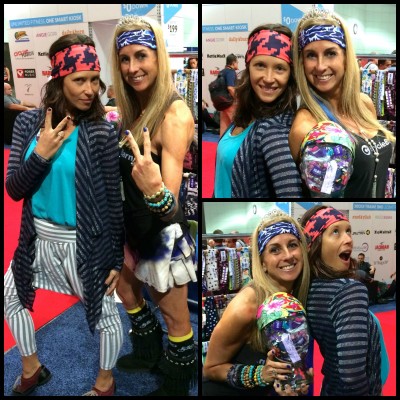
Rebecca and Karen share a business philosophy of #keepingitfun
Email info@totalstockroom.com to inquire about wholesale pricing on Violet Love Headbands and product. Violet Love by Rebecca Michaels