Do you have an elevator pitch? Mine has changed several times — all necessary. But this post is actually about the emotions that sugar generates.
I began with a standard 30-second elevator pitch. Remember that version? It was the original length years ago, but now almost nobody will listen that long.
I shortened mine to 15 seconds.
Yet people went glassy-eyed when I said “psychoactive nutrition,” even though I immediately defined it as “how foods affect brain chemistry.”[wlm_private ‘PRO-Platinum|PRO-Monthly|PRO-Gratis|PRO-Seasonal|Platinum-trial|Monthly-trial|PRO-Military|30-Days-of-PRO|90 Day PRO|Stages-Instructor|Schwinn-Instructor|Instructor-Bonus|28 Day Challenge']
Still, brain chemistry interested them, so I changed the pitch again. I started with ‘food and brain chemistry’ and left out ‘psychoactive nutrition.’
Then I heard great recommendations from speakers and marketing pros on the perfect pitch:
– Don’t explain your process, just the results.
– Keep it short.
– Avoid big words.
– Start with a question.
All sounded like good ideas. I re-crafted my pitch with a starting question and shortened it again — this time to 10 seconds.
“You know how people have diabetes, high blood pressure, or other medical problems they can’t fix because they’re stuck on sugar? Well, I help people conquer sugar addiction so they can transform their health and feel great.”
I could never finish it. Everyone would interrupt by the time I said “high blood pressure…”
“My father has both, and high cholesterol. What should he do?”
“My mother’s diabetic. Are you a doctor?”
One woman told me, “The second part interested me, but the first part didn’t.”
(Ironically enough, when I asked what she did, her answer took 45 complicated, boring seconds. I didn’t have the heart to challenge her critique of my 10-second pitch when hers was a remedy for insomnia. But I digress.)
I changed my pitch again and dropped the opening question.
“I help people conquer sugar addiction, so they can transform their health, feel better, lose their mood swings, and gain control of their eating.”
It’s 6 seconds long. And I can’t make it through the 6 seconds without being interrupted, right after ‘sugar addiction’:
“Oh, that’s so important!”
“That’s a big deal right now. Everyone’s addicted to sugar.”
“My daughter is addicted to sugar; it’s all she eats.”
“Sugar is more addictive than heroin. Don’t you agree?”
“Do you really believe it’s possible to be addicted to sugar?”
So — and I already knew this — it’s an emotional topic. If I can’t even get through a 6-second sentence, something is charging people up enough that they must speak then and there.
In past presentations, people have glowered at me when I’ve talked about the health problems linked with the granulated white stuff.
A man walked out during one talk because I answered his question that, yes, fruit is sugar.
While I was still working on my doctorate, fat was the go-to dietary demon. In a lecture I gave to fitness pros, I was discussing sugar as a factor in health issues. “I have the same degree you do,” an angry woman shouted [we had master’s degrees in exercise physiology], “and you don’t know what you’re talking about!”
With all of these food-related emotions, this past weekend was such a relief. A real estate agent asked what I do.
He gave me the full 6 seconds to finish my sentence and questioned, “Is there a market for that?”[/wlm_private]
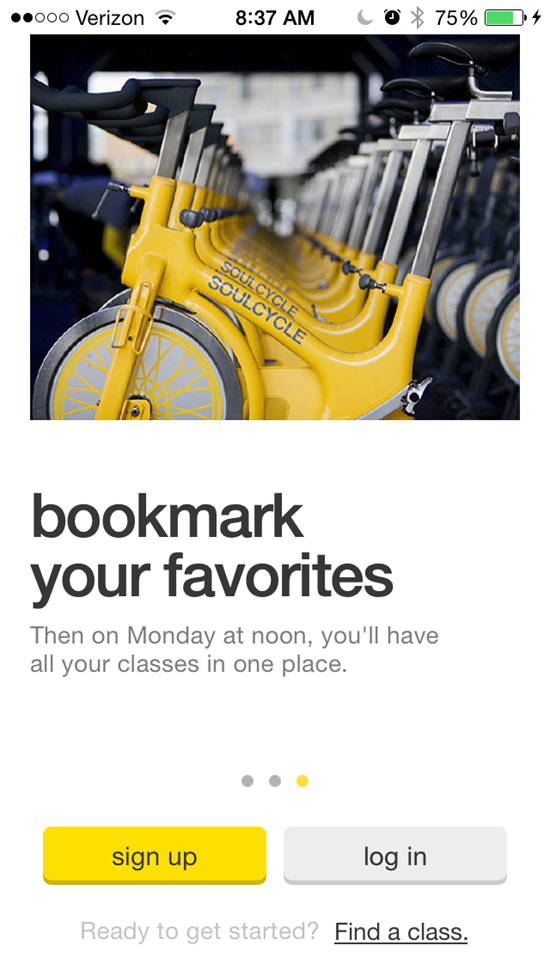
Love ‘Em or Hate ‘Em, there's no denying that SoulCycle is enormously successful and a driving force that's responsible for much of the excitement our industry. I visited SoulCycle last fall and participated in a few classes. The purpose was to accurately report on this juggernaut of Indoor Cycling.
The bottom line IMO, SoulCycle get's it. They understand their target market precisely– everything they do is directed at female non-cyclists who ride at SoulCycle multiple times a week.
More importantly, these non-cyclist ride year-round!
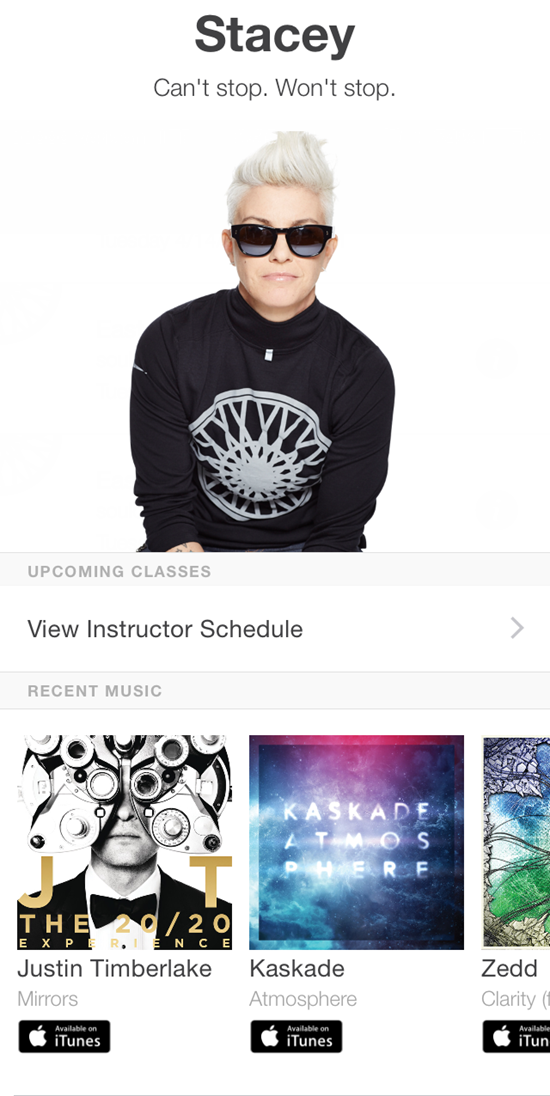
SoulCycle also understands that their Instructors are what make them so successful. Now that I was able to find and then download, the new SoulCycle iPhone App, it's abundantly clear that promoting each Instructor is the main focus of the App. Not only are they featuring Instructors, they've also added links to the favorite music each Instructor plays in class. Check out the bio page for “Stacey” who I just choose at random >
Each of those album thumbnails link to a sample in iTunes. Why not Spotify? Good question. My guess: everyone with an iPhone can play those tracks. Not everyone (yet) has Spotify. I also wouldn't be surprised if SoulCycle has an advertising agreement with Apple = they might be generating some ad $$$ every time a customer views an Instructor bio.
Participant resistance was such a big part of running a weight-loss program, I didn’t even realize it was a thing to write about (if that makes any sense). It just went with the territory.
“Resist” has many synonyms: oppose, battle, combat, duel, fight back, put up a fight, defy, struggle against, stonewall. Why would someone join a weight-loss program — and pay lots of money — only to do these?
Participants resist in many ways. Below are only a few examples of actual participant behavior during the 13 years I ran a program combining athletic performance training and a robust nutrition plan geared to weight loss and ending sugar addiction.[wlm_private ‘PRO-Platinum|PRO-Monthly|PRO-Gratis|PRO-Seasonal|Platinum-trial|Monthly-trial|PRO-Military|30-Days-of-PRO|90 Day PRO|Stages-Instructor|Schwinn-Instructor|Instructor-Bonus|28 Day Challenge']
Names have been changed to protect the guilty.
Jeffrey
Jeffrey was our first participant. He got used to having my full attention and turned petulant when other participants joined. From that point on, he continually criticized the program and stopped following instructions. When I said peanut butter was okay to eat, he ate a 1-pound jar in a day.
John
John was in the program for almost a year before he lost any weight. Once his weight started dropping, he told me that, at first, he wanted to prove it wouldn’t work, so he made sure it didn’t.
Kathy
Kathy complained about hearing sugar addiction info in both a live class and a webinar, instead of realizing she heard it twice because it was key. After a private consult, she waved to me from the window of Pete’s (the coffee place) while eating. Based on Pete’s menu, draw your own conclusions about the food.
Kimberly
Kimberly was a vegetarian, miserable, touchy, and quick to anger. She masked it with a phony-soft voice but complained to management about everything (especially me). Even her doctor had told her she needed protein. I knew on Day 1 she’d never finish the first quarter. She didn’t.
Tom
Tom was an alcoholic who reacted to the rule about avoiding alcohol with a strange grin. He dropped out and rejoined over a year later. He reacted to the alcohol rule with the same grin, dropped out again and never came back.
Shelly
Shelly was in sales and said she had to drink with clients. She had many reasons she couldn’t get around drinking. She never lost weight until she did the AIDS ride from San Francisco to L.A. (without alcohol).
Kristin
Kristin’s attendance at trainings was poor. Because it was a progressive, periodized training program, not a drop-in class, she didn’t progress. She also wanted detailed menus instead of guidelines. When we didn’t supply menus right away, that became her excuse to eat pizza, drink wine, and never keep a food log.
When we developed menus, she complained they weren’t specific enough. She wanted to know precisely what SHE should eat every hour of every day. She gave me The South Beach Diet and said our nutrition program was just like it. It wasn’t, but I never understood why she didn’t just follow that diet instead of eating nachos and drinking margaritas. Or what any of this had to do with never logging her food intake as instructed.
So why do people pay lots of money and then resist? Here are a few reasons.
Alcoholism
Addiction defies rules of reason and logic. It’s a complex topic, very briefly covered in a previous post (Sweet Tooth or Sugar Addiction: What’s the Difference?). Alcohol can sabotage weight loss, as covered in another post.
Sugar Addiction
See above. People will go to extreme lengths to avoid giving up their favorite foods. Lots of blame gets thrown.
Not Taking Responsibility
They’re overweight because of a spouse’s work schedule. Or they go to restaurants frequently. Or they never learned what to eat as kids. Or… fill in the blank.
Plausible Diversion
Registering and paying for an expensive, intensive program showed their sincere desire to lose weight. If they didn’t lose, it was the fault of the program, not because they never did the work to make it happen.
[/wlm_private]
These stories aren’t pretty — and they’re crummy memories — but they’re 100% true. If you have a similar experience with your students, maybe something here can help you start them moving in the right direction.
I'll bet somebody at Apple/iTunes is getting an ear-full this morning…
SoulCycle sent out an email this morning, announcing their new iPhone App. The email included this link to their App in the iTunes store… which of course opens in iTunes so you can download the software.
Except most people (like me) don't use iTunes to install an App. We download and install Apps directly from our phones.
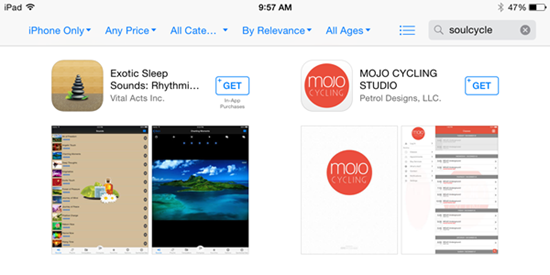
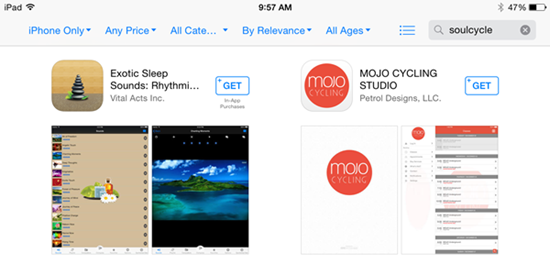
Which is great as long as the App Store can find SoulCycle's App when a user (in this case me) searches for SoulCycle… which returns two available Apps, neither is the SoulCycle App 🙁
So I guess I'll have to go old-school and transfer it from my computer, before I can review it!
413 Update – I'm now seeing you can search and find this now in the App Store using your iPhone.
There's an old saying that goes; “I've been at this so long… I've forgotten much of what I didn't know, when I first started.” I've taught Indoor Cycling classes since 1998ish. A long time ago for sure. Even back then I had an advantage over most new Instructors. I'm married to the “Senior Group Fitness Instructor” in my family. Amy began her fitness career in 1994 and Spinning® in 1995. She was there for many of my early classes to help guide and critique me and my classes. I had her positioned front-center in the class during my first audition at Life Time – yes, I passed 🙂
So a lot of time has passed between those first classes and today. It's hard for me to think back on the nervousness and insecurity that's common in most new instructors. What's needed is a newer Instructor who's willing to share their ideas and solutions. That sounds like my friend Lena Hershey 🙂
This page at leanlena.com has links to multiple articles writen by Lena > New Instructor Tips specifically for those of you just getting started in your teaching carreer 🙂
Master Educator Cameron Chinatti with Stages Indoor Cycling joins me for a fun followup to their very successful IHRSA convention where they launched the new Stages SC3 Indoor Cycle. We've got a bunch of videos that relate to my interview, which you'll find below.
One of the highlights from the show was the amazing efforts of two cyclists, during their 60 sec challenge.
First there was
Junior Nationals competitor Dominic Suozzi decided to try his hand at the #60secchallege today. The kid's wearing Converse and he destroyed everyone. 1100 Watts!! That's crazy-ville!
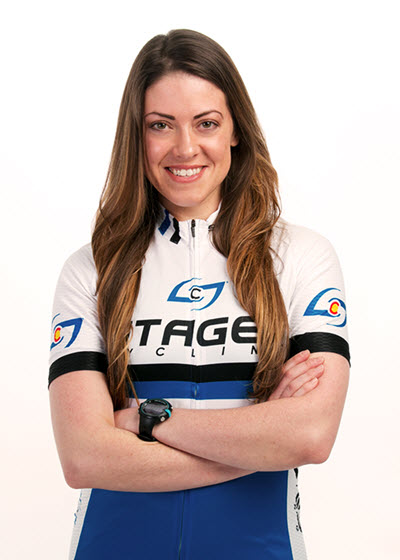
Then how about the huge effort from Kat Haskins … aka TheBarnKat > she's an Instructor at CB Cycle Barn and wasn't an outdoor cyclist, up until now. She won a new Giant bicycle with Stages Power Meter for her efforts 🙂
Here's my interview with Cameron. Enjoy!
Cameron and I discuss their new “Sprint Shift” innovation. Here's a quick video showing how it works. You can read more about how I used this new feature at my review of the Stages SC3 Indoor Cycle.
Before I get a bunch of hate mail from Schwinn Instructors. I make the comment that Stages is the first Indoor Cycling company that is focused on both Indoor and outdoor cycling. Yes I realise that the brand “Schwinn” was first a bicycle company – my first road bike was a green Schwinn Varsity, second was a white and purple Schwinn Paramount. But the Schwinn Indoor Cycling brand has/had no connection with the bicycle company known as Schwinn bicycles. Stages is currently selling products to outdoor cyclists (the Stages Power Meter+ Endurance Training Education) as well as Indoor Cycling studios (the Stages SC3 Indoor Cycle + Instructor Education) Does my comment make sense now?