
by Chuck Cali | May 22, 2021 | Engage Your Students, Featured Studios

After attending ICI/PRO Conference 2010, Kathy Ehrlich-Scheffer and husband Matt were motivated to open their own studio. In her words, “to bring the best the industry has to offer to our riders.” And to her credit, she has done just that. Kathy and Matt opened Cycledelic, their vision of an indoor cycling studio on the well known 12 Corners in Rochester, New York. To say that this studio is unlike most would be an understatement. Kathy and Matt have seen to every detail. This is clearly evident from your first step inside to toweling off before going on your way.
If you are an indoor cycle instructor with a bent toward showmanship, 😉 this studio is Nirvana to to teach in. Kathy had shown me the studio shortly after opening and I’ve been waiting for the opportunity to get my butt up on her stage.
Opportunity knocked, the weekend of Cycledelic's first anniversary (Saturday, October 20, 2012) as that date was juxtaposed with Rochester Institute of Technology's parents weekend. Since our son's a freshman there, my trip was preordained. I invited myself to do a guest instructor class that day.
Rochester is also my home town having moved to the San Francisco bay area 25 years ago. Ah, when the stars align. Knowing the sleep habits of college students, I figured I'd be able to have a fun workout with the crew there on the 12 corners before my student saw the light of day. Kathy was all for it, immediately replacing husband Matt's 0800 class with my name.
I stopped by Cycledelic the day before to check it over. Turns out Matt has thought of everything. Their projector is HD, the perfect size 16:9 screen, lighting controls like I have only seen at concerts, plenty of wall mounted fans and a sound system that leaves nothing to chance. I had iPod Classic, iPad and MacBook Pro all going simultaneously.
The theme for my ride was, Indoor Cycling, From Then to Now. The idea was to silhouette how technology has enhanced the experience instructors can create for our riders. The Cycledelic studio was engineered perfectly for such a show. Right down to the right mix of color from the baseboard lighting. I was in heaven.
Kathy did a great job of promoting my visit, resulting in a full house. The 70 minute presentation/ride came off without a hitch even if I did not quite sync my class builder app (providing me with cue information) with my Mac which was providing video and sound.
After class, Cycledelic provides three shower rooms with towels for those that need to head off smelling all fresh. There is not one client comfort that Kathy has not thought of. She personally maintains her bikes insuring her customers that all the great metrics work. Kathy is very selective with who gets to instruct and how they deliver. And, conveniently located in the same strip mall is Starbucks where we convened post ride to pat ourselves on the back and celebrate the anniversary.
If all this is sounding a bit like a travelogue it’s not. (Yet if you find yourself in Rochester, New York don't miss a visit to Cycledelic)
A couple of points.
First it is the ‘boutique studios’ like Cycledelic that are blazing the trail for Indoor Cycling 2.0. We cannot thank them enough. Boutiques are doing what the big boxes are very slowly realizing, differentiation by technology. Those of us working in big box gyms can attest to the lethargy of change at these bottom line oriented facilities.
What I’m saying (my second point) goes to my earlier post (A Good Reason to Come Back – October 2012). Simply stated, boutique studios are compelled to provide their customers with a good reason to come back. They must – at every level – provide the service that their customers are willing to keep paying for, or close the doors. Essentially that translates to, incredible customer service, effective training, incredible customer service, entertaining distractions and, incredible customer service.
As I type this Kathy is posting to the Cycledelic FaceBook page photos and videos of their Halloween ride. It was another sold out room for a fun filled 90 minute workout set to the music of the eighties.
Kathy can't teach all the classes. She is, after all, a woman balancing the responsibilities of mother, wife, daughter and business. So who she chooses to put on the stage at Cycledelic must understand the meaning of ‘on stage’. It is not just about the training but also the performance. She has found it difficult to find such instructors.
My greatest worry before teaching my class at Cycledelic was not about the workout but rather, letting Kathy down by not providing a remarkable experience for her customers. Hopefully that's what happened. In my opinion that's how it should be, wherever we teach, for all of us, all of the time.
Originally posted 2012-11-01 09:33:32.

by John | May 10, 2021 | Your Fitness Business

I've been watching the steady growth of the Association of Fitness Studios (AFS) and was recently invited to join as a member of their Advisory Council. From the AFS press release:
NEWS RELEASE Nash, Macgowan Join AFS Advisory Council (CHICAGO, ILLINOIS, August 7, 2015) — The Association of Fitness Studios (AFS) today proudly announced the addition of fitness industry leaders Frank Nash and John Macgowan to the AFS Advisory Council.
John Macgowan is a consultant and owner of Deep Breath In, LLC – publisher of ICI/PRO, the online Indoor Cycling educational resource for Cycling Studio owners, managers and Instructors around the world. He has been leading Indoor Cycling classes since 1997 – with certifications from Schwinn, Stages, Heart Zones, ICG, Life Time Fitness and Cycling Fusion.
“We welcome John Macgowan to our Advisory Council with open arms,” said Leve. “He’s a true indoor cycling guru, with a dedicated following. He will be a tremendous AFS resource for this segment of the studio market.”
ICI/PRO has been at the forefront of the explosion of boutique Indoor Cycling studios. Many successful studio owners can point to one of multiple interviews John has conducted, as being the “spark of inspiration” they needed to launch their new fitness business. “I love what I see AFS doing to help connect, educate and encourage independent fitness studio business owners,” said Macgowan. “There's power in numbers and all modalities of fitness will benefit from being a part of this well managed organization. As a member of the Advisory Council, I'm excited to help AFS develop the Indoor Cycling vertical within the umbrella of the greater association.”
History of AFS
Toward the end of 2011 two life long friends, one a fitness industry veteran and the other an attorney and business consultant, got together to fill a void they observed while working with colleagues and clients alike. Despite the major industry trend towards the development of freestanding fitness studios, there was a lack of support for the owners. The reality was these businesses — opened by great fitness professionals — could benefit greatly from the sharing of business ideas and best practices.
The Association of Fitness Studios (AFS) is the only membership community dedicated to the business of fitness studios. We provide studio owners and developers a wide array of business-specific products, services, and benefits that will enable them to more effectively manage and grow their businesses, building on the passion, compassion and courage they’ve already shown. Previously, there was no such business-centric, trade association dedicated solely for fitness studios.
We created AFS to do for our members what studio trainers and instructors do for their clients — help them achieve their objectives.
Most of the challenges of studio ownership are universal. Through sharing of information, best practices and delivery of the tools necessary to enhance management efficiency, marketability, and profitability AFS is the direct link between studio owners, suppliers, fitness professionals, and consumers – connecting all segments of this vibrant industry. Welcome to the AFS community!
Mission Statement
The mission of the Association of Fitness Studios is to create a community of studio owners by equipping them with the tools necessary to enhance management efficiency, marketability, and profitability while promoting the benefits of living a healthy lifestyle through education, information, and technology.
My goal is to help AFS develop a strong & vibrant membership of all types of Cycling Studios. I'm planning an interview with AFS founder and CEO Josh Leve in the near future to help you learn more about this vital organization.
Originally posted 2015-08-11 09:13:40.
by John | May 10, 2021 | Engage Your Students, Instructor Training

I love seeing stuff like this!
ICI/PRO member Joe Ducosin was the front cover model of our local community magazine – you look great Joe 🙂
Joe's Cycle Quest Studio runs a regular weight loss challenge and it was featured in this article; Southwest Metro Fitness Challenges – Local gyms and fitness studios offer motivation for kicking your metabolism to a new level.
Pedal Off the Pounds
Duration: Eight weeks, beginning September 10.
Goal: Weight loss through exercise and nutrition
Reward: Participant losing the highest percentage of body weight in fat will win a five pack of classes
Brief description of program: Participants receive a professional fitness assessment and unlimited cycling and boot camp classes for the eight-week challenge at CycleQuest Studio in Eden Prairie, along with nutrition and fitness coaching. The cost to register is $275 (discounted to $250 if you sign up with a friend.) 6409 City West Pkwy., Suite 107, Eden Prairie; 952.236.7691
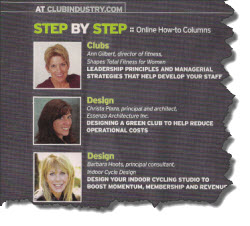 Next, our very own Indoor Cycling Studio Design Expert Barbara Hoots was published in ClubIndustry.com, the leading resource for fitness business professionals.
Barbara's article; Design Your Indoor Cycling Studio to Boost Momentum, Membership and Revenue
Momentum is important for organizations to survive their competition. Look at any successful product or service and notice the improvements made after the product is introduced. Club members are constantly introduced to new and improved products, yet when they show up at an indoor cycling studio, they face the same white walls, mediocre sound system and bike arrangement you had when the doors first opened. In order to maintain a competitive edge, club owners must constantly renovate, rethink and renew their cycling program.
You can read the rest of the article here.
Have you or your studio been featured in the media? Maybe in an article or on local TV news? If so then send us the info so we can promote you!
Originally posted 2012-11-29 08:48:41.
by John | May 7, 2021 | Engage Your Students, Member Spotlight

Our very own Melissa Marotta & Barbara Hoots will be co-leading the 11th Annual Special Olympics 6-Hour “Ride for a Reason” on Saturday, March 19 in Burlington, Vermont. Joined by Spinning® Master Instructors Angie Scott and Anthony Musemici, Melissa and Barbara will be leading 100+ riders to raise money to support the children and young adults supported by the Special Olympics.
In addition to an inspiring day of motivating instructors, live music, and awesome energy, riders will have the opportunity to hear directly from Special Olympics athletes themselves about how their lives have been changed through their participation with the organization – thus giving a deeper source of fuel for every pedal stroke.
The event will be held at the Champlain Valley Exposition Center outside of Burlington. If you've ever thought about checking out the beauty of Vermont, now might be the perfect occasion. Melissa and Barbara will be thrilled to have some folks from the ICI community take part in this special event. Come say hello, and you might even find yourself invited to ride on stage.
Visit http://vtso.org/spinning_marathon.php for more information, and to register for the event.
Originally posted 2011-03-06 15:04:55.
by John | May 4, 2021 | Best Practices, Engage Your Students, Instructor Training, KEEPING IT FUN, Learn Leadership Skills, Mental Toughness
I love sharing anything created by public speaking expert Alexa Fischer. She has just published part one of a free video series. I just finished watching this 13 min video and felt you may enjoy learning how to move past the negative thoughts that could be holding you back from effortlessly connecting with your riders.
When opportunities happen, it's up to you to be ready.
Whether it's chatting your boss up in the elevator, introducing yourself to a major influencer, sharing your new idea at the company retreat or effortlessly welcoming new neighbors, when you speak with confidence and calm – in any situation – it matters.
It matters to you, but it also matters to them.
Drum roll, please… I cordially invite you to watch VIDEO ONE of the 1000 Watt Presence: Free Training Series. No need to sign up, just click on the video and you'll be directed to the classroom. This week I'm sharing a few exercises to help you identify and release the habitual negative thoughts that have been holding you back. And the truth is, we all have them.
Positive thoughts are your fuel for happiness, success and clarity. Your inner scripts are the reason you have stopped yourself from speaking up, taking risks and seizing opportunities. But habits can be changed. Starting now.
The world needs your light. Let it shine,
Alexa
Click here to see the video.
Originally posted 2018-01-09 09:00:18.
by John | Apr 16, 2021 | Featured Studios, Instructor Training
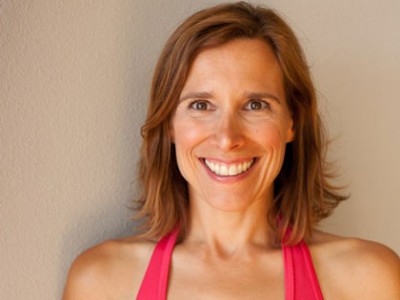
Studio Owner Alison Zemanek
I woke up this morning to a very nice note from Studio Owner Alison Zemanek.
Hi John,
I just want to express to you how much I love your site. Thank you for putting together such a wonderful resource!
I recently opened a Cycling Studio in Longmont, CO
(BreakAway Cycle & Strength Studio). I was lucky enough to find instructors who have been certified and teaching for over 10-15 years, but who have pursued continuing education throughout that time and fully embrace the true meaning of IC 2.0. We use it at the studio and our clients love it.
We are all cyclists, as are many of our clients, so that helps. But even non-cyclist appreciate the higher volume of work that can be done when you are not scrambling constantly between 15 second full out efforts and 45 seconds zero effort recoveries. They also appreciate being able to understand the relationship between cadence, resistance, and power output.
I would love to use the term Indoor Cycling 2.0 to describe what we do at BreakAway!
Thanks so much!
Alison
Thanks for your kind words Alison – you made my day!
Her studio is called BreakAway Cycle & Strength and is located north of Boulder, in Longmont Colorado. From the looks of her very nice website, it appears that Alison and her Instructor team really do practice Indoor Cycling 2.0!
BreakAway offers a mix of cycling and strength classes using TRX – what I see as the perfect combination for maximizing revenue for any boutique studio.
If you are considering opening an Indoor Cycling Studio, Alison's website design is very impressive. It communicates all of the key benefits to her offerings including regularly scheduled intro cycling and TRX classes!
Intro to Indoor Cycling -The Basics
So, you’ve never taken an indoor cycling class before and you’re just a bit intimidated. If that sounds like you, then you should take this class. We’ll go over the core moves done during cycling classes, some safety basics, what to wear, and will answer any individual questions you may have. The Schwinn AC Performance bike has an amazing console computer, but if you don’t know what to do with the data, then it’s not a very useful tool. We’ll go over the computer with you and tell you about all the ways it can be used.
Introduction to TRX
You’ve seen the crazy straps hanging from the big metal anchor…but you’re not too sure what it’s all about. That’s why we offer this free 20-minute intro class. Sign up and come in to learn everything you’ll need to know in order to join future TRX classes.
If you're reading this and wondering; what exactly is Indoor Cycling 2.0?
Indoor Cycling 2.0 â„¢ — is the transition from entertainment based exercise (fun, but without purpose and rarely effective) to results driven training (the stuff that works, just ask any real endurance athlete)
You can achieve it through the introduction of specific measurement tools; Heart Rate Monitors, Cadence (RPM) indicators, Power Meters and Periodization into your classes.
Our mission here at ICI/PRO is to provide you with the tools and information you need to to teach a successful Indoor Cycling 2.0 â„¢ class.
Indoor Cycling 2.0 is a trademark of Deep Breath In, LLC (my company) and is free for you to use as long as you credit us as the source.
Originally posted 2012-12-18 17:01:09.
