As you’ve no doubt heard, saturated fats are no longer considered the health problem they once were. It turns out that the connection between saturated fats and heart disease, cholesterol, and atherosclerosis is far weaker than we thought.
These days, everyone is pointing to sugar, and blaming sugar for the very health issues that used to be blamed on fats — the diseases above, as well as hypertension and more. Those health conditions have more to do with inflammation. And sugar and other highly insulin-triggering carbs promote greater inflammation than sat fat.
No argument from me, of course. I’ve been blaming sugar for those conditions for over 20 years and have written a number of posts on those very subjects.
The main difference lies in the huge number of arguments I used to get, compared with how few I hear now. In 1996, for example, I recall participating in what I was told would be a “panel discussion.” (I was lied to about the format. It turned out to be a debate, and I was up first so the other speaker could have the last word. Ah, memories!) Anyway, the other speaker stood up at one point, held out his arms like an orator and intoned in his deepest horror-movie voice, “FATS ARE BAD!”
In the years since, I’ve sometimes wondered if taking such a hard line on a now-disproven point ever made him feel as ridiculous as he looked and sounded with his arms waving as he channeled Vincent Price. But I digress.
Currently, we know that unsaturated fats are associated with numerous health benefits. Omega-3s (polyunsaturates) are known for their anti-inflammatory properties. They’re cited for their ability to reduce the risk of cancer, the complications of diabetes, and the incidence of depression, bipolar disorder, dementia, and more. Omega-9s (monounsaturates) have long been credited with the ability to prevent and even reverse various heart disease risk factors.
Even saturated fats have their benefits. Butter and raw, organic coconut oil both contain lauric acid. Lauric acid has been shown to benefit hair and skin, and to have antiviral, antifungal and antibacterial effects. When it turns to ketone bodies, lauric acid can reduce epileptic seizures in children and improve brain function in Alzheimer’s patients.
There’s an interesting health point, though, that’s less widely known and differentiates saturated and unsaturated fats. Saturated fats have been shown to contribute to weight gain to a greater degree than unsaturated fats.
If weight management were always “calories in / calories out,” that couldn’t be so. All fats provide 9 calories per gram. But this has to do with hormones. Sat fats trigger insulin secretion, and unsaturated fats do not. Insulin is a fat storage hormone. Also, a combination of saturated fat and insulin-triggering carbs will promote a synergistic boost in insulin that neither would generate alone.
Yet to further complicate the issue, coconut oil appears to be associated with weight loss.
So what recommendations can we take from all of this? Well, nothing earth-shattering. If you eat saturated fats, eat the better kinds — organic coconut oil and butter, rather than bacon or battered, deep-fried foods. Let’s continue to go easy on the traditionally bad sat fats and the foods that contain them.
When I was a kid, every baked potato I ate was as bright yellow as a rain slicker because of all the butter I insisted on glopping on it. Sure, it might be less likely to give me heart disease than we used to be told, but it’s obvious that restraint and moderation might still be a good idea. And I don’t know about you, but the older I get, the more my hips and thighs demand that….
I wish I had taken notes or recorded Barbara Hoots' presentation from WSSC last weekend. Barbara's session was entitled, ” Studio Design: Creating Emporiums to Increase Profits.” The room was filled with eager fitness entrepreneurs looking to open a new studio or remodel an existing one. What Barbara said in her introduction was priceless.
I'm paraphrasing her here:
Can we all quit bashing SoulCycle now? Without the excitement they've created, most of you wouldn't be sitting here, energized by the prospect of opening and running your own Indoor Cycling studio.
Now I don't have any firsthand experience with CrossFit, but I do understand that they have been similarly disparaged by various “fitness experts”, for a multitude of supposed sins toward their members. I came across this article CrossFit Bashers, Can You Be More Constructive? written by Eva M. Selhub, M.D.in the Huffington post today. As I read it, it became clear to me how you could easily interchange CrossFit with SoulCycle.
It opens with…
Apparently people like Erin Simmons, who hate CrossFit didn't read my article on how CrossFit saved my health, nor have they considered the broader implications of how this fitness program may be helping tens of thousands (and maybe more) of people get healthy and happy.
Erin is just one among many who have made headway bashing CrossFit as being a sport that causes too many injuries, is overwhelmed by poor coaching or thoughtless programming, and, oh yes, for being a cult. And though there is some validity to some of what I have read, and I am happy to stand corrected on any point, it seems to me that these opinions are personal, ego-based vendettas written by people who feel the need to shout out warnings on subjects that are not completely substantiated by research or fact.
It's really incredible to me. Really. I've been practicing medicine for close to 20 years and none of us have figured out a way not only to get people motivated to exercise and get fit, but to stick to it. CrossFit is not the problem folks, obesity is. We have an epidemic of obesity that is not only propelling the rising costs of healthcare, but also morbid problems like metabolic syndrome, heart disease, cancer and diabetes. The estimated annual medical cost of obesity in the U.S. was $147 billion in 2008 U.S. dollars. The medical costs for people who are obese were $1,429 higher than those of normal weight.
Dr. Selhub goes on…
Let's start with bashing factor number one: CrossFit (CF) is dangerous because of the injuries:
This seems to be the most popular, though there is no current literature that validates that CF causes more injuries than any other sport. You can get injured skiing, running marathons, playing football and yes, the new research is pointing to injuries from yoga.
Perhaps it is more important to shine a light on the notion that injuries are occurring because people are actually exercising and talking about it? I don't know about you, but in my clinic, I hear more complaints of injuries people are sustaining from walking up the stairs because their knees can't handle carrying the heavy weight of their body.
If people actually like to run, do gymnastics, play basketball or become active in any sport, you are going to see more widespread injuries because being active and inactive come with risks, risks which can be avoided with proper education and learning to be mindful of one's abilities and the body's needs, instead of allowing the ego to run the show.
So if I were to pull out the value of this argument, I would surmise that the real concern is that novices and people who don't know their fitness levels are pushing too hard, too fast and getting injured. It seems to me that the solution is asking people to be more mindful and educated, to put their egos aside and understand their fitness level and set appropriate goals, and take into account that the fitness program also involves days of rest and recovery, appropriate sports and life nutrition, and self-care.
I love to share these short videos from communication expert Alexa Fischer
Picture this… You’re the new guy. It’s your first day. Your heart skips a beat as you enter the front door knowing that everything is new. New people. New desk. New job. Sigh. Now go ahead and switch roles. You are sitting at your desk, clasping your favorite mug, surrounded by the lovely pictures of your family on the wall. At once you notice the new guy heading into the conference room for an orientation meeting. That’s the moment you decide that you’re going to make that guy’s day. No need to wait for an awkward moment in the elevator or a meek hello at the water cooler. You are going to do what you wish others had done for you on your first day of the job.
Here’s how to be a hero to the new kid on the block. Kindness wins every time.
Christian Noni was recruiting Spinning Instructors at WSSC.
His homemade “I'm Hiring” badge got my attention as Christian Noni walked by me at WSSC. As the Executive Fitness Director for Revelry Indoor Cycling and Fitness, Christian has a problem that I heard expressed multiple times this weekend; where do I find quality Instructors in my area? It's not like they're sitting around, waiting for me to launch my new studio 🙁
The options are limited
Let me know if I'm missing any here – I'm thinking there are only two realistic options:
Recruit existing Instructors from other health clubs.
Develop/grow your own… and then take really good care of them so they stay.
The recent brouhaha over Soulcycle banning Instructors from their classes, suggests that many fitness businesses are getting protective of their prized positions – popular Instructors. Rightly so. Despite all the interest and effort being invested in rider metrics, video display systems, fancy studio designs, ect… the life blood of a successful studio is you – the Instructor.
Recruiting may work, depending on where you're located. Most big-boxes that I'm aware of don't require exclusivity agreements (just don't get caught mentioning you also have a class down the road) so a few Instructors may be willing to join your team. Word of a new studio in town tends to travel fast. As soon as you've signed your lease you should have signage up in the windows advertising your needs. Barbara Hoots told me all this was very inexpensive to design and have printed at a local sign shop.
Attractive signage is a must while you're building out your space!
Many of these new studio start-ups are filling an unserved fitness need in a community, so unfortunately not every city has other clubs to draw from. Which leaves… develop/grow your own as the better long term solution.
Barbara Hoots gave a wonderful presentation here at WSSC, where she demonstrated how successful businesses are continuously; NEW, IMPROVED & IMPROVING. She used the example of OREO cookies, which to my surprise, were first introduced in 1912. A 104 year old brand and they are still offering new and/or improved versions of Americas best selling cookie. My take away from Barbara's session was that studio owners need to be continuously developing NEW Instructors and of course IMPROVING those you have in place.
While I was chatting with Christian, he explained how finding prospective Instructors was just step one. He's planning a comprehensive training program for every new hire that he's developed with the help of his friend and mentor Lawrence Biscontini.
In case you missed my pair of very entertaining interviews with Lawrence, you can find part one here. Part two's here.
Christian told me he's open to sharing his Instructor training plans and we're scheduling an interview in the next few weeks.
Now I'm off to find my PST – (Personal Spinning Threshold) with MI Janet Toussaint!
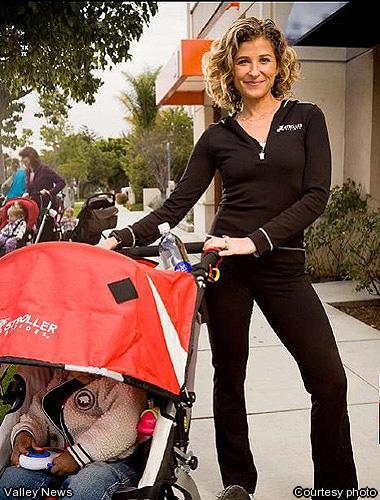
As the fonder of multiple fitness programs for Moms; Stroller Strides®, Body Back® and Fit4Baby® – Lisa Druxman knows all about creating a Tribe of people passionate about a fitness business.
Lisa Druxman created Stroller Strides in 2001 after the birth of her baby. With over 1,300 locations nationwide, it offers moms an opportunity to get in shape, meet other moms and have fun with their baby. Since then, we have released Fit4Baby, our prenatal fitness class and Body Back, our workout for any stage of motherhood. All of our programs give women the “Strength for Motherhood” and together create FIT4MOM.
Helping YOU to make strides in fitness, motherhood, and life! ®
Our Values:
We will help moms achieve their ultimate potential, both physically and emotionally.
We will offer support and education for moms.
We will inspire moms to reach optimal health and well being.
We will inspire children to emulate their moms and make fitness a part of their lives.
During the interview Lisa and I discuss the importance of Starting With Why – it's what your Tribe will connect to, Here's a presentation from author Simon Sinek where he explains the process of finding your Why!
Can't say I'd blame anyone for wanting to ride outdoors.
Are you faced with this dilemma, now that Summer is here?
Hello John,
Thanks for your speedy response.
Here is my question with a little ‘back brief' first; I live in Bend, Oregon and teach indoor cycling classes (and other types of GX as well) at the premier health club facility in my region. I have taught here for many years and can confidently say that we experience a seasonal trend in class attendance that is affected by the onset of beautiful weather! Much more so than I have seen while teaching in my other home, Southern California.
Management typically responds to this trend by cutting classes until the Fall to save on payroll. As an instructor I have learned to accept this and indulge myself in other, more self focused, activities; but in all honesty it is disheartening. Other instructors concur. I wonder if this topic is familiar to you? Have you had similar conversations with other instructors? Any insight you, or others might offer?
Really appreciate your time and expertise, and I want to say that I am a huge fan of ICI/PRO! So glad I discovered you while podcasting 🙂
In Health,
Tina
In a bit of serendipity… I received this email from my Dept Head only a few hours after Tina's.
John,
I am reaching out to get your thoughts on if you think it is worth/ideal to offer both the 6am and 5:30pm indoor cycle classes for June-August? The last think I want to do is disappoint any of our members, but I also want to be realistic with the horrific winter we have all experienced. I am not 100% sure what the participation has been like for both classes lately?? I do feel/think that many would rather be outdoors once the sun and heat really arrive.
I look forward to hearing your thoughts.
Thank you.
Tamara
I can understand how you could feel disheartened Tina. I've experienced a cutback in classes during the Summer for as long as I have been an Instructor, so this email to me was expected. You almost have to start from scratch again, building your class in the Fall. I find myself needing to re-learn many names after the Summer and it typically takes me weeks to get back the level of rapport I enjoyed the previous season.
My response was to agree to drop the evening class at the end of May, leaving me with just one class a week. This could be a problem as Life Time has a two class per week minimum to retain your status as an employee. Thankfully in my case it isn't. I lead two scheduled outdoor rides each week (Saturday and Sunday – join me if you can) and those rides are counted as classes.
If they won't come to you inside > could you go to them outside?
If getting outdoors, after a (I'll use Tamara's words) horrific winter is what your members really want, then why not applya little bit of “out of the box” thinking here Tina? And by “out of the box” I mean it literally – is there a possibility you could create a class that's held outdoors and not in the studio?
Your participants still want to be active, so how about…
Holding your Indoor Cycling class – outside?
You're a Group Fitness Instructor – could you offer a park class?
Maybe a Summer boot camp with all the activities help outdoors?
If you ride outside, why not start a group ride? Or find a group you could join?