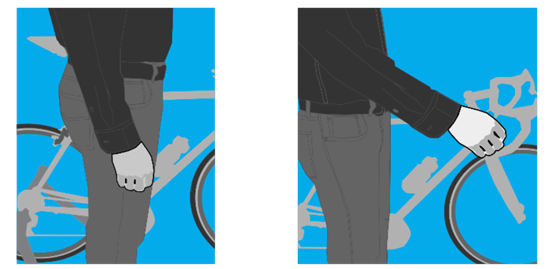
Paul Swift from BikeFit sent out another infographic showing proper wrist alignment, this time for road bikes. We published his previous email that highlighted proper wrist alignment on a mountain bike. Notice in the image above how the curve of the handlebar drops matches the natural, straight wrist position?
I see this problem a lot on our group rides… Set up incorrectly (bars rotated down too far) causes the hinged wrist shown above, left. Where this becomes obvious is the additional arm movement needed to grasp the brake levers – there shouldn't be any 🙁
With your hands on the brake hoods, your wrists should be straight for best comfort and control. In this position you should be able to rest your fingers on the brake levers. Rotating the handlebars and/or brake hoods upwards helps improve alignment for more comfort and better control.
Cuing wrist position in class, or on the road, will be appreciated by your participants.
Remember bike fit is not about the bike, but where you touch the bike.
Plenty of things about nutrition are important but, to me, kinda boring. This is one of those things. But the topic is health-related, so it seems like a viable one.
What’s great is many foods are said to be powerful disease fighters, and this post will cover several of them. Those who plan to object that I’ve left out a bunch will be right. This is not meant to be the definitive, exhaustive list of such foods.
As you probably already know, colorful pigments in foods often indicate the presence of phytonutrients that can fight cancer, heart disease, and other diseases associated with oxidative damage. Oxidative damage is caused by free radicals, molecules that have lost an electron. Free radicals can scavenge electrons from healthy molecules, which may then develop diseases, including cancer.
Free radicals occur during normal metabolic functions but can also be created by toxins, processed foods or pollution. Potential sources of free radical production are everywhere. Antioxidants in foods help guard us against the damage they cause.
Red/blue foods contain anthocyanins. Examples are cherries, blueberries, plums and strawberries. In addition to anti-inflammatory benefits, they can protect against memory loss and declining motor skills.
Yellow/orange foods contain carotenoids, which can fight lung cancer. Examples of these foods are sweet potatoes (a wonder food in themselves), pumpkin, carrots, winter squash, cantaloupe, and broccoli. The chlorophyll in broccoli masks the yellow/orange pigment.
Orange foods, such as mangoes, oranges and papayas, contain cryptoxanthin, which is said to reduce cervical cancer risk.
Lycopene is well known for its ability to fight prostate cancer and heart disease. Since cooked tomatoes contain lycopene, they sparked, as you may recall, an odd controversy on whether or not pizza is a health food. No comment needed.
The yellow pigments — lutein and xeaxanthin — can protect the eye from blue-spectrum light and guard against macular degeneration. Corn and spinach are foods that contain them. Again, the chlorophyll in spinach masks the yellow pigment.
Astaxanthin is an important antioxidant found in pink foods — wild salmon, shrimp, lobster and crab.
An often-overlooked produce color is white. White produce is said to protect against stroke. White produce includes cauliflower, parsnips, Daikon radish, cucumbers, apples, pears, and bananas. Apples and pears are also anti-inflammatory and may help reduce blood pressure.
Looking beyond colors, some high-ranking antioxidant foods are dried beans, blueberries, cranberries (not dried — those are sweetened), berries, artichokes, prunes, apples, pecans, cherries, black plums, and Russet potatoes.
Cancer-fighting foods include almonds (10 per day), apples, blueberries, cherries, Brazil nuts, chickpeas, lentils, red beans, oranges, green leafy vegetables, dark green vegetables, tomatoes, wheat grass juice, and cruciferous vegetables.
Those much-touted and healthful cruciferous vegetables include broccoli, cauliflower, Brussels sprouts, cabbage, spinach, arugula, bok choy, collard greens, Daikon radish and other varieties, horseradish, kale, kohlrabi, mustard greens, rutabaga, turnips, and watercress.
As you can see, several foods show up on more than one of the above lists. Those are nutrition powerhouses.
Despite the appearance of various fruits on all of the lists, my general recommendations are 6 to 13 servings of vegetables per day (a serving is ½ cup), plus 1 to 2 servings of fruit per day (a serving is ½ cup or 1 medium-size fruit). Choose your fruits and vegetables from the lists above, and above all, stay away from the 5-a-day approach. That can too easily turn into 5 servings of fruit with no vegetables.
Don’t forget to include nuts and beans. And, of course, avoid junky, processed foods to limit free radical formation in the first place.
I wish I had taken notes or recorded Barbara Hoots' presentation from WSSC last weekend. Barbara's session was entitled, ” Studio Design: Creating Emporiums to Increase Profits.” The room was filled with eager fitness entrepreneurs looking to open a new studio or remodel an existing one. What Barbara said in her introduction was priceless.
I'm paraphrasing her here:
Can we all quit bashing SoulCycle now? Without the excitement they've created, most of you wouldn't be sitting here, energized by the prospect of opening and running your own Indoor Cycling studio.
Now I don't have any firsthand experience with CrossFit, but I do understand that they have been similarly disparaged by various “fitness experts”, for a multitude of supposed sins toward their members. I came across this article CrossFit Bashers, Can You Be More Constructive? written by Eva M. Selhub, M.D.in the Huffington post today. As I read it, it became clear to me how you could easily interchange CrossFit with SoulCycle.
It opens with…
Apparently people like Erin Simmons, who hate CrossFit didn't read my article on how CrossFit saved my health, nor have they considered the broader implications of how this fitness program may be helping tens of thousands (and maybe more) of people get healthy and happy.
Erin is just one among many who have made headway bashing CrossFit as being a sport that causes too many injuries, is overwhelmed by poor coaching or thoughtless programming, and, oh yes, for being a cult. And though there is some validity to some of what I have read, and I am happy to stand corrected on any point, it seems to me that these opinions are personal, ego-based vendettas written by people who feel the need to shout out warnings on subjects that are not completely substantiated by research or fact.
It's really incredible to me. Really. I've been practicing medicine for close to 20 years and none of us have figured out a way not only to get people motivated to exercise and get fit, but to stick to it. CrossFit is not the problem folks, obesity is. We have an epidemic of obesity that is not only propelling the rising costs of healthcare, but also morbid problems like metabolic syndrome, heart disease, cancer and diabetes. The estimated annual medical cost of obesity in the U.S. was $147 billion in 2008 U.S. dollars. The medical costs for people who are obese were $1,429 higher than those of normal weight.
Dr. Selhub goes on…
Let's start with bashing factor number one: CrossFit (CF) is dangerous because of the injuries:
This seems to be the most popular, though there is no current literature that validates that CF causes more injuries than any other sport. You can get injured skiing, running marathons, playing football and yes, the new research is pointing to injuries from yoga.
Perhaps it is more important to shine a light on the notion that injuries are occurring because people are actually exercising and talking about it? I don't know about you, but in my clinic, I hear more complaints of injuries people are sustaining from walking up the stairs because their knees can't handle carrying the heavy weight of their body.
If people actually like to run, do gymnastics, play basketball or become active in any sport, you are going to see more widespread injuries because being active and inactive come with risks, risks which can be avoided with proper education and learning to be mindful of one's abilities and the body's needs, instead of allowing the ego to run the show.
So if I were to pull out the value of this argument, I would surmise that the real concern is that novices and people who don't know their fitness levels are pushing too hard, too fast and getting injured. It seems to me that the solution is asking people to be more mindful and educated, to put their egos aside and understand their fitness level and set appropriate goals, and take into account that the fitness program also involves days of rest and recovery, appropriate sports and life nutrition, and self-care.
Marketers have specific names for people, based on how quickly they purchase new products or embrace new technologies. The people who lined up, days in advance, to buy the first iPhones are described as innovators. Those of us who waited a few weeks for our new phone are early adopters. The few holdouts still using a rotary dial phone fall into the laggards category.
It maybe a “guy” thing, but I love new technology and feel I'm a bit of an innovator. I'm very comfortable experimenting with new software, especially if it includes a promise to improve my fitness or help me deliver a better class. For example; the second I saw Spotify I knew I needed to learn how it worked – both for myself, and then be able to help motivate the thousands of Instructors who visit here use it as well.
When it comes to Social Media, I hate to admit, I haven't been very innovative. Closer to a laggard. I've been privately wishing that FaceBook would fade away. You see, ICI/PRO has always been about others. My response to questions; “so, what do you do John?” has always been; “I have a platform to promote smart, talented and passionate people in our industry”.
So after multiple promptings to “get more active on FaceBook” and my realization that it isn't going away any time soon – I have finally decided to do just that… get more active on FaceBook and other platforms. Except I realized that I needed some help.
Enter Social Media expert, blogger and Indoor Cycling Instructor – Courtney Messier Lee 🙂
Courtney makes her living helping businesses develop their brands, online, using the various social media platforms. She has graciously offered to help me, starting with the creation of a FaceBook fan page.
Courtney joins me to discuss her plans to enhance my social profile and some of her ideas may help you as well.
You can learn more about Courtney and the services she offers, by following the (you guessed it) links to her profiles below.
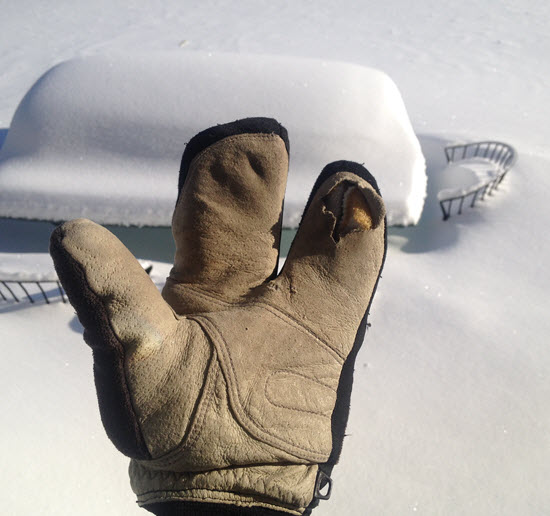
10+ years of shifting has left its mark on my gloves.
My buddy Randy is convinced that we'll be riding outdoors by March 15th. As it was -9° F this morning, I'm thinking he's a bit optimistic. But can you blame him for wishing winter will be over soon?
We've had cold/winter here since Halloween. That followed a summer that didn't really begin until mid June. Day two of our annual MS150 rideon June 9th blessed us with a light, consistent rain and hypothermia inducing temps in the early 40's. Amy and I were shivering so convulsively at the half way point, that we could barely ride our tandem. Then we did the unthinkable; we abandoned the ride at the lunch stop 🙁
So when March 15th rolls around, and if the roads are dry, me, Randy and a few others will attempt a short ride… for no reason other than breaking the depression many of us are feeling. That's not the only reason. You see Randy is the regional Life Time Cycle Lead = he manages all of the outdoor group rides and he's picked me as the ride leader for our home club in Eden Prairie.
The realist in me says I had better be prepared to stay warm.
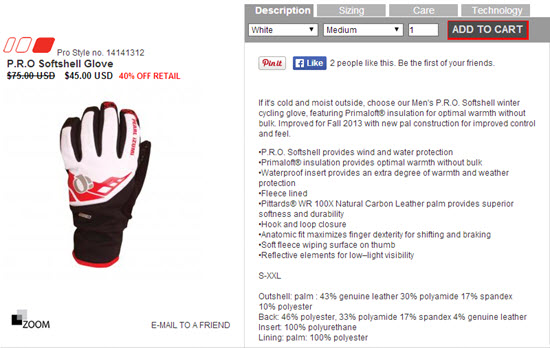
I enjoyed winter riding on my MTB for years, mostly alone – I never didn't have much luck finding anyone to ride with. As long as my hands and feet stayed warm, I would ride for hours. I have some very ugly shoe covers that do a great job keeping my toes from going numb. The Pearl iZumi Lobster Glove pictured above must be 15 years old and did a great job (when they were a bit newer) keeping all ten fingers functioning. I burned out completely on winter a few years ago – more recently they're only used for shoveling snow.
Thinking I'm going to try these as the lobsters don't work as well with the SRAM shifters on my VeloVie road bike.
Annual ICI/PRO Platinum members get access to this 40% discount PRO purchase program. Everything Pearl makes and sells for women & men is available. Learn program details here at shop.pearlizumi.com/icipro/
Don't depend on BCC email getting through to your athletes.
“Sure John – I'll email everyone on my list about your up-coming classes.”
My buddy Randy Erwin is a “Connector”. One of those awesome people who makes the effort to plan events (like outdoor rides) and get-togethers. Randy is the team captain of our Subaru MS 150 team and his love/passion for coordinating group rides lead to him being recruited to be the area Life Time Fitness Cycle lead.
Last night I talked to Randy and he told me he was excited for the FTP assessment I had planned for this morning and that he had emailed everyone three times, so he felt that we'd have a bunch of cyclist from his list.
Except most of them didn't show this morning 🙁
A couple of them did show up for the 9:00 am class that follows mine. Confused looks at those of us there who were cooling down; “Wait, was there an earlier class… why wasn't I told?”
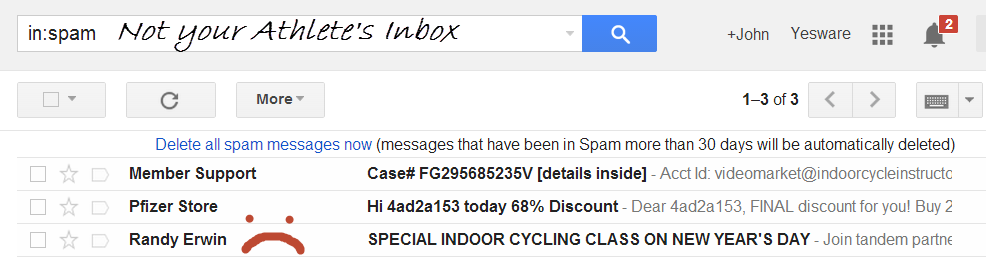
I hadn't received (and neither had many others) any emails from Randy this week. Neither did Amy – we're both on his list. So when I got home this morning I checked and found one of Randy's emails in my SPAM folder, which I rarely check on my laptop and never on my iPhone. Note to self to check there more frequently.
I called and asked; Randy…how many names are on your list? . About 200 was his response. Send a BCC email to a large of a list of email addresses must have triggered something in Gmail to think his email was SPAM = very few of us saw it.
So what to do?
It drives me crazy when I receive mass CC emails – typically I see them as sub requests. They are a total violation of email privacy and if one of the recipients have their email hacked, we all get the spam emails.
So if I want to email a list of athletes who take my class, I should use the BCC (Blind Carbon Copy) feature… right?
For a few people, sure that's OK. But once you have a large number (20+) of recipients, then No. At least not if you want to be sure your email doesn't end up in a SPAM folder and everyone will receive your latest class/event announcement.
Use a White-Listed Email Provider.
White-Listed just means trusted source… as in we don't allow any SPAM emails sent from our accounts Ms. AOL, Yahoo, Gmail, Hotmail, etc. so you can confidently deliver it to your customer. The two most popular are Constant Contact and my favorite MailChimp for a bunch of reasons. The biggest reason for you is that it's completely free until you go over 2,000 subscribers or send over 12,000 individual emails a month. So if Randy used MailChimp he could send 60 emails a month to is list of 200 subscriber each month at no charge. Fabulous deal – they don't even ask for a credit card.
Click to Subscribe
At one point you subscribed to the ICI/PRO Newsletter, by clicking a link and adding your name and email address. Using MailChimp you'll have the same ability to post a Subscribe Here link on your Facebook or Instructor blog = no manual entries!
You need their permission first
I decided that I would like to have all of Randy's contacts in a MailChimp account so I could email them > and know they are getting through. Except Randy doesn't have permission to give me the list, from the people on it, so he can't just give it to me. The solution is to:
Create a MailChimp account – here's the link.
Create a specific list
Have Randy send out my Subscribe Here link in an email. I'll suggest that he brake up the list into 20-30 address at a time and send the email with the link 2-3 times.
I already have a MailChimp account – so all I needed to was to create a new list. Here's the link to my list if you'd like to see it – http://eepurl.com/LQ_2P The Default in MailChimp is to collect First & Last Name + email address, which is normally plenty to start with. It's beyond the scope of this post, but the signup form can be easily modified to include pretty much anything. Please understand that you can ask for too much and they'll not subscribe.
Class sign-in list
I'm also collected emails at the start of each class using a hand written sign-in legal pad.
Instructor Tip: When adding emails to MailChimp from a sign in sheet, it's not uncommon to end up with a few you can't read. My tip is to do a quick search in Google using what you CAN read and search for the rest.
First and Last + the word “email” will many times display the correct email. You might need to add a state (MN, CA,FL, etc.) or city for common names. Google knows everything.
I will frequently check the domain alone – @XYZcompany.com or the domain + first/last name
Would you like additional info or help with this or other methods of marketing your class?
Many of us get near ZERO help from our club/studio > so it's up to all of us to grow our classes.


 Paul Swift from BikeFit sent out another infographic showing proper wrist alignment, this time for road bikes. We published his previous email that highlighted proper wrist alignment on a mountain bike. Notice in the image above how the curve of the handlebar drops matches the natural, straight wrist position?




 Hotmail, etc. so you can confidently deliver it to your customer. The two most popular are Constant Contact and my favorite MailChimp for a bunch of reasons. The biggest reason for you is that it's completely free until you go over 2,000 subscribers or send over 12,000 individual emails a month. So if Randy used MailChimp he could send