
by Jim Karanas | Aug 1, 2017 | Master Instructor Blog, Mental Toughness
By Team ICG® Master Trainer Jim Karanas
As you may know from reading these posts, I’ve written about motivation in several of them. I’m often asked to speak to groups about motivation, or write about it in newsletters that go out to athletes. It typically happens in January, because the expectation is that everyone has de-tuned over the holiday season and let their fitness and discipline slide. Since I don’t look at motivation or athletic training in that way, there doesn’t seem to be any reason not to write about it in July.
True, motivation probably is a good topic for the first newsletter of a new year, but I still consider it somewhat ludicrous. I’ve read too many articles about “getting started again” or “staying motivated”. In my mind, training never stops. You can be in an ICU after having open-heart surgery to repair a malfunctioning mitral valve with a congenital defect, and still train. You may not be logging miles, but you can train.
Physical training seems to me to be a natural process that incorporates conscious development and the integration of mind, body and emotions. It’s a form of human development that produces greater insight. If you approach your training in this way, it can and will enhance virtually every endeavor you undertake. You may even improve your performance as an athlete. At the very least, you’ll get more and take more (i.e., use more) from the experience.
When you understand this, training becomes an experience that engages you throughout your life regardless of circumstance. If for some reason you can’t train your body, you can still train your mind. If for some reason you can’t focus your mind, you can practice firing your emotions, or stimulating your will, or reducing your anger, or accepting what you are and are capable of doing.
Once you head down that path, there is no more stopping and starting. You may take a physical break, but, if you lose touch with what your training means to you, you’re simply exercising. Not that there’s anything wrong with that. It just has the capacity to be so much more. (See The Tao of Training, Part 1 and Part 2.)
If you tend to take a physical break during the holidays — and that could even include the long Independence Day weekend some may recently have taken — hopefully you feel rejuvenated when you return, rather than “out of it”. If you’re beginning a training cycle, you need to plan your competition phase: which races you will enter and your specific goals for each race. Decide which races are the most demanding and/or the ones in which you wish to perform best.
If you find metrics motivating, it could be worthwhile to find out where to obtain a fitness assessment that you know how to interpret, or that a coach can interpret for you. If not, begin with your base. Keep your training relaxed and comfortable and enjoy this phase.
Re-establish your drive by committing time and energy to understanding the motivation behind your training. If your motivation has not evolved, and you find yourself training for the same reasons you did last year, say hello to a plateau.
Maybe instead of turning your attention to getting back in shape, your first priority should be to determine the reasons you will log more miles — or train with greater commitment — this year.
Then do it because you know exactly why you want to.
Originally posted 2013-07-21 08:19:37.
by Tom Scotto | Jul 31, 2017 | Master Instructor Blog
 As we approach the colder months (for many of us anyway), instructors and riders alike are searching for new ways to train indoors to maintain their fitness and keep from going insane. Over the last 10 years I’ve delivered various flavors of winter training programs as an independent indoor cycling instructor, as Stage5 Cycling and now through Cycling Fusion. Just as there are more than one type of rider and numerous demographics in fitness, there is more than one way to present a winter training program. I’m going to share some tips that I believe make these programs attractive and valuable.
First, What is a Indoor Cycling Winter Training Program?
A winter training program usually consists of weekly indoor training sessions over the course of a number of weeks or months. I’ve seen programs as short as 6 weeks and as long as 16 weeks. In addition to a fun group environment, they provide both accountability and training structure for riders trying to build and maintain their fitness over the winter (off-season) months of the year. The number of participants can range from 6 to 30+, with some offering multiple sessions per week, each from 1 to 4 hours in length. Some winter training programs can start as early as December and others may continue into April. What drives all these decisions and options? Well…..it depends.
Why Should You Consider a Winter Training Program at Your Club?
Before I go on a rampage about bringing the outdoor cycling community into your club, they are not the only group of people that may like or benefit from this type of training. Remember, the overall goal is accountability and training structure. Winter training programs can also appeal to the non-cyclist / fitness-only crowd who are looking for something different or another way to workout in a group with a purpose. Furthermore, other sports such as soccer, lacrosse, football and tennis (to name a few) have used indoor cycling as a great cross-training activity to provide their pre-season aerobic conditioning. But the bottom-line is…. Show Me the $$Money$$!
- Health Clubs Want More Members ($)
- Instructors Want to Make More Money ($$)
- Cycling Coaches want more Clients ($$$)
These programs are not free, but are offered at an additional cost to members (and non-members). The instructor gets a cut of the money which is usually a percentage of the revenue or a fixed amount per participant. The club will often use this as a way to attract non-members (who usually pay a higher price than members). It is a great opportunity for the club to offer temporary memberships or special promotional deals. If you are a coach, what better way is there to introduce yourself to a group of potential clients? Each weekly session provides a captive audience of riders, and if you do your job of leading the winter training well, it is not uncommon to convert a few of the participants to personal coaching clients.
SUGGESTION: Break down the price of the winter training program by week or session. For example, if you are charging $200.00 per rider for an 8-week session, show that this is only $25 per week. This will allow them to immediately see the value as they compare the weekly cost (apples to apples) to other services in the club like personal training, which are often priced much higher per session.
Choose Your Audience
Before you bring your master plan to the club’s fitness director, do your homework. First decide who your target audience is. Eh..cyclists, right? Maybe not. Consider who takes your indoor classes. Announce that you are thinking about holding a winter training program at the club and want to know who would be interested. Don’t just take note of how many people raise their hands but WHO raised their hand. A more formal way to present the idea is to make up a quick survey which asks a few questions:
- Would you be interested in an “X”-Week Winter Training Program (circle Yes or No)?
- Which Days are Best (circle Monday, Tuesday, Wednesday, Thursday, Friday, Saturday and/or Sunday)?
- What Times are Best (circle Morning, Lunch and/or Evening)?
- What is Your Goal (circle Weight Loss, General Fitness, Charity Ride, Century Ride, Cycling Vacation and/or Competition)?
Keep it short and sweet and just have them circle or check things. The less they have to write, the greater your chance of getting a real response. The results of the survey will provide a good pulse on what structure may be best and indicate potential interest levels and goals.
SIDENOTE: Be true to yourself. Don’t try to be someone you are not. I’ve seen some disastrous programs where participants we disgruntled because the instructor targeted those interested in “Performance” but knew little about coaching or competitive cycling. Many of the participants demanded their money back and the program (and future programs) got a bad rap. Use your strengths and target those you are most able to help, and you are on the road to success.
Create a REAL Training Plan
Regardless of whether you are working with people interested in weight-loss or competitive athletes, design a weekly training plan that is progressive and adheres to a periodized model. Remember, many riders will begin the program deconditioned with a goal of building fitness over time. The plan needs to consider the goal of the program and provide progressive steps to deliver the necessary skills, training intensity and training volume. This is not about putting together 6 to 12 random classes, but rather creating a smart approach to training. This plan is also part of your marketing materials. When you advertise the program, list the focus of each week on your promotional materials and people will immediately see the value and benefit they will receive. Sign Me Up!
Get Measurable Results and Track Progress
The best way to show that a program works is to prove it. Both as Stage5 Cycling and Cycling Fusion, we provided metabolic testing and/or power testing before AND after the program. Not only is this an additional revenue opportunity, but it will show where a rider started and how much progress they have made as a result of your great instruction and coaching. If you don’t have access to metabolic testing equipment, try to find someone who does and see if they will give you a deal. They should, because (1) you are giving them a group of people, (2) they can setup a day (or event) when everyone can be tested together, (3) includes built-in repeat business and (4) provides good exposure to a health club with LOTS of potential clients.
I also recommend providing a way for each rider to record and track their progress. This could be a simple paper training log where one can write down their daily training time (volume), the specific training intensities they worked at, how many calories they burned, and improvements in leg speed and power. There are also a number of online training logs and journals that can make keeping track of this information easier. Some online systems can even pull your rider’s training information directly from their heart rate monitors, greatly reducing the amount of time needed to manually enter and calculate numbers.
Don’t shrug this off as a “would be nice to have”. There is tremendous value in being able to see a rider’s progress or lack there of. The purpose is not to harass your people each week like a drill instructor, but to help them be successful. If you are not aware of a struggle one of your riders is having, you can’t help them. In the end, they will have failed to receive the benefit from the program — which is not good for the rider and not good for business. Plus, many people don’t see a trend unless it is written down or displayed in front of them. Keep them honest and keep them accountable to the goals THEY said they wanted to achieve.
Don’t Forget the Basics
When you begin your program, don’t just jump right into training on day one. Depending on the background and experience of your participants, it may be very important to ensure everyone is setup correctly on their bike. I would make it “mandatory”. During the first session, I usually give them a very easy drill to accomplish (which doesn’t require a lot of cueing) while I move from rider to rider to check and record their setup and notes on their form. This is a good time to make specific recommendations on proper cycling clothing and shoes. The more you set your riders up for success in the beginning the more successful the program will be.
More Sales $$
In almost all winter training scenarios, I recommend participants have or purchase a heart rate monitor. Yet another training tool to ensure they are getting the most (and the right amount) from each session. This is a great opportunity to collaborate with your health club’s shop or store (if you have one). Many of the clubs I teach at have a pro shop or store where members can purchase (branded) merchandise such as water bottles, workout clothing and accessories. Many club shops may already carry heart rate monitors that you can recommend to your riders. If not, talk to the shop manager and let them know what you are doing. They may see the business opportunity and work with you. The more of the club’s services you can get involved in your program, the greater the perceived value and visibility.
Bring In A Guest Instructor, Coach or Athlete
Everyone loves a special guest. Is there a local coach or athlete that is interested in giving a talk or leading a training ride for your class? Don’t be shy, because these coaches and athletes often are not and “love” the spotlight. It is worth paying a celebrity for a day to boost the exposure and “coolness” of your program. Keep in mind that your guest coach or athlete will also pass the word around their circles of influence, validating your program and attracting more people.
Provide Training Resources
You should expect your riders to train between your weekly sessions as part of their commitment to the program. In addition to stating the expectation, provide training resources and options. These could include suggested training videos they can use at home, other recommended classes they could take at the club, and cross-training options such as yoga, pilates and strength training. This can be yet another way to get more of your club, or additional clubs, to participate in the program. For example, I spoke to a yoga instructor at a local studio that loved the idea of working together and created a “Yoga for Cyclists” partner program. People paid extra for these yoga sessions (winter training participants received a discount), she attracted cyclists to her studio and it was a great compliment to our program. We even got a couple of members from her studio to register for our program — spreading the love!
There is a lot to consider and a good amount of work involved to pull it off, but the rewards are great if you take the time to build it right.
Also, keep a look out for Gene Nacey's upcoming ICI/Pro podcast Sunday about developing a multi-week training program.
Originally posted 2011-11-03 19:28:14.
by John | Jul 27, 2017 | Master Instructor Blog

By Team ICG® Master Trainer Jim Karanas
One of the best things about the Olympics is that it provides an ideal. We rejoice in being human. Even if we don’t exercise or have never done athletics, “stronger, faster, higher” makes sense. This became even truer with the inclusion of Oscar Pistorius (aka Blade Runner) in the Track and Field competition. The masses that watch and support the Olympics show no ego in that regard.
We believe there’s a reason for this. What it takes to become an Olympian is well advertised. Family, friends and businesses feel compelled to support the dedication these young people show for what they love to do. Because so many “ordinary” people play a role in getting the athlete to the Olympics, and because the athlete receives no financial benefit for the performance, we feel included.
Some great ads during the Olympics featured Morgan Freeman’s voice stating, “Before they got here, WE had to move them.”
ICG® wants to keep the fire going. Supporting our young trainers and instructors directly parallels the kind of support the Olympic athlete requires.
I’ve been a trainer/instructor for over 30 years. Everyone says they wish they had my job: I exercise, wear comfortable clothes, go to fun places and work with upbeat people. I also have less money for retirement and fewer assets than most people my age who have worked 30 years in a single, but different, industry.
I’ve spent a lot of time, money and effort becoming a good indoor-cycling instructor, and I’ll never regret it. I love to train. I love to show others how to train. I get to talk to people all day long about how great it is to ride a bike. I listen to music, watch forward-motion video, and travel to beautiful places to ride my bike, indoors and out.
I‘m happy to see more and more club companies providing employment opportunities with benefits for their instructors. Yet, overall, the industry is still lacking. I know many talented instructors who have left fitness because they couldn’t earn an adequate living to support their families.
Our industry needs dedicated instructors who are full-timers in attitude and caring, whether they work full- or part-time hours. To be effective in training someone in the second half of his/her life requires experience and maturity. Our future instructors must be dedicated professionals who take joy in their work, do it for life, and can earn the money necessary to support a family. Even send their kids to the Olympics, if that’s a possibility.
We at ICG® have looked at what we need to do to inspire the next generation of instructors. We take responsibility for supporting these young individuals who want to do what we do for the sheer love of training by giving away over one million dollars of accredited indoor-cycling certifications and continuing education for FREE. We believe that “Personal Bests are not just for athletes.”
To be a great indoor-cycling instructor, you must study as well as ride. You must dedicate yourself and commit to your craft. ICG® Master Trainer Chuck Cali is publishing an article later this week on “Improving Your Craft”. Become your best by taking time to read and learn, and then putting into practice, what ICG’s seasoned instructors and education specialists have created for the indoor-cycling industry.
ICG is offering the next 1000 new Team ICG® Members — and providing all its existing members with — our internationally accredited ICG® STAGES Online certification 100% free. This industry donation of over $1M is made knowing that, as we help you set new Personal Bests as teachers, you will help the generation of today — and the generation of tomorrow — set theirs, too. This is a worldwide offer.
We challenge our competitors to match our contribution and find ways that they, too, can inspire and deliver lasting benefits for future generations.
Club Owners, Providers, Instructors, Riders: Be Your Own Hero®.
“Join” Team ICG® at http://www.ic-pro.org/en/account/signin . “Follow” Team ICG® at facebook.com/teamicg
Originally posted 2012-08-20 09:03:45.
by Tom Scotto | Jul 24, 2017 | Master Instructor Blog

The Great Chris Boardman
Should people ride in an aero position during indoor cycling classes? I’ve been asked this numerous times by instructors and have battled with more than a few riders over the years on this very subject. My answer, NO. Here’s my take on it:
(1) Safely / Biomechanics
This may be the most convincing reason aero positions are not recommended for indoor cycling classes, and the most difficult to articulate. First, aggressive aero positions require much more specific fitting and postural alignment due to the angles, flexion and forces being applied (pelvis / spine). Most indoor bikes barely have enough adjustment to get into a proper riding position, so a rider would be hard pressed (or extremely lucky) to find a aero position that was appropriate. I can find myself spending 2-3 hours performing a bike fitting for an athlete on a actual Triathlon or Time Trial bike to obtain proper posture and alignment. Many indoor riders don’t realize that their back (spine) is not in proper alignment when they ride in an indoor class. The back should be relaxed and relatively flat from the pelvis to the shoulders. Unfortunately, it is common for riders to try and ride in an aero position in class and either (1) collapse their shoulders and sink down, (2) improperly flex at the thoracic (upper) spine and (3) improperly flex at the lumbar (lower) spine. To add insult to injury, some riders also attempt to look UP at the instructor while in this aero position causing the cervical spine to over-extend. Although some indoor bikes provide this pseudo-aero handlebar position, to date, I’ve not seen an indoor bike equipped with proper support for the fore-arms in order to use the position. This introduces more alignment and stability issues. Before your riders get the smart ideal to bring in support for their forearms, read on.
The second consideration is the fact that most indoor bikes do not move “side-to-side”. The risk of riding in an aero position (on any bike) is that you are creating another contact point with the bike (elbows/forearm). With the forearms resting on the handlebars (no elbow joint movement), the shoulder complex is isolated. This is not as detrimental on the shoulders as it is on the spine. With the shoulders isolated, the spine is now forced to absorb a greater amount stress due to pedal forces, as well as torsion and flexion caused by the movement of the hips. Since real bikes move under the rider (side-to-side), these forces on the shoulders, spine and pelvis are greatly reduced. Consequently, indoor bikes don’t have lateral movement which places the shoulders, spine and pelvis at risk, particularly under heavier resistance.
(2) Is He/She a Triathlete?
This is a “no-win” argument for the rider. If they are not a triathlete, there is no reason for them to attempt to develop the functional movement of a triathlete. Plus, they would not generally have the acquired muscular conditioning and postural alignment (that triathletes do) to ride safely in that position on an indoor bike. AND, if they were a triathlete, they would know how specific their aero position is and would never attempt to replicate it on an indoor bike.
If you can’t convince them with the above, try this…
I shame them into getting off their forearms. I’ve used a similar tactic to deal with cadence issues in class. I let everyone know (but intended mostly for the rider RESTING ON THEIR FOREARMS!), that riding with their forearms rested on the handlebars in not safe on indoor bikes. Triathletes know this which is why they don’t do it indoors. AND it is often a sign that a rider is tired and not able to hold their “proper” riding form. This way EVERYONE in the class knows that a person riding on their forearms, must be feeling weak and tired. No one wants EVERYONE “thinking” you may be weak, tired or have bad form.
I really appreciate the instructors who are constantly pursuing deeper knowledge into topics like this (besides the fact that it is one of my favorites). As instructors, we should be required to know best practices and safety issues of the disciplines we teach. It is great to see the quality of our industry improving and the integrity of instructors increasing.
Originally posted 2011-03-07 16:07:42.
by Joan Kent | Jul 19, 2017 | Big Box Instructor, Instructor Training, KEEPING IT FUN, Master Instructor Blog, Strength Training
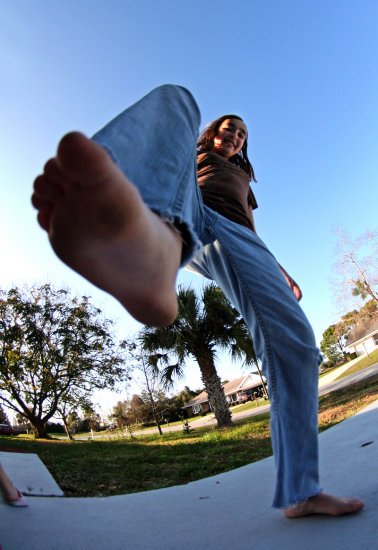
If you’ve done stomps in your cycling workouts, you may think I’m crazy when I say this, but I’ve always liked them. They’re extremely tough but appeal to that twisted part of me that enjoys hard training. (I know: you’ve got that part, too.)
If you haven’t done stomps, they’re designed to increase power in the saddle. I believe Chris Carmichael is generally given credit for the training, but his guidelines differ from the ones I know. The Carmichael method involves 15- to 20-second stomp intervals. Here's Chris' description at www.active.com
In Performance Max, the program created by Jim Karanas, we used 60-second intervals with a 60-second rest, and followed the format below.
A solid warm-up is essential, since stomps are difficult and can stress the knees and the lower back. Roll the legs for several minutes. Begin an alternating pattern of 2:00 of seated high cadence (110-120 rpm); 1:00 of 80-rpm standing runs; 1:00 seated with resistance at 80 rpm; 1:00 of recovery at 90 rpm. Go through the pattern several times, as your group requires. Change the order, if desired.
A stomp interval is 60 seconds; the recovery interval is 60 seconds. Allow 22 minutes for 10 stomps: a set of 5, a short break, another set. The break I used was 3 minutes total: one minute of the usual recovery after stomp #5, then 2 more minutes (sit out one stomp cycle). It’s enough, but you could go longer. Resistance during stomps is high to very high and drops during recovery. Recovery cadence is individual, but I suggest 90 to 100 rpm.
– Stomp at 80 rpm. Fatigue will tend to slow the legs, so it helps A LOT to have an 80-rpm song to beat-match. We almost always came back to Hallogallo by Neu! because it’s a pretty precise 80 rpm. The fact that it’s 10 minutes long helps sustain the energy of the training. Play it twice or change music for the second set.
– Keep the body centerline on the bike. During the stomp, don’t move side to side, as you would in climbing. Keep hands in position 1.
– Rules for a beautiful, circular pedal stroke don’t apply during stomps. Exaggerate the down-stroke and smash against the resistance, without moving the body side to side. I cue it as “punching the pedals.”
– Heart rate isn’t the point. However, there are no HR limits on this exercise, and HR can spike quite high if the rider is seriously stomping without modifying the resistance. (Intervals under 60 seconds may yield lower heart rates.)
Avoid longer stomps. One instructor used 90-second stomps, but that means easier stomping, so what’s the point? A full-out, 60-second stomp will start to bring on failure at the 50-second mark, so 90 seconds requires reduced intensity. That makes it … something, just not a stomp.
Avoid “mushy” cueing. The instructor of the 90-second stomps would cue the stomp with, “Okay, you guys, do another stomp now.” There’s NO WAY that will elicit a stomp from your riders. It will get you something, but absolutely not a stomp.
One time, the above instructor’s cue was so mushy, I actually missed the start of the interval. That simply never happened when Jim Karanas cued stomps.
So I recommend Jim’s cueing. It starts about 5-6 seconds before the stomp interval. In a firm voice, say, “And load the bike … AND … STOMP!” The slight pauses and the delivery are intended to let the word “stomp” hit the first second of the interval. Cue time during the interval — say, at 30 seconds and again with 10 to go.
If there’s a way to use some feature on the resistance knob to mark the resistance used on the last stomp, it makes things much easier than trying to re-determine resistance for each interval. Cue that reminder for your riders.
Resistance can be ferocious during stomps. Every time I do them — about 8 trainings per year in the PMax calendar — I notice that, despite growing leg fatigue as the intervals proceed, I can still raise the resistance for each stomp. Don’t ask me to explain that, but it’s too consistent to be a fluke. It even happens when I do stomp training on my own. As a result, I started cueing the riders to keep increasing the resistance so they’d get the added strength benefit.
If you use high-intensity intervals in your classes, this training could fit right in with your approach. Because the emphasis is on strength and resistance, stomps may offer variety, say, a change from speed intervals. If you try stomps, please let me know how they work for your classes.
Originally posted 2014-09-23 08:17:39.
by Gino | Jul 17, 2017 | Master Instructor Blog
[plulz_social_like width=”350″ send=”false” font=”arial” action=”like” layout=”standard” faces=”false” ]
 Not sure how you’d construct an experiment on this one
If you’ll recall from Blog post #5, we are doing our best to stick to “The Scientific Method” as we conduct our research. To that end, we have just accomplished three of the initial steps:
The Process So Far
- Select a topic of study
- Simplify the topic
- Conduct a review of the literature
Now it’s time to form a simple and direct hypothesis to act upon. The word “hypothesis” is the fancy science term for basically “my best guess”. That’s really OK since without an idea being a mere guess, we have no reason to do the research. We want to find out if our guess is true or not, and if it is true, the next phase of development would be to use that knowledge to make us (or our students) better riders.

Testability — Can It Be Measured
While it goes without saying, if one can prove something, one should be able to disprove it as well. Either outcome is acceptable if one can measure what is being studied. To do that, we must identify the Variables that are going to be specifically studied an used to prove or disprove our Hypothesis.
A Variable is a factor or element that can be changed and manipulated in ways that are observable and measurable. However, the researcher must also define exactly what each variable is using what are known as operational definitions. These definitions explain how the variable will be manipulated and measured in the study.
“These precise descriptions of each variable are important because many things can be measured in a number of different ways. One of the basic principles of any type of scientific research is that the results must be replicable. By clearly detailing the specifics of how the variables were measured and manipulated, other researchers can better understand the results and repeat the study if needed. (1).”
Our Variables for Muscular Endurance
Fortunately for us, the two variables that are being manipulated are also easily measured in our exploration of Muscular Endurance. These are Cadence and Heart Rate. Since we have used these to define the range at which one should expect the training effect to be activated or produced is defined by those very parameters. These would also be referred to as the “Independent Variables” since an independent variable is a variable that is manipulated in an experiment. We are going to have our subjects change their cadence and heart rate (through resistance or gearing).
The dependent variable is measured to determine if the manipulation of the independent variable(s) had any effect. In some ways, this is the more important variable to identify in that it represents the actual training result we are looking for. In this case, it is the Muscular Endurance of the legs. The problem is how to measure that. Unlike a proper research lab at a university, we do not have a near-infrared spectroscopy (NIRS) which estimates the relative changes in muscle oxygenation and blood volume during exercise.
That being said, it is true that researchers only began using this equipment in recent history, and so the practice of measuring one’s physical ability (or that of one’s legs) has been commonplace in this type of research and can be done with specific controlled riding drills.
The Hypothesis Formula
To “formalize” our hypothesis, we only need to construct it as an “If-then statement”. Specifically, it would be in the format:
IF Independent Variable = X and/or Independent variable = Y, THEN Dependent Variable should change (improve, increase, etc).
Specifically, our hypothesis would be formalized to look something like this:
IF a cyclist maintains a cadence within the range of 65 and 85 RPM while keeping their heart rate within a designated range of BPM (the middle of their Heart Zone 3 and 4) THEN improvements in Muscular Endurance will ensue after some period of repeated training sessions.
The next post will discuss the specific drills we will use to measure the level of Muscular Endurance in each of our study participants.
(1).Form a Hypothesis
By Kendra Cherry, About.com Guide
Originally posted 2012-05-31 12:23:44.
