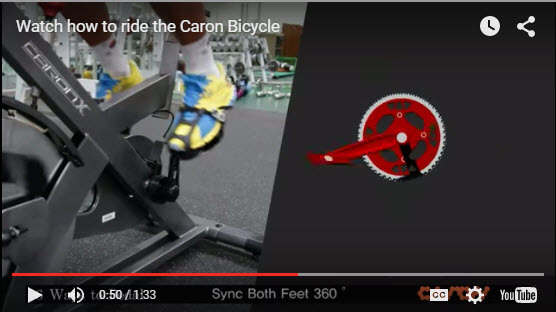
I just became aware of a new Indiegogo campaign for an innovative* method of pedaling a bicycle. Similar in functionality to a KrankCycle, the Caron Bicycle uses independent left/right crankarms that create 6 different pedalling movements.
They have their crankset installed on a conventional IC in this video. Watch and then tell me if you feel these added exercises would improve your class… or is it just a solution in search of a problem that doesn't really exist?
This animated video shows the various muscle activation from the different pedalling techniques.
*I'd be curious to know if Matrix has patents on the KrankCycle that would extend to a leg powered bicycle?
In case you haven't seen the KrankCycle in action:
Caron claims this on their campaign page:
Technology for CARON Bicycle is protected by patents worldwide, including US Pat. No. 7,544,139.
It might be cool to observe power output – especially during one legged work 🙂
During an office-clearing project, I found an article I wrote years ago about a book by Hirschman and Munter. They advocate 3 rules for approaching food whenever you feel like eating.[wlm_private ‘PRO-Platinum|PRO-Monthly|PRO-Gratis|PRO-Seasonal|Platinum-trial|Monthly-trial|PRO-Military|30-Days-of-PRO|90 Day PRO|Stages-Instructor|Schwinn-Instructor|Instructor-Bonus|28 Day Challenge']
Rule 1: Ask yourself if you’re hungry.
The purpose of food is to fuel us when our bodies need it. That’s signaled by physical hunger. Asking this question over and over reinforces the critical connection between hunger and eating.
Rule 2: Ask yourself what you’re hungry for, what you feel like eating.
The idea is to tune in to what your body is telling you. This assumes that the body will know what it needs nutritionally. You can then choose in accordance with that.
Rule 3: Stop eating when you’ve had enough.
This also involves tuning in to what your body is telling you and recognizing the feeling of “comfortable fullness” as the right amount of food.
Take it from a sugar addiction expert: these 3 rules could easily backfire when it comes to sugar.
Why Don’t They Work When Sugar’s Involved?
First, clients who eat sugar frequently may not get hungry. As explained in a previous post, my research hasn’t yet uncovered a solid explanation for exactly why that is. Still, too many clients have described this phenomenon for me to think it’s not real.
These clients may even get symptoms (headaches, queasiness, and so on) instead of physical hunger. The symptoms can typically be traced back to low glucose.
Second, it’s not surprising that someone who’s hooked on sugar feels like eating sugar. Frequently.
How can it be helpful to tell someone who’s going through sugar withdrawal — which may include cravings — to tune in to the body and eat what she/he wants?
Third, the comfort stopping point works well only for those who tend to eat to fuel.
It’s not always easy to stop eating sugar at the comfort point if (and when) the client’s “relationship” with sugary foods is based on satisfying a craving or an addictive urge.
Athletic Training Theories Apply To Sugar Addiction?
From my coach, I learned that the purpose of training is to bring consciousness to the process.
When athletes talked about the pain of athletic training, the coach would say that pain stimulates resistance. But through continued training — and by adding consciousness to it — our response to pain changes. We become nonreactive to it.
It doesn’t feel any better, he’d say. It just doesn’t bother us as much.
Once you remove an addictive substance, like sugar, from the diet, the body may start to display different signals. Hunger pangs may return — or show up for the first time — reflecting the body’s needs. Control over food may increase. Appetite may decrease. Awareness may increase and unconscious reactions decrease.
Significantly, over time, we become less and less reactive to external sugar triggers.
The triggers might include the sight of appetizing foods, the delicious smell of baking cookies — or even sounds that bring on cravings. For example, someone fond of candy might have been triggered in the past by the sound of someone unwrapping a candy bar. Once they’ve been “off” sugar for a while, that sound could become less automatic in triggering the desire to eat candy.
It’s not that the foods lose their appeal; it’s just that they bother us less.
These changes may take time, but staying off sugar long-term could be considered continued, long-term training.[/wlm_private]
[Part 2 will cover athletics and sugar addiction.]
Many instructors tell me that teaching indoor cycling has ruined their appreciation of music. They say that once you become an instructor music comes in only two genres, can be used in class or not. This is sad but true. I have been experiencing a different problem since I started using video in my classes. Now when I watch YouTube videos they are put into the same categories. I am stuck in the never ending quest for the best videos to use in my classes. Every once in a while someone posts a gem that magically appears in my Facebook News Feed, this week the gem was posted by non other than our very own John Macgowan.
[wlm_private ‘PRO-Platinum|PRO-Monthly|PRO-Gratis|PRO-Seasonal|Platinum-trial|Monthly-trial|PRO-Military|30-Days-of-PRO|90 Day PRO|Stages-Instructor|Schwinn-Instructor|Instructor-Bonus|28 Day Challenge']
I hope you like it and I wonder what would happen if the bike stalled?
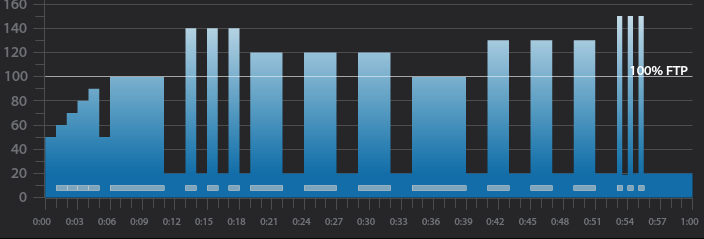
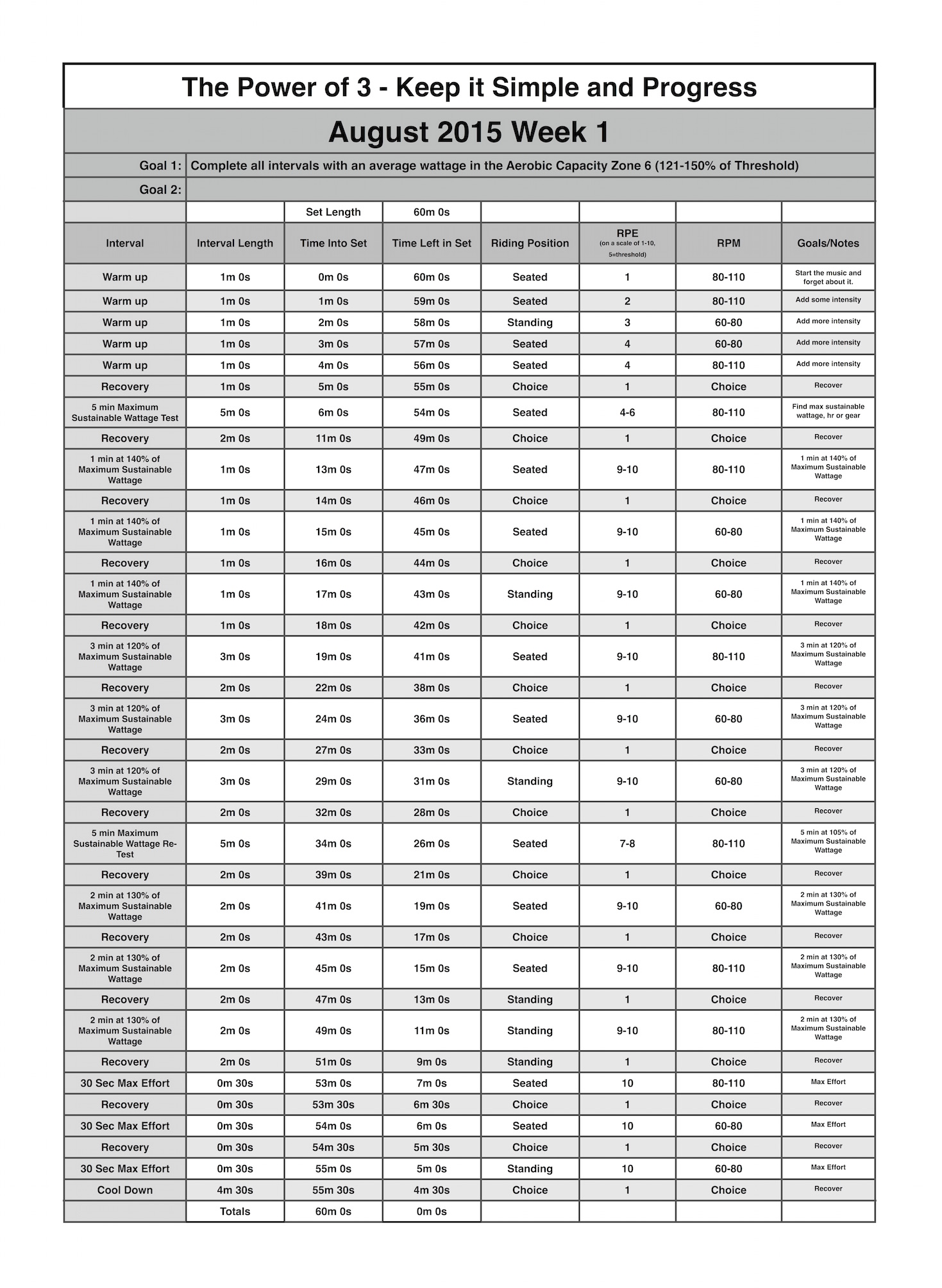
Below you'll find Week 1 of August's Keep it Simple and Progress indoor cycling profile. Over the past few months we have been working hard but with the limited rest most of the work was being performed in the Lactate Threshold and VO2 Max Zones of 90-120% of Threshold. The August progression is going to call for higher intensities into the Aerobic Capacity Zone of 121-150% of Threshold. Because of these higher intensities I'll also be giving more recovery. At first it may seem scary to recover this much, but I promise you, if your riders are working in the Aerobic Capacity Zone the'll appreciate the rest.
5 minute benchmark ride to find “Maximum Sustainable Wattage”
2 minute recovery
3 x 1 minute intervals
1 minute recovery after each
3 x 3 minute intervals
2 minute recovery after each
5 minute interval
2 minute recovery
3 x 2 minute intervals
2 minute recovery after each
3 x 30 second intervals
30 second recovery after each
5 minute cool down
5 minute “Maximum Sustainable Wattage” Test
Settle in to a 5 minute interval at 80-110 rpm.
This interval should be ridden at a maximum sustainable intensity.
if riders know their threshold they can spend this 5 minutes riding at it.
At the end of the interval take note of average wattage or HR or be aware of the RPE.
3 x 1 minute interval goals and specifics:
1st one minute interval should be ridden seated at 80-110 rpm at 140% of maximum sustainable wattage or threshold.
1 minute recovery or reset
2nd one minute interval should be ridden seated at 60-80 rpm at the same wattage or intensity as the 1st.
1 minute recovery or reset
3rd one minute interval should ridden standing at 60-70 rpm at the same wattage or intensity as the 2nd.
1 minute recovery or reset
3 x 3 minute interval goals and specifics:
1st 3 minute intervals should be ridden seated at 80-110 rpm at 120% of maximum sustainable wattage or threshold.
2 minute recovery or reset
2nd 3 minute interval should be ridden seated at 60-80 rpm at the same wattage or intensity as the 1st.
2 minute recovery or reset
3rd 3 minute interval should ridden standing at 60-70 rpm at the same wattage or intensity as the 2nd.
2 minute recovery or reset
5 minute “Threshold” interval goals and specifics:
Ride for 5 minute seated at 80-110 rpm and try match the output or wattage from the “Maximum Sustainable Wattage” test
2 minute recovery or reset
3 x 2 minute interval goals and specifics:
1st 2 minute intervals should be ridden seated at 80-110 rpm at 130% of maximum sustainable wattage or threshold.
2 minute recovery or reset
2nd 2 minute interval should be ridden seated at 60-80 rpm at the same wattage or intensity as the 1st.
2 minute recovery or reset
3rd 2 minute interval should ridden standing at 60-70 rpm at the same wattage or intensity as the 2nd.
2 minute recovery or reset
3 x 30 second interval goals and specifics:
1st 30 second intervals should be ridden seated at 80-110 rpm at 150% of maximum sustainable wattage or threshold.
30 second recovery or reset
2nd 30 second interval should be ridden seated at 60-80 rpm at the same wattage or intensity as the 1st.
30 second recovery or reset
3rd 30 second interval should ridden standing at 60-70 rpm at the same wattage or intensity as the 2nd.
4 minute and 30 second cool down
[wlm_private ‘PRO-Platinum|PRO-Monthly|PRO-Gratis|PRO-Seasonal|Platinum-trial|Monthly-trial|PRO-Military|30-Days-of-PRO|90 Day PRO|Stages-Instructor|Schwinn-Instructor|Instructor-Bonus|28 Day Challenge'].
Trainer Road Profile (If you're Trainer Road Member join my Team to get this and all profiles)
Over the last year I have been trying to take classes from many different instructors in many different facilities. I've been doing this to see what kind of profiles other instructors are using and what kind of music they are playing. Also, as a Master Educator for Stages Indoor Cycling, I want to see if our eduction is making it's way into these facilities and what we need to emphasize in our trainings.
When it comes to music I have found that most instructors are using mixes that you would hear in dance clubs. They are high energy with a strong beat. I like these mixes and they work well in most class, but sometimes I like to use Classic Rock songs that have real instruments with sing-a-long lyrics.
In this week's “Power of 3” mix I used some songs that bring me back to my childhood, riding in the car with my parents and hearing them sing along on the old AM radio.
[wlm_private ‘PRO-Platinum|PRO-Monthly|PRO-Gratis|PRO-Seasonal|Platinum-trial|Monthly-trial|PRO-Military|30-Days-of-PRO|90 Day PRO|Stages-Instructor|Schwinn-Instructor|Instructor-Bonus|28 Day Challenge']
Healthful omega-3 fats are found in such foods as fatty fish, flaxseed oil, walnuts and walnut oil, and leafy green vegetables. Other top sources of fats include raw coconut oil, avocado, olive oil, nuts and seeds. With nuts and seeds, raw is better than roasted.[wlm_private ‘PRO-Platinum|PRO-Monthly|PRO-Gratis|PRO-Seasonal|Platinum-trial|Monthly-trial|PRO-Military|30-Days-of-PRO|90 Day PRO|Stages-Instructor|Schwinn-Instructor|Instructor-Bonus|28 Day Challenge']
Higher intake of omega-3 fats may be associated with decreased incidence of depression, anxiety, and bipolar disorders. A diet lacking omega-3s may result in cognitive or behavioral problems, or such conditions as dementia, schizophrenia and more.
High triglycerides (blood fats) have been shown to be associated with depression, aggression and hostility. Omega-3 fatty acids may play a role in preventing high triglyceride levels.
As an additional benefit, fats can increase satiety. When fats (or proteins) first enter the small intestine, they trigger the release of a hormone known as CCK (cholecystokinin), which produces satiety, the feeling that we’ve had enough food. Interestingly, CCK cuts down our carb consumption and carb cravings specifically. A diet too low in fats can thus result in cravings and overeating.
For all of these reasons, it’s good to eat some healthful fats with your meals.
Do You Often Eat the Wrong Carbs?
Lets start with leafy green vegetables. Do you eat enough of them? Enough would be 3 to 5 cups per day, every day. But how do vegetables affect your mood?
Leafy vegetables contain folate. A diet that’s deficient in folate can result in low serotonin production, which in turn can cause possible depression. Build big salads from a variety of “serious” greens (kale, spinach, arugula, chard and more). Not iceberg lettuce! Eat these serious salads every day. (And other vegetables, too.)
On the other hand, a diet too high in the wrong carbs — meaning starchy or sweet carbs — will trigger high levels of insulin. Some people, called carbohydrate sensitive, release extra insulin when they eat these types of carbs. That can actually change the neurochemical balance of the brain.
To give just one example, a high-carb diet can make you insulin resistant. This is not always recognized. We typically hear that insulin resistance is a result of overweight — but it can also be caused by diet.
Insulin action is necessary for the production of serotonin. So insulin resistance could cut down on serotonin production, leading to depression or other dysphoric (rotten) moods.
When you eat carbohydrates, emphasize vegetables, lentils, beans, rice, or root vegetables — such as yams, turnips or parsnips. These would be more desirable than always turning to pastas and breads, which may trigger more insulin. Research has shown that, in general, wheat tends to trigger higher levels of insulin resistance than other starchy carbs.
And always keep your intake of sugar to a minimum — or eliminate it altogether.
Do You Drink Alcohol Regularly or Frequently?
Regular use of alcohol may either cause, or exaggerate, low brain levels of serotonin. Alcohol can do that in a couple of ways. One is by causing malabsorption of folate. Another is by actively destroying vitamin B6.
As explained above, folate and B6 are both necessary for serotonin production. Also stated above, B6 is necessary for production of norepinephrine and dopamine, as well.
So drinking alcohol frequently can result in depression and other mood disorders, resulting from low levels of these 3 important brain chemicals.
In addition, alcohol use can cause reactive hypoglycemia, a condition of low blood glucose following the consumption of alcohol. Reactive hypoglycemia results from the high insulin levels triggered by alcohol. High insulin may then cause glucose to drop — quickly and quite low.
Reactive hypoglycemia is associated with various mood-state disorders, such as depression, irritability, outbursts, or temper tantrums. If you want to keep your moods even, whenever you drink alcohol, do so in moderation.
Finally, low serotonin is often associated with cravings, especially for carbohydrate foods. To help keep serotonin levels adequate, limit alcohol consumption. Drink less often or have fewer drinks when you do drink.
There’s much more we could say about bad moods and foods. For example, bad moods can bring on cravings, typically for carbohydrates — and not the good kind. PMS or stress can also bring on cravings. But what causes cravings is a topic for another post.
Sticking with the current topic, if your diet tends to be high in white flour or sugar, or if it tends to be low in protein, good fats, complex starches, or veggies — or if you drink alcohol frequently — please try these general guidelines:
– Eat lean protein throughout the day. Lean protein would include fish, shrimp, eggs, chicken, or unsweetened protein powder.
– At lunchtime, avoid or limit starchy or sweet carbs.
– Eat plenty of vegetables, especially leafy greens, throughout the day.
– Whenever possible, select complex carbs — such as quinoa, lentils, turnips, squash — rather than white flour products.
– Include some healthful fats in each of your meals or snacks.
– Limit your alcohol consumption.
These general guidelines may help you improve your mood and increase your energy levels — whatever you may be doing throughout your day or week.[/wlm_private]
You may also find that your food cravings will diminish and — along with them — the urge to overeat!