
by John | Sep 15, 2026 | Big Box Instructor, Boutique Instructor, Member Spotlight

Not that big box.
I sent out an email last week, asking:
Do you teach at a Big Box and a Boutique Studio?
By “Big Box” I'm referring to one of the majors with multiple locations; 24 Hour, LA Fitness, Club Sports, Equinox, etc..
If so I'd like to talk to you and (if it makes sense) interview you for the Podcast…
After sorting through over 300 responses (thanks to you all!) I followed up with some additional detail about the topics I was hoping to explore:
What I'm trying to learn from you is:
- Is teaching at a Big Box different from a small studio?
- If so, how are you or your classes different?
- Are you a “different” person/Instructor at each location?
- Do you enjoy teaching at one vs. the other
- Do you feel limited and/or empowered at one vs. the other?
- Are you more motivated to promote and build your class numbers at one over the other?
- What quick advice would your offer a new instructor on-boarding at either?
​Your thoughts?
What I got back from a number of Instructors was amazing and exactly the type of thoughtful responses I was looking for. ICI/PRO is a platform for smart talented people and it looks like I've discovered a few more 🙂 I'm in the process of setting up these interviews and plan to produce them starting next week!
One question I'm seeing I could have asked differently (and will during the interviews) is; do you feel you need to project a different personality at each location? Instead of; are you a “different” person at each location. Of course you're the same person… it's just that over the years I've experienced Instructors who appear to be very different, depending on where I take their class.
Is that true for you?
Originally posted 2014-04-16 09:42:41.
by John | Sep 12, 2026 | Instructor Training, Master Instructor Blog

Image from http://wattbike.com/uk/guide/bike_fit/general_wattbike_cycling_position_and_setup
Myth #9 – Handlebar height isn't really very critical on an Indoor Cycle.
An alternative of this myth is; handlebar height should always be set to where it's most comfortable.
When the enemy is the wind… the drops are your friend 🙂
Every cyclist in your class knows how important it is to be as aerodynamic as possible. They realize that something like 80% of the energy needed for them to ride their bicycle on flat ground, at 20mph, goes to over coming wind resistance. Add a stiff headwind that has you wanting to crawl inside the paint on your bike and it's probably more like 100%… or more if that's even possible
Reducing your frontal area has the greatest impact on aerodynamics, smaller = better. So many cyclists have a goal to get as low as comfortably possible on the bicycle. In fact road bicycles have a special bend in the handlebars specifically designed to help a cyclist ride low & comfortably… the drops.
Trouble is that very few people use them because they don't have the lower back or hamstring flexibility needed to get low and stay there comfortably.
So why not help our cyclists to develop some additional flexibility… or maintain the flexibility they developed over the summer?
As a fitness professional you realize that gains in; strength, endurance and flexibility all come over time. Please forgive the pun here but any desired change will only come when we stretch beyond what is comfortable/easy/normal.
Indoor classes are the perfect place to work on flexibility for a number of reasons. The limited time (45-60 minutes) is long enough to help, while not as intimidating as the thought of committing to a 4 hour group ride with low bars.
Here's how you can help everyone get down low.
- If your club has the Livestrong / Tomahawk Indoor Cycles you can encourage your riders to spend time in the drops.
- Lead by example by keeping your bars low, demonstrating good form and then make mention that you are doing this on purpose to help increase your flexibility.
- Encourage everyone to observe where they have their bars set and then ask the question; “would your outdoor riding improve if you could spend more time comfortably in the drops?
- Use Periodization – suggest a series of small changes over time.
- Consider partnering with a personal trainer to lead post class stretching that focuses specifically on the hamstrings and lower back.
- Incorporate a short stretching segment into your class. Now that I'm teaching longer endurance classes I'll have everyone stop and stretch at the 15 minute mark when we are all warm – and yet not fatigued.
FYI
The typical handlebar height to saddle height on a road bike is ~level and yet you can find pictures of road bikes showing the handlebars considerably lower than the seat.
Originally posted 2019-01-10 07:15:41.
by John | Sep 9, 2026 | Big Box Instructor, Instructor Tips and Tricks, Instructor Training

If you promise me that you won't get a big head, I'd like you to go look in the mirror and repeat after me;
“I'm a celebrity and it's about time that I started acting like one.”
Now I'm not suggesting that you should start arriving for your next class in a chauffeur driven limousine, nor am I recommending that you follow these seven steps to becoming a celebrity. But I am suggesting that you consider acting in a way that will cause others to be interested in you… which is really no different than the people you are interested in and some of our attraction to other celebrities.
The dictionary lists ce·leb·ri·ty [suh-leb-ri-tee] as a noun meaning 1. a famous or well-known person. If you've been teaching for a while, I'm going to guess that within your little world, you are well known = you are a celebrity 🙂
So if the though of you as a celebrity is intriguing, here are a few things you can work on…
Develop your Shtick
Fernando's lines; “You look marvelous my darling… you really do!” and “It is better to look good than to feel good” launched the career of Billy Crystal back in the 80's. Your shtick may not be as corny as Crystal's, but what made these lines so memorable were how Billy delivered them with an accent that many of us have tried to imitate. A very popular Instructor I know starts every class with “GOOD MORNING MINNETONKA” with a delivery fit for the opening of a World Wrestling Match or Boxing title fight. People in her class look forward to it in every class and would feel something was missing if she didn't do it.
Consistency is key to both your Shtick. What you say and how you say it should be unique and your delivery should be as consistent as possible.
Dress the part
What's the first thing you think of when I say the names of these famous singers; “Lady Gaga?” (her wild clothes) “Bono” – lead singer with U2 (his sunglasses) Brett Michaels (bandanna head wrap) “Dolly Parton” (her… wigs) you get the point.
Consider a Theme Song
Where would Gilligan's Island be today without … five passengers set sail that day for a three hour tour, a three hour tour. Admit it, you could hear the song as your read the words 🙂
What would be wrong with having a consistent song for your class intro [wlm_firstname]? A song that your students begin to associate with your class?
Promote yourself
There's a great article at the Wall Street Journal about Rock Star Instructors and what they do to promote themselves.
Gyms are experiencing a surge in the popularity of group fitness classes, and as they move out StairMasters to make way for aerobics studios, they're finding that the linchpin of a successful class is a charismatic instructor. Often former dancers or musical theater dropouts, instructors motivate students, mostly women though some men too, to pack themselves like sardines into a studio and to come back, again and again.
A demi-class of female friendship is developing: the fitness instructor and the student. “My friends and I always gush about the instructors we have a girl-crushes on,” says Katie Lee, a writer and TV personality in Water Mill, N.Y., who takes spinning classes about four times a week.
Instructors market themselves on the Web by teaching free classes on Google+ Hangouts. They attract followers by posting videos on YouTube and offer daily affirmations to sometimes tens of thousands of Facebook subscribers.
Originally posted 2012-09-06 08:35:45.
by John | Sep 6, 2026 | Instructor Training, Spotify

e·nig·ma [uh-nig-muh] noun, a puzzling or inexplicable occurrence or situation: Spotify is such an awesome service for Indoor Cycling Instructors, it's an enigma to me… why so few Instructors are actually using it.
Or maybe it just looks that way. I'm basing my comment on how few subscribers we see to published playlists.
If you're using Spotify click on the People tab and select another user at random. Check out the number of subscribers they have to any of their published playlists. Even for all the popular Master Trainers I'm connected with, 40 subscribers is a big number for any specific playlist.
I found this playlist of club music on the right that Cameron Chinatti is subscribed to. It has over 57,000 followers.
Why is that?
I was trading emails with contributor Chris Hawthorne, discussing this “enigma” of what appears to be a very small number of Instructors using Spotify… or more specifically; Instructors using Spotify who take advantage of the phenomenal music sharing and new music discovery, that's available to users.
I realize that there are multiple reasons users don't want to share their Spotify usage. You may also view a playlist but not choose to “subscribe” to it. Maybe you listen to a few tracks, find one you like and drag it into one of your own playlists.
Here's an example. Krista Leopold (aka: groupfitpower) and I created these collaborative Spotify playlists and posted them at pedal-on.com. Collaborative playlists allow anyone to add their own favorites = they grow to fantastic Best Songs Lists that you can use to easily & quickly find the perfect track for your next class.
I built my Epic Blue Ridge PRO/Playlist using songs I found on these lists.
Best Intro-Warmup Songs
Best Songs for Climbing
Best Songs for All-Out Effort
Best Songs for Flats
Best Long Songs for Endurance
Best Cool Down Songs
Best Interval Songs
Over two hundred visitors have viewed these lists.
Collectively they have over 275 great tracks.
The most subscribers to any playlist – 16
Sixteen is less than 10% of the number of Instructors who have visited the page.
So again, why is that?
I'm thinking there's more to it… and if its an issue of understanding or the need for more education, we want to help.
So we've created this short survey to understand more about your use of Spotify… if you use it at all.
Totally anonymous if you choose – please take a few minutes and let us know your experiences with Spotify.
Originally posted 2013-02-10 12:43:16.
by Christine Hawthorne | Sep 3, 2026 | ICI/PRO Team Member Articles, Instructor Tips and Tricks, Instructor Training, Promote and Build Your Class
 As a long time educator, I’ve learned some lessons that have been very valuable to me as I added ‘Cycling Instructor’ to my resume. One of the things that I’ve learned over my years in education is how much my students and parents appreciate being connected to what’s going on in the classroom. In addition, my students are made to feel like they are a part of a family. Getting to know each and every one of them on a personal level is a goal I have in my classroom each school year. It builds camaraderie and it lets them know that I care. In return, I’m greeted with happy parents and almost 20 beautiful smiling faces every day.
This concept can be translated into your indoor cycling class in several ways. Connecting with your students can be as simple as sending out weekly emails. Or if you’re really ambitious, you can connect by blogging or through your own personal website. Your options are limitless!
How many times has a student come to you after class and asked you , “Now, which days/times do you teach”? Even though it’s surely posted on every wall in the facility. How often do you hear, “Wow, I loved that one song, what was it”? Or “I wish I had known class was cancelled-you added a class-you were subbing for so and so.”
Your students want to know what’s going on, and the easier you make it for them to get that information, the more they are going to appreciate it. In return, you WILL see your class size grow.
If you have a computer and five minutes a week, you’ll be off to a positive start. Here are a few simple ways that you can connect with your students:
Weekly Emails:
- Bring a sign up sheet on a clipboard with you to class and ask your students for their email address if they would like to receive updates and important information regarding your class.(Of course let them know that you would never share their information with anyone first.) As new members join and become consistent in your program, they will appreciate the connection, so keep that clipboard in your gym bag at all times. Every so often, make an announcement to see if anyone would be interested in receiving emails. If a member comes to you with a question about your classes or teaching schedule, suggest that they join your email list.
- Send out a mass email once a week. In the email give your students information about any closings or cancellations or special classes that you might be teaching that week. Your students will also appreciate the heads up when you’ll be subbing for another instructor or if another instructor will be filling in for you.
- If it’s a slow news week in your cycling world, add in a link to a good article about indoor cycling or a funny clip or picture.
- If you have your weekly playlists on iTunes or Spotify, add a link so your students can have a listen.
It doesn’t have to be elaborate, but I promise you-your students will appreciate you for it!
Connecting Through Facebook:
Facebook Groups
- You can easily create a group through Facebook where members can post, share and ask questions about your indoor cycling program.
- Creating a Facebook ‘Group’ is really pretty simple. If you have a Facebook account, click on ‘Groups’ under the ‘Applications’ menu on the left side of your home page. Enter your group information and invite members from a list of your Facebook friends.
- You have the option of keeping your group private or open to the public. Facebook members that are not already your ‘friends’ can search your group and request to be added to it.
- You can customize who can post on your group page, but it’s fun to keep it open for all group members to post.
- You can add photos and links to your Facebook groups. This is a good place to post your cycling playlists for your students to view.
Facebook Pages
- A Facebook ‘Page’ differs from a Facebook ‘Group’ in that it allows only the page administrator (you) to post. It is open to the public and anyone that ‘Likes’ your page can see your updates on their newsfeed. It is not as interactive as a ‘Group’, but still a great way to get information to your students. Page administrators (you) can also track your page’s activity.
- To create a Facebook ‘Page’: Go to this link which will take you to the Facebook page wizard. It will lead you through the steps and you will have your very own page in no time! You can view my Facebook page here.
If you’re feeling ambitious, here are a few other ideas for staying connected:
- Of course you could always create your own blog or website. I originally created my blog, Chrispins, with my students in mind. And while they still check it out, it has really blossomed into place where I communicate with other instructors around the globe.
- If you’ve never checked out FitGuru, it is a good (free!) tool for communication with your students as well. It takes a little bit of time to set up, but once you have it rolling, it is quick and easy to maintain your site. It allows you to easily email all of your members with the click of a button and you can post your teaching schedule there along with important news.
If you are not already connecting with your students in some way, give one of these ideas a try and see the difference it can make in your classes.
How do you communicate with your students? Are you already using some of these methods or do you use a method that I did not mention?
Originally posted 2013-01-22 05:44:28.
by Gino | Aug 31, 2026 | Master Instructor Blog
 [plulz_social_like width=”350″ send=”false” font=”arial” action=”like” layout=”standard” faces=”false” ]
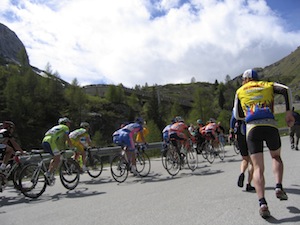
Long climbs of modest grades are the ideal terrain for Muscular Endurance
There are really two types of research available on virtually any topic related to cycling performance or physiology. There’s the research regarding what people are doing or what they think about a topic. These are people from many different perspectives; coaches, authors, bloggers, and we know that last category can include as many levels of proficiency that exist. A google search with the key terms will deliver plenty of results.
Then there is research regarding what the “Science” says. This research is found in medical and educational journals. Most often you must be a member of one of the governing bodies such as the ACSM (American College of Sports Medicine). While you might get some of the highlights in Google searches, the full studies are usually only able to be read by those who are members to the organization and have paid for access to said journals.
While you can simply use the free resources available, there is a distinct risk of basing your own work or conclusions on opinions or popular trends instead of hard science. However, that being said, this is part of the rationale for why Evidence Based Medicine is the only approach that makes sense for coming to conclusions that you will use for your own training or for that of your students. At the end of the day, EBC will be your own personal “proof in the pudding” as they say.
Muscular Endurance — Some Of The Science
I like to start with the science perspective — university, medical community, etc. I like to read the journals that the professional researchers read to get a solid foundation before I begin to let Mr. Google tell me he (and all of his many followers) think.
The first place I started was a position statement by the ACSM:
“Muscular strength and endurance are developed by the progressive overload principle, i.e., by increasing more than normal the resistance to movement or frequency and duration of activity. Muscular strength is best developed by using heavier weights (that require maximum or near maximum tension development) with few repetitions, and muscular endurance is best developed by using lighter weights with a greater number of repetitions (1).”
While this is clearly directed towards weight training, the application to cycling is also pretty obvious — the additional weight is represented by heavier gears (or steeper hills) and the greater number of repititions is represented by increasing cadence ranges.
In another article from the Journal of Medicine & Science in Sports & Exercise it says:
“…the extent of neuromuscular fatigue during pedaling exercise varies among different cadences and minimal fatigue is obtained at a considerably higher cadence (2).”
So from the above two statements we see the standard stress and adaptation principle being referenced and that there are cadence levels that result in lower muscular fatigue. Therefore this allows us to infer that there are cadence levels that encounter greater muscular fatigue, and hence it will be those levels that will promote the “progressive overload” we will need to force the adaptation or improvements in our muscular performance — either strength or endurance.
Muscular Endurance — Some Of The Practice
Here it is super easy to find out what so many coaches and instructors are doing to work on Muscular Endurance (ME). We see cadence guidelines that range between 65 RPM and 85 RPM across may different coaches, where the sweet spot is probably 70 to 80 RPM. However, when it comes to intensity or heart rate, there is considerable variation. The range typically starts at a low of T1 or Low Zone 3 (based on a 5 zone system with bottom of zone 5 your High Threshold), and goes to High zone 4. If we also throw out the lowest low and the highest high, we have an intensity level “sweet spot” that puts us between the middle of Zone 3 and the middle of Zone 4.
So in summary, the science confirms that we can create or promote the improvements in muscular endurance by specifying training rides within a cadence range of 70 to 80 RPM while working at an intensity level of Mid Zone 3 to Mid Zone 4.
The next question to look at is duration of the training, the amount of recovery between ME drills, and the number of ME workouts in a given week. Also, this begs the question if we workout at the low ends of both Cadence and Heart rate, would it take longer to see the training effects than if we worked at the high ends of both. In other words, if we do two weeks of 80 rpm (actually the higher RPM represents lower muscle fatigue) and mid Zone 3 work, will this produce less of an improvement than working at 70 rpm while in mid Zone 4.
If that would be true, then we can use this information to prescribe varying levels of ME work based on the fitness level or the time frame a coach and student are working with. Even more interesting would be the possibility of creating a numeric scale that we could use to “measure” the amount of ME work a student has been doing over a given period of time.
The next post will discuss how we can set up a study to do just that.
Originally posted 2012-05-26 08:25:31.

