With the Resolutionists descending en-mass on your club or studio, Cycling Fusion's Tom Scotto and I felt you would benefit from an Audio PROfile that would get them off on the right foot peddle for 2013.
Strong Foundation is a 30 minute class you can teach repeatedly during a weekend open house event or as a regularly scheduled introduction to Indoor Cycling!
Tom spoke very highly about Gene Nacey being the patron saint of beginner Indoor Cyclists. You can hear Gene's ideas here.
Our plan is to discuss his strategies and techniques for teaching effective Foundation Classes to the brand new to exercise participants we will all see the first week in January.
As you and your class transition into February 2017, it's often beneficial to begin adding some additional time in the saddle. Longer classes should (and often need to) be at a lower intensity.
So while a longer, endurance focused class has value, getting members to accept longer, steady state classes can be a challenge.
This week we'll be focused on the concept of “selling endurance” to your class participants.
Master Instructor Tom Scotto offered his thoughts in a previous podcast from 2012. If you haven't heard it, it will be time well spent.
Whenever I think of recovering faster, I hear my dad in the back of my head telling me to sleep faster when I only had 4 hours until the morning. I by no means want you to start short changing your recovery time nor trying to psychologically speed up the process. I do want you to consider how fast your heart rate recovers and some valuable information we can provide to educate our riders.
I’ve mentioned numerous times that I use recovery between efforts as a litmus test to determine whether a person is working at the appropriate intensity. The length of time given for recovery is often directly linked to the level of intensity we expected. For intensities that fall in the 80-95% range, I often provide a minimum of 3 minutes of recovery before the next effort. To put more context around this, if I was asking my riders to maintain a hard effort of 80% or greater for 3 to 5 minutes, I would provide 3 minutes for them to recovery. In a similar fashion, I may throw 4 to 8 short 1-minute intervals at them with only 30-60 seconds of intermediate recovery (between intervals), but would then give them 3-5 minutes to recovery after the set.
With both of the above scenarios in mind, I would expect riders to “need” at least 2 minutes to allow their heart rates to drop (near 60-70%) with the third minute providing some transition time before we launch into the next challenge. The bigger issue is always, did they work hard enough? And frankly, without a heart rate monitor it is very subjective. They may say, “I felt like it was hard, but then I recovered within a minute and now I’m ready to go”. It is far more objective for a rider to say, “I ended that last interval with my heart rate at 165 BPM and 2 minutes later it went down to 130 BPM”.
So what’s happening when someone pushes very hard and does not recovery very much within the 3-minute period? This is a question a few riders asked me this week. Here are 3 possible answers:
(1) The rider may be deconditioned and has possibly pushed himself or herself too hard. This is common with indoor classes that cater to all levels of fitness. Some riders do not have the body awareness and find themselves beyond their limit. They usually don’t have to stop riding, but you may want to suggest they take more time to recover before jumping back in. This suggestion is a sign of a mature and professional instructor who is not just interested in beating the riders to a pulp.
(2) The rider is just tired from a long day or is maybe lacking sleep or has not eaten well. This is where you can ask if this is a common occurrence or something they are just experiencing today. Similar to the rider above, they may need to sit out a few efforts or drills and then jump in once they feel recovered.
(3) The rider is borderline over-reaching or over-training. This is sadly a “silent-killer” in the fitness world. People workout on a regular schedule, regardless of whether the intensity and volume is correct, and eventual find themselves plateauing because they have not taken time to recover. I would ask this rider, “when the last time you took a light week or a total week off?” If they didn’t know or it was more than 5-6 weeks ago, I would strongly recommend they take the next 5-7 days off. Now, they don’t have to do completely nothing during those 5-7 days, but the intensities should be very light (50-60% perceived effort). If a person didn’t feel they had the disciple to go easy, then I would recommend they refrain totally.
As fitness professionals, we have to be prepared to help people deal with the challenges they experience as they strive for a healthy body. This includes saying the hard things (because they don’t want to hear it – which is why they are where they are at). So how can our riders recover faster after hard efforts (a sign of good fitness), it just may be that they need to pay more attention to their body’s signals for overall rest. It is our job, to provide the valuable input that helps them make an educated decision. Eventually then need to believe that rest and recovery IS training.
Suggest finding someone who looks like this to help you evaluate your online registration system – or review the one you're using now.
Prospective Indoor Cycling Studio owners have hundreds of both challenging and easy decisions to make, long before they're ready to launch. Considering that your new studio will be a real business and the purpose of your business is to make money, the registration system you choose* to collect your money is pretty darn important… in fact it's crucial IMO. With multiple solution providers of online registration systems – how do you choose?)
I'd start by answering the: how easy/intuitive are the registration and collect the money process?
In the online world, marketers describe collecting the money as a conversion – I call it making a sale. Conversion percentages = what percentage of visitors who somehow end up on your registration page actually convert? Conversions don't always equate to sales. They can also be; create a user's profile, register for a class or even just join your email list.
Any difficulty the visitor experiences during the process can reduce the number of successful conversions (you don't get the money).
Now I don't need to tell you that different people, react to online “difficulties” or “frustrations” differently. You could throw any amount of digital confusion at either of my two girls and they'd still figure out how to register for your class. But there are potential customers who aren't comfortable with online anything.
Testing the registration and collect the money process
You're probably not the right person to test and compare online registration systems. The fact that you are here reading this tells me you are comfortable using a computer and are probably routinely using it to make purchases online.
I suggest finding someone in your life who's not all that comfortable with technology and ask them to help you evaluate the various systems. For some of you it could be your Mom (hence the Mom Test), a friend or family member that's similarly technophobic.
Here's how I would structure your “Mom Test”.[wlm_private ‘PRO-Platinum|PRO-Monthly|PRO-Gratis|PRO-Seasonal|Platinum-trial|Monthly-trial|PRO-Military|30-Days-of-PRO|90 Day PRO|Stages-Instructor|Schwinn-Instructor|Instructor-Bonus|28 Day Challenge']
Contact each company's representative and ask for a link to the home page of an actual studio that uses their system/software.
Collect each studio's link
Sit down with your evaluator and have them go through a complete registration process: Create a user's profile and then register and pay for an actual class. Yes, this will cost you a few dollars > what you learn will be invaluable.
But please don't waste their time and ask the studio owner to refund these small purchases.
While your evaluator is going through the registration process, You Need To Sit On Your Hands and offer no direction or assistance. Just watch exactly what happens and how she/he responds.
How quick was the process?
Was there any place where they got stuck
Did anything happen/change that caused them to question anything? Am I doing this right? Why was I taken here? etc…
With any luck you'll have a fun time doing this and learn a lot about what works and what doesn't, making your final choice easier. After all, you and your successful studio is going to be married to this software for years to come 🙂
[/wlm_private]*Of course this isn't the only reason you would decide on one registration vendor over another. If you have other questions you can ask me here.
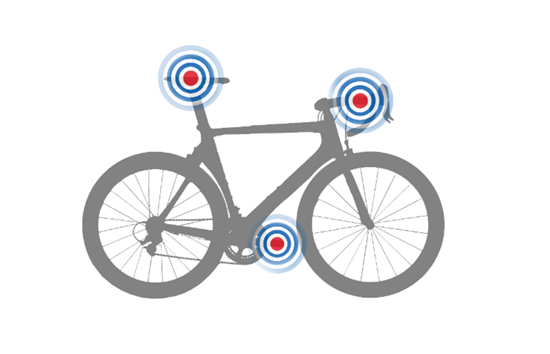
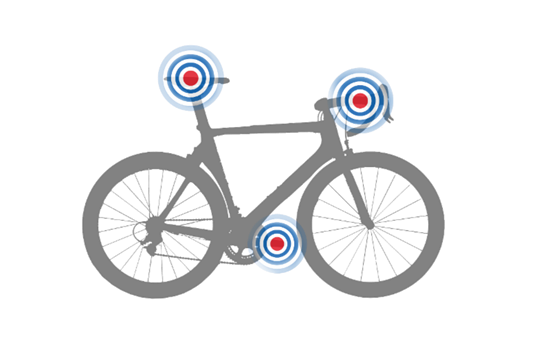
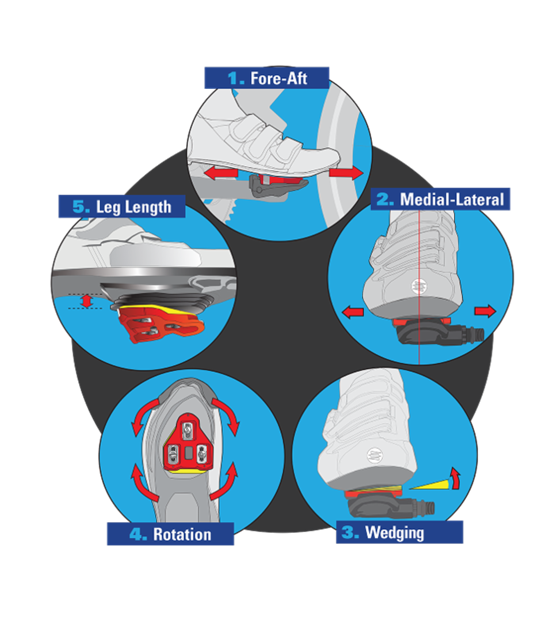
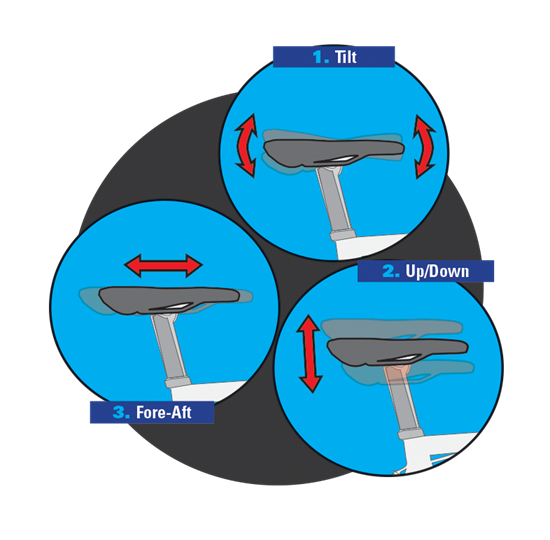
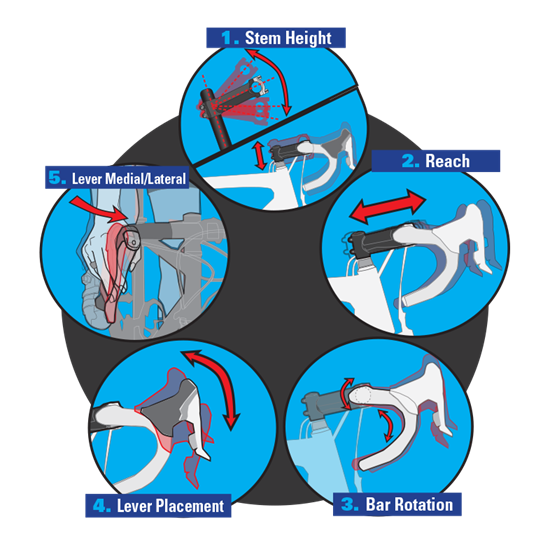
The guys at BikeFit.com do a great job using infographics to communicate the process of proper bicycle fit. Today they sent out these images and I wanted to share them with you. Each details the multiple points of adjustment that can be used to ensure a comfortable setup.
Having been through a three hour, professional fitting like what BikeFit.com offers – I have experienced how many of these adjustments are effected by others… i.e. saddle fore/aft affects height and reach to the bars, cleat position can require a change in saddle position, etc…
A comprehensive fitting is really important for someone who is riding thousands of miles a year and/or is super concerned about efficiency = getting the maximum amount of power to the road.
So how detailed should you be with a new participant? After setting up people for over 15 years, it's my view that you just need to get them close and feeling comfortable. You obviously don't have 3 hours and with the exception of the Keiser M3, the adjustments on Indoor Cycles are too coarse to really fine tune a person anyway.
A rock solid climb for this week! Super motivating with lots of twists and turns for coaching moments and power adds.
This Russian DJ hit the scene in 2009 at the age of 19 and has been pumping out the hits ever since.
This tune is 4:08 and has an rpm at 68. I cue ‘out of the saddle' at :40 with the music- staying out until a music pull back at 2:00. Again we get out at 2:30 with more load :), and a zone 4/5 push to the end starting at 3:16.
Featuring Angel Taylor, here's DJ Arty and ‘Up All Night':