If your objective is to communicate (sell) the value of either Training With Heart Rate – or – Training With Power, teaching your class using Three Zones will be the most easily understood, accepted and remembered… here's why.
The Rule of Three
It's no accident that throughout history – thousands of years in fact – three (3) is the magic number in many, memorable fairy tales, myths and marketing campaigns. They're easily remembered and shared because they follow The Rule of Three…
There were three little pigs, three blind mice, Goldilocks and the three bears, Three Musketeers, three wise men and the Three Stooges.
1st, 2nd, 3rd – who ever remembers (or cares) who came next?
This copy writing blog explains the Rule of Three very well in the context of effectively communicating ideas.
It all comes down to the way we humans process information. We have become proficient at pattern recognition by necessity, and three is the smallest number of elements required to create a pattern. This combination of pattern and brevity results in memorable content, and that’s why the Rule of Three will make you a more engaging writer.
Sticky Ideas
You see the Rule of Three used all the time across diverse areas of life. Why?
Because information presented in groups of three sticks in our heads better than other clusters of items. For example:
“Life, liberty, and the pursuit of happiness”
“Government of the people, by the people, for the people”
“Friends, Romans, Countrymen”
“Blood, sweat and tears”
“Location, location, location”
“Father, Son and Holy Spirit”
“Faith, Hope and Charity”
“Mind, body, spirit”
“Stop, Look and Listen”
“Sex, Lies and Videotape”
“I came, I saw, I conquered”
I'm confident you can add a bunch more to this list, which kind of makes my point. All of our brains are hard wired to create and retain patterns of three concepts… not four, five, six or seven – three is the magic number.
Sally Edwards understood The Rule of Three. Her three heart rate training zones concept called Zoning is designed to appeal to as many people as possible.
Please note that I didn't ask; What's the most accurate/precise/correct number of HR or Power zones? My question was; What's the best number of Heart Rate and/or Power Zones in our classes?
Cameron Chinatti with Stages Indoor Cycling says the answer is 7 Power zones. So does Joe Friel, Dr. Andrew Coggan. Chris Carmichael appears to use five. All super smart and knowledgeable people to be sure. Administered properly to a committed endurance athlete, 7 power zones is probably the most accurate/precise/correct number of HR or Power zones for them to train with.
But 7 Power training zones is too many IMO for our classes filled with Club Athletes.
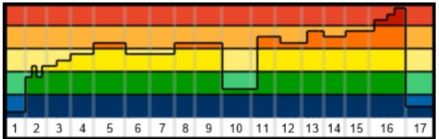
The ICI/PRO Power Training Zones follow The Rule of Three.
Protein Power: It’s Not Just for Muscles (Part 2 — Appetite Control)
By Joan Kent, PhD, and Shawn Bevington
Protein is used to make hormones, which are messengers in the body. They’re produced in one part of the body and then distributed — through blood, interstitial or other body fluid — to other organs or tissues. There they modify activity and function.
This brief post will focus on just a few hormones and how they affect appetite.
*CCK (Cholecystokinin) – Satiety is the feeling that you don’t need another meal because you’re still satisfied from the last one.
CCK is arguably the most powerful satiety hormone in the body. It reduces appetite by stimulating the function of the brain’s key satiety center, the VMH (ventromedial hypothalamus).
CCK is released when we eat protein and fats. It affects our food preferences by reducing the desire for carbs.
Anyone who suffers from an exaggerated desire for carbs probably needs to eat more protein. Vegans, for example, may experience strong cravings for carbs, including sugars. Finding a true protein source is a key factor in reducing vegans’ cravings. More on that in Part 3.
Eating adequate protein can also be key in conquering sugar addiction for this same reason.
*Ghrelin – Ghrelin increases appetite by stimulating the brain’s lateral hypothalamus. The LH can be seen as a ‘feeding’ center.
Eating protein can help to reduce ghrelin release. In healthy men, a high-protein breakfast decreased post-meal ghrelin levels more than a high-carb breakfast. The high-protein meal also slowed gastric emptying. Researchers attributed both effects to the secretion of CCK and glucagon, both triggered by protein.
*Glucagon – Glucagon is a hormone made in the pancreas. Insulin is, as well, but the functions of the two hormones are oppositional and work to balance glucose levels.
Insulin also tends to be a fat-storage hormone, while glucagon moves fats out of storage and into the blood stream so they can be utilized as fuel, rather than stored.
While many foods trigger the release of insulin, only protein foods trigger glucagon. Glucagon is also secreted when we exercise.
As mentioned above, glucagon and CCK seem to control appetite by modifying ghrelin levels.
Don’t miss protein and brain chemistry, age, and the vegan solution in Part 3, right here this week!
Shawn Bevington is a holistic health coach, certified by the National College of Exercise Professionals (NCEP). He has been a fitness trainer for six years, and boasts another seven years of activity in various programs, including football, shot-put, pro wrestling and other strenuous sports. Self-motivated, Shawn has spent years researching on his own – and putting that information into practice with his clients. His knowledge, skill and experience have made him a sought-after fitness trainer, both by clients and by colleagues who bring questions to him.
Dr. Joan Kent has a PhD in Psychoactive Nutrition. She was the first to document the brain chemical pathways of sugar addiction and to explain the sugar/fat seesaw hormonally and chemically. Joan has helped hundreds and hundreds of clients with metabolic conditions — diabetes, hypertension, heart disease, cancer — as well as clients with inflammation and mood disorders. Joan has written 2 best-selling books: Stronger Than Sugar, on conquering sugar addiction, and The Sugar-Free Workout, on fueling before, during and after training for optimal performance. Visit www.LastResortNutrition.com and grab your free gifts.
Technology can be a great thing for our classes – as long as all of your Instructors have been trained to use it properly.
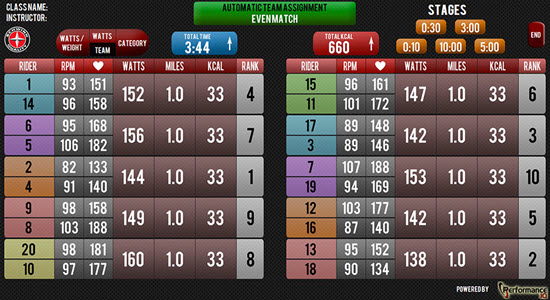
I'm seeing a bunch of clubs and studios having enormous success with performance data tracking and display systems. These systems connect to the consoles all of the new Indoor Cycle's with power and then display the information on a big screen + send out those informative emails that your participants love to receive.
Unfortunately some studios and/or Instructors aren't having the same amount of success. During many of my consultations with studio owners, I'm hearing them say that they would have appreciated (and benefited from) more in depth Instructor training, i.e. exactly how do we integrate these systems into an actual class?
So when I was at IDEA this past Summer I was encouraged to see that Schwinn Indoor Cycling has developed specific education, for the use of their Schwinn branded version of Performance IQ 🙂
To get the low down on what they are offering I invited Schwinn Indoor Cycling's Director of Education, Julz Arney, join me to discuss their education and get her thoughts on Best Practices for using Display Training.
During this interview Julz mentions that she would provide everyone with a PDF of her 10 Best Practices for using a Display Training system – here's the link to download it.
Would your club or studio benefit from additional Instructor training, regardless of the brand of cycle you're using? ICI/PRO has an experienced team that is available to provide intensive Instructor training at your location – please contact us and we can schedule a call to discuss your needs and see if we can help. We can also help you with decisions regarding Indoor Cycles, website design and performance data tracking and display systems.
This weeks ride is from Joey! – “This ride was fun to put together. You will recognize all of the music, and be tempted to sing along with most of it. This is a really hard ride. Normally, we structure endurance rides to begin with a higher cadence so that it first stresses the cardio vascular system and then the muscular system. The theory behind this is that the cardio system recovers fairly quickly where the muscles take more time. In this weeks ride, we begin with the muscles and then work toward the cardio, so you will carry the fatigue with you through the ride. Good luck and have fun.” Joey