ICI Podcast 334 – How do you track the effectiveness of your social media campaigns?

ICI Podcast 334 – How do you track the effectiveness of your social media campaigns?

Social Media Help for cycling studios

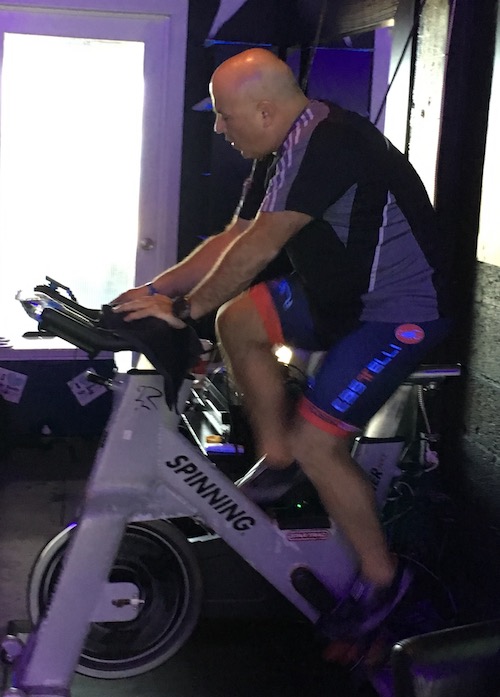
Image credit Keith Crews

Social Media has grown to become the primary method of marketing for Indoor Cycling Studios. Which makes sense. Many of your prospective customers are active on Facebook, Twitter and Instagram – and you can't beat the cost. All it takes is posting a few pretty pictures or clever sayings and SHAZAM! you get a bunch more loyal customers… right?

OK, it's really not that easy. I talk with studio owners every week who feel completely lost, with no clear strategy about how they should be using Social Media.

One common question I get is; “how can I know if my efforts at attracting, engaging and then converting followers are actually working?”

Instructor Cassie Piasecki is what I would describe as a Social Media Expert. She's responsible for all of the social promotions for Grit Cycle – a year old studio in Costa Mesa. CA that's crushing it. Part of their success, I'm guessing, comes from Cassie's obsession with everything social.

You can check out and then steal many of Cassie's ideas by following her blog | Facebook | Grit's Facebook That picture of Cassie is a fabulous idea all by itself – from Cassie's Instructor profile. Notice how it communicates some of her personality and personal interests? Check out all the other Grit Instructor profiles here.

I was excited to record this episode of the podcast with Cassie and share it with you.

Online access to these podcasts require some level of ICI/PRO membership – potential and existing studio owners can subscribe for free to our PRO Studio level here – gives you limited access to Your Fitness Business articles and podcasts.

[wlm_private ‘PRO-Platinum|PRO-Monthly|PRO-Gratis|PRO-Seasonal|Platinum-trial|Monthly-trial|PRO-Military|Schwinn-Instructor|PRO-Visitor|PRO-Studio|28 Day Challenge'] Enjoy!

Are these interviews helpful to you? Please let me know what else you'd like to learn by posting a comment below[/wlm_private]

ICI Podcast 334 – How do you track the effectiveness of your social media campaigns?

The Weekly Ride – 02/19/18 Anti V Day Ride

Welcome to the The Weekly Ride by Cycling Fusion:

No more hunting for new music or counting out cues.  Here is your ready to ride document, that can be displayed from your phone, or printed out onto cue cards.  This ride is timed out, down to the second, to make your life as easy as possible!

(more…)

Pedaling Backwards?

Pedaling Backwards?

ACE study on pedaling an indoor cycle backwards

This is interesting to me. Why choose to study this?

Talk about opening “Pandora's Box” – this is bound to get a few conversations going…

Cameron Chinatti from Stages Indoor Cycling alerted me to this. ACE (American Council on Exercise) published a scientific study that looked at the effectiveness of pedaling backwards. Please download the PDF and read it in it's entirety, so you have a complete understanding of the purpose and results of the study.

That ACE chose to study this at all is very interesting (and a bit confusing) to me. We've all been taught that we should always pedal forward and never backwards. So what's the point looking into this activity? The intro talks about the potential cross-training effects. Oh, and there's a quick bit about how variety can help prevent boredom…

Discussing this topic, I felt I needed to break it down to these three questions:

  1. Is backwards pedaling beneficial?
  2. Is backwards pedaling safe?
  3. Should you consider adding backwards pedaling to your classes?

#1 Is pedaling backwards beneficial? 

In the conclusion of the study, ACE says:

The Bottom Line

This study showed that pedaling backward on the Cascade cycle elicited higher heart-rate and energycost values than pedaling at identical workloads in the forward direction. The increase in physiological response was reflected by higher muscle activation of the quadriceps muscles (vastus medialis, vastus lateralis and rectus femoris), which is consistent with the subjects’ descriptions of feeling like they had to “pull” the pedals when cycling backward. “The concept of specificity tells us that pedaling forward should still make up the vast majority of a cyclist’s training,” explains Dr. Porcari, “but the subtle differences in muscle activation seen when pedaling backward can be very beneficial.” Dr. Porcari recommends treating backward pedaling as a change of pace and a form of cross-training that better targets the quads. Maria Cress, a member of the research team for this study, points out that by improving quadriceps strength by pedaling in the backward direction, cyclists will experience improved strength for regular cycling. “They will be able to work at a higher workload at a lower RPE and heart rate,” says Cress, “which means that incorporating backward pedaling into your routine will eventually make pedaling forward mentally and physically easier.”

So the researchers are saying backwards pedaling is beneficial. These folks from UWL are exercise scientists after all and include Dr. Carl Foster. Dr. Foster's research has validated most of the zone based heart rate training you've learned – regardless of the source.     

#2 Is backwards pedaling safe?

Let's start with this. All of the Indoor Cycling certifications recommend against pedaling backwards. But here's where my confusion comes in… why would ACE even consider studying and publishing this? They have to know that there will be many Instructors who will read this and think; “ACE isn't concerned about pedaling backwards, so I don't need to be either!”

I can already see the responses on Facebook; “ACE doesn't know what they're talking about… they don't understand cycling like Spinning®/Schwinn/Keiser/Stages/etc..

So why wasn't ACE concerned?

ACE quotes the manufacturer of this recumbent:

The Cascade CMXRT recumbent exercise bike is designed to mimic the real road feel of cycling outdoors. Its website says that the bike offers “quiet bi-directional resistance [that] lets you pedal forward and backward throughout the whole 360-degree pedal stroke for a more effective workout.”

I'm guessing that ACE saw this and thought; “you can pedal their bike both directions. Let's use it to see if backwards pedaling is beneficial.” Except…

ACE is mistaken about this part.

The Cascade recumbent is fixed gear drive

The Cascade recumbent is fixed gear drive

In the sidebar included in the study, ACE makes this comment:

Of course, bike safety is another issue entirely. Before telling participants in a group exercise class or a personal-training client to start pedaling backward, be sure that the bike you are using is designed to do so. It is important to note that this research was not conducted on a fixed-gear cycle, but rather on a specifically designed recumbent bike that provides resistance in both directions.

As you can see in the above screenshot from Cascade's website that their recumbent does have a fixed gear drive system, just like every other Indoor Cycle – the one exception being CycleOps which uses a freewheel.

What ACE should have highlighted is this recumbent uses magnetic resistance, combined with an aluminum flywheel. The eddy currents that create the magnetic resistance don't care which direction the flywheel spins = that's where the provides resistance in both directions comes from. The aluminum flywheel is light enough that it doesn't create the huge rotational momentum (and resulting “run-away flywheel” effect) experienced with a friction resistance system that uses a heavily weighted flywheel.

There isn't anything special/unique in use here. All of the Indoor Cycling brands (FreeMotion/ICG/Keiser/Schwinn/Stages offer a similar magnetic resistance. So it's my view that this experiment could have been conducted on any ICs with magnetic resistance and ACE would have seen similar results.

Quick side note: I jumped on my personal indoor cycle that has magnetic resistance and a Stages Power Meter, to try backwards pedaling. Believe it or not, I'd never, ever tried this before. The Stages Power Meter did display cadence, but the watts stayed at zero. So no backwards pedaling, power training for me 🙁 

What struck me was how I felt everything flipped; where I could add the most force was lifting my lead foot, as it came forward and up. Pushing down seemed very awkward and I didn't feel I could apply much pressure.


#4 Should you consider adding backwards pedaling to your classes?

I wouldn't. There doesn't appear to be enough positive benefits, in contrast with the possible injury. Not to mention pedaling backwards just looks wrong/goofy, So I can't see including it in my class.

If you are thinking; “My class is super experienced and we'd like to try this”. I'd love to know your experiences.

One more note: I briefly rode this recumbent cycle when I was at IHRSA. The manufacturer, Cascade Health and Fitness, and ICI/PRO are currently conducting a small study of our own. We have two clubs who are using recumbents, along with conventional indoor cycles, to see if they can be successfully integrated together in a group class. Our objective is to see if adding a few recumbents can make classes more accessible, to people who have physical limitations that prevent them from riding a stationary bike.

The Loud Ones – Class Work Set Profile using the Stages Sprint Shift

The Loud Ones – Class Work Set Profile using the Stages Sprint Shift

The Loud Ones ICIPRO Class Profile

Click to download this Profile PDF.

Ride Name: The Loud Ones

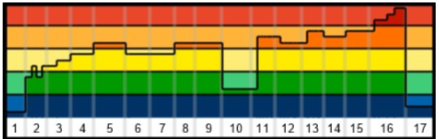
Work Set Length: 13:44 + 7:17 recovery [21 minutes]

The Sprint Shift on the new Stages SC3 bike is your interval training solution. Left position for easy, Center position for medium, Right position for hard. Make micro-adjustments with the resistance knob during the interval. Could it be any easier?

Now, I am a big believer in training with power, benchmarking your effort, and documenting your progress. All three are important for successful long-term cycling training but people sometimes misunderstand my position as “all science, timed intervals — no fun.” That's not the case at all!

For the 3 songs below, all I would track is total distance traveled. My riders would hit “The Loud Ones” maybe once every 10 rides and see if they went farther. You could also use average wattage or average speed – it is still a benchmark, just not a complicated one.

As for the science, these are aerobic and anaerobic power intervals – near maximum, brief efforts with short rests. This makes you strong during the frantic parts of road races, during time trials on hilly terrain, and when you want to inflict some pain on your group ride mates. The ride gradually slows in cadence as the resistance and length of efforts creep steadily upward.

But don't think too much about all of that. Do a quality warm-up with 2 or 3 very short sprint-type efforts, tell your participants they are in for some HARD WORK, then just turn it up, follow the music's energy, and have some rough, fast, sweaty fun!

[P.S.: You really just have to feel the music to get the transitions. Don't try to follow the time stamps to the letter. But the Sprint Shift makes that possible! Call each position (left, center, right) “gear 1, gear 2, gear 3” if you like. Slam the lever into gear and ride hard!]

[P.P.S.: After “Little Man,” I like to throw in one long, steady effort, usually to “Animus Vox” by The Glitch Mob. You can take your pick of ‘finisher.']

Download the PDF for The Loud Ones

Here's the Playlist in Spotify – you'll need to add your own warm up tracks to complete the 45/60 minutes.

ICI Podcast 334 – How do you track the effectiveness of your social media campaigns?

The Weekly Ride – 02/05/18 Endurance Ride

Welcome to the The Weekly Ride by Cycling Fusion:

No more hunting for new music or counting out cues.  Here is your ready to ride document, that can be displayed from your phone, or printed out onto cue cards.  This ride is timed out, down to the second, to make your life as easy as possible!

(more…)

Bring Heart Rate Training Into A School Near You

Bring Heart Rate Training Into A School Near You


heart zones smart hearts school pe monitors

While most of us are focused on adult fitness, Sally Edwards and her Heart Zones company are doing some pretty amazing stuff with middle and high school aged children – using display training technology to motivate kids and get them active 🙂

https://youtu.be/psEPcsR-R3A


I love seeing active kids who are enjoying fun activities…  they're our future Instructors and participants!

Use this contact form to request more information.

Thinking many of us would love to know how we could improve the fitness of the children in our neighborhoods, I'm sharing this press release I received earlier this week:

For Immediate Release
Contact: Joe Gooden Heart Zones, Inc.

Award-winning Physical Education teacher and visionary Beth Kirkpatrick joins forces this week with the experienced team of educators and entrepreneurs to accomplish a very large goal – get kids and teachers fit. “We are moving into 21st century education and PE is getting left behind,” says Heart Zones, Inc.'s CEO Sally Edwards, MA, MBA. “And, Beth Kirkpatrick has the spirit and the stamina to lead teachers, administrators, and students by revitalizing curriculum, leading professional development, and implementing technologies that will accomplish getting kids and getting America fit.”

From 1973 to 1993, Beth Kirkpatrick taught middle school PE in the public schools systems in Vinton, Iowa. She was one of the first PE teachers in the nation to pioneer the application of wearable technologies – the heart rate monitor – in schools. For the next 18 years, from 1993-2011 she was the Director of Education for Polar Electro Inc. using her experience, imagination, insight, and boldness to elevate physical education and education overall to new heights. A trailblazer ahead of her time, Beth has been unwavering in her conviction that the integration of technology and assessment through objective measurement best captured through heart rate and now almost any wearable smart device could create real breakthroughs in PE and in the health literacy of children long-term. “We must be able to prescribe personal exercise to individuals in a group setting. Without foot pods for tracking, heart rate monitors for assessing intensity, and hardware/software for collecting and interpreting the data, physical educators are prescribing exercise as one-size-fits all which doesn't work.”

Beth Kirkpatrick has been featured on CNN, NBC Nightly News with Tom Brokaw, Life Magazine, countless magazine and newspaper stories nationwide. Her published work includes one of the first books for using heart rate monitors in physical education titled “Lessons From the Heart.”

It would be difficult to find an individual who has impacted more lives in the PE profession than Beth. She has moved the profession forward and inspired countless teachers, administrators and decision makers to engage and motivate movement using sensors and software like the new Heart Zones “Smart Hearts System”. She has testified before the Congressional Health, Education, Labor, and Pension Committee in Washington D.C. and was part of the NASPE, National Association of Sport and Physical Education, advocacy group that lobbies Congress yearly to provide federal funding for physical education.

Beth's drive to incorporate fitness technologies into the more than 100,000 schools in the USA spans kindergarten through collegiate levels. She has worked with several NCAA Division I basketball teams introducing heart rate monitor training to universities including Duke University, the University of Kentucky, the University of Tennessee, the University of Connecticut, LSU, NC State, Fresno State, BYU, University of Iowa, Iowa State, Michigan State, and Ball State University to name a few.

Beth's reach extends far beyond the borders of the USA. Beth has keynoted over 1500 conferences in all fifty states as well as international keynotes in Malaysia, South Africa, Germany, Brazil, China, and Canada.

Beth was awarded the Emens Distinguished Professorship at Ball State University, and numerous state and national education awards including the U.S. Department of Education's Christa McAuliffe Fellowship Award, as well as the US West Outstanding Teacher of the Year for Iowa, and National Association of Sport and Physical Education's teacher of the year for the state and district.

According to Joe Gooden, Director of Physical Education for Heart Zones, Inc., “This is the era of Smart PE – integrating digital data and tracking into health clubs, sports teams, and school PE classes in an affordable way that it is in the reach of every PE teacher and every PE department. I know of no better educator than Beth Kirkpatrick to lead school physical education into the 21st century because of her dedication and commitment to kids and to health literacy. We are all excited that Beth has joined the Heart Zones team of like-minded PE advocates.”
____________________________________
About Heart Zones, Inc:
For the past 25 years, the fitness technology, education, and training company, Heart Zones, Inc. has been a leader in the development wearable technologies and their companion education and training solutions. Founded by author, professional athlete, exercise scientist, PE teacher, and app developer Sally Edwards, the company develops and markets wearable solutions for fitness enthusiasts such as the Blink heart rate monitor, the Apple iPad app Heart Zones PE, as well as the Smart Hearts System platform. These sensor based tools are used to track and assess participants activities and performance. The company holds several federal patent on the cardio- training methodologies ZONING and Threshold Training. Heart Zones, Inc. is headquartered in Sacramento, California.