By Jennifer Lintz, Registered Dietitian and ICI/PRO Member Soigneur
One of my colleagues recently asked me if I ever feel like a broken record on the instructor bike. Of course! I have definitely fallen into ruts where I find myself using the same cues over and over. In a class where variety of all kinds is important, it can be challenging to be clear and motivating without relying on the same words and phrases class after class. I do think it is possible to keep our word choices fresh and new, but it requires effort. Here are a few of my thoughts on how to give your cues a makeover if you ever feel like you're in repeat mode.
1. Become self-aware.If you don't realize that you say the same cue 12 times in an hour-long class, you probably won't see the need to do anything about it. The next time you teach, pay attention to your word choices. Make a mental note of anything you catch yourself saying multiple times. You might even record yourself to get a more complete picture of your teaching lingo and speaking habits.
2. Ask: “Is there another way?” Once you identify your go-to phrases, start brainstorming other ways to communicate a similar message. If you catch yourself saying “Push it!” multiple times in a class, jot down other ways you could ask participants to give a little more effort. Here are a few examples that might get your wheels turning:
“Show me what you have left.”
“Can you add more resistance?”
“For the next 30 seconds, I am giving you permission toget uncomfortable.”
3. Ride on your own. Cycling for personal enjoyment — and not on the clock — gives us a chance to see and feel things from our students' perspectives. When we go breathless at the end of a time trial or struggle up a seemingly unending hill, we become better able to coach those same scenarios to our students. If you ride up a hill so steep that makes you want to get off your bike and walk – but you don't – use that same language when talking your students up a long climb.
4. Share personal stories. Real-life examples are a great way to break up the monotony of the same old cues. I remember riding with my husband this summer and thinking “Man, he is way ahead of me. But, then again, he is usually ahead of me.” And then I realized “This isn't very difficult. I could probably get closer to him if I work harder.” Sure enough, I was able to catch up to him; I just needed a little kick in the pants. A few days later, I shared that story with my class as a reminder that, while our comfort zone is usually pretty cozy, we may be impressed with our abilities if we are willing to step out of it.
Making friends with a thesaurus is also never a bad idea :-). What techniques do you use to spice up your coaching?
I had an ‘aha' moment after last week's Sunday morning ride with the group which is going to tackle the Cabot Trail. All of these people started their cycling in my indoor classes so I have had an opportunity to observe their strengths and limitations. I can work on the same issues indoors and then outdoors, and then take the outdoors experience indoors to help people bring greater refinement to their form and understanding of their bodies.
About a year ago a 50ish year old woman arrived in my class. My questions about other physical activity revealed that she did a lot of Pilates. That was clear from the moment she got on the bike – good core and balance. On the other hand, she didn't seem familiar with the sensations of cardiovascular exercise. Over the next few weeks I had an opportunity to teach her the value of a a heart rate monitor. I saw a gradual change in her willingness to work hard. Her greatest limitation became her seeming inability to raise her cadence, even a little bit, under any circumstances.
Fast forward to this year. Her cadence indoors has increased dramatically but as soon as she got on a bike outdoors she reverted. I knew that she was well-prepared in terms of fitness and strength so that wasn't the reason for the change. I spent a lot of time riding with her or leaving her to the sweep with specific instructions for coaching. She was consistently the slowest rider but never complained and didn't seem discouraged about her progress. This seemed odd. In her ‘real' life she is an accomplished and driven university administrator.
I struggled to identify what I could do to help her. Two weeks ago I rode with her and observed that when road conditions would allow her to speed up she didn't. Speed was not the problem – she is a confident and fast descender. I began to give her speed checks, encouraging her to find the sweet spot that would let her move a little faster with a high cadence while keeping her effort in check. Halfway through that day I left her with the sweep and rode on to work with other riders. When I checked the sweep's GPS the next day, I noticed that Michelle's average speed was painfully slow even though that part of the route was not challenging.
Last Sunday I saw that Michelle had purchased a bike computer. She reported that the speed checks I had given her were very instructive. At that point I asked her how fast she was going at the end of the previous week. Her response was a number that was more than twice the actual. She was genuinely shocked when I told her what I had seen on the GPS record. Michelle had a great ride that day, with an average speed about twice what it has been. She finished only five minutes behind the biggest part of the group.
Over lunch after the ride she told us a story. As a girl of ten, she had an asthma attack while playing outside and was hospitalized. Her asthma disappeared shortly after but the effect on her behavior did not. The process of training for the trail helped her to recognize that she has been holding back ever since that first attack. Once she allowed herself to let go of the fear, the skills and knowledge she has acquired both indoors and outdoors let her perform to her potential.
As a coach I had my own epiphany that day. I realized that everyone has a story like that. Mine dates back to a second grade teacher who told me I couldn't draw. I didn't put pencil to paper for four decades. Now I make a part of my living as an artist. Recognizing that we all have a similar ‘story' will encourage me to keep gently exploring around the edges, reinforcing progress when I see it and keeping my students aware of the mental aspects of their performance.
As Instructors, our riders will often asked us questions about: insert topic here.
Where we can get into trouble is by launching into a short/long/epic dissertation on the subject, often without fully understanding the whole question.
My first sales job out of school was selling motorcycles. For someone like me, who at 22 couldn't be around them enough, it was the perfect job. Being the new guy, I asked a bunch of questions to the other salespeople (there wasn't any real training) and I was told to study up on all the different models. That year Honda had 52 different bikes – we had decks of playing cards with a different model on each card. I was very familiar with many of the models – I had put myself through school working as a motorcycle mechanic, so I felt like I could answer just about any question anyone would ask. I was ready to hit the sales floor and show everyone I was a born salesman.
Does this bike have a really powerful engine?
I've forgotten many of the details, but I'll never forget the gentleman's question or my response. He was looking over a new model Honda and after our introductions he asked; Does this bike have a really powerful engine? I couldn't believe my luck. I knew every conceivable specification and had nearly memorized the latest magazine test results.
Sir, you're looking at the most powerful motorcycle in its category.I told him proudly. Then (I'm sure I was trying to impress him with all my product knowledge) I launched into what had to be a 10 minute explanation of the 0-100 mph times, rev limits, performance tires, how it will smoke any other bike on a race track, etc… The man stood and listened politely until I came up for air. He then thanked me and walked out the door.
I saw the man later in the week. He was taking delivery of his new motorcycle – a much less powerful model than I had shown him. After he drove out I grabbed the other salesman and asked what had happened. I showed him a new Interceptor, what's he doing with that low powered bike? You idiot, you completely missed his question! Was his response. We're lucky he came back here at all… he bought that bike for his 17 year old son. He didn't want anything with too much power. Lesson learned.
Have you ever been in a situation like that? You're considering making a major purchase (or need personal advise) and were at first a bit nervous, anxious or guarded? So the question you asked was an abbreviated version, one that didn't exactly communicate your specific question?
What would you want to hear next?
Let me see if I understand your question…
Each of the The Seven Habits of Highly Effective People can beapplied to our fitness profession. Habit 5: Seek First to Understand, Then to be Understood rings the loudest for me.
Use empathic listening to be genuinely influenced by a person, which compels them to reciprocate the listening and take an open mind to being influenced by you. This creates an atmosphere of caring, and positive problem solving.
It doesn't matter if you're selling motorcycles, toasters or advising members about fitness, people want to feel like they've been heard & understood before communicating openly. The simple act of reflecting a question back conveys empathy and will go a long way to build trust.
Imagine if I had reflected back the question in the opening example; Are you looking for a very powerful motorcycle? My potential customer would have instantly responded; NO! This is for my 17 year old son. Then we would have been communicating and I could have made the sale.
Who knows. Maybe some day you'll be asked a question where you resist the temptation to educating and instead reflect back to them in the form of a question. Can you see how you might gain their trust and gather a better understanding of what's being asked? Wouldn't you be surprised to hear the unguarded response; I'm really hoping this class will build up my skinny chicken legs 🙂
I want to share this email exchange I had with ICI/PRO member Julie Zweck-Bronner.
Hi John,
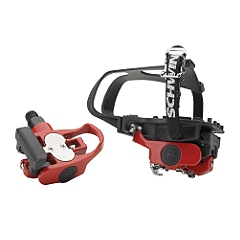
You have said you teach at a facility that has the Freemotion bikes. I was wondering if that facility uses the pedals that came with the bikes or different pedals. We will get 40 Freemotion bikes in May and are wondering how to accommodate our riders that have LOOK cleats. Should we spend the money to switch out to all Schwinn Triple Link pedals like on our Star Trac bikes we currently have? There was some talk about using the Triple Link Pedals off the old bikes to save money, but I worry they are too worn to put on brand new bikes. Do you also find that many riders wearing bike shoes do not like the basket/cage staying on the underside of the pedal as they ride?? Thanks for your insight.
You're going to have so much fun Julie.
If you are getting the S11.9 I think they come with a good two sided pedal with SPD/shoe basket. Where I'm teaching they switch out everything for triple links as that's just what they do.
If it was my studio I would work toward getting everyone to switch to SPD. Look doesn't make the traditional “LOOK pedal” anymore. Now they have the KEO which looks like it should work – but it doesn't.
I would swap the best 10 triplelinks onto the new bikes and leave the rest.
Unless of course you normally have 30 cyclists with LOOK cleats every class, then you already know what to do 🙂
Can I have your permission to create a post about your question?
Thanks John, yes you can post and thanks for your insight. Do you think avid bikers who wear bike shoes prefer the triple link because the can remove the cage/basket on the flip side of the pedal unlike the pedal that comes with the FreeMotion bike? That has the spd on one side and the fixed/permanent cage on the flip side. Sounds kind of anal but want to address all concerns. Thanks again, Julie ZB
Julie LOOK pedals were the most popular for years (but are no longer) and cyclists wanted to use their shoes – I don't think they care if the basket is there or not.
SPD is rarely used by road cyclists (they were first used by mountain bikers) but are best for indoor because they work on a recessed shoe = easy to walk in and safer – road shoes were never meant to walk in and are very slippery on any polished surface.
Rather than speculate, I suggest you ask your students and act accordingly.
Thanks John we will take a poll!
I haven't heard the results of Julie's poll, but I have conducted one myself at the two clubs where I teach that use the Triple Link pedal with some interesting (yet very unscientific) results:
About half of the riders using LOOKs had purchased their shoes/cleats specifically for indoor use.
Another 25% originally had LOOK cleats on their road bike = their shoes just happened to fit the pedals we used indoors.
Almost no one was using the original LOOKs on their road bikes anymore.
Almost everyone had multiple pairs of shoes.
I feel it's very important to be as accommodating to cyclists, but times are changing. If you're looking at an equipment upgrade a simple email poll using Survey Monkey will tell you a lot + identify those few participants you will need to accommodate if/when you make a change.
The question I asked was “how many of you are training for something?”
Over 80%, of a full class with 50 bikes this morning, raised their hands indicating that they were training for something… I wasn't specific as to what, only are you training? Even though this wasn't my class (I was the Sub for a Sub) I know many of them and know that they are all telling the truth. For each of them, what they're “Training” for is a little different:
Steve is scheduled for his first Ironman in June. Steve's “Training” is to find the time he needs to develop his fitness, while balancing the needs of his family and work.
Susan plans to ride her first Minnesota Ironman. It's not a Triathlon, but a large charity ride on the last Sunday of April each year. The weather is normally not pleasant – it's typically miserable 🙁 Susan is new to riding outdoors and she is “Training” to have enough endurance to finish with her girl friends, who have much more experience than she does.
Neal is excited for a week cycling through France with 9 of his friends. Neal's “Training” is focused on dropping the 30 pounds he gained after foot surgery.
Randy is determined to hear a “nice pull” as he rotates off the front of the “A” group this summer. Randy's “Training” is to demonstrate that he has the fitness to stay with the “A” group, even though he is 63 years old.
Are you talking to your class as training endurance athletes?
My favorite is to say to my class “I came here believing you all are training endurance athletes…. It's up to you to prove that I'm wrong.”
What words and actions do you use during your class that communicate your belief in them?
Meet Spinning® Instructor/Personal Trainer and Fitness blogger Darcy Knoblich!
Darcy is doing a fabulous job connecting with participants and other instructors, while promoting herself online through her websitedarcyknoblich.com.
I really enjoyed interviewing Darcy and I hope you enjoy listening to her passion for helping others 🙂
Our goal for this Podcast was to help motivate Instructors (that could be you) to get active online. There are multiple online tools available that are free and easy to use, like the blogging platform WordPress.com or Blogger.com.
UPDATE: A great promotional tool you could should leverage is creating your Instructor profile on indoorcyclinginstructorjobs.com where you can post your resume. Wouldn't it be awesome to get a call from an interested studio owner?
Your website may just include some info about you, your class format and your scheduled classes. Or you could really get into it and post your playlists, training information, feature some of your favorite participants or one of the Instructors on your team!
During our conversation I mentioned that I had started a blog back in 2008 – it was actually Spring of 2007. I checked and it's still there indoorcycletraining.blogspot.com/
Listen to Darcy's interview below or and never miss an episode.