On April 10th I attended a “Cycle 360” certification workshop at Colorado Athletic Club Monaco in Denver, Colorado. Wellbridge, the parent company of Colorado Athletic Club, has seen the huge success of programs like Soul Cycle, Flywheel and Full Psycle and decided to create a “Rhythm” style class of their own in an attempt to create a boutique cycling studio experience inside a big box club. Cycle 360 is a total-body indoor cycling class that combines cardio and strength conditioning that is meticulously choreographed to the music. This type of class is way out of my comfort zone!
I'm a degreed and certified personal trainer with over 25 years of fitness experience and a Master Educator for Stages Indoor Cycling, I'm the “Power Guy”, the “Technical Instructor”, I choose music for “energy” not choreography. So, I decided to go into this training with an open mind and challenged myself to figure out how I could make this style of class work with my skill set and teaching approach.
When I arrived at CAC Monaco for this 3 hour workshop I was surprised to see it was “sold out”, 35 instructors had given up their Saturday afternoon to be part of this new program. I was also amazed by the “energy” and “buzz” throughout the room, these instructors were excited to be part of something new and cutting edge. I've been managing, training and teaching in large “big box” facilities for most of my fitness career and I am always frustrated with their inability to adapt or adopt new fitness trends in a timely manner. I'm so tired of hearing, “It's not in the budget for this year” or “Our members don't like change”! I got the feeling that the instructor staff at CAC appreciated the fact that the management saw there was a need to adapt their programming and moved on it quickly.
After some quick introductions we transitioned into a 45 minute Master Class which consisted of a Warmup, Cycle Section, Strength Section (Biceps, Shoulders and Triceps), a second Cycle Section followed by a second Strength Section (Push-ups and Core) and a Cool Down. The cycling sections were choreographed to the music and had a Johnny G feel to them, with some jumps, runs, and music mapping. The strength sections were done with light dumb bells and to my horror to the beat of the music. I'm an indoor cycling instructor, not a Step instructor, a 32 beat count means absolutely nothing to me. This 32 beat count stuff was going to take some getting used to, but it wasn't too bad. With all the talk about how dangerous weights on the bike are I was expecting CAC to have an ambulance waiting in the parking lot, but all 35 of us made it through the class without dislocating our shoulders, blowing out our backs or needing to schedule ACL surgery and we had a great time using the bike as our exercise tool.
After a short break we got back together and went over how to put together a Cycle 360 class profile. We went over the class design, suggested weight exercises and spent a lot of time on music theory. We were taught that every class should follow the same structure of ; Warmup, Cycle Section 1, Strength Section 1 (Biceps, Shoulders, Triceps), Cycle Section 2, Strength Section 2 (Push-ups and Core) and a Cool- Down. We then went over some strength exercises that can be done on the bike. I'm not a fan of weights on the bike, but I did appreciate that all the exercises taught were very simple and, I felt, safe to be done on the bike. This was followed by a music theory lesson. We discussed the structor of a song ; Introduction, Verse, Chorus and Bridge and how choreograph movements to each part. I found this very informative, most instructors already use music this way but don't understand the theory behind it.
We then broke up into small groups and each group designed a Cycle Section and Strength Section to be taught to the whole group. Every group did a great job taking what we learned in the last 2 hours and demonstrating it to everyone, it also gave us all some teaching ideas to take to our first class. I was pleasantly surprised to see how many exceptional instructors are working at Colorado Athletic Club. I also realized that there is a whole other world of instruction out there. I use metrics like heart rate, watts and revolutions per minute to motivate and get the most out of my class participants there are many other instructors that use the magic of the music and movement to motivate their classes. I would like to find a way to bridge that gap so participants can have the fun of a Rhythm class and the effectiveness of a power based class, I think we could call it a “Power Party!”
Every workshop I have ever attended has given me new ideas and made me reconsider the way I teach. I'm always looking for ways to improve and change, sometimes things don't work and I throw them out sometimes things “stick” and they become part of my new teaching style. Ever since the Cycle 360 workshop I have been listening to music in a whole new way, trying to pick out the Introduction, Verse, Chorus and Bridge of every song I hear and methodically putting together a playlist and choreography for my first Cycle 360 class. Then I heard DJ Scott Melker's, The Melker Project 3 and it all fell into place.
Scott is a world renowned DJ and was Music Director for Flywheel Sports between 2010 and 2014, he knows music AND indoor cycling. Scott has been working on a new project called ADHD Radio where he releases a new 45 minute set every 2 weeks. ADHD is the perfect way to describe Scott's DJ style, he is constantly mixing and overlaying every known music genre in a style that just works. I have found that Scott's mixing style works perfectly with the “Rhythm” style indoor cycling classes that are popular today. With a new song being mixed in ever 30-40 seconds it's easy for instructor and participant to hear and feel the music and energy change.
When I first heard The Melker Project 3 I immediately knew it would work for me. The only problem was there was ALOT of language that would not go over well in the clubs that I teach in. If you work in a club where anything goes then use the original, it's awesome! I, on the other hand had to use my very limited DJ skills to try to cut out the bad and mix together the good. I think I did an okay job, but you can definitely hear the difference between my mixing ability and Scott's. I hope Scott isn't offended that I had to chop up his work, I absolutely respect an artist's vision, this was a situation where I felt this mix was so good that I wanted to share any part of it that I could with my class.
[wlm_private ‘PRO-Platinum|PRO-Monthly|PRO-Gratis|PRO-Seasonal|Platinum-trial|Monthly-trial|PRO-Military|30-Days-of-PRO|90 Day PRO|Stages-Instructor|Schwinn-Instructor|Instructor-Bonus|28 Day Challenge']
As you can see I did not put together a profile for this mix because there is no need for one. My recommendation is to come up with 2 or 3 variables and cycle through them with every song change. One example of what I've used is to start seated with a RPM of 80-100, then transition to seated with a RPM of 60-80 then transition to standing with an RPM of 60-80 and repeat for as long as you want (the clean version of the song is 23 minutes long), I usually go for about 10 minutes. Another example would be to simply alternate between seated and standing riding with every song change for your chosen interval length. You could also have participants spin up with every song change; start at 80 rpm, increase to 90 rpm, then 110 rpm and start over for the length of the interval. I'm lucky enough to teach with power, I'll have my class set a wattage goal for each interval and have them keep their wattage in that range throughout the interval no matter what position or cadence.
The Melker Project 3 (Clean), to download Right Click > Save As / Save Target As to download. Open in iTunes and then you'll see this in your Spotify Local File folder.
The Melker Project 3 (Original), to download Right Click > Save As / Save Target As to download. Open in iTunes and then you'll see this in your Spotify Local File folder.
Recording of me teaching this ADHD set in a class on a Spinner Blade Ion, Right Click > Save As / Save Target As to download on PC or Download Linked File As on Mac. Open in iTunes and then you'll see this in your Spotify Local File folder.
I've been using this mix and ADHD teaching style for one of my class sets for the last 2 weeks and a very interesting thing has happened. First, people love it and secondly people are able to average a much higher wattage when they are changing positions every 30-40 seconds than when holding a position for 8-10 minutes. Something to think about.[/wlm_private]
Is it possible to create Performance Cycling Classes that are entertaining and compelling, for both endurance athletes and non-cyclists? David McQuillen, with The Sufferfest video series, says you can with entertaining video content – note the emphasis on entertaining 🙂
I've been aware of David's videos for years. Perfect for pounding away in the garage or your basement, but I didn't consider them suitable for group cycling classes. Turns out I may need to adjust my thinking about this… With more than 45 licensed facilities worldwide (they're called Sufferfest Embassies) it sounds like there is a group application for these extremely well produced HD videos.
Listen below as David and I discuss his ideas on expanding your studio's appeal to cyclists through the use of his Sufferfest training videos.
Studio/Club Owners and Managers interested in becoming a licensed Sufferest facility can request a free information package by emailing Kate Patterson Kate@TheSufferfest.com – you'll want to include your studio's name and location.
Please tell Kate you heard this interview on ICI/PRO and she'll send you a pair of these cool Sufferfest Socks, just for saying hello! Limited to responses through June 30th.
Over the past few weeks there have been some questions on the ICI/Pro website that gave me the idea for this week's post. One question was about music flow and another was asked which comes first, playlist or profile?
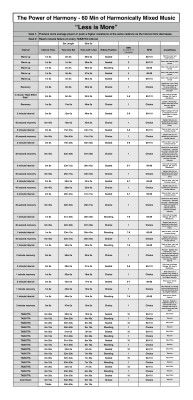
To show one way to make music flow I decided to put together a playlist of songs that are all in the same harmonic key, this is technique is called “Harmonic Mixing” and is used by many of the world's top DJ's. I use a software named “Mixed in Key” (http://www.mixedinkey.com) that automatically analyzes all my music files and determines the key and tempo of each song. Mixing harmonically enables you to create smooth transitions between songs and ensure that all songs sound great together. I put this playlist together without any consideration of the profile. I chose popular, high energy, songs and let the Harmonic Mixing create the flow. This is a playlist that can be used with, just about, any interval based profile where the profile, not the music, is the focus.
Next I put together a killer profile using a technique known as “anchoring time and effort”. This is a very simple tactic where riders should be able push higher intensities as interval length gets shorter. Less Time = More Work.
[wlm_private ‘PRO-Platinum|PRO-Monthly|PRO-Gratis|PRO-Seasonal|Platinum-trial|Monthly-trial|PRO-Military|30-Days-of-PRO|90 Day PRO|Stages-Instructor|Schwinn-Instructor|Instructor-Bonus|28 Day Challenge']
You can join my TrainerRoad Team at : http://www.trainerroad.com/teams/2484-dennis-mellon-s-indoor-cycling-team
60 minute harmonically mixed track, to download Right Click > Save As / Save Target As to download. Open in iTunes and then you'll see this in your Spotify Local File folder.
This is just one example of how I put together my classes. Other times I try to match the music and profile exactly and let the music dictate the terrain. I would recommend instructors get proficient at both methods. This way you don’t pigeonhole yourself and you keep your participants on their toes. It also keeps things fresh and exciting for you.[/wlm_private]
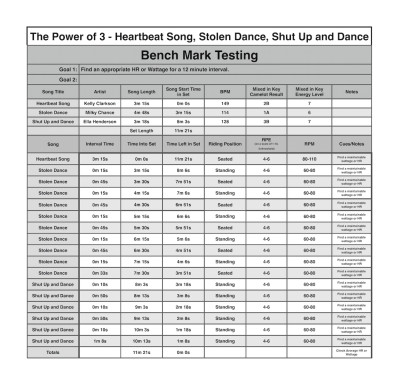
The gold standard of benchmark testing in indoor cycling is the FTP (Functional Threshold Power) test. I'm a huge fan of this test and perform it with my classes on a monthly basis. In a perfect world every rider would know their power and/or heart rate thresholds and have personalized training zones that are percentages of these values. We don't live in this perfect world and in any given class there will be many participants who have never performed a FTP test and have no idea how to determine their threshold metrics. I deal with this dilemma by beginning every class with a proper warmup followed by a benchmark interval or set of intervals.
My benchmark interval or set can last anywhere from 5-12 minutes depending on the type of class and length of intervals being performed that day. For example if I'm teaching an “@” threshold class with longer intervals I'll do a longer benchmark interval set but if I'm teaching an Above Threshold class I'll do a shorter benchmark interval. These sets or intervals should be be performed at the same intensity that is expected for the main sets of the class and an average HR or wattage should be determined and used as a guide for future intervals in that day’s workout. It is important to cue how the benchmark interval should “feel” especially for new riders who may not have previous rides to base their HR or wattage numbers on.
[wlm_private ‘PRO-Platinum|PRO-Monthly|PRO-Gratis|PRO-Seasonal|Platinum-trial|Monthly-trial|PRO-Military|30-Days-of-PRO|90 Day PRO|Stages-Instructor|Schwinn-Instructor|Instructor-Bonus|28 Day Challenge']
Now that each rider has a metric to aim for during each interval or set the instructor can set realistic and attainable goals.
3 song harmonically mixed track, to download Right Click > Save As / Save Target As to download. Open in iTunes and then you'll see this in your Spotify Local File folder.
We've all heard the causality dilemma, “Which came first, the chicken or the egg?”. Ancient philosophers have been debating this question since the beginning of recorded history. Indoor cycling instructors have been asking themselves a similar question,”What comes first, the playlist or the profile?”, ever since Jonny G showed the world how much fun it could be to ride a bike that goes nowhere.
As a more “seasoned” instructor and Master Educator for Stages Cycling I am often asked my advice on this dilemma. I tell them that an awesome playlist or a great profile can carry a class, but if you can create both you'll be a rock star.
[wlm_private ‘PRO-Platinum|PRO-Monthly|PRO-Gratis|PRO-Seasonal|Platinum-trial|Monthly-trial|PRO-Military|30-Days-of-PRO|90 Day PRO|Stages-Instructor|Schwinn-Instructor|Instructor-Bonus|28 Day Challenge']
In my “The Power of 3” posts I put together 3 harmonically mixed songs and a short profile that can be used with each mix. I'm always searching for the perfect blend of music and performance based interval sets. Sometimes, like I did for the “ICI/Pro DJ Scott Melker Music Playlist Contest” I let the timing and energy of the music determine my profile. In this post I'm presenting a profile that takes the lead and the music is of secondary importance.
Below I have provided a harmonically mixed 65 minute long music track. The music is not the focus of this profile, so if you want to use your own playlist go right ahead. I would recommend you find a playlist that is high energy and don't worry about the timing of each song and interval, just let the music play.
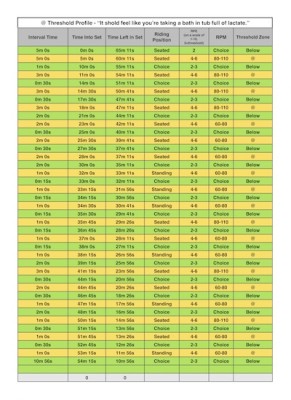
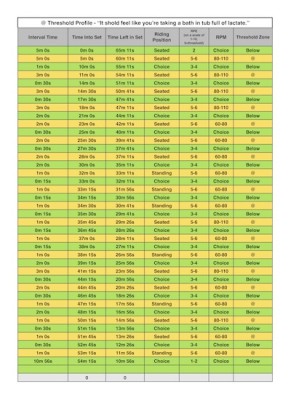
The two profiles I have provided are very similar, actually the timing of the intervals are exactly the same. The only change is the difference between the low intensity or “Floor” and the high intensity or “Ceiling” of each workout. Due to the high intensity or vaulted ceilings of the Above Threshold workout a low intensity or shallow floor is required to recovery after each interval. It's important to understand this principle, if you are asking your class participants to work above threshold for any length of time you are also going to need to give them time to recover, the higher the intensity, the lower the recovery. If you do not give appropriate recovery you should expect to see a drop in the work done for each interval. I purposely DID NOT give my class appropriate recovery between each interval of this workout. My goal was to have them work on their anaerobic endurance, lactate clearance and lactate buffering. I expected a drop in wattage or work from interval to interval but asked my riders to try to keep this drop as small as possible. Between each interval set riders were given a 2 minute recovery to filter out as much of these accumulated waste products as possible. The cue I kept repeating in the middle of each interval set was “Your legs should feel like you're taking a bath in a tub full of lactate.”
The timing of the @ Threshold workout was exactly the same as the Above Threshold workout, but the height difference between floor and ceiling went from a room with vaulted ceilings to something that resembled a crawl space. The higher intensity or ceiling should be only a few watts above threshold or just above maximum sustainable intensity and the low intensity should be just below threshold or to the point where riders can regain control of their breathing. I like to compare this workout to a Time Trial effort or I also call it a Criss Cross Threshold workout. It is as much mental toughness training as it is physical. Science has shown us that a rider can maintain a threshold effort for more than an hour, so riders are physically capable of successfully completing this workout, the question is are they mentally capable. We can train the brain the same way we can train the body, if any participants cannot continue, let them know it's okay to take a 2-3 minute recovery then rejoin the group when they are recovered both physically and mentally. Also let them know that the next time you teach a class like this they should expect to “keep the power the pedals” longer. The cue I used in the Above Threshold profile also holds true here, after about 10 minutes, “Your legs should feel like you're taking a bath in a tub full of lactate.”
Give these two profiles a try and let me know how it goes. Both profiles are very similar and very challenging, so challenging that a bet your participants will not be able to remember a single song you played for the entire class.
As a training tool – running a PTP test/assessment is invaluable!
We had some excellent questions from Studio Owners this past weekend during our Full Psycle/PRO PIQ workshop. Paul Harmeling addressed these two related questions during the Q&A – I wanted to offer my thoughts on it here:
When, or how often, should we be using using the PTP (Personal Threshold Power) mode screen?
What exactly should we have our riders doing, during the PTP (Calc) test/assessment?
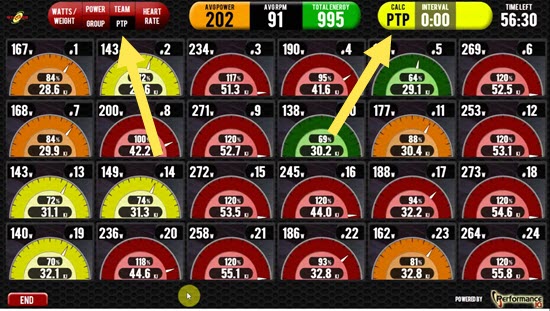
First, for those currently not using a Display System in your studio, let me explain what we're talking about. NOTE: I'll focus on Performance IQ because I know it much better – all of this has similar application with Spivi.
On a related note, I learned a little known trick that could potentially save a new studio enough money to pay for PIQ or Spivi – contact me if you're interested in learning more.
The PTP (Personal Threshold Power) mode screen in PIQ offers a quick (just three minutes) and simple tool to give your riders an approximate understanding of their maximum sustainable power wattage. Then through the wonders of technology, PIQ creates 5 power zones and displays them as different colors. The system calculates PTP as 90% of the highest sustainable power each rider can sustain for the length of the three minute test.
Is PTP as accurate as a 20 Threshold assessment? It doesn't matter to ~98.5% of your riders. What is important is that PTP answers the question that I've heard over and over the past 3 years I've been teaching with power: how hard should I be working… when you ask me to work hard?
So on to the questions:
When, or how often, should we be using using the PTP (Personal Threshold Power) mode screen?
Paul and I are in agreement here – we both feel you should be including PTP in most, if not all classes. There are of course exceptions. You may have a teams challenge scheduled or focus on a class that's directed toward handicapping everyone based on watts/pound.
What exactly should we have our riders doing, during the PTP (Calc) test/assessment?
Here's where Paul and I diverge in our thinking. I see this as a time for a focused effort in the saddle with a consistent cadence, where Paul was saying (and he demonstrated during the Master Class) that he's open to varying position and/or cadence. So who's right? I feel we both are 🙂
You see we each teach very different classes. Mine are typically focused efforts in the saddle = how I would run my PTP tests. Paul's classes are much more frenetic, with frequent changes = that's how he conducts his PTP segments.
Here's mine:
Running a PTP test isn't any different from the Best Effort intervals we suggest you use in a power class that doesn't have a Display Training system. Here's one I included in a recent Performance Cycle class.
Track #2 — the first PTP track is important. We’ll use this average wattage for each of the four PTP efforts to follow. Everyone seemed to enjoy Billy Idol — Rebel Yell — 1999 — Remaster — maybe suffered a bit as well. At 4:47 there’s plenty of time to explore PTP.
We use the Stage button to reset the averages at the beginning of what I describe as; Your Best Sustainable Effort. It’s normal for riders to miss-judge where they should be, so I’ll often have everyone make needed adjustments and hit the Stage button again to reset the averages.
My experience is that everyone will benefit from from a few mini (30-60 secs) PTP efforts to figure out where you should be. On any of the magnetic bikes I like to have find a reasonably challenging climb at around 65 RPM and then have riders accelerate to over 80RPM and observe what it feels like (RPE) and the wattage.
Two or three of these short intervals should give your peeps a watts window they can shoot for during the actual 3 minute PTP test.
I ask everyone to stand and walk, without touching the resistance, for a minute recovery.
To start the PTP test, I'll cue up a track like 83RPM Billy Idol — Rebel Yell and cue finding the cadence. Ten seconds to get everyone there and I will click Calc PTP. Encourage everyone to do whatever it takes to complete the assessment and let the technology work it's magic, figuring everyone's training zones.