by Gino | Aug 31, 2026 | Master Instructor Blog
 [plulz_social_like width=”350″ send=”false” font=”arial” action=”like” layout=”standard” faces=”false” ]
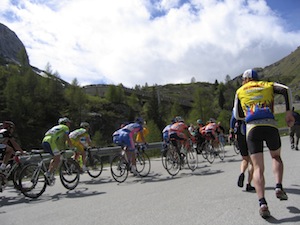
Long climbs of modest grades are the ideal terrain for Muscular Endurance
There are really two types of research available on virtually any topic related to cycling performance or physiology. There’s the research regarding what people are doing or what they think about a topic. These are people from many different perspectives; coaches, authors, bloggers, and we know that last category can include as many levels of proficiency that exist. A google search with the key terms will deliver plenty of results.
Then there is research regarding what the “Science” says. This research is found in medical and educational journals. Most often you must be a member of one of the governing bodies such as the ACSM (American College of Sports Medicine). While you might get some of the highlights in Google searches, the full studies are usually only able to be read by those who are members to the organization and have paid for access to said journals.
While you can simply use the free resources available, there is a distinct risk of basing your own work or conclusions on opinions or popular trends instead of hard science. However, that being said, this is part of the rationale for why Evidence Based Medicine is the only approach that makes sense for coming to conclusions that you will use for your own training or for that of your students. At the end of the day, EBC will be your own personal “proof in the pudding” as they say.
Muscular Endurance — Some Of The Science
I like to start with the science perspective — university, medical community, etc. I like to read the journals that the professional researchers read to get a solid foundation before I begin to let Mr. Google tell me he (and all of his many followers) think.
The first place I started was a position statement by the ACSM:
“Muscular strength and endurance are developed by the progressive overload principle, i.e., by increasing more than normal the resistance to movement or frequency and duration of activity. Muscular strength is best developed by using heavier weights (that require maximum or near maximum tension development) with few repetitions, and muscular endurance is best developed by using lighter weights with a greater number of repetitions (1).”
While this is clearly directed towards weight training, the application to cycling is also pretty obvious — the additional weight is represented by heavier gears (or steeper hills) and the greater number of repititions is represented by increasing cadence ranges.
In another article from the Journal of Medicine & Science in Sports & Exercise it says:
“…the extent of neuromuscular fatigue during pedaling exercise varies among different cadences and minimal fatigue is obtained at a considerably higher cadence (2).”
So from the above two statements we see the standard stress and adaptation principle being referenced and that there are cadence levels that result in lower muscular fatigue. Therefore this allows us to infer that there are cadence levels that encounter greater muscular fatigue, and hence it will be those levels that will promote the “progressive overload” we will need to force the adaptation or improvements in our muscular performance — either strength or endurance.
Muscular Endurance — Some Of The Practice
Here it is super easy to find out what so many coaches and instructors are doing to work on Muscular Endurance (ME). We see cadence guidelines that range between 65 RPM and 85 RPM across may different coaches, where the sweet spot is probably 70 to 80 RPM. However, when it comes to intensity or heart rate, there is considerable variation. The range typically starts at a low of T1 or Low Zone 3 (based on a 5 zone system with bottom of zone 5 your High Threshold), and goes to High zone 4. If we also throw out the lowest low and the highest high, we have an intensity level “sweet spot” that puts us between the middle of Zone 3 and the middle of Zone 4.
So in summary, the science confirms that we can create or promote the improvements in muscular endurance by specifying training rides within a cadence range of 70 to 80 RPM while working at an intensity level of Mid Zone 3 to Mid Zone 4.
The next question to look at is duration of the training, the amount of recovery between ME drills, and the number of ME workouts in a given week. Also, this begs the question if we workout at the low ends of both Cadence and Heart rate, would it take longer to see the training effects than if we worked at the high ends of both. In other words, if we do two weeks of 80 rpm (actually the higher RPM represents lower muscle fatigue) and mid Zone 3 work, will this produce less of an improvement than working at 70 rpm while in mid Zone 4.
If that would be true, then we can use this information to prescribe varying levels of ME work based on the fitness level or the time frame a coach and student are working with. Even more interesting would be the possibility of creating a numeric scale that we could use to “measure” the amount of ME work a student has been doing over a given period of time.
The next post will discuss how we can set up a study to do just that.
Originally posted 2012-05-26 08:25:31.
by Chuck Cali | Aug 16, 2026 | Master Instructor Blog
 By Team ICG® Master Trainer Chuck Cali
“Is there a way to find out what your class profile will be before the class?”
I’m never quite sure how to take this question, which I get periodically. Still, I screw up the courage to ask, “Why?”
The answer usually begins with, “If I knew…” and involves anything from “my knees can’t take the climbing,” to “the video makes me dizzy,” to “I would have come in earlier to get a bike.”
I’ve come to believe that riders benefit from knowing the objective for any scheduled class. I’ve wondered why facilities don’t improve programming, and hypothesized that those that did would flourish.
If facilities could flourish with a strong, well-marketed program, it seems they’d all be doing it. But it’s a weird world and sometimes doesn’t follow logic. So these thoughts became a personal research project.
This wasn’t a local issue. During years when business travel found me in far-off places, I sampled indoor cycling from a range of instructors and facilities. Different place, different instructor, same one-size-fits-all format.
It occurred almost exclusively at big-box facilities during prime time. But why?
Prime time classes are obviously scheduled early (before work), late (after work), after kid drop-off at school, and weekend mornings. Facilities exploit prime time with a popular instructor who handles the large crowd well, connects with the regulars, and delivers a good workout, perpetuating full classes.
Prime time is when members can participate in large numbers for reasons of convenience. But these times are convenient for all fitness levels. So trying to target specific goals during a prime time class is like herding cats: You never get everyone going in the same direction.
Imagine how a 30-minute beginner class would go over at 5:00 or 6:00 pm when over-stressed members pour into the studio for stress relief. Instead of the good cardio workout they expect, they don’t even break a sweat and have to wait for the instructor to bike-fit half the class.
What about the beginner who takes a prime time class described as “suitable for all fitness levels”, while the well-liked instructor plays to the regulars and kicks butt with cues only they understand?
Programming is difficult when it must accommodate all fitness levels in crowded classes. The big boxes leave it to the instructors and simply state, “Beginners welcome”.
Jim Karanas and I have discussed this at length. His experience, especially at big boxes, is far more extensive than mine. His position was, “It’s too costly to run the kind of program you suggest and is likely to meet with mixed success at best.”
Jim’s advice was sound, but I’m a program guy. There had to be a way to introduce and develop long-term training concepts during prime time.
What about boutique studios? Did they have regular programming by fitness level? I examined their schedules and interviewed the owners.
Boutique studios arose from the desire of an entrepreneurial instructor to do it better, to provide what’s missing at the big boxes — a coherent indoor cycling program — and, perhaps, combine it with yoga, pilates or personal training. Boutique programs were progressive and geared to smaller groups and personal service.
On the surface, the progressive nature of boutiques seemed to make real programming possible. But closer examination revealed that boutiques suffer the same malady as big boxes: Prime Time classes! At boutiques, even more than at big boxes, a paying member is not turned away, regardless of the class description.
Clearly, the most popular instructors, regardless of facility, were running their own programs. The best-liked instructors knew the regulars and were able to make both beginners and advanced riders happy.
Indoor cycling instruction is survival of the fittest. To keep the saddles full, we have to raise our game. Every instructor does his/her own thing. So long as the instructor is likeable and trusted, this doesn’t bother riders.
I never determined if facilities would flourish with real programming, but I realized there’s nothing stopping you from creating your own program. I plan a month or two ahead and publish it for my regular classes — everything from “Climbing to Classic Rock” to stages of the Tours.
I had fun this year doing stages three and five of the Tour of California. ICI/PRO is a great resource for class ideas. I’ll work Jim’s ‘Crit’ profile in soon. When I want to make a ride special, it’s communicated to the Group X director and we get the word out early enough to draw others.
Doing my own programming de-stresses preparing. My classes are usually full, and it wasn’t always that way. Also, by mixing up the rides I can find out what my riders like and do more of that.
At ICG® Academy, Jim Karanas runs a monthly instructor workshop to keep us on the same training page, right down to hand position. He pounds us on leading/coaching/instructing through the use of structured profiles that include training concepts consistent with ICG’s mission — all set to forward-motion video.
Jim’s cueing at the last workshop was spot-on as he delivered a kick-butt class. You just know this is one of his favorite rides and on his schedule often.
If you’re reading this, I’d bet you’re already working hard to prepare great rides. Hopefully you keep them around to categorize, save and re-use. They don’t all have to be cycling-specific. Change the music; call it something different. Last Thursday I introduced my “Shazam Ride”. Tuesday was my “five-minute ride” — all the songs were five minutes long.
Before you know it, you’ll have a full calendar.
Programming is another great way to connect with your riders. Don’t wait for someone else to do it.
[plulz_social_like width=”350″ send=”false” font=”arial” action=”like” layout=”standard” faces=”false” ]
Originally posted 2012-07-09 12:02:11.
by John | Aug 4, 2026 | Instructor Tips and Tricks, Instructor Training, Master Instructor Blog, Promote and Build Your Class

“Because that's where the money is…” was famous American bank robber Willie Sutton's reported answer to the question; “Willie why do you rob banks?”
I can imagine a similar conversation with an upscale restaurant owner; “so why do you cater to business people?” “Because they regularly entertain important clients and pay with expense accounts!”
Now that business people (and their prospective clients) are moving away from the two-martini lunch and adopting a more healthful lifestyle, expense accounts are paying for fitness classes.
Sweaty Wall Streeters Skip Booze for Spin-Class Meetings
Wall Street’s salesmen and dealmakers, whose expense accounts help fill downtown chophouses and box seats at ballparks, are now treating clients to a different kind of entertainment: high-end workouts.
Pre-dawn and afternoon classes at Manhattan fitness studios SoulCycle, Barry’s Bootcamp and Flywheel Sports are growing popular with bankers who want to bond without loading up on liquor and fatty foods, according to traders and salesmen. John Abularrage, head of Tullett Prebon Plc’s Americas unit, takes clients to 5 a.m. sessions at Barry’s Bootcamp in Tribeca, where they run on treadmills and lift weights to thumping dance music.
…
Bankers who sell stocks or bonds have long plied mutual-fund traders and hedge-fund managers with tickets, meals and drinks in the hopes that friendship — or at least familiarity – – will lead to more trades. Health-conscious clients increasingly view steak dinners as “three-hour ordeals,” said Chelsea Kocis, a 26-year-old former equity saleswoman.
“‘Let’s meet at 5 for a workout,’” she said, describing the way she’d invite out traders. “‘You can be home before your kids go to bed.’ That’s an enticing thing for a lot of people.”
They're calling it sweat-working
New Yorkers have been wooing clients and forging business relationships in yoga classes and locker rooms for more than a minute, but after the New York Times introduced the term “sweatworking” to the public at the end of last year, the concept entered the serious spotlight.
And at the center of it all was Sarah Siciliano, an advertising production executive who has turned sweat-working into a branded business. Siciliano now has a website and a group of clients who work out with her two or more times a week. They spin, stretch, and make business deals.
CREATING BUSINESS CONNECTIONS OUTSIDE OF THE OFFICE HAVE BECOME TOO MUCH ABOUT EATING AND DRINKING, OFTEN TO EXCESS. THE CONCEPT OF SWEAT-WORKING IS THAT EVEN BETTER, MORE MEANINGFUL CONNECTIONS CAN BE FORGED WHEN A GROUP OF LIKE-MINDED PEOPLE WORK TOGETHER TO IMPROVE THEIR MINDS AND BODIES. IMAGINE IF ALL THE TIME WE INVESTED IN NOISY, CALORIE-LADEN, ALCOHOL-SOAKED NETWORKING EVENTS WERE PUT TOWARDS INVIGORATING, CLARIFYING, ENERGIZING ATHLETIC CLASSES AND EXCURSIONS.
Now you don't have to wait for someone like Sarah to organize a group of like minded people and have them meet regularly at your club. You could do it yourself by using a free service like www.meetup.com.
I encourage you to visit meetup.com, search by your studio's Zip Code and scroll through all of the results. I did a quick check for groups located within 5 miles of ICI/PRO member Joe Ducosin's CycleQuest studio and found these groups…
Would any of these groups be interested in holding a meeting at your studio? I have no idea, but the group leaders are easy to contact.
Another option would be for you to form your own networking group that meets after your class for coffee. What types of business are prominent nearby? Who's already in your class that would benefit from meeting more people?
Joe has a huge (6,000 employees) new health care provider moving in just up the road. I'll bet there will be a steady stream of sales people visiting who may appreciate a sweat-working opportunity at his studio – and will pay for the privilege with an expense account 🙂
Originally posted 2017-12-28 09:00:58.
by Jim Karanas | Jul 26, 2026 | Engage Your Students, Master Instructor Blog
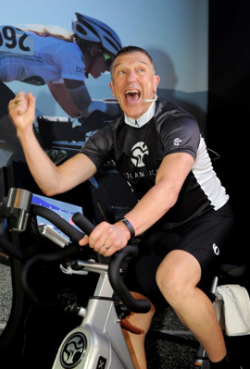
By Team ICG® Master Trainer Jim Karanas
I’ll switch gears from my recent posts on using public speaking techniques to enhance our teaching to talk about what we say. In The Art of Cueing, I discussed the use of cues to bring depth to the class and make it more than just a workout. Cues concerning the science, the music, the video, your personal experience, even philosophy can make your class more interesting and more impactful.
Philosophical cues are the most difficult to incorporate. Instructors don’t typically cover philosophy when they teach because they don’t think people want to hear it, or they don’t feel comfortable talking about it. Someone who doesn’t teach might say the first is true. But maybe that person hasn’t yet heard a well-delivered philosophical message and is just uninformed.
I understand not feeling comfortable talking about it and will address that later.
Adding philosophy to a class so it doesn’t sound like preaching is what I call “messaging.” A class without messaging is just a workout. It might even be a good one. But the instructor’s power will weaken over time, just like playing the same workout video over and over. It diminishes with no message. All the public speaking techniques in the world can’t compensate for a class that lacks substance.
Unforgettable lyrics are unforgettable because they send a message. A public address goes viral on YouTube when it sends a message. Messaging will touch a person’s life beyond the great workout you just delivered and compel him/her to come back to your class again and again.
What’s a message? Any life concept that you bring to the class and that can be experienced in the class as result of the training you’re providing. A couple of examples:
Focus
Coaches often tell you to “stay focused” but rarely tell you how. Focus is not simply directing your attention to what you’re doing. That leads to thinking. Thinking will weaken focus. Focus is complete engagement in what you’re doing. A focused mind pays no attention to distractions. Fast descending takes focus. If you’re not 100% engaged and non-reactive to distractions, you might crash. How do you train yourself to be this way — not just during a dangerous descent, but right now, so you get the most from your workout? That’s the essence of our class today.
Motivation
Something that happens outside of you that you consider “motivating” is not a strong incentive. You might see someone overcome great adversity or hear a story that strikes a personal chord with you and feel filled with motivating energy. These external motivations work temporarily, but have far less impact than motivation you generate by yourself. I want you to look at motivation as something personal. Then you have the ability to train and get better at it. You can train yourself to be motivated the way you train anything else.
When you understand how to do this, motivation is endless, limitless. The only time you won’t feel motivated is when it’s a personal choice, and you’ll recognize it as such. You’ll no longer look to me or to anyone else to motivate you to train. You’ll rise to the occasion again and again because you’ve trained yourself to do so. I’ll show you how to do this in today’s workout.
As an instructor, all you have to do now is deliver a physical practice (the day’s ride) that delivers the results you just promised to deliver in your message. If I’ve enticed you, and you want to learn how to focus or be consistently motivated, the solution is simple: Come to my class. That’s the power of good messaging.
The messages you can deliver are many: how to engage fully, how to sense meaning, how to expand your concept of what you can do, how to sense your life energy, how to direct it, how not to react to adversity, how to develop discipline, how to go beyond hope and fear, and on and on.
How do you, as an instructor, learn to deliver these messages, both verbally and physically? First, you must want to. Second, you must become a student of philosophy. You study and you ride, and you bring the lessons that you learn from your study to the bike, and then to class.
I have a small library of what I call my “Life Books”. These are about 10 books that I have found extremely helpful. I’ve read each of them dozens of times. A good philosophical book is one you immediately realize you need to reread. My first Life Book was Way of the Peaceful Warrior: A Book That Changes Lives. It was the first book to encourage me to approach my training from a conscious perspective. I have several copies with dog-eared pages and many handwritten notes throughout.
Physical movement has been part of spiritual training for thousands of years. It was not meant to provide exercise. Daily activity was supposed to do that. Keep a conscious attitude, go beyond the workout, and deliver a message every time you teach.
Originally posted 2015-01-07 07:16:21.

by Joey Stabile | Jul 11, 2026 | Audio PROfiles, Best Practices, Class Work-Sets, Creativity Indoor Classes, Instructor Training, KEEPING IT FUN, Master Instructor Blog, PRO/Playlists, Training With Power
Welcome to the The Weekly Ride by Cycling Fusion
Welcome to our new era of The Weekly Ride, you get:
- Full Ride PDF
- Apple Music Playlist
- Spotify Playlist
- File to Download the Ride directly into My Fitness DJ (Yes, no Programming)
- The Ride will be available for purchase in the iClass Builder Store (No Programming)
- A Podcast of the ride being delivered by a master instructor.
(more…)
Originally posted 2018-12-23 09:34:42.
by Jim Karanas | Jun 27, 2026 | Class DVDS & Videos, Master Instructor Blog

Everything changes…
By Team ICG® Master Trainer Jim Karanas and ICG® Marketing & Product Director Gary Warren
Forward Motion Video was first produced for, and used in, Indoor Cycling classes in the form of DVDs. DVDs paved the way for production companies like Virtual Active to bring Hollywood-level filming to the fitness industry.
We would never detract from the contribution these DVDs and their producers made to the indoor-cycling industry. Going forward, however, there’s a point of contention that we consider critical: continuing to use DVD as the medium for providing forward motion video.
In response to Jim’s last post, “Video Done Right”, Gino Nacey, one of the pioneers of Forward Motion Video, offered his “1% disagreement” and commented, “as long as the DVD is played on a big screen, I don’t really see why we should knock it — if all a site can afford is a projector, screen and some DVDs then if the video is well done, they should have a great experience.” We appreciate Gino’s feedback.
DVDs are seen by some in the industry as a good option for clubs, a way to provide a quality visual experience in an indoor cycling class. ICG® believes that, at this time, DVDs will do more to inhibit the development of both indoor-cycling programs that offer video and the instructors who teach with it.
DVD is being superseded as technology progresses. Despite DVD’s low initial purchase cost for club owners, is it really forward-thinking and fit-for-purpose with respect to the skills instructors need to develop to enhance their classes with video, as they do with music? We believe DVD limitations are one reason more instructors don’t teach with forward motion video.
What can an instructor truly do with a DVD? The instructor can’t alter the programming or investigate the synergies that exist between music and video. The profile is unchangeable. DVD length can’t be altered to fit the music. That limits the music that can be used with the DVD. The instructor can’t swap out portions of the DVDs, which makes it impossible to alter the profiles to create endless class variations.
DVDs lack the essential tools the instructor needs, such as selecting and changing footage at any given point in a profile, repeating parts of a video, skipping parts of a video, or switching to panoramic footage for water breaks or to shift the experience. Even more importantly, DVDs don’t permit the instructor to keep the footage running to match the music track length, or vice versa. Any of the above can be done — with one touch — with a system like Myride®+.
DVD offers the same ride time and again, and the ability to use different music is limited.
The use of DVDs for virtual classes may seem to make sense initially, particularly if the voiceover coaching and the music are good. Again, the number of different rides is limited because DVD footage is fixed and can’t be reprogrammed. Also, quality of filming comes into play because Standard Definition on a large screen looks unrealistic.
But it’s more than that. Virtual classes have to be highly advanced in coaching, graphics, filming techniques, post-production techniques, and exhibit extremely compelling locations because they now do what instructors do — lead the class. We also have to push the limits of technology to enable consoles to provide “virtual class” schedules, where console and projector turn on and off at selected times to enable the club owner to offer classes without an instructor present.
It takes a platform of technology that can continue to grow to make the experience (and the buyer’s investment) stronger over the years without fading. Sustainability is key, and DVDs can’t make the cut.
Are DVDs passable? For the retail market, yes. But for sustainable commercial operations where the consumer is savvier and more demanding as competition rises, perhaps not.
Finally, our tree-hugging moment. DVDs are not green and create an enormous amount of waste product that is eliminated with the use of advanced digital technology. CDs and DVDs don’t decompose. Their composition is too complex to make large-scale recycling possible, unlike aluminum, glass or paper. So old CDs and DVDs must be shipped to a special center for recycling.
Then there’s packaging. 85% of under-24s believe that downloading music can help save the planet by reducing the packaging, waste, and carbon emissions involved in producing and transporting CDs and DVDs to shops.
Here’s what video in indoor cycling needs:
1. Improved content-delivery tools for video that offer increased programming features, designed to enable instructors to utilize this new asset fully and owners to embrace the ROI they can get from video done right.
2. Increased availability of high-quality video through network delivery that will enable us to bring new video to our customers as easily as we bring new songs.
3. Improved filming and post-production techniques to enhance immersion and raise the member experience and the demand for video.
4. A shift away from a retail product that’s not green and that experts say won’t be around much longer.
We believe Myride®+ fulfills these needs, except item 2, which it will in the immediate future.
As always with new technology, there’s a higher initial cost — in this case, for the digital media console and the HD projector. But let’s not confuse initial cost with “total cost of ownership” (TCO). The cost of a DVD media system may be low, but it wastes money if it’s not sustainable and/or doesn’t fully meet the market’s needs. As demand increases and more companies play a role in development, digital video costs will decrease. Continuing to advocate DVDs, which give the club owner a cheaper option without a complete understanding of its limitations, will hinder forward progress.
The end result seems inevitable, and DVD may delay the transition but won’t prevent it.
ICG® respects Gino and his organizations for all they’ve done to pave the way. But ICG® can’t recommend adherence to an outdated form of presenting video to the Indoor Cycling industry.
Originally posted 2012-08-13 07:47:25.