The big news at this years IDEA World Fitness Convention was the launch of Fitness Connect, which is the world’s largest fitness professional directory, connecting more than 16 million consumers to more than 100,000 fitness professionals with credentials verified by the top 14 fitness certification bodies.
While I was at the convention I met Jason Davis -IDEA’s Internet Revenue Director.
Jason walked me through a demonstration of Fitness Connect and while I watched I was struck by how intuitively it was designed and it became very easy to see the potential value it could bring to both individual fitness professionals and fitness clubs and studios.
During my interview with IDEA's COO -Mike Bannan we discuss additional details about why I feel strongly that you, as a Fitness Professional, need a profile on Fitness Connect.
Listen to the Podcast below or subscribe for free using
Are you annoying some of your current (or potential) participants? You know, rubbing those folks who are of a different/opposite personality type than yours the wrong way?
I recently came to the conclusions that there's a good chance that I do at times – please let me know if any of this makes sense to you…
Yesterday I gave a presentation to our sold-out group of studio owners and Instructors at the Full Psycle/PRO PIQ workshop entitled:
Selling Power – The success of your studio depends on it!
We've got all of this fancy technology in our studios; bikes with consoles, display training systems, results emails and online user profiles that record all of your previous class data. So (to me) it should follow that persuading (Selling) participants that Training with Power is worthwhile becomes supercritical to building a loyal following = a profitable fitness business.
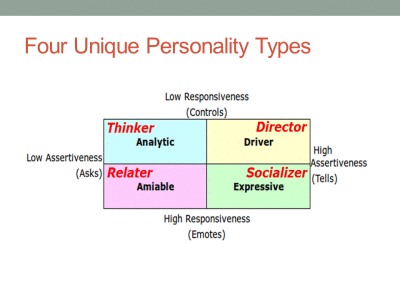
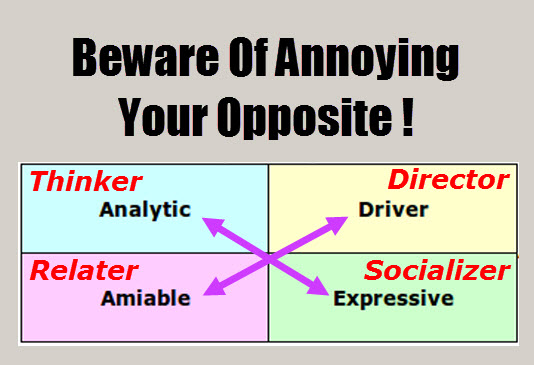
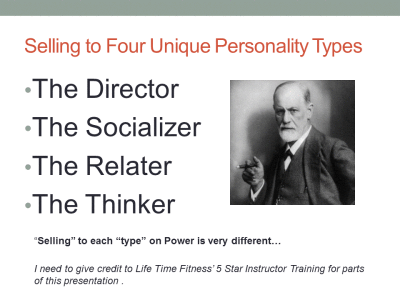
The core concept of my talk was how you need to understand how the four different personality types; Director, Socializer, Relater and Thinker need to be “Sold” to differently.
The personality matrix is constructed like this:[wlm_private ‘PRO-Platinum|PRO-Monthly|PRO-Gratis|PRO-Seasonal|Platinum-trial|Monthly-trial|PRO-Military|30-Days-of-PRO|90 Day PRO|Stages-Instructor|Schwinn-Instructor|Instructor-Bonus|28 Day Challenge']
Then I went on to describe the common personality traits of each type.
Teach an early AM class? I'll bet it's filled with “A” type Directors.
I am a Director > my kids will attest to me sometimes being a bit harsh 🙁
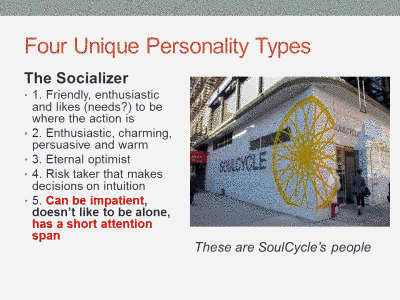
These social folks will pay your overhead if you can attract and retain them.
I explained how it was my belief that attracting Socializers is the key to a successful/profitable Indoor Cycling Studio. Everything I observed at SoulCycle appeared to be designed to attract this type of people and who can argue with their success?
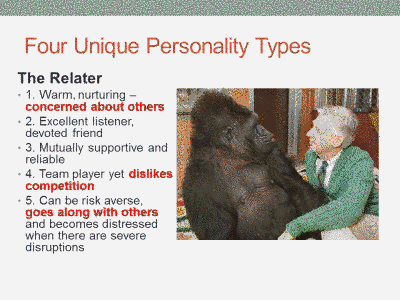
You're a Relater if you include the word “safe” in your class description.
When we first began promoting Performance IQ there was some initial pushback from Instructors; “we need to keep competition out of our classes!” > which I realize now came from Relaters who were concerned about weaker riders not being able to keep up. NOTE: that's been fix… now you can run PIQ competitions between riders that are handicapped for weight/gender or Team based challenges are awesome for including everyone.
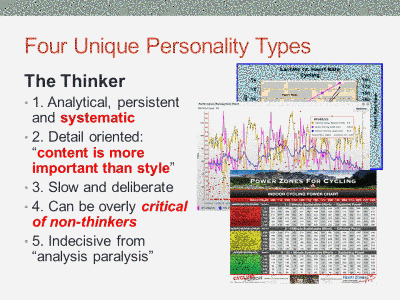
Thinkers spend a lot of time discussing the “Science” of training with anyone who will listen.
At the risk of sounding harsh (I'm a Director… we do stuff like that!)…
I feel we are wasting our time, when we focus our attention on Thinkers.
Many (maybe most) dedicated endurance athletes/cyclists fall into the Thinker group. Don't get me wrong – I know hundreds of them and they're a bunch of nice people. If I had a technical product or service to sell I would devote nearly all of my attention on these data junkies. But Thinkers are very individualistic* (loners) ≠the type of people who add value to a group fitness class. Not to mention they disappear from your class on the first nice spring day.
While typing this I remembered an article from Stages Indoor Cycling's Cameron Chinatti about not focusing on the Squeaky Wheels in your classes. Cameron doesn't call out Thinkers directly, but I see it all the time where Instructors get sucked into esoteric debates about the science of training on Facebook or with the guy in a full kit, who sat in the front row, doing his own thing.
Little, if any, of the “science” of training is of interest to Socializers. So while you're caught up with the wannabe pro cyclist/Thinker, debating the pro's and con's of Training Zone 5B > the Socializer (who has many hundreds of friends) who wanted to thank you for recognizing them during class, leaves feeling like you don't really care… and never comes back.
So Who annoys Who?
I got a lot of heads nodding “YES” when we discussed who annoys who during my presentation.
All of this is strictly anecdotal > just my 53 years of observation and my own personal feelings.
Thinkers and Socialisers can get under each other's skin.
As a Director, Relaters can bug the crap out of me and they see me a uncaring 🙁
We discussed a number of examples of how we need first need to identify our “type” and then be careful not to annoy our opposites, during the presentation of our classes.
Directors need to recognise a Relater's concerns for the safety of others – even if we think it's unfounded.
Relaters need to understand that not everyone shares their concerns and encourage the Directors in class to take a risk.
Thinkers need to minimize the “science lessons” or they'll quickly lose Socializers.
Socializers – it can't be all passion and cheerleading. Throw your Thinkers a few technical “bones” to satiate their need for concrete data.
[/wlm_private]I'm kicking myself for not recording this complete session. There was a lot of excellent comments and feedback. We're planning more of these Full Psycle/PRO workshops and I won't make the same mistake twice.
*Yes, cyclists go on group rides, with other cyclists. But these rides are rarely social events – especially for men. More like a group of individuals riding near each other, all going in the same direction and using each other's draft.
Time is the great equalizer. We all have different abilities, different income, different experiences, but one thing we all have the same of, is TIME. I don’t know about you, but I am a time miser; greedy, protective and otherwise fanatical about not wasting that precious resource. That’s how I’m going to make up for not having other advantages — I’m going to make every minute count. I’m such a fanatic, I even consider sleep highly over-rated, and have averaged less than six hours per night most of my life — even when I was just a whipper. Yeah, I was that annoying kid who would sit outside your door on Saturday morning waiting for you to wake up. I had kids to see, things to do, worlds to conquer… so it seemed back then.
Now that I’m older, well, it’s still that way, just on an adult scale. So, it should not surprise you that I really dislike wasting time. This is why just plain old “exercising” doesn’t make sense to me. It is so vague and wishy washy. What’s the point? If it’s to loose weight, then I want to make sure that is what I accomplish, lost pounds, or I will be wasting my time. If I want to “stay in shape”, I need to know what that is — is it toned muscles, faster running, winning cycling events, lowering blood pressure, what!?! If I don’t know what that means, I can’t determine if I’ve accomplished my objectives. If I accomplish nothing, then I am simply wasting my time. Argh! I just can’t have that.
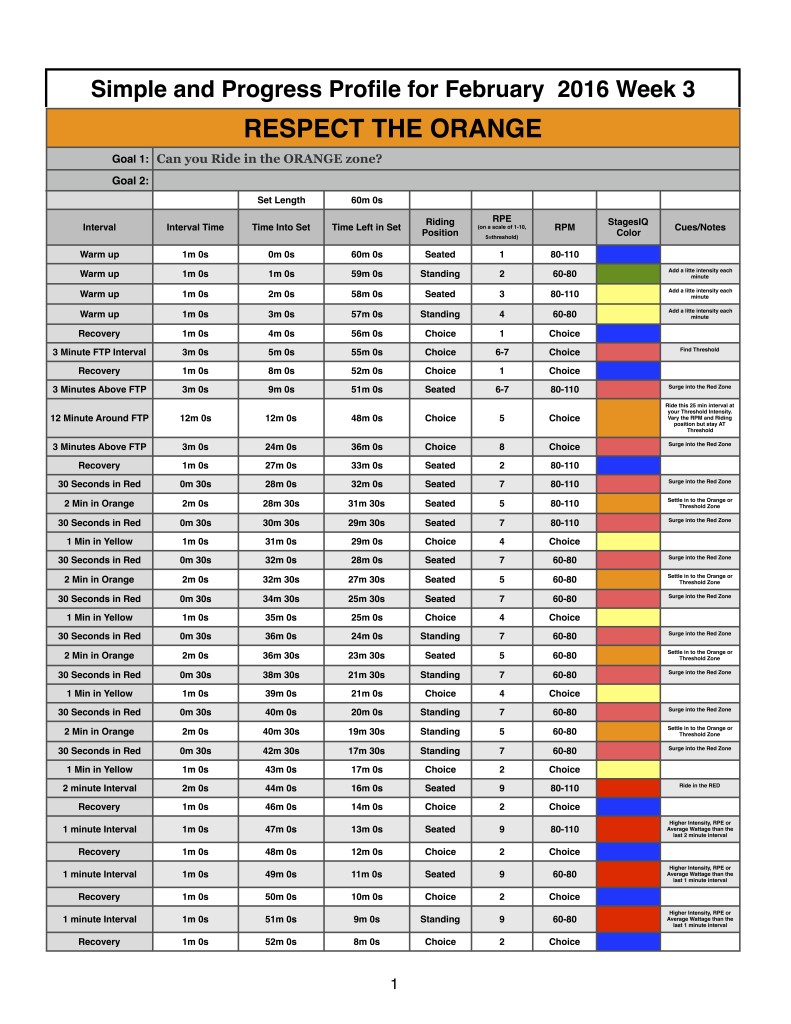
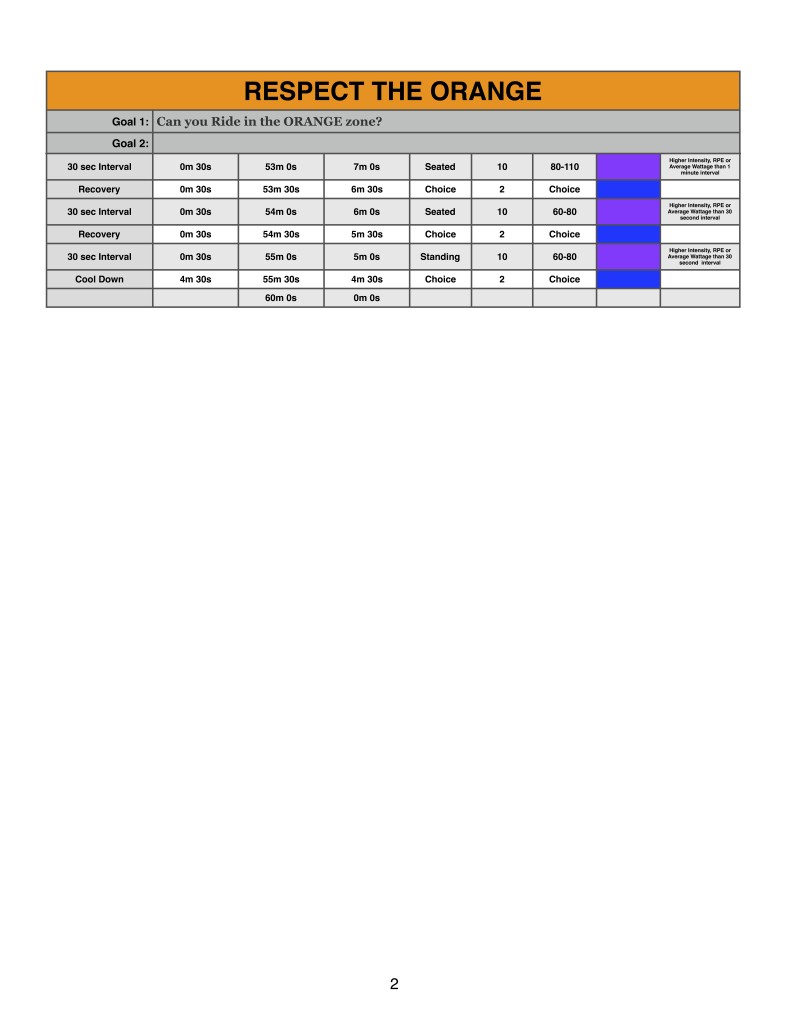
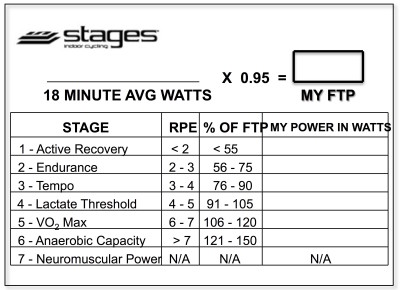
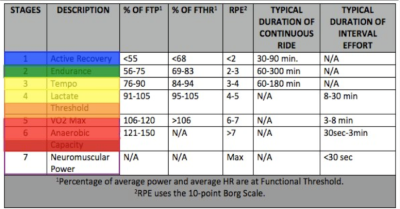
Below, Premium Members can read a detailed description of this Class Profile, download a printable Class Profile that can be used in class, read a detailed description of the Power Based Training Zones and download a printable Power Postcard.
[wlm_private ‘PRO-Platinum|PRO-Monthly|PRO-Gratis|PRO-Seasonal|Platinum-trial|Monthly-trial|PRO-Military|30-Days-of-PRO|90 Day PRO|Stages-Instructor|Schwinn-Instructor|Instructor-Bonus|28 Day Challenge']
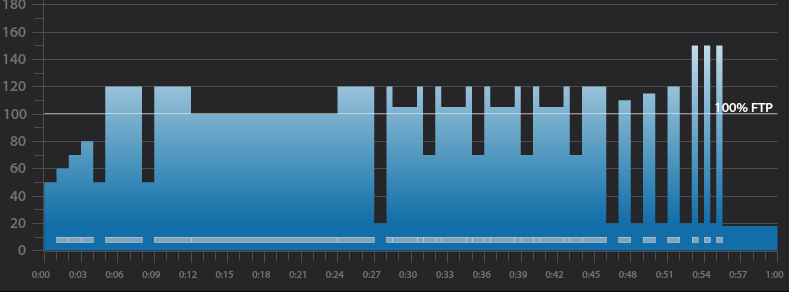
#18 minute interval slightly above “maximum sustainable intensity” or threshold or Orange Zone
First and Last 3 minutes above threshold or Red Zone
1 minute recovery
4 X 3 minute interval at a slightly higher intensity or average wattage than the #18 minute interval or Orange Zone
30 second surge to Red Zone at the beginning and end of each 3 minute interval
1 minute of “recovery” only a few watts or heart beats below the 3 minute intensity after each interval
1 x 2 minute interval at a slightly higher intensity or average wattage than the #18 minute interval or Red Zone
1 minute recovery this is real recovery
3 x 1 minute close to maximum intensity
1 minute recovery after each interval
3 X 30 second interval done at absolute maximum intensity
30 seconds recovery after each interval
Workout Goal:
Can you respect the ORANGE and stay in your Threshold zone for all intervals before we max out at the end.
4 minute warm up
Soft pedal for the first 2 minutes. Get comfortable on bike. Discuss fit and console.
Slowly and steadily increase HR and/or Average Wattage each minute, for 2 minutes, keep intensity below threshold.
1 minute recovery.
3 minute “Benchmark” or Stages IQ FTP Test goals and specifics:
Ride for 3 minutes at a maximum sustainable intensity.
If you have the capability to capture average wattage use the average wattage as your “Benchmark”. If you are limited to RPE to determine intensity use your cueing to make sure participants remember how this 3 minute interval “feels”. All intervals sets in this profile will use this wattage number or RPE as a starting point.
If you are instructing with a Group Display System like Stages IQ, this is when you will have your class perform their initial FTP or Threshold test.
Ride Seated with a cadence of 80-110 RPM
1 minute recovery.
#18 minute interval goals and specifics:
Ride the first 3 minutes at an intensity, wattage or heart rate that is higher than the benchmark intensity found above or in the Red Zone
Ride for 12 minutes at the benchmark intensity, wattage or heart rate or in the Orange Zone
If you are instructing with a Group Display System like Stages IQ, this is when you will have your class perform their initial FTP or Threshold test.
This is a long effort so switch it up as you ride.
Ride the last 3 minutes at an intensity, wattage or heart rate that is higher than the benchmark intensity or in the Red Zone
1 minute recovery in Zone 1 or in the Blue Zone
3 minute interval goals and specifics:
Ride the first 30 seconds at an intensity, wattage or heart rate that is higher than the benchmark intensity or in the Red Zone
Ride for 2 minutes at the Benchmark intensity
Ride seated with a cadence of 80-110 RPM.
If using Stages IQ ride in the Orange zone.
Surge for the last 30 seconds in the Red zone.
1 minute “recovery” just below Threshold or in the Yellow zone.
3 minute interval goals and specifics:
Ride the first 30 seconds at an intensity, wattage or heart rate that is higher than the benchmark intensity or in the Red Zone
Ride for 2 minutes at the Benchmark intensity
Miller Time Interval seated with a cadence of 58 RPM.
If using Stages IQ ride in the Orange zone.
Surge for the last 30 seconds in the Red Zone
1 minute “recovery” just below Threshold or in the Yellow zone.
3 minute interval goals and specifics:
Ride the first 30 seconds at an intensity, wattage or heart rate that is higher than the benchmark intensity or in the Red Zone
Ride for 2 minutes at the Benchmark intensity
Another Miller Time Interval with a cadence of 58 RPM.
Alternate between seated and standing riding for 30 seconds.
If using Stages IQ ride in the Orange zone.
Surge for the last 30 seconds in the Red Zone
1 minute “recovery” just below Threshold or in the Yellow zone
3 minute interval goals and specifics:
Ride the first 30 seconds at an intensity, wattage or heart rate that is higher than the benchmark intensity or in the Red Zone
Ride for 2 minutes at the Benchmark intensity
Another Miller Time Interval with a cadence of 58 RPM.
Ride standing with a cadence between 60-80 RPM
If using Stages IQ ride in the Orange zone.
Surge for the last 30 seconds in the Red Zone
1 minute “recovery” just below Threshold or in the Yellow zone
2 minute interval goals and specifics:
Ride for 2 minutes at a higher intensity, RPE or average wattage than benchmark
Ride at your choice of RPM and position
If using Stages IQ ride in the Red Zone.
1 minute recovery, easy, in the Blue Zone.
3 x 1 minute interval goals and specifics:
Ride for 1 minute at a higher intensity, RPE or average wattage than the previous 2 minute interval.
Ride at your choice of RPM and position.
If using Stages IQ ride in the DARK RED zone.
1 min recovery after the interval 1 and 2
1 minute recovery at the end of the set in Zone 1 or Blue
3 X 30 second interval goals and specifics:
Repeat three 30 seconds at MAX intensity, RPE or wattage.
I invited Cameron Chinatti and Doug Rusho from Stages Indoor Cycling back to the Podcast to learn how they communicate the concepts of Power in ways that reach the different learning styles and personalities in your classes.


 professional directory, connecting more than 16 million consumers to more than 100,000 fitness professionals with credentials verified by the top 14 fitness certification bodies.
 The personality matrix is constructed like this:[wlm_private ‘PRO-Platinum|PRO-Monthly|PRO-Gratis|PRO-Seasonal|Platinum-trial|Monthly-trial|PRO-Military|30-Days-of-PRO|90 Day PRO|Stages-Instructor|Schwinn-Instructor|Instructor-Bonus|28 Day Challenge']