The information below is from my upcoming book Ride Inside which will be published by VeloPress and Available on shelves in late November 2019
The Power Meter
When looking at the intensity of exercise, especially in the world of cycling, power is the ultimate metric. As we will explain later in Chapter 9, there are times where heart rate is a better metric to use, but overall all, cyclists must train using power to get better, faster and stronger. As we said above, the heart rate’s biggest downside can be it greatest advantage. Conversely, power’s biggest advantage can be it largest downside. Power is an absolute number, unchanging due to external factors that affect your life (sleep, stress, diet, emotional stability and more).
While many view this as a plus, it can be all too easy to
implode during a race or very hard ride because you are trying to maintain a
power number that your body is physiologically not able to maintain that
particular day, regardless of your training.
So, what is power? Power is simply how much work you are
doing on the bike. Power is measured in watts. The definition of a watt, from https://www.merriam-webster.com, is “the
absolute meter-kilogram-second unit of power equal to the work done at the rate
of one joule per second or to the power produced by a current of one ampere
across a potential difference of one volt : ¹/₇₄₆ horsepower.”
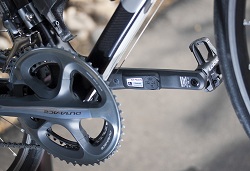
Most of the tools we have looked at in writing this guide
can provide you with power numbers, or have the capability to do so: trainers,
indoor bikes and outdoor bicycles. Before we look at how those devices generate
that data, you need to understand that most power numbers are an estimated
value. This is a large area of contention currently in the indoor cycling market:
if the power number on the bike is calculated or measured, but please know that
all power displays on indoor bikes, and the power meters on outdoor bikes, estimate
the data based on measurements and algorithms. What this means to you, the
rider, is that you should attempt to use the same equipment each time that you train
so that your data is consistent. The more serious you are about measuring your
gains the more important this becomes.
How is Power Calculated
As mentioned above, power is the
amount of work or energy that is being produced. The only true way to measure power
is through the use of a dynamometer, or "dyno" for short. A dyno
itself actually calculates the power data by simultaneously measuring torque
and rotational speed (rpm). This is the type of measurement that most sports
science labs utilize and this is the measurement that most bicycle power meters
use to calibrate and rate their performance.
Most indoor bikes and outdoor bicycles
use power meters that are constructed utilizing one or more strain gauges or
load cells. In short, from https://www.merriam-webster.com, “a
strain gauge is a device that consists
of a fine wire firmly bonded to thin paper and that when attached to an object
subjected to stress indicates minute changes in strain by corresponding changes
in electrical resistance of the wire as it is likewise elongated.” To truly understand
a strain gauge, we looked to Omega Engineering (https://www.omegaeng.cz/prodinfo/straingages.html):
A Strain gage (sometimes refered
to as a Strain Gauge) is a sensor whose resistance varies with applied force;
It converts force, pressure, tension, weight, etc., into a change in electrical
resistance which can then be measured. Stress is defined as the object's
internal resisting forces, and strain is defined as the displacement and
deformation that occur.
For a more indepth explanaition
we look to Omega Engineering (https://www.omegaeng.cz/prodinfo/straingages.html):
Today, the typical power meter uses metal-foil strain gages. The metallic
foil-type strain gage consists of a grid of wire filament (a resistor) bonded
directly to the strained surface by a thin layer of epoxy resin. When a load is
applied to the surface, the resulting change in surface length is communicated
to the resistor and the corresponding strain is measured in terms of the
electrical resistance of the foil wire, which varies linearly with strain. Interestingly,
the most desirable strain gage materials are also sensitive to temperature
variations and tend to change resistance as they age. So the power meters should
be re-calibrated every so often to remain accurate, or at least as accurate as
they were designed.
In order to measure strain with a
bonded resistance strain gage, it must be connected to an electric circuit that
is capable of measuring the minute changes in resistance corresponding to
strain. Strain gage transducers usually employ four strain gage elements that
are electrically connected to form a Wheatstone bridge circuit. The output
voltage of the Wheatstone bridge is expressed in millivolts output per volt
input.
Wow, that is a lot of technical
knowledge. The most important take-away from all of this is that the power
meters that you find on bicycles, both indoor and outdoor, calculate power.
While you will use the power data to determine your training zones, and to
perform your actual training, what is actually important about that data is the
change in your numbers over the course of your training. What we mean by that
is that if you begin your indoor training cycle with an FTP of 230w and end the
cycle with an FTP of 260w you have gained strength, efficiency and endurance
over the cycle provided that you have used the same power meter (or indoor
bike) over that period and especially for starting and ending testing. While
there are libraries of information on power meter and indoor bike accuracy, the
delta in power from start to end is the bottom line. It is for this reason that
we advocate the use of a bicycle equipped with a power meter, which can be
paired with a Kinetic or Bkool trainer for E-Racing, for indoor training if you
are serious about continuing your power when you return to outdoor riding in
the spring.
Power Meter Features
We will take a look at the power applications
in Chapter 6, but for now, let’s look at the features that many power meters have.
In general, power meters are a measurement tool. That tool then needs to send the
data it calculates to some type of computer for storage and analysis. In most
cases, that computer is in the form of a cycling computer, such as a Garmin
Edge, Polar V650 or Wahoo Elemnt, or a sport (maybe multi-sport) watch such as
the Garmin Forerunner, Polar Vantage or Suunto Spartan. All of these computer
options have an amazing array of features and the ability to export or download
the training data to other programs that can sort and analyze that data to give
you unparalleled insight into your training and more importantly your strengths
and weaknesses. This data can be paired with heart rate data for a complete
view of your fitness level and progression.
With 40°f and rain scheduled for this past Sunday, I agreed to sub the 9:00am Cycle Sculpt class at the Life Time Fitness where I have scheduled classes. This was my third chance to teach this LTF branded format that combines Indoor Cycling and Resistance training. You can read about my earlier experiences here and here – both links include my class profile and Spotify playlist.
I was chatting with my friend Richard in the locker room before class. He has taken my cycling classes for years and he's front & center for this class religiously. He also knows something about training physically and mentally – Richard's a triathlete and Tae Kwon Do Grand Master with 9th Degree Black Belt. I told him how I rarely feel anxious before any class, but these cycle sculpt classes always make nervous.
Do you have any suggestions? I asked.
Just relax and do what YOU normally do…
Just relax?That's it? That's your suggestion?
Richard went on to explain; I haven't seen the John I know up on that bike, the other times you've lead this class. You need to lighten up man and just be you. Show us that you're having fun, work us hard and we'll all be happy!
Truer words were never spoken
As soon as Richard finished speaking I knew exactly what was wrong. Two things actually:[wlm_private ‘PRO-Platinum|PRO-Monthly|PRO-Gratis|PRO-Seasonal|Platinum-trial|Monthly-trial|PRO-Military|30-Days-of-PRO|90 Day PRO|Stages-Instructor|Schwinn-Instructor|Instructor-Bonus|28 Day Challenge']
I was trying too hard to make everything fit together. I had decided that the music, movements and transitions all had to flow together perfectly = the anxiety I felt before and during the class. I can remember panicking early in the last class I subbed when I heard the currently playing song crossfading to the next > Crap – they're not done with their exercise yet! This messed up my perfectly choreographed class and shortened the time available (and needed) for next activity… everything snowballed downward from there.
I wanted (needed?) everyone to like me and my class. I've been at this game for a long time and normally feel very confident subbing any class. Why, all of a sudden, am I now feeling insecure and looking for approval? Because these people don't normally come to my class. That's why. I realized that I was trying to be someone different in order to appeal to a group of people whom I assumed don't come to my other classes because they don't like me.
Separating their like/dislike of ME from a like/dislike of MY CLASS
After 9 years at LTF, I'm well known as the Instructor who teaches a very cycling specific class. Believe it or not, there are a lot of members who don't like that format. That's why they don't come. It isn't that they don't like ME, just my heavy emphasis on outdoor cycling. So after 30 seconds of self-talk while I walked to the studio, I had a new perspective – the proper perspective to lead the class confidently and it appeared that most participants enjoyed it 🙂
End note:After the class I was told by a member how she appreciated that I included the weight segments. She explained that a previous sub had refused to offer anything but cycling > which confirmed my new perspective (it's not ME they dislike) and I felt awesome knowing that I delivered a class very close to what these participants came for!
Evolution Cycle/Sculpt Profile #3
To keep this class more familiar to me, I switched my plan and followed our typical Evolution Cycling format through the first four tracks.
Equipment: Everyone needs hand weights = 12/15 Reps to failure and a floor mat.
This light between us 5:09 Warm up where we transition to a standing run after just a few minutes. Every minute after we sit, increase a few gears and then up again. NOTE: Cycle Sculpt includes a lot of standing work & jumps. Frequent variation is important = if you feel you've been doing something for too long, you probably have and need to change.
Revolution 5:09 Openers– I like to have everyone find a comfortable cadence and add load until they feel the need to stand. Each of 4 openers is a standing acceleration that's maintained for a progressively longer effort. Start with 15 seconds and add ten seconds each time. The goal is to get to threshold by the end of the last 45 sec effort.
Daybreak 5:04 Best Effort– This track has a long intro that lights off at exactly 1:00. I used that as a recovery after the openers. Sunday we recorded our Best Effort distance over three minutes. This is all out, absolute maximum sustainable power, from start to finish.
Remind everyone to remember both their miles traveled and Avg. Watts (if you have them) or average HR at the end. We'll be referencing these metrics later.
Runaway Baby 2:28 Reset – Resets are a short transition song, part recovery part just plain fun! Here I offer an option to either recover completely, or find a productive effort around VT1 – edge between Zone 2 & 3 in a five zone system.
Tribal Force 8:01 Floor set #1 – With only 12 participants, we had plenty of room in the front for everyone to have a mat. While standing we did: 10 x DB curls, 10 x DB OH press, 10 Pushups and 10 situps/crunch > repeat. These are all at self directed tempo and with 8 minutes there's plenty of time.
The few who choose to stay in saddle were instructed to find a comfortable climb and alternate seated and standing at their discretion.
Spectrum 5:01 Jumps on a climb – @62 RPM, this track has a very strong beat begins around the one minute mark. Use the intro to get everyone back on and settled, then build the hill – again to that point where they feel the need to stand. Follow the phrasing of the music first at 8 count, then 4 count jumps. It's super important that you can properly demonstrate these jumps exactly with the music. I'll start by calling out the count; up, two,three,four, down, two three four (or out to eight). Then get quiet and just watch them, watching you. If you see some struggling, go back to the basics of seated pedaling to the music. Rinse & repeat.
Until we go down 4:12 Floor set #2 Compound movements: 20 Squats/OH press and then alternating leg lunges with curls – 8 each leg.
Animals 5:04 Pick your head up – You're off the back! – this seated climb replicates the panic you feel when riding in a group, with your head down… only to raise it up and see you've slipped off the back. Have your riders find the 64 RPM pedal speed and then add the hill that has them thinking they should stand. There are a number of changes in the music (a great one at 1:50) that become your trigger to pick your head up, realise what's happened and then stand, accelerate and sustain the effort to fight to get back on. You'll find natural breaks that will have these efforts ~ 30 seconds. Perfect for a few brief trips to threshold.
Police and Thieves 6:10 Floor set #3 Floor work 2 sets of 20 pushups (using weights as support) and 20 crunch/sit-up.
Riders are following the 77 RPM cadence with a strong endurance (just below threshold) Time Trial pace.
Show Me 3:28 Reset Easy pace, taking time to drink, towel off and prepare mentally for the last hard effort of the class.
Ready to go 5:01 Big finish Time to replicate that earlier Best Effort – or better it if possible. This track as a nice, 30 sec building into where you'll be encouraging everyone to get back to their previously remembered watts or HR. Hit the stage button and see how far you can get over the next three minutes… or sustain that VT2 threshold HR over the timed section. [/wlm_private]
It's the end of the world 4:07 Warm down – my preference is to give athletes a chance to warm down = a gradual recovery vs. just soft pedalling. The cadence of ITEOTWAWKI is a tick over 100 RPM. Get there and then add enough resistance to keep yourself aerobic (around VT1) for the first three minutes and then slowly dial it back until everyone is conversational > that's your cue as the Instructor that everyone has recovered 🙂