John, I'm still confused by this power stuff… where should I be riding? How many watts should I be seeing on my monitor, because I'm no where close to my body weight?
I get questions similar to this frequently from members. My answers has evolved over time:
I used to give into the pressure; “please tell me a number” and would throw out a vague target – “your first goal could be seeing watts equal to your your body weight”.
Later I revised it down a little; “what would be your desired, lean body weight?” “Let's try to reach that as an early power goal.”
But now I'm learning that throwing out watts = body weight (lean or actual) isn't as helpful as I intended. Sure for some it works. Those who are reasonably fit looking (read not overweight) and with a good fitness base. For others I've found I was asking them to work too hard, using a kind of formula that wasn't personalized for each individual. Which sounds is a lot like using the 220 – age for MAX HR 🙁
Now my preference is to conduct a short “Best Effort”, about a quarter of the way through class, to give everyone an understanding of a number they can work from. Not a true FTP or PTP, but it's been reasonably well accepted… but not by everyone.
Case in point: last Thursday after class I had the “how many watts should I be making?” discussion with a female member. She's a fit 50 year old and I would guess (I never ask) she weighs about 130lbs.
So I asked her what she normally sees during the “Best Effort” interval. “I average about 80 watts.” Which confused me… a lot actually. I would have guessed she could easily make more than 80 watts. I was stuck for an answer. Rather than guess at the reason, I started asking questions:
Do you ride outdoors? No, not regularly.
Are you a runner? YES!! Big smile.
How would you compare running vs. cycling? Cycling is much easier. I'm getting to something here…
Do you run in competitive events like a 5k, 10k, Marathon, etc…? Another YES !!! I love to compete!!!
Do you run faster & harder in a 5k vs. a Marathon? Yes, of course I do – why?
When you're riding in here with me, does your “Best Effort” feel more like a 5k or a Marathon? She stopped to think about it and then said; like a Marathon.
Bingo!
I didn't need to say anything more. The look on her face told me she understood exactly where her confusion was coming from. Her perception of working hard was at her Marathon level of intensity = 80 watts was exactly right, figuring an aerobic level of effort. I had been making the assumption that when I asked for hard, everyone would work at the level I perceive as “hard” – which for her was different.
She ended the conversation with; so when you ask us for our “Best Effort”, I should be working at my 5k level of effort?
Exactly, or maybe a 5k where you're chasing one of your faster friends 🙂
For years I have taught classes that were physically challenging to participants but when I started to bring more than the Physical Dimension of Wellness to my classes, MAGIC HAPPENED.
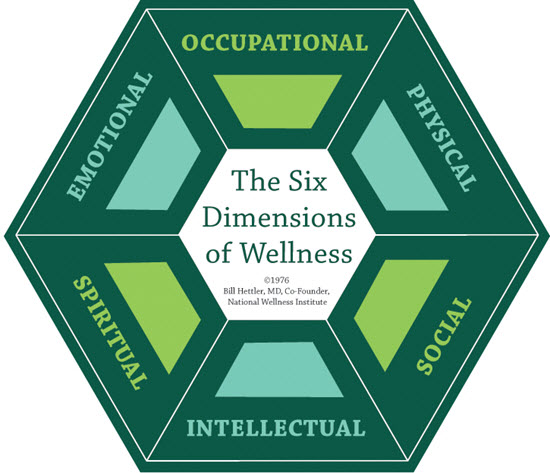
Dr. Bill Hettler, the co-founder of the National Wellness Institute (NWI), created a model named, The Six Dimensions of Wellness, in 1976. His idea of Wellness was not merely just the absence of disease, but living a life in which you become more aware and make decisions towards a more successful existence.
The dimensions from Dr. Hettler’s model are;
Physical
Social
Intellectual
Spiritual
Emotional
Occupational.
These 6 Dimensions when fully obtained can be thought of as a wheel, the more full your wheel is the better life may be, the less full the wheel is the harder life may be. Knowing this as a Fitness Professional, I made it a point to bring more than just the Physical Dimension to each of my classes and saw an improved mood and performance from members.
Below are a few ways to implement some of the Dimensions of Wellness into your classes and getting your participants to living more successful lives!
Social Wellness: I start each of my classes by having participants near one another introduce themselves and share their goals with each other, during the Warm-up. This really creates a sense of community and connection that might not be there unless you initiate it to happen.
The first time I tried this in class there was a silent pause and a look of hesitation of those in the room. I quickly followed up my request by sharing a stat that I read in Forbes Magazine, stating that those who share their goals with others, are 75% more likely to accomplish those goals than those who do not. This lit the fire and soon my classes were celebrating each other’s successes and helping hold each other accountable.
Physical Wellness: During the class it’s crucial you create a sense of connection with the body, whether it is Heart Rate, Perceived Exertion, or simple stating where and what they should be feeling. This help will get your participants engaged and understanding what’s happening PHYSICALLY rather than just going through the motions.
Whenever you get a chance during your classes, tell your participants exactly what they should be feeling so they know they are accomplishing the goals you have set.
For example, when I am teaching a Standing Attack Drill, I will prep the class by saying, “think of the word ATTACK, it’s strong, it’s powerful, and it’s aggressive! If you attack with those words in mind, your legs will start to warm, your breathing will become heavy, your heart rate will rise and when you finish this attack, you will be breathless and that much harder to beat! Let’s Roll!”
Your riders will now be able to connect with physical signs and feedback from their own bodies, which will be a great way to keep them engaged and working hard no matter if they are a beginner or a well-seasoned athlete.
Emotional Wellness: Towards the end of classes, I usually have a track where I give full control to the riders. I have a set directive for the drill and try to evoke an emotional attachment to their work effort and goals. I will ask again and again, “Is this the best you can do? Is this as hard as you can work, if so KEEP GOING, IF NOT MAKE THE CHANGE! BE BETTER!” I try to create a sense of pride and worthiness to their work and show them not just how PHYSICALLY strong they are but EMOTIONALLY.
This is all about song selection and coaching. The best example I can give that I use in my classes is the song, Breakn’ a Sweat by Skrillex & The Doors (Zedd Remix). The drill is simple; it’s a seated climb up the hill that scares you, the one you can BARLEY make it to the top of, the hill that when you get to the top, you feel victorious. The gear choices are up to you but the RPM’s must never go below 65. Ever rider will have a different idea of what this hill looks and feels like. It then becomes the instructor’s job to coach their team of riders up this hill and make them believe every second of the way that they can do it.
Spiritual Wellness: Finally at the end of class, during the Cool-Down, I always have participants turn to their neighbors and give them a good-job or some words of praise for their work. The Cool-Down to me has 2 parts to it, first to bring recovery and relief to the body through a controlled ride and stretches, and second to feel a strong sense of pride for the effort and work they did during class.
As soon as the last beat drops and the work part of the class is over, I always tell my class to turn to their neighbors and commend them for their effort during class. I also always make sure that the song or songs that I use for Cool-Down provide motivation or inspiration, like the song, I Lived, by One Republic. The lyrics talk about taking chances and, my personal favorite, OWNING EVERY SECOND! As the leader of your class, assure your team of riders that the effort they put in is one they should be proud of and feel good about.
Since the implementation of these techniques I have seen a steady retention and full classes. When you start to introduce these Dimensions into your classes, be authentic and go in wholeheartedly, and you too will see MAGIC HAPPEN!
My friend Sally Edwards makes an excellent point here that applies equally to any endurance athlete and affirms our discussion from Podcast 368 — Does Intensity Trump Duration?.
It turns out that very fast runs are good for you–and that moderately fast runs (those just above threshold, in the Black Hole) are not. That’s because Black Hole runs are too slow to cause enough stress to make your body want to strengthen itself, and too fast to allow you to go long enough to improve your endurance. Studies of top runners find that they (by design or not) minimize their time in the Black Hole.
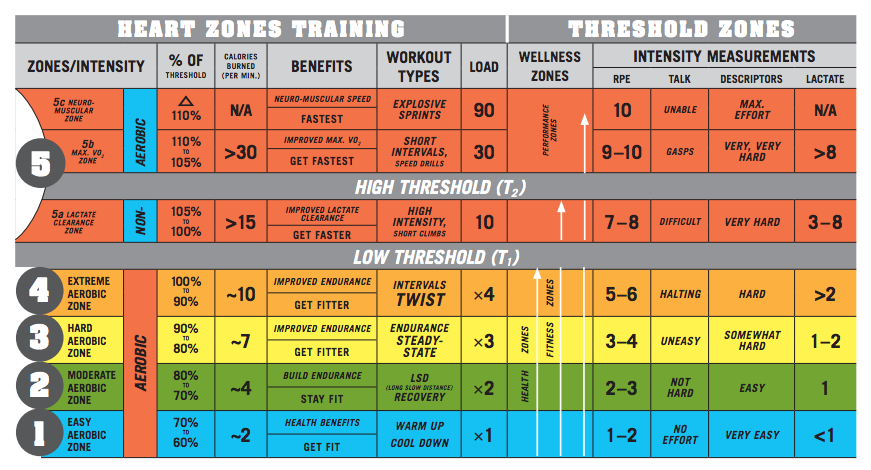
How fast is the Black Hole? In terms of pace, heart rate, and the Heart Zones chart, the Black Hole is actually a very narrow band. It starts at threshold, right as you enter Zone 5, and goes about 5 percent higher. So, if your threshold heart rate is 150 bpm, your Black Hole would extend from 150 to 157 bpm. That means if you really want to improve, your fast runs should roughly start at a second threshold: 158 bpm.
**This post is one of several in an excerpt series from the book, Be a Better Runner by Sally Edwards & Carl Foster**
But don't discount fun exercise = running/cycling that you enjoy just for how it makes you feel. Many people have no interest in structured “training”, they exercise because they find it fun.
Whether you’re in training or not, every ride has a purpose–and just about every one is legit
Fun, however, is a legitimate purpose. Stress relief is a legitimate purpose. The fact that you can finally ride outside after being trapped inside by a wall of snow and ice for six weeks, structure be damned, is a legitimate purpose. The only non-legitimate purpose I can think of is if you’re out there joylessly slogging through some self imposed workout because you feel like you need more miles when those miles are not a) making you happy b) making you faster or c) building your reserves, but rather a) making you miserable, b) making you slower and c) breaking you down.
As an A type male, it was difficult to understand the whole “fun exercise” concept. What's the point of taking this class, if you're going to talk through it?
Once I understood that for some folks, Keeping It Funis the objective, it became a lot easier to accept the appeal of SoulCycle type classes… and their wild success 🙂
This is cool! Professional cyclist Alex Howes taught a class at the Peloton Cycle studio in Manhattan. This article explains how Alex taught what was only his second Indoor Cycling class. My guess is that he doesn't have a IC cert – not that it matters.[wlm_private ‘PRO-Platinum|PRO-Monthly|PRO-Gratis|PRO-Seasonal|Platinum-trial|Monthly-trial|PRO-Military|30-Days-of-PRO|90 Day PRO|Stages-Instructor|Schwinn-Instructor|Instructor-Bonus|28 Day Challenge']
He's a World Tour rider for Team Garmin Sharp, which means he races in the big international tours in Europe. This year, he placed third in the professional national road race championships in the US, and won a stage of the USA Pro Challenge in Colorado. In 2014 he finished the Tour de France, and last year, he completed the Vuelta a España.
Wednesday, he became a temporary spin[sic] instructor at the Peloton Cycle studio in Manhattan. It was his first time teaching a class and only his second time on a spin[sic] bike. You can usually find him doing six-hour training rides in Boulder, Colorado or his European base in Spain. He liked it though.
The author's description for the image above jumped out at me; We did a lot of standing work with high cadence, which is like running on a bike.
Is it just me, or were you also surprised that a Professional Cyclist would include high cadence out of the saddle work as part of a class he lead? I really wish I had known about this class because I was in NYC at the time. So even though I wasn't there, I am willing to formulate a hypothesis about why Alex chose to include this in his class: The stability of an indoor cycle creates a unique opportunity to train in a way that he felt would help everyone in his class – including himself. No one had told him that standing (a lot) with a high cadence (which by default can only be with light resistance) is wrong/contraindicated/inefficient/dangerous/etc… IMO Alex added these drills because they felt natural to him 🙂
Here's a short video showing his form.
This post got a strong reaction over on Facebook > It defies explanation how anyone could find fault with a Professional Cyclist guest teaching a cycling class… but they do. Incredible :([/wlm_private]
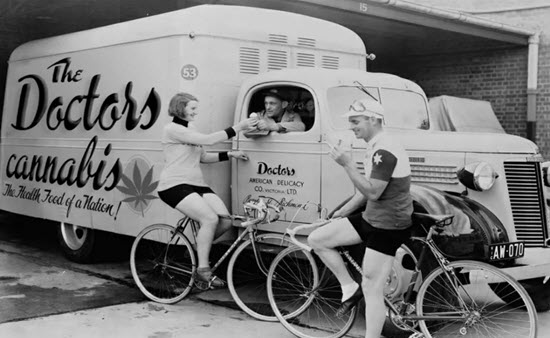
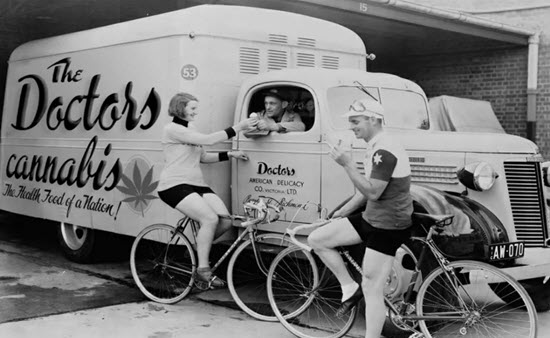
This May, the world's first cannabis-infused gym will open in San Francisco, where members will be encouraged to integrate the plant into their pre- and post-workout regimen
They'll say it will be about “Science”…
Power Plant Fitness will be a premier gym, McAlpine says, not just a hangout for potheads. Though, to be clear, there will be weed. He’s still hammering out the details, but McAlpine envisions offering cannabis performance assessments, in which trainers help determine how the plant can help an athlete work out before guiding them through weed-assisted fitness plans.
… and getting into the right training “Zone”…
“If you use it right,” he says, “cannabis takes the things you love and lets you love them more. With fitness that can help get you into the zone, into eye-of-the-tiger mode.”
… but really it's about selling stuff.
In addition, McAlpine hopes, members will be free to buy and consume cannabis on site, including Power Plant’s own line of edibles, which he says are “made for pre-workout focus and post-workout recovery.”
Is it a stretch to think this might be the start of a new genre of Indoor Cycling? It would give new meaning to; “Keeping it Fun” – don't you think?
Check out this video: The Benefits Of Smoking Weed Before Your Workout
Karen Nuccio, a fitness and spin instructor in New York City, told me a funny story:
While waiting in my car before teaching an evening spin class one night, I spotted one of my students. He tapped on my window and got in my car to chat. This was one of my all-star spin students – a ripped, shredded dude with tattoos and attitude. He would spin faster and harder than anyone. He gets in a car, we start talking about the playlist for the class and then he goes, ‘Do you mind?’ before pulling out a joint. Yep, my best spin student to date was high during every class. Moral of the story? Not every pot smoker sits on the couch and orders Domino’s. Some of them are dominating your spin class. We are all very specialized animals. Do I promote mixing drugs and fitness class? No. But I think we all need to find our way and for some people, the road to health is not a typical one. OK, so a fitness instructor I know well and respect confirmed marijuana can be extremely effective in athletic performance. Upon further digging, I found some long-distance runners use it before running races, and yogis use it to get a better stretch in. In more weed-friendly states, there are even yoga classes specifically designed to incorporate marijuana, like Ganja Yoga in San Francisco.
Now… who will be offering the first HIGHCYCLE Indoor Cycling Instructor certification?
And will they provide munchies?
Could be a cool franchise opportunity – let me know if you want to discuss.
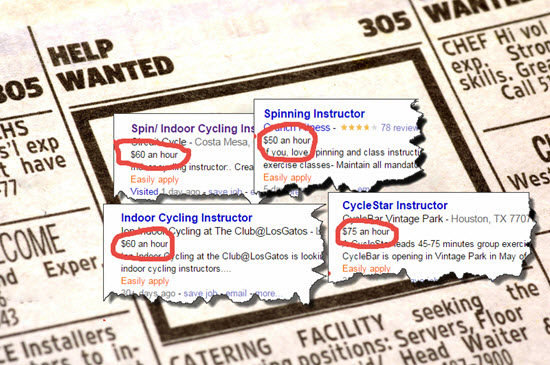
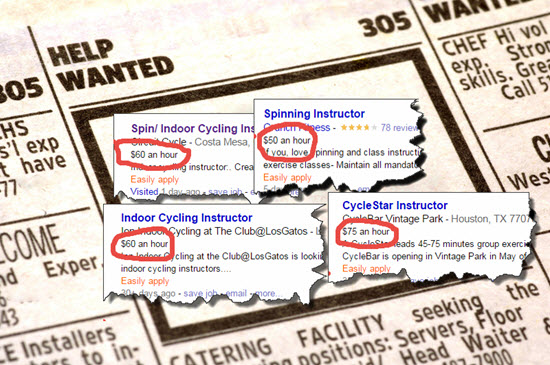
What I've described as the “SoulCycle Effect” appears to have caused a nice jump in the starting rate for IC Instructors. At many new boutique studios, the $50 – $75 per class rate advertised is the starting base pay rate. Consistently fill the room and the added $'s per-head incentives you'll receive could push your pay to $125.00 or more per class. Teach just six classes a week and you'll be making $15,000 to $37,500 a year… for a part-time job.
I don't know about you, but that's real money to me!
Big Box Clubs are feeling the labor pinch
Large health clubs are sensing competitive pressure from small/boutique fitness studios and it scares them. Not only are they losing customers, they're also watching their best Instructors walk out the door to join a startup down the street.
How do I know this? Because it was a common theme voiced by multiple club owners and equipment distributors I spoke with last month at IHRSA.
Which is a 180° flip from six or so years ago. That's when the small/boutique studio boom was ramping up. Then a fitness entrepreneur's primary strategy was differenciation. What can I do to be different from the local Big Box? Now it's the owner's and managers of these same large fitness clubs asking the same thing – LOL!
If it's been awhile, you're probably due a raise
If it's been a few years since your last review, now is probably as good a time as any to ask for an increase in your per-class rate.
Do a little research to learn what other studios near you are offering. It wouldn't hurt to graph out your class attendance and possibly list all of the times you agreed to sub other Instructors classes – so you can demonstrate your value to the business. Then be brave, schedule an appointment and politely ask for a raise. Unless you're a real flub, or there's no other option where you can teach, your current employer will want to retain your services = will want to keep you satisfied and offer you some additional $$$.
If that doesn't work – you can always check indoorcyclinginstructorjobs.com to find a studio who would love to have you on their team 🙂