Participant resistance was such a big part of running a weight-loss program, I didn’t even realize it was a thing to write about (if that makes any sense). It just went with the territory.
“Resist” has many synonyms: oppose, battle, combat, duel, fight back, put up a fight, defy, struggle against, stonewall. Why would someone join a weight-loss program — and pay lots of money — only to do these?
Participants resist in many ways. Below are only a few examples of actual participant behavior during the 13 years I ran a program combining athletic performance training and a robust nutrition plan geared to weight loss and ending sugar addiction.[wlm_private ‘PRO-Platinum|PRO-Monthly|PRO-Gratis|PRO-Seasonal|Platinum-trial|Monthly-trial|PRO-Military|30-Days-of-PRO|90 Day PRO|Stages-Instructor|Schwinn-Instructor|Instructor-Bonus|28 Day Challenge']
Names have been changed to protect the guilty.
Jeffrey
Jeffrey was our first participant. He got used to having my full attention and turned petulant when other participants joined. From that point on, he continually criticized the program and stopped following instructions. When I said peanut butter was okay to eat, he ate a 1-pound jar in a day.
John
John was in the program for almost a year before he lost any weight. Once his weight started dropping, he told me that, at first, he wanted to prove it wouldn’t work, so he made sure it didn’t.
Kathy
Kathy complained about hearing sugar addiction info in both a live class and a webinar, instead of realizing she heard it twice because it was key. After a private consult, she waved to me from the window of Pete’s (the coffee place) while eating. Based on Pete’s menu, draw your own conclusions about the food.
Kimberly
Kimberly was a vegetarian, miserable, touchy, and quick to anger. She masked it with a phony-soft voice but complained to management about everything (especially me). Even her doctor had told her she needed protein. I knew on Day 1 she’d never finish the first quarter. She didn’t.
Tom
Tom was an alcoholic who reacted to the rule about avoiding alcohol with a strange grin. He dropped out and rejoined over a year later. He reacted to the alcohol rule with the same grin, dropped out again and never came back.
Shelly
Shelly was in sales and said she had to drink with clients. She had many reasons she couldn’t get around drinking. She never lost weight until she did the AIDS ride from San Francisco to L.A. (without alcohol).
Kristin
Kristin’s attendance at trainings was poor. Because it was a progressive, periodized training program, not a drop-in class, she didn’t progress. She also wanted detailed menus instead of guidelines. When we didn’t supply menus right away, that became her excuse to eat pizza, drink wine, and never keep a food log.
When we developed menus, she complained they weren’t specific enough. She wanted to know precisely what SHE should eat every hour of every day. She gave me The South Beach Diet and said our nutrition program was just like it. It wasn’t, but I never understood why she didn’t just follow that diet instead of eating nachos and drinking margaritas. Or what any of this had to do with never logging her food intake as instructed.
So why do people pay lots of money and then resist? Here are a few reasons.
Alcoholism
Addiction defies rules of reason and logic. It’s a complex topic, very briefly covered in a previous post (Sweet Tooth or Sugar Addiction: What’s the Difference?). Alcohol can sabotage weight loss, as covered in another post.
Sugar Addiction
See above. People will go to extreme lengths to avoid giving up their favorite foods. Lots of blame gets thrown.
Not Taking Responsibility
They’re overweight because of a spouse’s work schedule. Or they go to restaurants frequently. Or they never learned what to eat as kids. Or… fill in the blank.
Plausible Diversion
Registering and paying for an expensive, intensive program showed their sincere desire to lose weight. If they didn’t lose, it was the fault of the program, not because they never did the work to make it happen.
[/wlm_private]
These stories aren’t pretty — and they’re crummy memories — but they’re 100% true. If you have a similar experience with your students, maybe something here can help you start them moving in the right direction.
I'll bet somebody at Apple/iTunes is getting an ear-full this morning…
SoulCycle sent out an email this morning, announcing their new iPhone App. The email included this link to their App in the iTunes store… which of course opens in iTunes so you can download the software.
Except most people (like me) don't use iTunes to install an App. We download and install Apps directly from our phones.
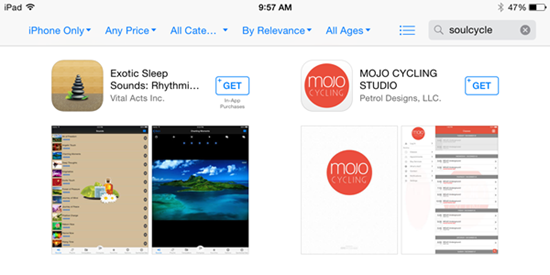
Which is great as long as the App Store can find SoulCycle's App when a user (in this case me) searches for SoulCycle… which returns two available Apps, neither is the SoulCycle App 🙁
So I guess I'll have to go old-school and transfer it from my computer, before I can review it!
413 Update – I'm now seeing you can search and find this now in the App Store using your iPhone.
There's an old saying that goes; “I've been at this so long… I've forgotten much of what I didn't know, when I first started.” I've taught Indoor Cycling classes since 1998ish. A long time ago for sure. Even back then I had an advantage over most new Instructors. I'm married to the “Senior Group Fitness Instructor” in my family. Amy began her fitness career in 1994 and Spinning® in 1995. She was there for many of my early classes to help guide and critique me and my classes. I had her positioned front-center in the class during my first audition at Life Time – yes, I passed 🙂
So a lot of time has passed between those first classes and today. It's hard for me to think back on the nervousness and insecurity that's common in most new instructors. What's needed is a newer Instructor who's willing to share their ideas and solutions. That sounds like my friend Lena Hershey 🙂
This page at leanlena.com has links to multiple articles writen by Lena > New Instructor Tips specifically for those of you just getting started in your teaching carreer 🙂
Master Educator Cameron Chinatti with Stages Indoor Cycling joins me for a fun followup to their very successful IHRSA convention where they launched the new Stages SC3 Indoor Cycle. We've got a bunch of videos that relate to my interview, which you'll find below.
One of the highlights from the show was the amazing efforts of two cyclists, during their 60 sec challenge.
First there was
Junior Nationals competitor Dominic Suozzi decided to try his hand at the #60secchallege today. The kid's wearing Converse and he destroyed everyone. 1100 Watts!! That's crazy-ville!
Then how about the huge effort from Kat Haskins … aka TheBarnKat > she's an Instructor at CB Cycle Barn and wasn't an outdoor cyclist, up until now. She won a new Giant bicycle with Stages Power Meter for her efforts 🙂
Here's my interview with Cameron. Enjoy!
Cameron and I discuss their new “Sprint Shift” innovation. Here's a quick video showing how it works. You can read more about how I used this new feature at my review of the Stages SC3 Indoor Cycle.
Before I get a bunch of hate mail from Schwinn Instructors. I make the comment that Stages is the first Indoor Cycling company that is focused on both Indoor and outdoor cycling. Yes I realise that the brand “Schwinn” was first a bicycle company – my first road bike was a green Schwinn Varsity, second was a white and purple Schwinn Paramount. But the Schwinn Indoor Cycling brand has/had no connection with the bicycle company known as Schwinn bicycles. Stages is currently selling products to outdoor cyclists (the Stages Power Meter+ Endurance Training Education) as well as Indoor Cycling studios (the Stages SC3 Indoor Cycle + Instructor Education) Does my comment make sense now?
John, I feel we need an official organization of Cycling Studio Owners + an annual conference where we can all meet and learn from each other.
I've heard this dozens of times from Studio Owners, including this past IHRSA and last month at our Full Psycle/PRO PIQ training in Chicago.
That's a great idea, I would say repeatedly, followed by; So who's going to organize it?
Well… you are John – always said with a big smile 🙂
—————————————————————–
There's a simple sales technique that's called; If I could… would you? The purpose of this exchange is to confirm if a person's question (do you have this in blue?) is conveying actual interest. Your open ended response is designed to understand more, keep the conversation going and possibly gain an early commitment (if I could get you one in blue, would you purchase one today?).
An example of using this at your studio:
Customer question; do you offer a “beginners” class for new riders?
Your response; If we could offer a “beginners” class… would you come?
Notice how responding directly; yes, we have a beginners class, doesn't have the same effect? That response ends the conversation and now you're left waiting for your customer to offer more.
An alternate response to this (if you have an existing beginners class) might be; yes we do – Wednesdays at 9:00. If we have an open bike, can I count on you being here to ride it?
—————————————————————–
So back to the original question:
If we organized a meeting for Cycling Studio Owners…
…would you join us?
Now I understand that isn't nearly enough information to say Yes, or No. You'd need more detail. This would be open to Owners, Managers and prospective fitness entrepreneurs. We have some early interest from a number of potential sponsors and have scouted a possible location. Here's what we've found:
At an upscale hotel in Stamford, Connecticut > very close to NYC and LaGuardia airport – the east coast has the highest concentration of boutique studios.
Rooms are only ~$110.00 a night.
We're thinking about meeting over two days, during the third week in August > that dead time, after youth sports and long before Labor Day.
Having hosted two ICI/PRO conferences, I know that events like this are a huge undertaking and will be very, very expensive. Beyond your tentative Yes/No, I probably will/won't participate, I have a bunch of additional questions for you:
What are the best days of the week for this?
What should the format be?
What would you like to learn, see, experience?
Does it make sense to establish a formal Studio Owners organization?
I've created this survey to collect your responses.
If, or how, we proceed will depend on what you tell us!
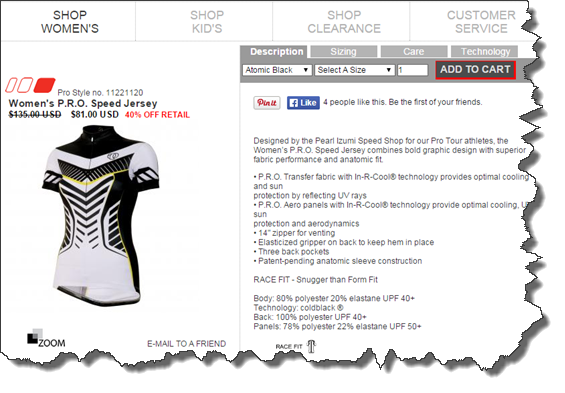
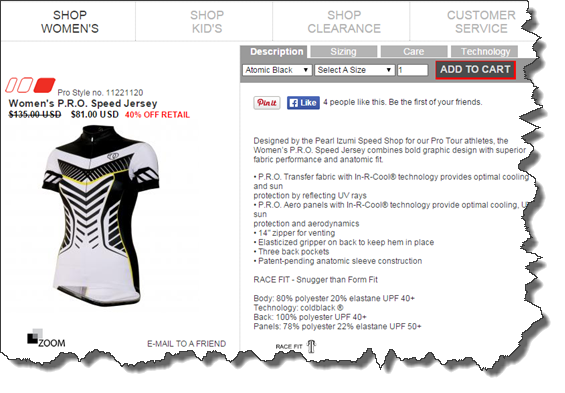
Welcome to the Pearl Izumi/ICI PRO Program!You are qualified for a 40% off retail purchase rate for up to $1,000 of gear per season at shop.pearlizumi.com .
Please remember some of the basic rules of the program. This program is for your personal use only – please don't discuss your special privileges with anyone who's not part of the program; it's designed to make you more familiar with our products so you can show them off to your clients.
Of course, the whole process isn't complete unless your clients can purchase our products for themselves at a retail location – please take a few minutes to familiarize yourself with the stocking Pearl Izumi dealers in your area so you can send some customers their way – you might even land a few clients through these new relationships (you can use the dealer locator function on the site if you're not sure which dealers are nearby).
Dealer orders take precedence over any of our discount programs; your order will generally ship within 4 business days (even orders for PI employees have to wait), and you'll receive an automated email with your UPS tracking number once your order is en route.
ICI/PRO Annual/Platinum members can log in and review Pearl's entire 2015 line here. Please contact me if you have any issues accessing the programs website.
*I've lost track… I think this is year six of our exclusive access to the Pearl iZumi PRO Purchase program. Thanks Pearl for your continued support of our Instructors 🙂