Many things contribute to a great Indoor Cycling class, but none as much as cueing. Cueing a class is a skill, even an art, that develops over decades. Like public speaking, it’s about more than the words and involves multiple factors.
Cues add depth and color to a class and focus the students on aspects other than getting some exercise. In the class of a Master Instructor, the words flow, go beyond workout instructions, and command attention.
We’re professional instructors, and cueing is our craft.
The Opening
Every class needs an opening. No matter how many times you’ve taught the group, the opening is critical to the success of each class. While it’s OK to greet students personally with just your voice, always open on the microphone. The tone and content of a good opening should be amplified.
When you open, you must do two things: get in sync with the students and grab their attention. If they’re quiet and serious, don't open energetically. Use a subdued tone. Once your energy matches theirs, move them to where you want to take them. Even in a subdued voice, though, you have to get them to listen right away.
Instructors may miss an effective opening by socializing with the students or ignoring them while fiddling with their bike or music. As with any presentation, the opening sets the tone for the class.
“Good morning, everyone. As we start, I want you to focus on what you’re doing and what’s happening. The rollout is a special time in the ride. Let me tell you why.”
Whether you open from the bike or from the floor, your opening depends on that optimal moment that experience helps you feel. It’s the moment when students first direct their attention toward you and are most receptive. Use it as soon as you feel it.
Cueing the Class
The cues for the day should encompass more than ride instructions or motivation. Cues can relate to the Concept, the Workout, Exercise Science, Philosophy, Music, Video, Personal Experience, or Motivation.
The Concept is what you want your students to learn from the day’s class and is more important than the Workout. Your concept can be standard, such as Endurance, or more esoteric, such as Finishing Every Climb. If it’s an endurance class, teach the concept of endurance. There’s the science of endurance (aerobic metabolism, building a foundation, oxygen transfer), and there’s the philosophy (contemplation, discipline, resilience). The more your knowledge and experience grow, the more compelling your cues become.
The Workout consists of the mechanics of the class, which we learn in any Indoor Cycling curriculum: ride positions, hand positions, terrain, cadence, technique, proper breathing and modifications. Many instructors never progress their cueing beyond this.
Exercise Science cues should support the day's concept. If you don't know much about exercise science, read some articles or tap into the wealth of fitness information here for PRO members. Students look to us to explain what’s happening in their bodies through exercise. It’s disappointing when an Indoor Cycling instructor can't explain the physiology of cardio.
Cues around Philosophy take some experience. Yet students may need to hear them to realize what they’re doing transcends exercise (which may become boring). It takes courage to introduce these cues because they can sound preachy. The key is to say them as a student of philosophy who’s still seeking answers — and stick to cycling. When you talk about a philosophical point you’ve contemplated for a long time, it won't sound preachy.
Music and Video are sensory assets that can and should be included in your cues. Why did you select the song you’re playing — the nuance? The structure? Why did you want the class to ride to the video segment you put up that day? These make relevant and interesting cues.
Personal Experience lets your class know that you feel what you’re asking them to feel. Even if you don't ride a bike, years of dedication to your cycling-based workouts are a quality experience. For instance, how did your thousandth class differ from your first?
Last are Motivation cues. These are straightforward encouragement but too heavily relied upon by many instructors. When said time and again, motivational cues lose their impact. “You can do it” is much more effective when used infrequently. Said at the right time with the right tone, though, it can change the direction of a student's effort.
The Close
A close for each class is important and a good time to make a final, perhaps philosophical, point. Students are open and receptive after a hard effort.
Timing
Timing cues properly is one sign of a quality instructor. Timing is your sense of flow, your sensitivity to what’s happening in class, and how you change in the moment to balance and maximize performance.
Time your cues around the vocals in your music; speak in the pauses. Match the video playing. Couple that with tone: Should you be supportive and quiet? Firm and commanding? Never yell.
When you’ve timed your cues well, the class energy will build, and the students will be with you.
No matter how good you are, inexperienced students with less awareness will exercise “unconsciously” and not listen. You’ll need to repeat cues, finding different ways to say the same thing.
If this type of cueing is different from what you do, ease into it. One day, try an attention-grabbing opening that explains the workout, and close by summarizing it. Another day, open with how important cardio fitness is. During the class, explain one physiological point that you know really well. Close by reminding the students of that benefit they just got.
The goal is optimal communication that lets the students walk away with something besides exercise.
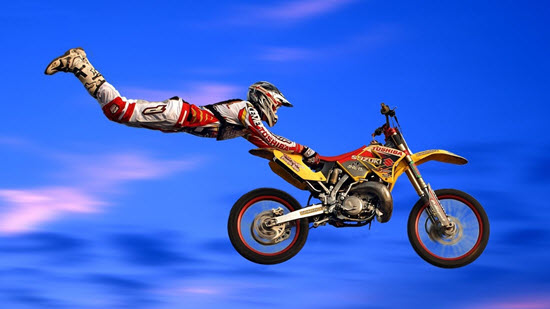
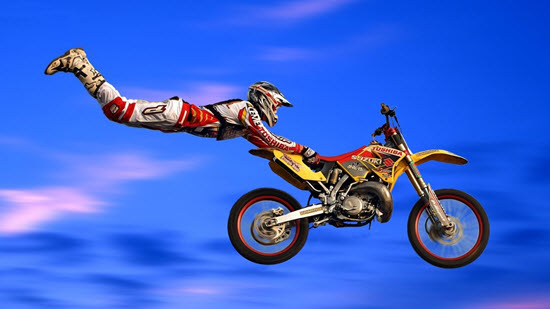
No stunt is too dangerous for extreme motocross competitions.
What caused the SoulCycle phenomenon? Why are their riders so passionate, loyal and willing to spend $34 dollars a class, when clubs and studios had been offering Indoor Cycling classes for 10 or more years – long before SoulCycle's launch in 2007? The research done (and reported here) by future studio owner Callie Bowling finds Cycling Studios that are offering class formats similar SoulCycle's appear to be doing well, but studio startups following traditional / cycling specific formats are struggling. Sadly many have already closed. Why?
One plausible explanation is that for a long time now, Indoor Cycling has been too focused on the negatives, “don't do this [contraindicated] … and don't do that [contraindicated]” while at the same time asserting rules and restrictions on the sport, [if you don't do it outside…]. Now I get that the intent here has been to try and ensure our rider's safety, butcould all of these rules/limitations/contraindications be causing unintended consequences?
My theory
So let me throw out a possible theory for you to consider. NOTE: my intent here at ICI/PRO is never to tell you what to think… you're too smart for that. Rather, my hope is that you thoughtfully consider what's written and come to your own conclusions.
Is it possible that people are turning to SoulCycle classes, for reasons similar to the rise in popularity of Extreme Sports?
Growing up in the late 60's and 70's there were no “Extreme Sports” – although I should probably be dead based on how much danger I was exposed to daily. That is, I enjoyed a lot of freedom as a kid – if you're of a similar age, I'll bet this was the same for you. We spent summer days in the suburbs pretty much unsupervised. Neither my mom, summer sitter, or my neighborhood friend's moms, knew where we were most of the day. We did pretty much whatever we wanted and created our own play. We got everyone together for pickup games of all types daily. Yes we got in trouble on occasion. Yes we got hurt a few times, doing dumb things like falling out of trees we shouldn't have climbed, crashing our mini-bikes without wearing a helmet, etc. We survived. Sure we had youth sports (little league baseball and football) but there was very little parental involvement. I rode my bike to practices/games and, with the exception of my grandmother who seemed to attend every game, my parents were rarely involved in my play while I was growing up.
Everything was different for my two daughters and kids across America, growing up in the 1990's. Amy and I parented like every other parent our age. We knew where our kids were pretty much every minute of the day. “Play time” was often initiated, structured and supervised by us. Why? Because we wanted to ensure our kids safety, based on concerns that I now see were really overblown.
Organised youth sports (soccer and later softball) started at age 5. Games and practices were religiously attended by both parents. I coached both my girls until they were teenagers. As a youth sports coach, I had first hand knowledge (very intense phone calls and on-field conversations) of how incredibly involved and controlling some parents were in their daughters lives.
Thankfully, Amy and I recognised the negative impact our actions were/or could have on our girls and we backed way off. For many who didn't, all of that parental supervision and control didn't end well. Multiple friends of my daughters quit sports completely, having been burnt out by excessive amounts of structured practice. These kids just wanted to play and have fun. But their parents never gave them the chance.
What should have been enjoyable, playtime activities with friends, became joyless, purposeful, objective driven work. And a lot of kids grew to hated it.
The problem isn't limited to moms and dads. Schools, for a multitude of reasons*, have imposed restrictions and limitations on “play time” during recess to the point where it's hard to believe you actually could have fun. Don't believe me? Try teaching your five year old to follow all these playground rules I found for an elementary school in California. After reading through the very detailed list of playground rules, I'm thinking I would give up and just instruct my child to sit quietly on his hands 🙁 Here's how the list of rules begins:
Playground Rules
Play Structure
Play with SAFETY in mind at all times. Students are always to walk in the playground equipment area. Those running will be removed from the area. No tag games are allowed in the playground area.
Swings: * Students sit on swings facing the field area
* Students can swing to a count of 50
(1 swing consists of a forward and backward motion)
* Students wait behind the green pole to take turns on the swing
* Students should never be allowed to jump over the swing seats, twist swings, or
stand on swings
* Students must swing independently. No pushing from a friend!
Enter Extreme Sports
It no secrete that youth have a tendency to rebel against authority. Sociologists have figured out that many young adults are acting out their rebellion at the parental and societal intrusion on their play, by participating in Extreme Sports. Now, instead of climbing trees, doing an oly-under while pushing your friend on a swing and occasionally sneaking out at night as kids, we have people jumping off buildings and doing flips with motocross bikes 🙂
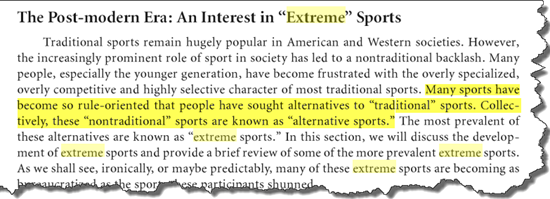
I did some research and I found a book that you can read at this link; The Sociology of Sports: An Introduction. The author makes a compelling argument > Extreme Sports are in fact a response to the excessive structure imposed on children's play.
Excerpt from The Sociology of Sports: An Introduction – page 53
Many sports have become so rule-oriented that people have sought alternatives to “traditional” sports.
So, are people flocking to SoulCycle because it's the alternative to rule intensive Indoor Cycling programs? I believe in part they are. After taking a few SoulCycle classes last fall, I wrote a series of reviews that you can find here, here and here > opens in new tabs. I came away thinking that part of the appeal of SoulCycle is that the class is very challenging physically – and I don't mean just cardiovascularly…
Is there purpose to all of these extraneous movements?
Critics of SoulCycle (and similar) classes point to how non-cycling specific movements; jumps, push ups/rhythm presses, “tap-backs”, figure eights, etc… have no proven training value and/or diminish the potential training value of riding an Indoor Cycle… like an Outdoor Cyclist would. For those reasons, along with perceptions the some of these movements may be potentially dangerous, we’re told we should not include these movements in our classes as they’re “Contraindicated”.
Based on what I saw at SoulCycle (and other similar classes I’ve taken) my feeling is that critics are completely missing the point. IMO these movements are a critical part to the appeal of these classes. It is a thing of beauty, watching a room full of people exactly on the beat and rising and falling in unison. I’ve heard this described as “tribal” behaviour, similar to fans doing the ‘wave’ at a sporting event. It’s a very powerful way to connect a group of people together. And at the same time, these jumps are very challenging to perform correctly — which I feel is another reason for the success of SoulCycle that I explained in this post.
In case you're wondering, what started my thought process here was a provocative post from CB Cycle Barn's Owner Karen Casler. She made a statement, by way of the below image, in this post at the Indoor Cycling Instructors Facebook group. You might be interested in reading the 100+ comments, including mine near the end where this theory first popped into my head.
Are you an independent thinker when it comes to conducting a fun, effective, entertaining and motivating Indoor Cycling class? If so please consider joining us here as an ICI/PRO memberwhereeveryone is welcome — no matter where, our how, you choose to teach!
*Yes, I agree that there are a lot of legal liability issues that drive institutional decisions. It's just that I've talked to too many school administrators, who's personal interest in “protecting the children” seemed more important than whether or not the kids will actually have any fun.
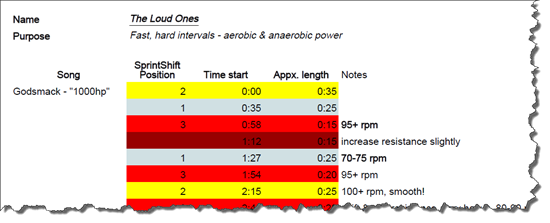
No more hunting for new music or counting out cues. Here is your ready to ride document, that can be displayed from your phone, or printed out onto cue cards. This ride is timed out, down to the second, to make your life as easy as possible!
This is interesting to me. Why choose to study this?
Talk about opening “Pandora's Box” – this is bound to get a few conversations going…
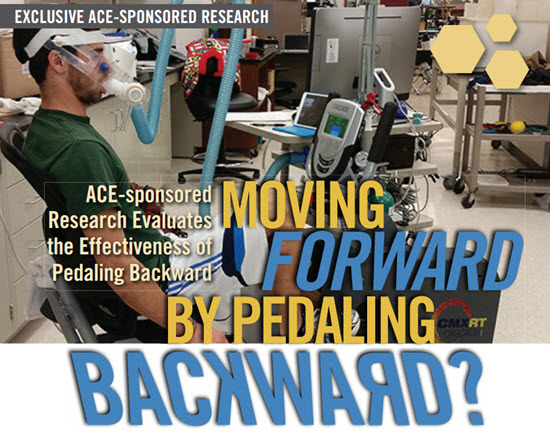
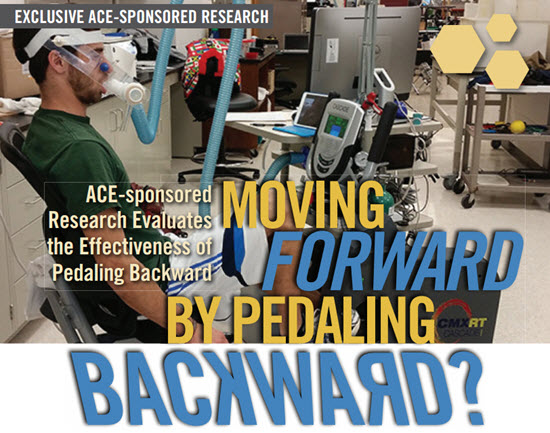
Cameron Chinatti from Stages Indoor Cycling alerted me to this. ACE (American Council on Exercise) published a scientific study that looked at the effectiveness of pedaling backwards. Please download the PDF and read it in it's entirety, so you have a complete understanding of the purpose and results of the study.
That ACE chose to study this at all is very interesting (and a bit confusing) to me. We've all been taught that we should always pedal forward and never backwards. So what's the point looking into this activity? The intro talks about the potential cross-training effects. Oh, and there's a quick bit about how variety can help prevent boredom…
Discussing this topic, I felt I needed to break it down to these three questions:
Is backwards pedaling beneficial?
Is backwards pedaling safe?
Should you consider adding backwards pedaling to your classes?
#1 Is pedaling backwards beneficial?
In the conclusion of the study, ACE says:
The Bottom Line
This study showed that pedaling backward on the Cascade cycle elicited higher heart-rate and energycost values than pedaling at identical workloads in the forward direction. The increase in physiological response was reflected by higher muscle activation of the quadriceps muscles (vastus medialis, vastus lateralis and rectus femoris), which is consistent with the subjects’ descriptions of feeling like they had to “pull” the pedals when cycling backward. “The concept of specificity tells us that pedaling forward should still make up the vast majority of a cyclist’s training,” explains Dr. Porcari, “but the subtle differences in muscle activation seen when pedaling backward can be very beneficial.” Dr. Porcari recommends treating backward pedaling as a change of pace and a form of cross-training that better targets the quads. Maria Cress, a member of the research team for this study, points out that by improving quadriceps strength by pedaling in the backward direction, cyclists will experience improved strength for regular cycling. “They will be able to work at a higher workload at a lower RPE and heart rate,” says Cress, “which means that incorporating backward pedaling into your routine will eventually make pedaling forward mentally and physically easier.”
So the researchers are saying backwards pedaling is beneficial. These folks from UWL are exercise scientists after all and include Dr. Carl Foster. Dr. Foster's research has validated most of the zone based heart rate training you've learned – regardless of the source.
#2 Is backwards pedaling safe?
Let's start with this. All of the Indoor Cycling certifications recommend against pedaling backwards. But here's where my confusion comes in… why would ACE even consider studying and publishing this? They have to know that there will be many Instructors who will read this and think; “ACE isn't concerned about pedaling backwards, so I don't need to be either!”
I can already see the responses on Facebook; “ACE doesn't know what they're talking about… they don't understand cycling like Spinning®/Schwinn/Keiser/Stages/etc..
So why wasn't ACE concerned?
ACE quotes the manufacturer of this recumbent:
The Cascade CMXRT recumbent exercise bike is designed to mimic the real road feel of cycling outdoors. Its website says that the bike offers “quiet bi-directional resistance [that] lets you pedal forward and backward throughout the whole 360-degree pedal stroke for a more effective workout.”
I'm guessing that ACE saw this and thought; “you can pedal their bike both directions. Let's use it to see if backwards pedaling is beneficial.” Except…
ACE is mistaken about this part.
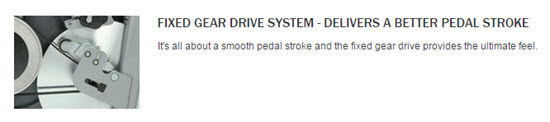
The Cascade recumbent is fixed gear drive
In the sidebar included in the study, ACE makes this comment:
Of course, bike safety is another issue entirely. Before telling participants in a group exercise class or a personal-training client to start pedaling backward, be sure that the bike you are using is designed to do so. It is important to note that this research was not conducted on a fixed-gear cycle, but rather on a specifically designed recumbent bike that provides resistance in both directions.
As you can see in the above screenshot from Cascade's website that their recumbent does have a fixed gear drive system, just like every other Indoor Cycle – the one exception being CycleOps which uses a freewheel.
What ACE should have highlighted is this recumbent uses magnetic resistance, combined with an aluminum flywheel. The eddy currents that create the magnetic resistance don't care which direction the flywheel spins = that's where the provides resistance in both directions comes from. The aluminum flywheel is light enough that it doesn't create the huge rotational momentum (and resulting “run-away flywheel” effect) experienced with a friction resistance system that uses a heavily weighted flywheel.
There isn't anything special/unique in use here. All of the Indoor Cycling brands (FreeMotion/ICG/Keiser/Schwinn/Stages offer a similar magnetic resistance. So it's my view that this experiment could have been conducted on any ICs with magnetic resistance and ACE would have seen similar results.
Quick side note: I jumped on my personal indoor cycle that has magnetic resistance and a Stages Power Meter, to try backwards pedaling. Believe it or not, I'd never, ever tried this before. The Stages Power Meter did display cadence, but the watts stayed at zero. So no backwards pedaling, power training for me 🙁
What struck me was how I felt everything flipped; where I could add the most force was lifting my lead foot, as it came forward and up. Pushing down seemed very awkward and I didn't feel I could apply much pressure.
#4 Should you consider adding backwards pedaling to your classes?
I wouldn't. There doesn't appear to be enough positive benefits, in contrast with the possible injury. Not to mention pedaling backwards just looks wrong/goofy, So I can't see including it in my class.
If you are thinking; “My class is super experienced and we'd like to try this”. I'd love to know your experiences.
One more note: I briefly rode this recumbent cycle when I was at IHRSA. The manufacturer, Cascade Health and Fitness, and ICI/PRO are currently conducting a small study of our own. We have two clubs who are using recumbents, along with conventional indoor cycles, to see if they can be successfully integrated together in a group class. Our objective is to see if adding a few recumbents can make classes more accessible, to people who have physical limitations that prevent them from riding a stationary bike.
Work Set Length: 13:44 + 7:17 recovery [21 minutes]
The Sprint Shift on the new Stages SC3 bike is your interval training solution. Left position for easy, Center position for medium, Right position for hard. Make micro-adjustments with the resistance knob during the interval. Could it be any easier?
Now, I am a big believer in training with power, benchmarking your effort, and documenting your progress. All three are important for successful long-term cycling training but people sometimes misunderstand my position as “all science, timed intervals — no fun.” That's not the case at all!
For the 3 songs below, all I would track is total distance traveled. My riders would hit “The Loud Ones” maybe once every 10 rides and see if they went farther. You could also use average wattage or average speed – it is still a benchmark, just not a complicated one.
As for the science, these are aerobic and anaerobic power intervals – near maximum, brief efforts with short rests. This makes you strong during the frantic parts of road races, during time trials on hilly terrain, and when you want to inflict some pain on your group ride mates. The ride gradually slows in cadence as the resistance and length of efforts creep steadily upward.
But don't think too much about all of that. Do a quality warm-up with 2 or 3 very short sprint-type efforts, tell your participants they are in for some HARD WORK, then just turn it up, follow the music's energy, and have some rough, fast, sweaty fun!
[P.S.: You really just have to feel the music to get the transitions. Don't try to follow the time stamps to the letter. But the Sprint Shift makes that possible! Call each position (left, center, right) “gear 1, gear 2, gear 3” if you like. Slam the lever into gear and ride hard!]
[P.P.S.: After “Little Man,” I like to throw in one long, steady effort, usually to “Animus Vox” by The Glitch Mob. You can take your pick of ‘finisher.']
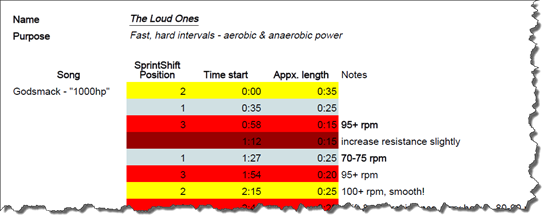
No more hunting for new music or counting out cues. Here is your ready to ride document, that can be displayed from your phone, or printed out onto cue cards. This ride is timed out, down to the second, to make your life as easy as possible!