The word “technique” intrigues some and makes others yawn. But there’s much to be said for technique. It’s the foundation for all athletic performance features.
Technique involves improved skills. In the broadest, most general terms, that means eliminating unnecessary movement; making movements in the correct directions; applying the necessary power, but no more than that; using the right muscles for the activity; and using optimal speed if time isn’t a factor.
Okay, that’s a dry list. Still, the benefits of good technique — and the consequences of bad — affect training and performance. The last thing I’m going to do is describe cycling technique; vastly superior riders have done that in too many venues. (Check out the excellent videos here on ICI-PRO.) Instead, I’d like to list some benefits of good technique.
Efficiency
The main benefit of good technique is efficiency. Efficiency is the ratio of work output to expended energy. If work output increases OR energy expenditure decreases, efficiency has improved. Efficiency and technique are closely related because principles of efficiency are so similar to principles of technique.
Many activities have an optimal rate. Rates above and below that cost more energy. The mechanism behind that is stored muscle elasticity, which requires the shortest time between muscle relaxation and contraction to prevent the loss of energy as heat.
Good technique reduces the energy required for the pedal stroke, reduces energy lost as body heat, and retains more mechanical energy for the next pedal stroke. Strength goes up — functional-type strength.
Practice reinforces cycling technique, so it improves efficiency.
Consistent velocity
Consistent velocity also affects technique. Unintentionally accelerating or decelerating due to poor technique wastes energy. Obviously, holding a single cadence throughout a cycling class isn’t usually part of the workout plan.
But staying consistent during a song or segment — an important technical skill — can increase efficiency. Beatmatch is an excellent teaching tool for helping students develop consistency.
What else affects efficiency?
Efficiency may involve factors other than technique. For example, it may depend on the contractile properties of the muscle: slow-twitch is more efficient than fast-twitch. It may depend on training, which can increase strength and endurance by increasing muscle efficiency. Big-gear training, for example, can improve efficiency in fast-twitch fibers.
Other benefits of good technique
Doing something with correct technique feels good, probably because the body is being used the right way.
Correct technique makes the student look good. In my master’s thesis, I compared the principles of technique and efficiency to principles of movement aesthetics. It turns out that what makes a movement correct and efficient is also what makes it beautiful.
So technique leads to efficiency, and that wastes less energy. The less we waste, the more energy is left for the demanding parts of the class when it really counts. And the better we look and feel cycling.
You’d like your students to look and feel good while taking your class, complete it successfully, and want to come back for more, right?
Jim Karanas always said, “Endurance athletes don’t mind expending energy, but they never want to waste it.”
Quick question: what do you feel is missing with (or should be added to) Spotify or Deezer, that would make it the complete music delivery package we need as Instructors?
From where I'm sitting, having the option to include non-Spotify/Deezer tracks in playlists I share – and then have those tracks play for whoever I shared with.
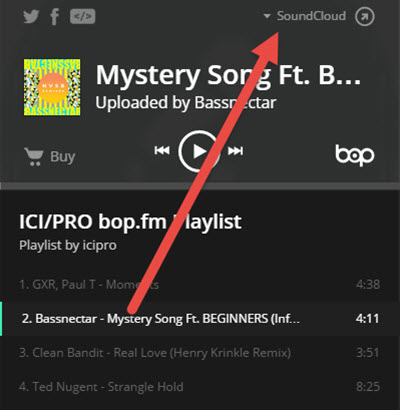
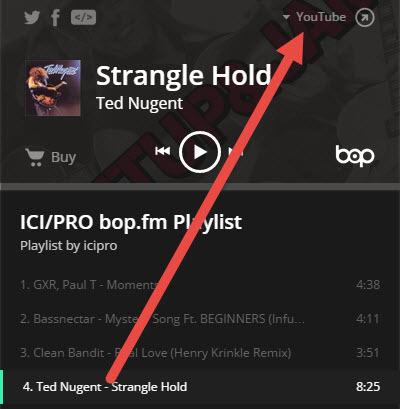
I'm not sure yet, just getting a feel for it – but bop.fm maybe a service we can use in the future. bop.fm connects to many of the popular music sites and their iPhone App allows you to assemble a playlist from multiple sources like; Spotify, Deezer, SoundCloud, YouTube, etc.. and then you can share the playlist with anyone. As long as you have a premium subscription, the bop.fm playlist will stream & play the songlist accuratly.
The trouble with local files > you can't share them
When I create a playlist with the purpose of sharing it, I'm either super careful not to include any of my local files – or – I make sure to include a download link for any tracks that aren't in Spotify/Deezer. But this is still really limiting because there are lots of awesome remixes and mashups that can really complete a playlist.
The trouble with SoundCloud > no option to download many of their tracks
You might search SoundCloud for a specific root track and find dozens of great quality remixes. Which is great except most don't offer any download option = you can only stream them. So you could build and stream a SoundCloud playlist as your class music, but there's no option to include any tracks from anywhere else.
So bop.fm maybe a solution?
Yes bop.fm will aggragate tracks from multiple sources. Which solves the initial problem of sharing a playlist with you. Unfortunately there isn't an “offline” option to download all of the tracks to your device – placing your and your class at the mercy of your Internet service. If you've got a great wireless signal you might give bop.fm a try. I don't, so I say bop.fm might be an option for us in the future if/when they include an offline mode in the future. Spotify's early iPhone App didn't at first, it was added later.
So I've got to record a video of myself teaching the new Evolution class format at Life Time Fitness. This isn't appreciatively different from how I teach my normal class. LTF is looking to bring some consistency to each class, which makes sense for a large club.
My recommendation for private studios is that they offer a variety of styles/formats as long as you; match the correct format to time slot + clearly label the class for what it is and provide a short description.
The work portion of an Evolution class are a series of “challenges” that are between 5 to 12 minutes. I like to do a “Best Effort” 4 minute PTP assessment as my first challenge. I add on a longish slow climb (80% of observed PTP) directly after we complete the 4 minute PTP test.
Next week I'll be using this 90 RPM remix of No rest for the wicked – it's a perfect 4 minutes if you use the initial intro to ramp up. I'll be following it with this new remix from Peter G.
“Danny, Dakota and the Wishing Well” by A Silent Film
“Can't Hold Us” by Macklemore & Ryan Lewis
“Vertigo” by U2
Last week I wrote about the “Threshold Check” or “Mini-Threshold Test” that I perform at the beginning of every class. This week I want to share how I teach the full 20 minute FTP (Functional Threshold Power) Test. With this post I have also included the playlist and video I use as well as a recording of me teaching an entire FTP class.
[wlm_private ‘PRO-Platinum|PRO-Monthly|PRO-Gratis|PRO-Seasonal|Platinum-trial|Monthly-trial|PRO-Military|30-Days-of-PRO|90 Day PRO|Stages-Instructor|Schwinn-Instructor|Instructor-Bonus|28 Day Challenge']If you are lucky enough to be teaching on bikes with power I believe it's important to use this technology and all the available metrics to their fullest capacity. I find the most powerful use of a power meter is in finding one's maximum sustainable wattage or threshold. Threshold is that state of equilibrium between high intensity exercise and the body's ability to buffer and filter the waste products produced by this intensity. With a power meter we can find a wattage number that correlates with this state of equilibrium or your FTP (Functional Threshold Power).
Exercise physiologists have devised many different ways to find one's threshold, but I have found the simplest and cheapest technique is to perform a 20 minute effort at maximum sustainable intensity. At the end of this 20 minute effort take note of the average wattage and multiply it by 95% and this number is your FTP. I'll go into greater detail on how to use this number in later posts, but now let's go over how to perform the FTP Test.
I like to have my riders warm up for a minimum of 15 minutes. I'll have them slowly increase their intensity for 10 minutes then I like to have them perform 3-4 one minute “pickups” increasing their intensity each interval while recovering for one minute after each. After a short, 3-5 minute, active recovery from the pickups I have the class perform a maximum effort 5 minute interval. This effort ensures that the lactate buffering and clearance systems are turned on and ready for the 20 minutes test that follows. I also have class participants remember their average wattage for this 5 minutes, it's a good number to refer back to when doing above threshold intervals. After another recovery, about 10 minutes long, we are ready for the 20 minute FTP test. Make sure all your participants know how to reset the bike console so they can get a new average for the 20 minute interval to come. Tell them that this is a very simple test, you want them to ride at the highest possible wattage for 20 minutes. Your job as the instructor is to motivate, but not to talk too much. Let your riders “settle in” to their maximum sustainable wattage and their most efficient cadence and just let them ride. At the end of the 20 minutes make sure they remember their average wattage, multiply it by 95% and they have their Functional Threshold Power. This “Benchmark” test is also great to see improvement over time, with proper training FTP should continue to improve.
Let me know how it goes, my classes love FTP days! They work so hard every day and once a month they get to see the payoff for all sweat and suffering.
6 song harmonically mixed FTP track , to download Right Click > Save As / Save Target As to download. Open in iTunes and then you'll see this in your Spotify Local File folder.
While I was in NYC last month I rode in two classes lead by Instructor Julie Jarrett. The first class was sold out, which was cool considering Julie has only taught for a few months + the studio Prime Cycle opened in September of this year.
After Julie's class I had the chance to sit and learn about her Reality TV production company Jarrett Creative and how she uses her time teaching as a inspirational break from day job. During our chat she explained to me how beneficial teaching has been to her marriage with business partner/husband Seth + how it has motivated him to start exercising after years of inactivity.
So why is Julie having so much success, so quickly? There's a lot of reasons; Julie and I explore them during my interview below.
In a previous post, I listed the DSM-5 criteria for addiction and left tolerance and withdrawal for another time because they take a bit more explanation. For the sake of completeness, here they are. I promise to keep this short!
Tolerance and withdrawal are linked with addiction, but addiction can occur without them. Once called the classic markers of addiction (criteria 1 and 2 in the DSM-IV), tolerance and withdrawal have been moved to 10th and 11th places in the DSM-5 criteria for substance abuse disorder.
Tolerance
Tolerance is reduced effectiveness of an addictive substance. We’ll talk about sugar. A larger dose is needed to obtain the same effect, which may increase sugar intake.
Tolerance involving endorphins occurs with sweet substances. Sugar and artificial sweeteners can both change endorphin (beta-endorphin) function through up- or down-regulation. Endorphins are produced in response to pleasure or pain.
Serotonin is another brain chemical that alleviates pain, and tolerance can occur to its effects, as well. Serotonin production is higher when insulin release is higher, so more sugar means more serotonin.
Carb sensitivity — the exaggerated release of extra insulin when eating sugar — would also increase serotonin production.
Withdrawal
Withdrawal is a predictable set of symptoms that most addictive substances will produce when chronic use stops or drops.
Withdrawal includes physical symptoms and negative moods, both associated with low levels of specific brain chemicals.
It’s common to use more sugar, or a closely related food, like fruit, to relieve or avoid withdrawal symptoms.
Addiction involves two types of reinforcement. Positive reinforcers establish and sustain habits because they cause pleasure. That’s what typically creates an addiction in the first place.
Negative reinforcers establish and sustain habits because they alleviate pain or distress. If eating sugar takes away the discomfort of withdrawal, the sugar is a negative reinforcer. That’s true even though it started as a positive reinforcer.
Most addictions will run in this direction — toward seeking negative reinforcement to stop withdrawal — no matter how “positive” the reinforcing effects of the substance or food were in the beginning.
Any positive reinforcer can be addictive. Any negative reinforcer can be addictive, too. The negative reinforcer can be either a substitute or the substance itself.
So anything that’s substituted for sugar and takes away withdrawal symptoms (negative reinforcement) has addictive potential. I’m thinking fruit, agave, sweeteners.
What Withdrawal Looks Like
80% of self-labelled chocoholics reported irritability or depression when avoiding or cutting down on chocolate. They felt preoccupied with chocolate at those times. Abstinence from chocolate led to relapse and overeating of chocolate in all participants.
One thing that occurs during withdrawal is craving. A craving is an intense urge or desire for a substance. Cravings are typically highest when withdrawal is most severe — and the greater the intake, the greater the withdrawal and craving.
Cravings may be triggered externally (seeing or smelling the sugary food) or internally (tasting a little). Withdrawal is also internal triggering.
Among women, chocolate is the most craved food, and the cravings peak premenstrually. Chocolate contains stimulants and mood-elevators, including caffeine, theobromine (similar to caffeine), tyramine and phenylethylamine (the being-in-love chemical). These were defined as the “psychoactive components” of chocolate.
Yet, when chocolate wasn’t available, all the substitutes were sweet, rather than stimulants like caffeine.
PMS and morphine withdrawal share several symptoms, including cramping, carb craving, sweating, fever, increased appetite, insomnia, irritability and nausea. During PMS, endorphins drop, so PMS has been described as periodic withdrawal from endogenous opioids (endorphins).