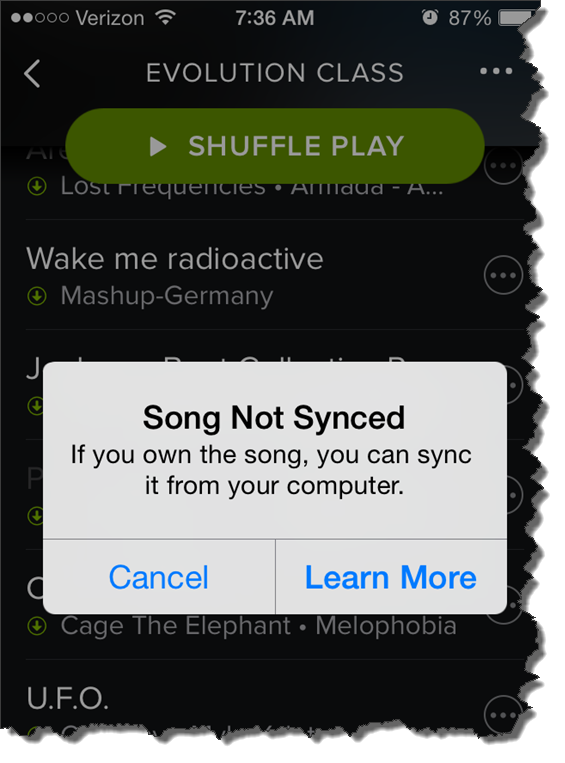
This morning at about 5:30, as is my normal routine, I check to see that my playlist is ready for my 6:00 AM class. The frustrating notice above appeared when I clicked one of the local tracks in my playlist.
I've seen this before
Amy has been having this same problem with her iPhone 6. Best we can tell, this started after she updated to the latest version iOS 8.1.2. Playlists that have worked perfectly in the past now have local tracks that won't play.
But not all local tracks are MIA – which is very confusing to me. For some I figured out that Spotify was substituting one of their tracks. Others work just fine. When I checked the folder location on my computer and compared working tracks vs. nonworking tracks – I can't find any difference. Unfortunately many of the remixes Amy and I like to use aren't available to use with Spotify = we're SOL.
So far I don't have a solution
We tried everything we could think of on Amy's iPhone; rebooted the phone, checked for a Spotify update, copied all the tracks into another playlist, toggled the Available Offline off and on multiple times… nothing has worked.
Quick question: what do you feel is missing with (or should be added to) Spotify or Deezer, that would make it the complete music delivery package we need as Instructors?
From where I'm sitting, having the option to include non-Spotify/Deezer tracks in playlists I share – and then have those tracks play for whoever I shared with.
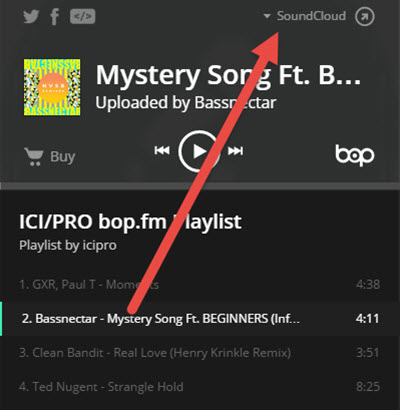
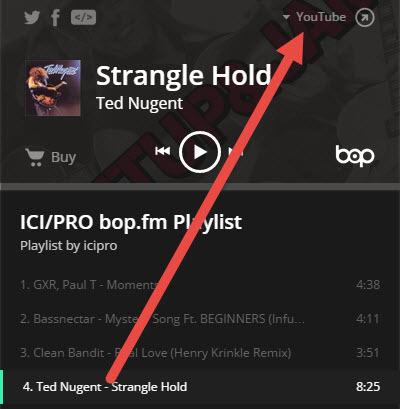
I'm not sure yet, just getting a feel for it – but bop.fm maybe a service we can use in the future. bop.fm connects to many of the popular music sites and their iPhone App allows you to assemble a playlist from multiple sources like; Spotify, Deezer, SoundCloud, YouTube, etc.. and then you can share the playlist with anyone. As long as you have a premium subscription, the bop.fm playlist will stream & play the songlist accuratly.
The trouble with local files > you can't share them
When I create a playlist with the purpose of sharing it, I'm either super careful not to include any of my local files – or – I make sure to include a download link for any tracks that aren't in Spotify/Deezer. But this is still really limiting because there are lots of awesome remixes and mashups that can really complete a playlist.
The trouble with SoundCloud > no option to download many of their tracks
You might search SoundCloud for a specific root track and find dozens of great quality remixes. Which is great except most don't offer any download option = you can only stream them. So you could build and stream a SoundCloud playlist as your class music, but there's no option to include any tracks from anywhere else.
So bop.fm maybe a solution?
Yes bop.fm will aggragate tracks from multiple sources. Which solves the initial problem of sharing a playlist with you. Unfortunately there isn't an “offline” option to download all of the tracks to your device – placing your and your class at the mercy of your Internet service. If you've got a great wireless signal you might give bop.fm a try. I don't, so I say bop.fm might be an option for us in the future if/when they include an offline mode in the future. Spotify's early iPhone App didn't at first, it was added later.
Here's a great deal for anyone who's been dragging their feet on subscribing to Spotify. Sign up now and get three months for $0.99 – this is for USA customers, you'll need to check to see if the offer is available in your country.
If you're concerned about learning the in's and out's of Spotify – we've got you covered here at ICI/PRO.
Beyond the access to millions of tracks – one of the main benefits of Spotify is how easy it is to share playlists between friends. As an ICI/PRO member you're considered a friend and we have over 60 fabulous playlists that you can download here.
Looking for that perfect track? We have 8 collaborative playlists where you can find song selections from other ICI/PRO members and you can add your own.
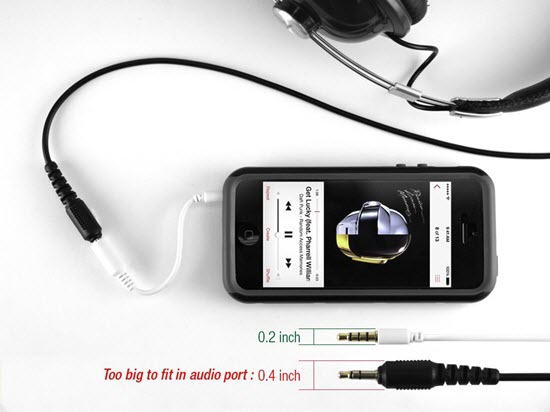
Do you have this problem? Click image to see this adapter at Amazon
I never expected this problem
Amy and I both updated our iPhones last week. She got a new iPhone 6 and I went with a 5s. Both are lighter and thinner than the iPhone 4s' we replaced. Thin is great, until you add a case to them. Now the club's connection cord to the stereo is too thick to fit into the iPhone cases' female jack = neither of us can use our phones to teach without; A. removing the case or B. use a bluetooth receiver to connect wirelessly.
So to fix this I ordered two very inexpensive 3.5mm adapters today from Amazon – $4.99 each with free Prime* shipping. One for each of us. I'm tempted to tape it securely to the existing cord at the one LifeTime where I teach, but inevitably it will disappear and then I'll be stuck with nothing.
*I'm two years with Amazon Prime and without a doubt it's been worth every penny. I cannot begin to tell you how much stress and anxiety this service has saved me. Whenever I think; I need to remember to get some more AA batteries (or whatever) the next time I'm at Target I break into a cold sweat. There never is a “next time” because I never just go “shopping.” So either I'll forget to plan a special trip to Target – or worse – on the off chance I'm ever at Target, I will forget to buy batteries.
Now when I notice I need more readers, batteries, headphone jacks or more Chef Jays bars – I jump on Amazon, hit a few keys and in two days they'll be at my door. No wondering how much shipping will be on a $10 item – it's free 🙂
Now if I could just think of something to get Amy for Christmas…
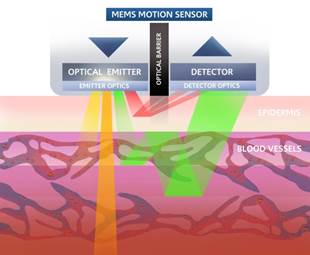
The Scosche armband heart rate strap uses optical sensors to “see” the pulses of blood flow in the blood vessels in your arm. Groundbreaking technology and pretty cool stuff if you ask me. Anything to get rid of those monitor chest straps will be an improvement. I feel this will result in a greater number of people training more effectively. You can read an earlier post where I describe the Scosche as possibly the best heart rate monitor strap option for participants in our classes that include any of the new Indoor Cycles with power consoles – except the Keiser M3 or M3i.
The new Apple iWatch uses the same optical sensor technology and it will be interesting to see how the two match up.
Jon Ham is a fitness consultant to Scosche and has written a detailed comparison between what he sees as the differences between the Scosche and the iWatch. You can read it here. [Understand that Jon's comments about the iWatch are based on information provided by Apple – the iWatch isn't available for purchase yet.]
As a side note, I've been trading emails with a former Schwinn Master Trainer who's involved in the iWatch project and (fingers crossed) I hope to interview him about the fitness applications of the iWatch once it's released.
The part I found most interesting in Jon's article was the part about data collection
Is the Apple Watch Designed to be a Continuous Heart Rate Monitor for intense exercise?
The way I saw it, In Tim Cook’s presentation, the Apple Watch was shown to be an excellent Activity/Life monitor, where movement, lifestyle, and general health were emphasized, and not heart rate training. I could be wrong, but I think Apple knows heart rate is not going to be super accurate during exercise with the Apple Watch, therefore they built the Watch around making a great interface for activity monitoring – IE: how often you stand up throughout the day, pedometer information, etc. This will surely play out to be a thorn in the side of FitBit and other activity monitors, but I don’t think it poses a threat to serious heart rate training athletes.
Data Centralization
I think Apple knows their job is to centralize the data collected from accurate sensors, not to necessarily create the sensor itself – except for activity monitoring. For example, Health Kit will allow all connected apps to push data that has been collected from different sensors directly into Apple’s Health App. I don’t see Apple getting into the Blood Pressure monitor or blood glucose monitor business any time soon, but apps that monitor blood pressure and blood glucose can push their data to Apple Health. I DO like the way the Apple Health App will centralize that information into one health app, along with other health related metrics. It makes sense to have all that data in one centralized location. The bottom line is that you should be able to use other heart rate sensors to do your workout and gather accurate data, you won’t be confined to only using the Apple Watch to collect accurate heart rate data.
Time will tell if Jon is accurate about this and if so, there's a chance we'll want to be wearing both an iWatch and a Scosche armband when we exercise.
Display tracking of each rider's performance during an Indoor Cycling class is proving to be very motivating for the riders and profitable for the studio owners because those participants keep coming back.
Customer retention is hugely important to keeping your classes full. I hear over and over; “once you've shown me my performance, up on a screen and then on that email I get after class, I'm hooked. Why would I ever go back to that Big Box club, who doesn't show me anything?”
Jennifer Ashbrook is the owner of Inner Drive Cycling | Fitness Studio in Newtown Square, PA. Jennifer's studio features FreeMotion S11.9 indoor cycles that provide the performance data that drives the Spivi Display Training system she purchased to differentiate her studio, from other competing fitness clubs in her area.
Jennifer created this short video to help her prospective customers understand Spivi and how it adds to the “WOW” factor of her classes.
You can learn more about Jennifer and her studio by listening to our interview.
I forgot to talk about … It's common for guests to contact me, post interview, with a point or two that they felt should have been included, but weren't. Jennifer emailed me to add:
Hi John,
I just wanted to thank you for the chance to talk with you about Spivi this morning — I really enjoyed it! A couple of things I think maybe I should clarify about Spivi that I forgot to mention — when I explained how Spivi “normalizes” or handicaps riders, I indicated that they are normalized based on power output — and that’s a major part of the equation for bikes with power — but the system also takes into account cadence; it factors all of that together and “ranks” riders based on “Spivi Points” — which (as I understand it) factors in riders age, weight, gender, FTP (if know and power data is available), and cadence — perhaps other factors… The system can also pick up heart rate from ANT+ heart rate straps.