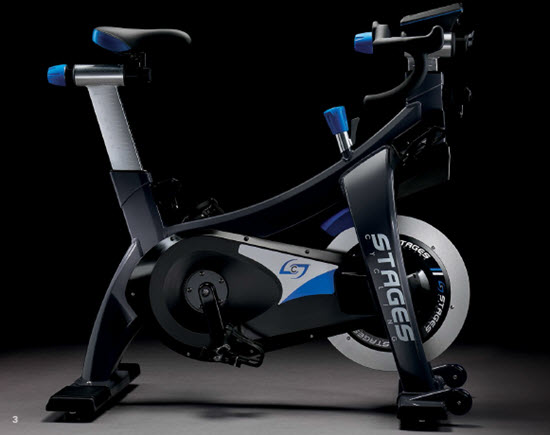
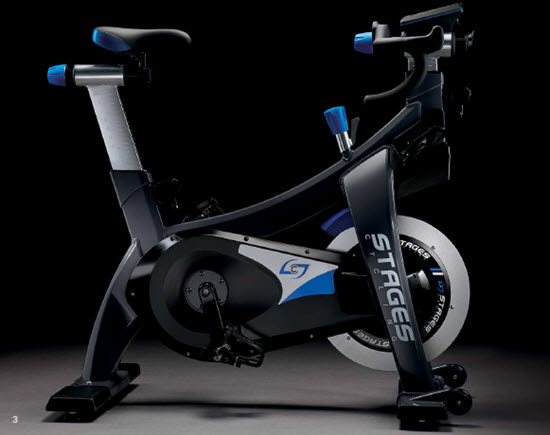
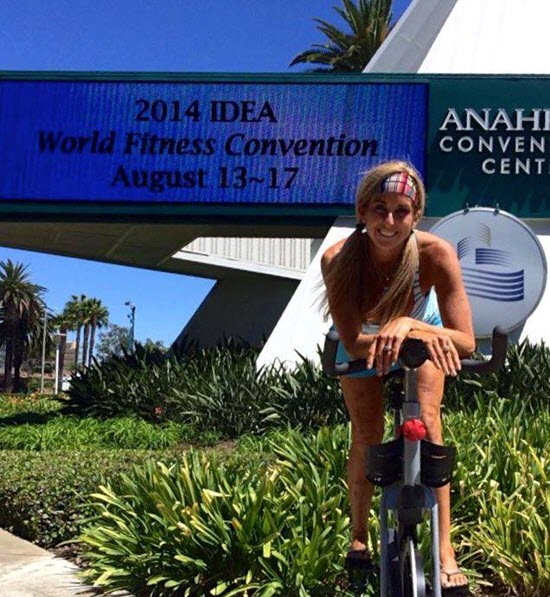
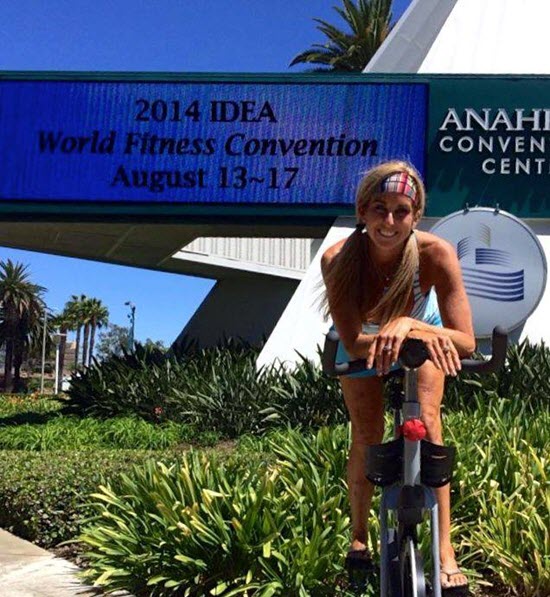
I'm here with Amy at IHRSA 2015 and need to thank Stages Cycling for sponsoring our attendance this year 🙂
We'll be riding these brand new SC3 Indoor Cycles later today (they're still packed in a semi) and will be communicating my initial reactions tomorrow.
For immediate release, March 11, 2015, Boulder, CO– Stages Cycling® extends its brand with the launch of Stages Indoor Cycling and the new SC Series–a line of commercial and high-end retail indoor cycling bikes, which bring an array of breakthrough features to redefine the category of indoor cycling.
The SC Series launches with two models: the flagship, SC3, with many innovations, including the Stages Power® meter–the same power measurement system that reshaped the outdoor cycling power meter category. A second model, the SC2, is the same in all respects but does not include the Stages Power meter.
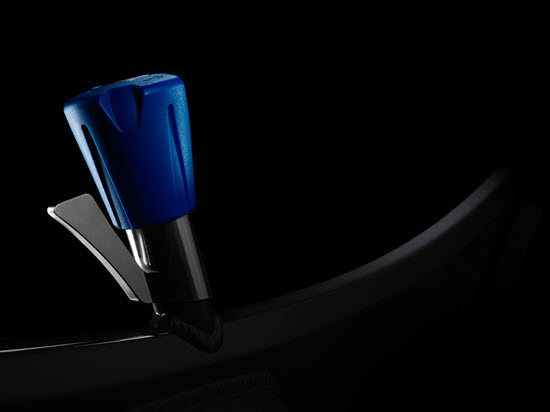
The SC Series bikes share two never before seen concepts, which have patents pending: SprintShiftâ„¢ and FitLocâ„¢. SprintShift is a dual-action resistance adjustment, which pairs a traditional micro-adjust dial with a three-position macro-adjust lever. The SprintShift lever allows large, consistent jumps in resistance for intervals and rest. FitLoc replaces the standard twist-to-lock pop-pin height adjustments with a new cam operated pop-pin, making fit adjustments for height lightning fast.
These new innovations are paired with the accuracy, consistency, and reliability of the pro-peloton-proven Stages Power meter on the SC3 model, which sports Stages new rider-powered EcoSCRNâ„¢ console. EcoSCRN uses a hub dynamometer, rather than batteries, to make it the ultimate bike for a data driven studio or cyclist. The Stages Power measurement system provides unprecedented accuracy in power measurement, enabling studios the ability to now train their clients ‘indoors and outdoors’ with the same technology.
“The SC Series has the potential to be a benchmark,” said Pat Warner, the product director for Stages Cycling, who spent 20 years working on indoor cycling bikes in the Fitness industry prior to Stages. “We’ve addressed every major issue we’ve ever seen with an indoor bike. SC3 is certainly worthy of our ‘flagship’ status, with features like Stages Power, SprintShift, FitLoc, and our RoadBarâ„¢. But we’ve also nailed the basics on these bikes, and we’re confident that the ride feel, lack of maintenance, and reliability of the bike will be the features that actually set the benchmark for both the facility owner and the instructor.”
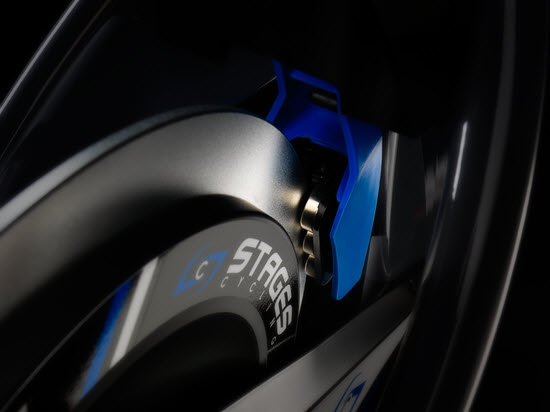
Both of Stages Cycling’s flagship SC3 and SC2 bikes utilize the new CarbonGlydeâ„¢ drive system. CarbonGlyde builds on the unparalleled reliability and lack of maintenance offered by Gates® Carbon Driveâ„¢ carbon fiber belt, with a 5:1 gear ratio and high-inertia flywheel to provide for one of the smoothest, most realistic rides available indoors.
“Stages Indoor Cycling is a new company and new brand,” said Jim Liggett, the general manager of Stages Cycling. “We will be attractive to club and studio customers who are seeking to expand their base business within their Indoor Cycling group exercise offering. Our success with Stages Power has passed the test of professional cycling and we offer this, tested, Stages Power meter to indoor athletes. We feel the combination of a completely new bike with uniquely new features, and our Stages Power meter, allows facilities to offer their members the next category breakthrough. Stages Cycling is a company rooted in cycling. Our goal is to help create indoor cycling athletes who can achieve their dreams in fitness or in cycling.”
“We also realize that–while we know and do power better than anyone in the Fitness industry–some cycling studios have a different focus. So we’re bringing the SC series to market with two flagship bikes, one with the Stages Power meter, and one without, so that we’re prepared to meet every indoor rider, and every indoor facility on their own preferred terms.”
Stages Cycling will show the SC Series bike line for the first time publicly in Los Angeles, at the Los Angeles Convention center on March 12 and 13 at Booth 2735 in IHRSA 2015 International Convention and Trade show.
The Stages SC Series bikes will be available both commercially and at retail for home use. For sales information contact:
For North America / Canada Sales inquiries, please contact: Les Wiehe 435-659-9114 lwiehe@stagescycling.com
For International Sales inquiries, please contact: Paddy Murray 781-206-4376 pmurray@stagescycling.com
For Stages Cycling University / Instructor Training, please contact: Cameron Chinatti 615-499-6029 cchinatti@stagescycling.com
For further press and product information, please contact: Laurel Mylin 503-866-8157 lmylin@stagescycling.com
–end–
Stages Cycling® LLC, based in Boulder, CO, with staff having well over 100 years of combined experience in the Commercial Fitness and cycling industries, launched the Stages Power® meter at Interbike in September 2012. The Stages Power meter immediately made waves in the power measurement category. Stages Indoor Cycling delivers the metric that works for every rider, every instructor, every athletic club and every cycling program.
“Hello… My name is Karen and I stepped out of the box last year. I am also the self proclaimed spokesperson for KEEPING IT FUNâ„¢ Indoor Cycling. I’m committed to helping other indoor cycling instructors who aren't afraid to approach indoor cycling differently.”
I wrote it a little over a year ago.
I wrote it after making the commitment to add variety into my own studio's Indoor Cycling program.
I wrote it because in order for me to continue to transform lives through Indoor Cycling I recognized that my program needed to evolve.
If you are an Indoor Cycling studio owner/manager the brutal truth is… maintaining the integrity of the road may be the demise of your studio/program.
Soon after I opened my studio in November of 2012, I realized this NOT SO FUN fact.
So, I took an honest inventory of what our studio offers, what our customer wants, and what future projections were for the Indoor Cycling industry. I listened to our customers. I observed what classes they gravitated to and away from. I asked them what they found FUN.
I took into account my personal evolution as a GroupEx instructor, my observations of the Indoor Cycling industry, as well as input from other instructors and studio owners. And then … I charted my Indoor Cycling course and set sail by following my heart. I stayed true to my WHY. I honored both my vision and our Mission Statement of creating the ultimate Indoor Cycling customer experience. I added variety to our schedule.
In addition to traditional Indoor Cycling classes, our studio also offers
CB2 Rhythm
CB2 TotalBody
CB2 Performance IQ
CB2 Rhythm & TotalBody and
CB2 Revelation Revolution Christian Indoor Cycling … all of which we did not offer when we opened. It wasn't easy … but we did it … and it was worth it!
Is offering variety the key to success for future Indoor Cycling studios? ABSOLUTELY NOT
The key is recognizing that the Indoor Cycling industry is evolving and will continue to evolve.
Only you can figure out where you and your studio/program fit in. I suggest you start by revisiting your WHY.
Make decisions that maintain the integrity of your brand mission (which I hope you have) and honor your brand vision (which I also hope you have). Talk to your customers and look at it through their eyes. Look at it through the eyes of customers that ARE NOT customers. Talk to your peers. Ask for help.
Regardless of the path you choose… BELIEVE in it and be ALL IN
Words of Wisdom From An Outdoor & Indoor Cyclist “People need to realize clients have different goals, something your team is exceptionally respectful of. Those who say dance has no room in spin* need to check why they are in the business in my opinion. I love cycling, fitness and helping people improve and grow. I know that may violate an ideal that orbits the bottom line comes first mindset, but it is how I feel. If you want to have limited appeal to a small clientele offer nothing but high powered, intimidating classes that serve Tour de France, Ironman Kona specialists, otherwise open your mind and look at he every day folks that are interested in mixing it up and developing fitness via different methodologies.
I'm admittedly novice in your world and likely idealistic to a fault, but I have trouble dealing with folks that are close minded, dismissive and risk averse. Try things live and learn!” Phil
* “spin” has not been identified as Spin® to maintain the integrity of the customer's own words.
Click below to see (clearly amateur) video of Phil riding in a CB2 class taught for the purpose of media photos. The testimonial after class is unplanned and a beautiful testament to different being a good thing. How do you feel about Phil's testimonial?
As a training tool – running a PTP test/assessment is invaluable!
We had some excellent questions from Studio Owners this past weekend during our Full Psycle/PRO PIQ workshop. Paul Harmeling addressed these two related questions during the Q&A – I wanted to offer my thoughts on it here:
When, or how often, should we be using using the PTP (Personal Threshold Power) mode screen?
What exactly should we have our riders doing, during the PTP (Calc) test/assessment?
First, for those currently not using a Display System in your studio, let me explain what we're talking about. NOTE: I'll focus on Performance IQ because I know it much better – all of this has similar application with Spivi.
On a related note, I learned a little known trick that could potentially save a new studio enough money to pay for PIQ or Spivi – contact me if you're interested in learning more.
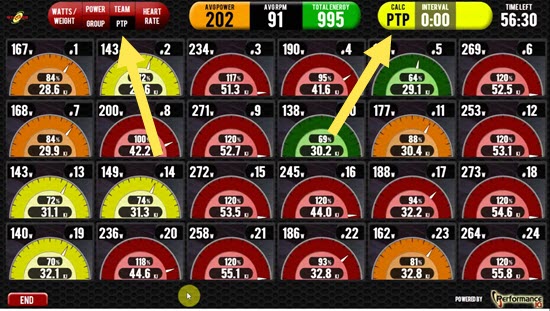
The PTP (Personal Threshold Power) mode screen in PIQ offers a quick (just three minutes) and simple tool to give your riders an approximate understanding of their maximum sustainable power wattage. Then through the wonders of technology, PIQ creates 5 power zones and displays them as different colors. The system calculates PTP as 90% of the highest sustainable power each rider can sustain for the length of the three minute test.
Is PTP as accurate as a 20 Threshold assessment? It doesn't matter to ~98.5% of your riders. What is important is that PTP answers the question that I've heard over and over the past 3 years I've been teaching with power: how hard should I be working… when you ask me to work hard?
So on to the questions:
When, or how often, should we be using using the PTP (Personal Threshold Power) mode screen?
Paul and I are in agreement here – we both feel you should be including PTP in most, if not all classes. There are of course exceptions. You may have a teams challenge scheduled or focus on a class that's directed toward handicapping everyone based on watts/pound.
What exactly should we have our riders doing, during the PTP (Calc) test/assessment?
Here's where Paul and I diverge in our thinking. I see this as a time for a focused effort in the saddle with a consistent cadence, where Paul was saying (and he demonstrated during the Master Class) that he's open to varying position and/or cadence. So who's right? I feel we both are 🙂
You see we each teach very different classes. Mine are typically focused efforts in the saddle = how I would run my PTP tests. Paul's classes are much more frenetic, with frequent changes = that's how he conducts his PTP segments.
Here's mine:
Running a PTP test isn't any different from the Best Effort intervals we suggest you use in a power class that doesn't have a Display Training system. Here's one I included in a recent Performance Cycle class.
Track #2 — the first PTP track is important. We’ll use this average wattage for each of the four PTP efforts to follow. Everyone seemed to enjoy Billy Idol — Rebel Yell — 1999 — Remaster — maybe suffered a bit as well. At 4:47 there’s plenty of time to explore PTP.
We use the Stage button to reset the averages at the beginning of what I describe as; Your Best Sustainable Effort. It’s normal for riders to miss-judge where they should be, so I’ll often have everyone make needed adjustments and hit the Stage button again to reset the averages.
My experience is that everyone will benefit from from a few mini (30-60 secs) PTP efforts to figure out where you should be. On any of the magnetic bikes I like to have find a reasonably challenging climb at around 65 RPM and then have riders accelerate to over 80RPM and observe what it feels like (RPE) and the wattage.
Two or three of these short intervals should give your peeps a watts window they can shoot for during the actual 3 minute PTP test.
I ask everyone to stand and walk, without touching the resistance, for a minute recovery.
To start the PTP test, I'll cue up a track like 83RPM Billy Idol — Rebel Yell and cue finding the cadence. Ten seconds to get everyone there and I will click Calc PTP. Encourage everyone to do whatever it takes to complete the assessment and let the technology work it's magic, figuring everyone's training zones.
In many of my “The Power of 3” posts I have written about the importance of “anchoring” time and effort. In it's most basic terms this means that the shorter the interval the higher the effort. If you instruct on bikes with power, then a higher effort should also translate to a higher wattage. This “anchoring” concept holds true as long as riders are given appropriate rest or recovery after each interval or hard effort. If riders are not given enough recovery between intervals their effort may still be high but their output or wattage will start to drop as fatigue increases. The ability to see this phenomenon is one of the most “powerful” features of a bike with a wattage meter.
The theme for my Above Threshold classes this month is to show my participants the importance of recovery. Over the last few months I've been using a lot of interval sets where I decrease the interval time from interval to interval and I expect to see a higher average wattage for each interval. For example I may have my participants perform intervals of 5, 4, 3, 2, and 1 minutes, each interval is followed by a 2 minute recovery, with the goal of increasing average wattage for each interval. This month I'll have my riders perform the same intervals, but I plan on reducing the recovery time to as low as 30 seconds between each interval. At the beginning of the month I expect to see wattage drop from interval to interval, as the body fatigues from lack of recovery. In the middle of the month I expect the see wattage held steady from interval to interval and by the end of the month, as the body adapts, I hope to see wattage again increase as the interval time decreases.
The body is truly an amazing organisms and it adapts to the stresses it faces, be patient and enjoy the process.
[wlm_private ‘PRO-Platinum|PRO-Monthly|PRO-Gratis|PRO-Seasonal|Platinum-trial|Monthly-trial|PRO-Military|30-Days-of-PRO|90 Day PRO|Stages-Instructor|Schwinn-Instructor|Instructor-Bonus|28 Day Challenge']
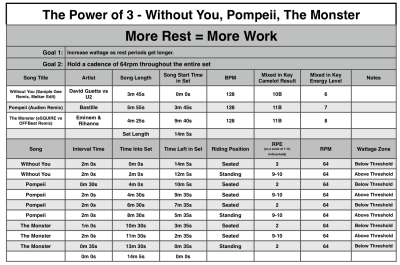
The Power of 3 – “More Rest = More Work”
“Without You (Sample Gee Remix, Melker Edit)” by David Guetta vs U2
“Pompeii (Audien Remix)” by Bastille
“The Monster (eSQUIRE vs OFFBeat Remix)” by Eminem & Rihanna
3 song harmonically mixed track, to download Right Click > Save As / Save Target As to download. Open in iTunes and then you'll see this in your Spotify Local File folder.
Before I was an ICI/Pro Contributor, or Master Educator, before I spent every weekend coaching whatever sport my kids were playing at the time, back in what feels like a different life I was and Ironman triathlete. I spent close to 10 years in pursuit of that coveted Hawaiian Ironman spot, only to see my competition get faster and that spot get farther and farther away. I may not have made it to the finish line in Kona, but the journey I took in pursuit of that dream has made me the person I am today.
People often ask me if I miss Ironman training and racing and I can honestly say I don’t. At that time in my life it was my identity, it was what I lived for. Today I have a wonderful wife and two great 15 year old boys. I would much rather be riding the lifts of Vail, with them, then base training for next year’s races. I may race again some day, but for the next few years I would rather focus on raising my boys, they are my identity, they are what I live for now.
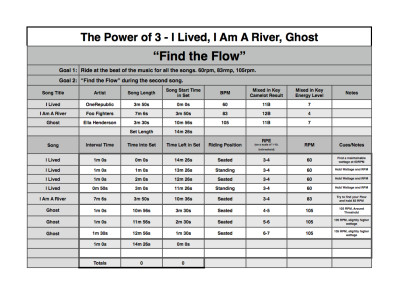
The one thing I miss most about Ironman training are the long training workouts. I loved to train alone. There is no better place to find the answer to any of life’s questions than on a 4000m swim, 5 hour ride or 3 hour run. The rhythm and length of these workouts gave me a chance to quiet my mind and listen. I don’t know where the answers or ideas came from but they just came. Many people call this Flow or being In The Zone.
Flow is a mental state in which a person is fully immersed in a feeling of energized focus, wellbeing and enjoyment in the activity being performed. The hallmark of flow is a feeling of spontaneous joy while.
Many people find the flow accidentally, without thinking about it or trying, all the conditions of a workout magically come together and work feels effortless, time flies by and your body feels like it is working perfectly. This flow state is like a drug, once you have had it once you want more of it. Luckily, finding The Flow can be practiced and perfected.
[wlm_private ‘PRO-Platinum|PRO-Monthly|PRO-Gratis|PRO-Seasonal|Platinum-trial|Monthly-trial|PRO-Military|30-Days-of-PRO|90 Day PRO|Stages-Instructor|Schwinn-Instructor|Instructor-Bonus|28 Day Challenge']
The controlled environment of an indoor cycling studio is the perfect place to practice and perfect finding the flow state. I’ve been incorporating one flow state song per class for the past few months and my riders love it. When cueing a flow state song I ask my riders to focus on the beat of the music, or their cadence or the rhythm of their breathing. They need to focus on something rhythmic and hypnotic. The intensity needs to be below threshold, burning legs and lungs will pull them out of the flow. The most important and probably hardest thing for an instructor to do during a flow state song is to BE QUIET. Your riders need to focus on the rhythm of THIER bodies, the sound of your voice will pull them out of this flow state every time.
I have gotten more positive comments about this addition to my profiles then anything I have ever done. I would recommend you add it in during one of your recovery songs, this way the volume or intensity junkies in your class don’t feel like they are missing out on any of the “quality” of the workout.
If you listen to my recorded classes below, see if you can find any “Soul Cycle” influence, no I have not added weights.
3 song harmonically mixed track, , to download Right Click > Save As / Save Target As to download. Open in iTunes and then you'll see this in your Spotify Local File folder.