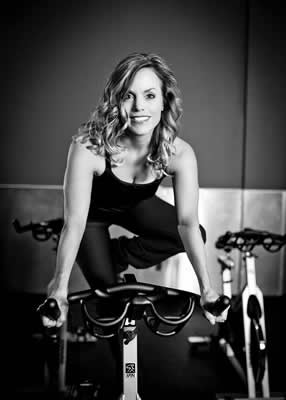
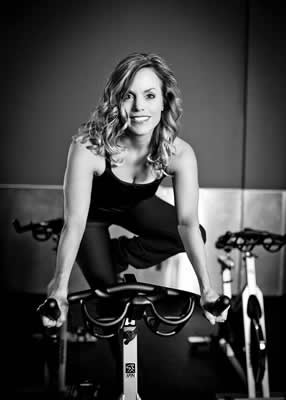
Spinning® studio owner Suzanne Olson, along with her 4 partners, runs Pure Energy in Paoli, PA . Suzanne joins me to discuss how she ensures a quality experience for her participants, in their multi-format fitness studio.
Are you annoying some of your current (or potential) participants? You know, rubbing those folks who are of a different/opposite personality type than yours the wrong way?
I recently came to the conclusions that there's a good chance that I do at times – please let me know if any of this makes sense to you…
Yesterday I gave a presentation to our sold-out group of studio owners and Instructors at the Full Psycle/PRO PIQ workshop entitled:
Selling Power – The success of your studio depends on it!
We've got all of this fancy technology in our studios; bikes with consoles, display training systems, results emails and online user profiles that record all of your previous class data. So (to me) it should follow that persuading (Selling) participants that Training with Power is worthwhile becomes supercritical to building a loyal following = a profitable fitness business.
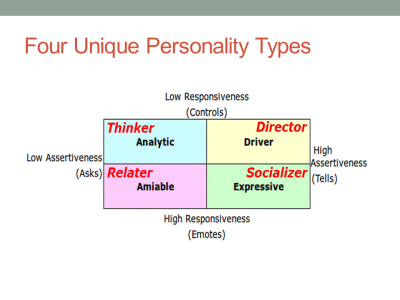
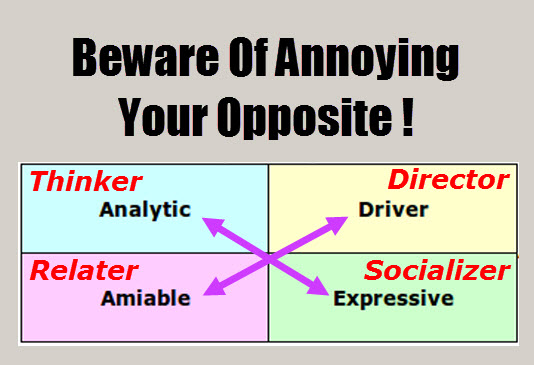
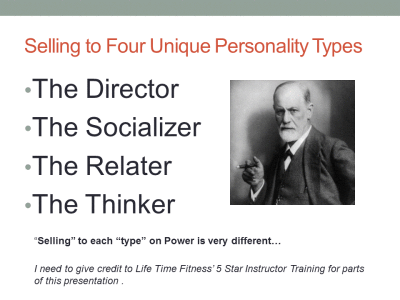
The core concept of my talk was how you need to understand how the four different personality types; Director, Socializer, Relater and Thinker need to be “Sold” to differently.
The personality matrix is constructed like this:[wlm_private ‘PRO-Platinum|PRO-Monthly|PRO-Gratis|PRO-Seasonal|Platinum-trial|Monthly-trial|PRO-Military|30-Days-of-PRO|90 Day PRO|Stages-Instructor|Schwinn-Instructor|Instructor-Bonus|28 Day Challenge']
Then I went on to describe the common personality traits of each type.
Teach an early AM class? I'll bet it's filled with “A” type Directors.
I am a Director > my kids will attest to me sometimes being a bit harsh 🙁
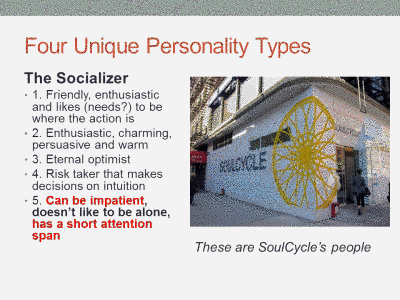
These social folks will pay your overhead if you can attract and retain them.
I explained how it was my belief that attracting Socializers is the key to a successful/profitable Indoor Cycling Studio. Everything I observed at SoulCycle appeared to be designed to attract this type of people and who can argue with their success?
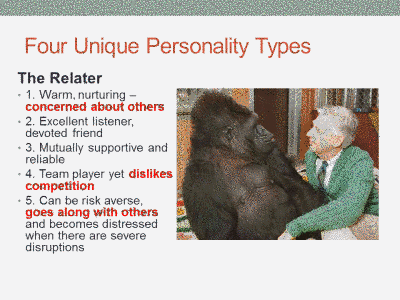
You're a Relater if you include the word “safe” in your class description.
When we first began promoting Performance IQ there was some initial pushback from Instructors; “we need to keep competition out of our classes!” > which I realize now came from Relaters who were concerned about weaker riders not being able to keep up. NOTE: that's been fix… now you can run PIQ competitions between riders that are handicapped for weight/gender or Team based challenges are awesome for including everyone.
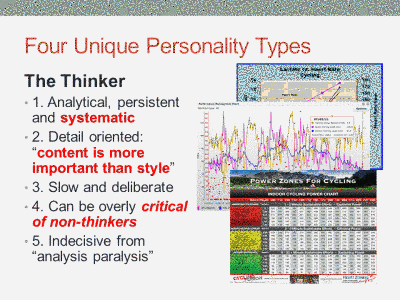
Thinkers spend a lot of time discussing the “Science” of training with anyone who will listen.
At the risk of sounding harsh (I'm a Director… we do stuff like that!)…
I feel we are wasting our time, when we focus our attention on Thinkers.
Many (maybe most) dedicated endurance athletes/cyclists fall into the Thinker group. Don't get me wrong – I know hundreds of them and they're a bunch of nice people. If I had a technical product or service to sell I would devote nearly all of my attention on these data junkies. But Thinkers are very individualistic* (loners) ≠the type of people who add value to a group fitness class. Not to mention they disappear from your class on the first nice spring day.
While typing this I remembered an article from Stages Indoor Cycling's Cameron Chinatti about not focusing on the Squeaky Wheels in your classes. Cameron doesn't call out Thinkers directly, but I see it all the time where Instructors get sucked into esoteric debates about the science of training on Facebook or with the guy in a full kit, who sat in the front row, doing his own thing.
Little, if any, of the “science” of training is of interest to Socializers. So while you're caught up with the wannabe pro cyclist/Thinker, debating the pro's and con's of Training Zone 5B > the Socializer (who has many hundreds of friends) who wanted to thank you for recognizing them during class, leaves feeling like you don't really care… and never comes back.
So Who annoys Who?
I got a lot of heads nodding “YES” when we discussed who annoys who during my presentation.
All of this is strictly anecdotal > just my 53 years of observation and my own personal feelings.
Thinkers and Socialisers can get under each other's skin.
As a Director, Relaters can bug the crap out of me and they see me a uncaring 🙁
We discussed a number of examples of how we need first need to identify our “type” and then be careful not to annoy our opposites, during the presentation of our classes.
Directors need to recognise a Relater's concerns for the safety of others – even if we think it's unfounded.
Relaters need to understand that not everyone shares their concerns and encourage the Directors in class to take a risk.
Thinkers need to minimize the “science lessons” or they'll quickly lose Socializers.
Socializers – it can't be all passion and cheerleading. Throw your Thinkers a few technical “bones” to satiate their need for concrete data.
[/wlm_private]I'm kicking myself for not recording this complete session. There was a lot of excellent comments and feedback. We're planning more of these Full Psycle/PRO workshops and I won't make the same mistake twice.
*Yes, cyclists go on group rides, with other cyclists. But these rides are rarely social events – especially for men. More like a group of individuals riding near each other, all going in the same direction and using each other's draft.
I've been doing some consulting with potential cycling studio start-ups and a common question has been; should I consider leasing vs. conventional financing / paying cash?
My feeling is (to use the expression) Cash Is King for any small fitness business. If you listen to any of the past interviews (you'll find them here) I've done with Indoor Cycling Studio Owners, there are two common themes that keep coming up:
Studio build out and equipment costs are always considerably more than what's initially forecast in the business plan.
The business's cash flow doesn't ramp up as quickly as forecast.
Does it make sense to lease your Indoor Cycles… and possibly some of your other upfront hard costs like the audio/AV system, computers, technology PIQ/Spivi and possibly your studio's website? Saving your available cash or line of credit to carry you through a slow start (or surprise expense) maybe a good strategy. But it's a rather complex question to just offer a simple answer.
So I've found a fitness equipment leasing expert and I have an interview scheduled with him for this Tuesday Nov 4th. I met Joe Schmitz from F.I.T. Leasing at the past IDEA fitness conference and felt very comfortable talking with him. He's been in the equipment leasing business for a long time and he's agreed to help me explore the ins and outs of leasing.
When does leasing make sense for a new studio – or an existing studio looking to upgrade to new equipment?
When doesn't it?
Should I lease my indoor cycles directly from the manufacturer?
What other costs can be included, besides new Indoor Cycles?
What is the approval process?
Is it more difficult to get approved for a lease vs. a bank or SBA loan?
What documentation will you need?
Is there anything you want to do, or prepare for, in advance of needing your lease funds?
What happens at the end of the lease?
Explain any tax benefits of leasing vs. conventional financing or paying cash
Do you have specific questions you would like me to ask Joe? Let us know by Tuesday Nov 4th 10:00 central.
This interview will be published by Friday next week.
Please use the contact form below to explain your questions with as much detail as possible. Also include additional methods of contacting you if you'd like a personal response.
I can't remember ever talking to a new studio owner, who didn't express the dream to open & own a second… and possibly a third studio once their first was established.
Which raises an interesting question…
When is the right time to open a 2nd studio? And should you?
Studio Owner Nancy Katinas owns The Revolution, a pair of Indoor Cycling studios in upstate New York. She joins me to share her thoughts and experiences about how she and her partners built their first profitable studio. And then opened a second a few years later.
What about Instructor exclusivity? Dennis Mellon share his thoughts from the Instructor's perspective last week. Be sure to catch Nancy's explanation of her studio's policy – one that I found pretty gutsy as it takes a bunch of confidence to pull off.
If you're interested in learning about franchising options for opening an indoor cycling studio – we have a podcast you should listen to here.
Great stuff here for any current (or future) studio owners!
As you hear in the interview, despite not having Indoor Cycles with power indication, Nancy is a fan of Performance IQ – she's using PIQ's heart rate display training system with great success. Here's a few of her participants sharing their thoughts.
I'm on my way to Chicago for Club Industry 2015 to show off the new Stages SC3 Indoor Cycling bike. Cameron Chinatti and I will be leading a bunch of free training session, if you're in the area please stop by and ride with us. Here are class descriptions and registration links:
Here are the descriptions and form links to register for each:
8:30-10:00 – Oh no! Not the Power Police – Led by Cameron Chinatti: It’s official: consoles and power measurement for indoor cycling are here to stay. But with every new piece of equipment comes ‘creative’ misuses and abuses. Avoid getting caught by never committing a crime in the first place! You’ll learn the most common crimes against consoles, then get ready to ride as we explore our top-ten best power practices. These Simple Setsâ„¢ will give you hours of new ride content and provide priceless aha! moments for your participants. Join Stages® Indoor Cycling to see how easy it is to use today’s data to achieve tomorrow’s goals.
Register for the 8:30am session, here: http://goo.gl/forms/FBrFLLtvkZ
11:00-12:00 -Head Up to Get Down! – Led by Cameron + Dennis Do you want to know that you’re doing exactly the right amount of effort? Join Stages® Indoor Cycling for a ride with our Special Edition version of Performance IQ Heads Up Display, better known as Stages IQ. A quick 3-minute assessment is all you need to determine your Power Rx – the most important piece of ride data you’ll ever need! For the first time ever your entire class is doing exactly what they need to get better and see the results they’ve always wanted.
Register for the 11:00am session, here: http://goo.gl/forms/9UKtDmYUTs
1:30-2:30 -Show Me – Led by Dennis Mellon
If a picture is worth a thousand words, then a video is worth a million! Since the inception of indoor cycling, instructors have been talking and talking in an attempt to set the scene for their riders' indoor journey. Let’s stop talking and start showing! What is the speed of a sprint finish or the increased pulse of an epic ski run? Let’s dance to the beat of your favorite artist and experience the POWER of your favorite band playing a live concert. Through the use of video and the new Stages SC3 Eco Screen there is no course that cannot be ridden and no metric that cannot be evaluated to take your riders on the most epic fitness journey ever!
Register for the 1:30pm session, here: http://goo.gl/forms/ggYUrTXEor
3:30-5:00 – Oh No! Not the Power Police + SIQ – Led By Cameron Chinatti
It’s official: consoles and power measurement for indoor cycling are here to stay. But with every new piece of equipment comes ‘creative’ misuses and abuses. Avoid getting caught by never committing a crime in the first place! You’ll learn the most common crimes against consoles, then get ready to ride as we explore our top-ten best power practices. These Simple Setsâ„¢ will give you hours of new ride content and provide priceless aha! moments for your participants. Join Stages® Indoor Cycling to see how easy it is to use today’s data to achieve tomorrow’s goals.
Register for the 3:30pm session, here: http://goo.gl/forms/4Mwxd6UTXB
I'm most excited for my “Show Me” class where I'll take riders through a power based class where the focus will be on the metrics available on the SC3's console as well as the various videos on the screen. It will be a multi-media power party!
Below you will find the videos I'll be using for this class. If our stereo has a “Record Out” output I'll record the class and share it in a future post.
[wlm_private ‘PRO-Platinum|PRO-Monthly|PRO-Gratis|PRO-Seasonal|Platinum-trial|Monthly-trial|PRO-Military|30-Days-of-PRO|90 Day PRO|Stages-Instructor|Schwinn-Instructor|Instructor-Bonus|28 Day Challenge']



 The personality matrix is constructed like this:[wlm_private ‘PRO-Platinum|PRO-Monthly|PRO-Gratis|PRO-Seasonal|Platinum-trial|Monthly-trial|PRO-Military|30-Days-of-PRO|90 Day PRO|Stages-Instructor|Schwinn-Instructor|Instructor-Bonus|28 Day Challenge']