by Joan Kent | Nov 16, 2015 | Engage Your Students, Health and Wellness
I’ve never liked the word “snack.” People are casual with snacks, as if they don’t matter.
People also treat snacks as if they’re different from meals.
Case in point: When I give nutrition presentations, I outline a simple method for creating meals with a good balance of foods and nutrition. Someone almost always asks, “What can we have for snacks?”
The answer is: Whatever you have for meals, just less.
Does Everyone Agree About Snacking?
Some say snacking keeps energy levels high throughout the day. That prevents the low energy and excess hunger that can lead to overeating later.
Others — particularly weight-loss programs — stress eating precisely three meals per day. Snacking encourages overeating. With too many chances to choose food, we have too many chances to give in to temptation.
Let’s assume here that Snacks Happen, so we might as well be wise about them.
The Quick Energy Question
Clients often ask me what to eat for “quick energy.” Maybe they’re hoping I’ll suggest something sugary. (Those who read my posts or my book won’t be surprised that I don’t.)
The need for “quick” energy implies that your energy has dropped. Instead, balance your meals by eating a good combination of foods. That will help keep energy more even and sustained throughout the day.
Prior to a workout, when many people seek “quick energy,” eat a tiny meal that follows the same nutrient balance.
What Does a Balanced Meal Look Like?
Whatever the size of your plate, fill half of it with vegetables. And eat them.
Fill the other half more or less equally with protein foods (fish, shrimp, chicken, grass-fed beef, unsweetened protein powder) and complex starch (quinoa, yams, lentils, squash, turnips, and so on). Add “good” fats in moderation wherever you’d like them (coconut oil, avocado, macadamia oil, olive oil, raw nuts).
Treat snacks like small meals. If you treat a snack as if it’s different from a meal, it’s too easy to mess up the nutrient balance.
How To Balance Meals On the Go
One simple way to plan snacking throughout the day is to get some divided plates with lids. They’re available online and at variety stores, and resemble the color graphic above. Follow the plate format described. Vegetables always go in the big section!
If you have access to a refrigerator at work, perfect. Once you’ve created your solid and balanced meal, take the container to work. For a snack, just eat from the meal you put together.
But! Eat using the proportions of the divided plate. Don’t eat just one item in the container, no matter how good for you it may be. Eat the most from the biggest section (veggies).
If you eat lunch out, this method still works for your snacks. If you eat lunch at your desk, prepare two containers — one for your lunch, the other a smaller meal to snack from as needed.
Can You Drink Your Snacks?
Great question.
One research study allowed participants to eat at will from a buffet, and compared the calories consumed by three test groups.
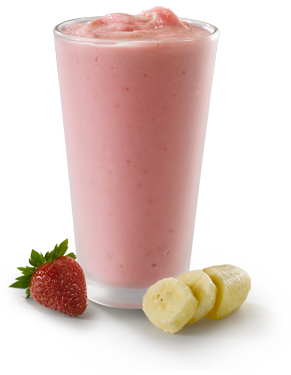
Group 1 had no snack before eating from the buffet. Group 2 had a snack of 150 calories two hours before eating from the buffet. Group 3 had a 150-calorie snack in liquid form — juice, a shake or a smoothie.
Group 2 participants, who ate 150 solid snack calories, reduced their average intake of buffet food by about the same number of calories.
Group 3 participants, who drank 150 calories, did not reduce their buffet intake.
So drinking juice could possibly add calories to your day. If you’re thirsty, it’s a body signal for water.
There’s much more to say about snacking, but the bottom line is to treat snacks as small meals. Build them the way you would a meal. Keep the nutrient balance the same as for a meal. Don’t use snacks as an excuse to over-consume calories.
FYI, the foods that give the highest satiety are protein foods. Don’t skip protein.
Americans tend to snack on junky foods, but let’s not follow that example. In particular, avoid snacking on sugar. It’s bad for your health and increases appetite.
Who needs a bigger appetite with the holidays almost here?
by Joan Kent | Nov 2, 2015 | Health and Wellness
The sugar industry has powered its way through Washington as one of the most imposing lobbies, ever since the 1980s.
You may have read recently that sugar is under attack, specifically the industry’s substantial federal subsidies.
At first that might seem like good news, but the primary leader of the attacks is none other than the Corn Refiners Association.
These days, everyone knows sugar’s bad stuff. This ‘new’ news is actually old news. As covered in a previous post, the original studies on the evils of sugar date back to the 1970s. That was before the sugar lobby gained its stronghold.
Once the sugar industry came into power, all nutritional hell broke loose. Fat became Dietary Enemy #1 — sadly, the fitness industry was all over that viewpoint — and US obesity became epidemic.
It took a couple of decades for the pendulum to swing back to sugar. Yes, it’s about time.
But the worst news about the attack on sugar industry subsidies might have to do with what’s coming as a result. Logic tells us that, if the sugar industry loses its subsidies, sugar prices will skyrocket. In a perfect world, that might reduce sugar consumption, not unlike the decrease in smoking that followed sky-high cigarette prices.
The real, and unfortunately more realistic, nutrition danger is that demand for sweet foods won’t decrease.
What Might Happen Then?
One possibility is nothing will change. Hardcore sugar fans will simply pay the higher prices and keep eating their favorite desserts.
The other is that a cheaper alternative will be offered and devoured — exactly what the corn refiners must be plotting.
What will happen if high fructose corn syrup (HFCS) replaces sugar?
Much bad stuff has been written about HFCS — and it sparked controversy. Of course, the pro-HFCS side came from the Corn Refiners Association, so we can obviously ignore that as a highly vested interest.
Let’s simply skip over the looming shift in power in Washington and stick with food — as if sugar in any of its forms could be considered food.
What Does The Science Show Us?
Studies comparing fructose to glucose have measured the response of the hypothalamus to the two sugars. The hypothalamus helps regulate signals of hunger and satiety, as well as reward and motivation.
In comparison tests, subjects consumed either a fructose-sweetened beverage or one sweetened by glucose. Within 15 minutes, test results showed substantial differences in the activity of the hypothalamus. Glucose reduced activity in the feeding center of the hypothalamus, but fructose prompted a small increase.
The glucose drink also increased the participants’ feelings of fullness, which suggests they’d be less likely to keep eating after having something sweetened with glucose. That might relate to its effect on insulin. Insulin plays a role in fullness and reducing food reward.
Fructose is metabolized differently by the body and triggers less insulin secretion than glucose does.
Unlike glucose, fructose also fails to reduce circulating ghrelin, a monster hormone that increases appetite and food intake, while decreasing metabolism.
Sugar contains equal parts fructose and glucose. HFCS contains more fructose. All (all) research shows that fructose is the health troublemaker, not glucose.
Implications For Future Fructose Use
Obesity is epidemic and associated metabolic disorders (diabetes, hypertension, heart disease and more) are on the rise now, and largely because of sugar.
Imagine how bad things will get if sugar is replaced by HFCS.
James Davis, of the Freedom Partners Chamber of Commerce, said his group opposes special breaks for sugar and corn growers alike.
Davis said, “We’re not real interested in climbing in bed with the corn lobby to accuse the sugar industry of being prostitutes. We oppose all forms of corporate welfare.”
That’s a politician’s statement for sure, and this post will abstain from the politics of this issue.
And I’m certainly NOT pushing sugar over HFCS.
But wouldn’t it have been astounding if Davis’s second sentence had been, “We oppose all forms of sugar”??
by Joan Kent | Oct 27, 2015 | Engage Your Students, Health and Wellness

The client’s food log was extreme. She kept track of every bite she ate and calculated the calories in each item. In the food log, she described every workout she did and the calories she had burned. She was working out several times a day.
But the most extreme thing about her food log was that it included almost nothing but sugar: pastries, chocolate, malted milk Whoppers, fat-free muffins.
Her health issues were also somewhat extreme, at least in severity. The problems were varied. She had irregular menstrual cycles, endometriosis, breast engorgement and tenderness, chronic fatigue, and quite a bit more. Perhaps unsurprisingly, none had been diagnosed as linked with her diet.
She didn’t feel ready to quit sugar, but was willing, in her words, “to cut back.”
While I saw a drawback or two with that approach, I was convinced that her long list of health issues had a great deal to do with the sheet volume of sugar she was consuming. All day, every day. I was ready for any improvement I could encourage her to take.
Basics of Sugar Reduction
Cutting back on sugar is pretty basic; everyone knows these basics:
Skip desserts.
Avoid sodas.
Don’t snack on cookies or other sugary foods.
Don’t add sugar to coffee or tea.
Many more.
But environment matters. Especially at home, where what you have — or don’t have — in your kitchen can make a huge difference. Figuring out which foods to stop buying — and which ones would be okay to swap for them — is important. The bad news: It requires an ordeal called Reading Labels.
It’s important to know what to look for on those labels. Sugar can hide behind many names. Here are the names I’m currently aware of — but please keep in mind that the list keeps growing as new sugars are created. Some are technically not sugar, but have virtually identical effects on insulin and brain chemistry. A few are simply different names for the same thing. For example, Cane Sugar and Sugar Cane are, obviously, the same.
Overt and Covert Sugars
Agave
Alcohol
Barley Malt
Beet Sugar
Brown Sugar
Cane Juice
Cane Sugar
Corn Sweetener
Corn Syrup
Date Sugar
Dextrose
Erythritol
Fruit Juice Concentrate
Fructose
Glucose
Glycerin
Glycerol
Granulated Sugar
High Fructose Corn Syrup
Honey
Hydrogenated Starch Hydrolysates (HSH, Maltitol Syrup, Lycasin)
Isomalt
Job’s Tears
Lactitol
Lactose
Lycasin
Malted Barley
Malt Extract
Maltitol
Maltodextrin
Mannitol
Maple Sugar
Maple Syrup
Molasses
Polydextrose
Powdered Sugar
Raisin Juice
Raisin Syrup
Raw Sugar
Rice Syrup
Sorbitol
Succanat
Sucralose
Sucrose
Sugar
Sugar Cane
Turbinado Sugar
Unrefined Sugar
Xylitol
Why Use the List?
What’s true is the first time or two that you shop using this list — and it’s a good idea to take it with you to the grocery store at first — you might need to spend a little extra time reading all the labels.
The good news: After a couple of trips to the store, you’ll know what you can buy and what to skip. At that point, shopping will be just as easy as it is now.
As for my sugar warrior client, she’s been working on reducing sugars for a while now. Yes, during her cutting back process, some of my fears were justified. Eating little bits of sugar made her crave more sugar. That made it tough, even impossible, for her to eliminate cravings. She still thinks of desserts as a viable option when she’s stressed, and has to tell herself “no” each time. The individual “no” doesn’t always work.
But her health has been improving. Her energy has increased a lot. And that has provided enough encouragement and motivation to get her committed to quitting sugar altogether.
Nutrition geek that I am, that’s what I live for; it is, after all, all about the client.
by Joan Kent | Oct 12, 2015 | Engage Your Students, Health and Wellness

My client was crying. She was upset about what she thought I had just asked her to do. She was afraid she’d have to go hungry all day and starve herself. She was afraid she’d end up over-compensating with a binge the following day — or even for several days afterward.
It wasn’t true that she’d have to starve, but her emotional reaction was genuine.
What had I asked her to do? Simply to try an exercise that I’ll share with you in a moment.
I knew the exercise would ground her in a solid awareness of her body’s signals of when to eat. I expected a bit of pushback, but not quite like this. As she cried, I addressed her concerns point by point.
So What Was The Scary Food Exercise? [private PRO-Platinum|PRO-Monthly|PRO-Gratis|PRO-Seasonal|Platinum-trial|Monthly-trial|PRO-Military|30-Days-of-PRO|90 Day PRO|Stages-Instructor|Schwinn-Instructor|Instructor-Bonus]
I won’t keep you in suspense. The client picks one day — or even half a day — to try this. Here’s what you might tell him or her to do:
The goal is to get hungry as often as possible during the day. Eat only small amounts each time you feel hungry. That will ensure as many hunger experiences as possible throughout the day.
BUT!! Every time you feel hungry, it’s time to eat! Eat only enough to take away the hunger, rather than to satiate yourself completely. But do eat.
One of the points of this exercise is to develop body awareness. Part of that is avoiding eating on autopilot. So before eating when you usually do — say, first thing in the morning or when it’s “time” for lunch or dinner — check in with your stomach first to see if you’re really hungry. Discover what hunger feels like.
Another key is to avoid “preventative eating” (eating now to prevent hunger later). Stay in the moment with your hunger and your eating. Keep the behavior logical and predictable: I’m hungry. I eat. I get hungry again. I eat.
Important suggestion: If you have a cycling participant try this, suggest that he/she do it on a day that with a light schedule — or no set schedule at all — to really tune in to the process.
I Didn’t Invent This “Mean” Food Exercise
Many years ago, I read about this process in a book. Unfortunately for me — the PhD who always cites her sources! — it was a long time ago, and I’ve forgotten whose exercise it is. I’m definitely not trying to claim it as my own; I simply can’t recall who came up with it. My apologies (and thanks) go to the author.
This Exercise Is Great Because It Works
What happens? Every client I’ve taken through this process — every single client without exception — has reported feeling grounded and aware of the hunger/eating cycle after trying it.
My clients report that they now feel confident in their ability to tune in to signals that tell them when their bodies need food — and when they don’t. They feel confident that they can trust what their bodies are telling them. They feel confident that they can respond appropriately.
I have never asked a client to eat this way longer than one day. But it has never been necessary. Each and every client who follows the instructions seems to have the same positive experience.
To be clear, your participants don’t have to go through life eating only a bite or two of food at a time — just the day of the process.
And What Happened To My Crying Client?
She did understand what I had really asked her to do and agreed to try it for half a day. She ended up doing the whole day — and said she “got” what I’d been trying to help her discover regarding hunger, food intake, and much more.
Anything that helps my clients feel more aware and sure of their decisions is a boon to their self-knowledge, self-esteem, self-image, and self-efficacy. This “scary” exercise makes them more effective in following my system and getting results.
The exercise is also in keeping with one of my favorite quotations. It’s from Simone de Beauvoir: “Confidence in the body is confidence in the self.” [/private]
by Joan Kent | Sep 1, 2015 | Engage Your Students, Health and Wellness
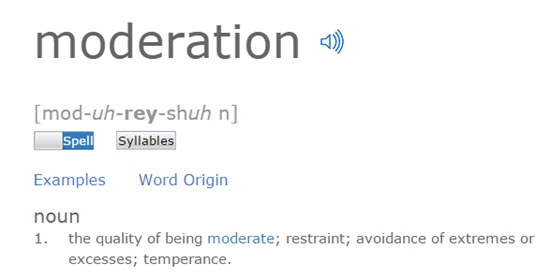
When it comes to food, no doubt you’ve heard, read, or even said something along these lines: Everything’s fine in moderation.
Many famous people have said that they’ve never been successful at achieving moderation.
Professionally, I never recommend moderation in sugar intake.
Instead, I favor this quotation by Saint Augustine: “To many, complete abstinence is easier than perfect moderation.”
Clinical experience has taught me that some people simply can’t achieve moderation around certain foods.
Sugar addiction is real. Encouraging a sugar addict to eat sugar “moderately” makes no sense. It makes as much sense to tell a recovering alcoholic to drink in moderation — or a smoker who’s just quit to smoke in moderation.
In fact, when you’re talking about addiction of any type, moderation makes no sense at all.
Many Of Us Should Abstain From Moderation
In cases of addiction, moderation may be an impossible goal. For some of my clients, a small amount of any addictive substance — alcohol, sugar, whatever — simply leads to more. In addiction literature, the phenomenon is known as “priming.”
When I’ve brought up priming and sugar, self-styled censors have chastened me online. Apparently, researchers have not yet tested such a thing on sugar.
My dissertation study, however, showed priming among women with binge eating disorder who were also sugar-sensitive. Sugar was a primary food trigger for their binges.
Yet lab research is often behind the curve — which seems exactly the opposite of the way things should be. Scientific research happens when a need, a problem, is perceived. It’s my strong hope that researchers will soon realize that we need to acknowledge and start testing priming and sugar.
The research delay isn’t surprising. I’ve been speaking and writing about sugar addiction for almost 25 years — and only now is it becoming mainstream thinking.
Better late than never, of course. A lack of abundant scientific study in the past didn’t make the notion false, though — just ahead of its time. Research existed back then but was limited. Much was done on animals, but not all. Chocolate studies, for example, were always conducted with human participants. But I digress.
The Moderation Myth Makes Clients Feel Crummy
The main reason I dislike the myth of moderation is it makes my sugar-sensitive clients feel as if something’s wrong with them. That bothers me.
When sugar addicts can’t eat certain foods in moderation, no one’s to blame. Certainly not the sugar addicts — it’s a brain chemistry thing.
Brain chem is largely genetic. You got what you got. I’m old enough to recall the public service announcements that used frying eggs to show us “This Is Your Brain On Drugs.”
‘Your Brain On Sugar’ isn’t your fault.
People now agree that sugar is addictive, yet the implications remain a mystery to some. Who cares who says what about moderation? Do what works for you.
If it’s easier for you to abstain completely than to try moderation … then fail … and then feel crummy about yourself, I strongly encourage you to abstain.
Saint Augustine would support you, too.