
by Dr. Haley | Feb 12, 2011 | Mental Toughness
Please learn from this article

You need all three sides
My good friend John Macgowan of www.indoorcycleinstructor.com effectively outlined the three components of a group fitness class: 1) foundation, 2) media (i.e. music) and 3) presentation. It is my opinion that neither one, alone, will make your class great, but one, alone, can ruin it.
I participated in an indoor cycle class this morning and I am confident I will never attend this instructor’s class again. The foundation was great. The instructor chose to lead us through a moderately challenging endurance ride. We performed a combination of high and medium cadence sections both off and on our seats.
The music selection was good. Most of the music was easily recognizable and appropriate for the ride.
The presentation, on the other hand, was extremely poor. There was zero excitement and enthusiasm in the instructor’s tone and facial expressions (if there were any facial expressions at all). Eye contact with the fitness participants was minimal. Lastly, there was too much talking and explaining during the 60-minute class.
Unfortunately, the instructor’s poor presentation skills trumped the foundation and media components of the class, making the experience a negative one. I didn’t exert every ounce of energy I had to give. I can say the same for the other participants because they were busy chatting amongst each other during the entire class.
I have always taught athletes, coaches and fitness professionals to highlight their strengths and improve their weaknesses. I do not believe you have to be excellent at everything, but you must be adequate in all of the components involved in your craft.
I would bet this instructor spends numerous hours planning the foundation and the media components of the class while dedicating little time to the presentation and delivery. Although the foundation and media components were good, if not great, the poor presentation ruined the class. When I looked around I saw people talking and doing their own thing. A few participants left before the class was over, most likely to never return.
Call to Action:
We can all learn from this instructor. Identify your weaker links and spend the time and effort to improve them. If you don’t improve, your participants’ focus will be on your weaknesses rather than your strengths. However, if you do improve, it will be easier for the fitness enthusiasts to gloss over the weaker components of your class and focus on the components you excel at.
Believe and Achieve,
Dr. Haley
You can read more from Dr. Haley at http://drhaleyperlus.wordpress.com/
by Dr. Haley | Jun 15, 2010 | Mental Toughness

You need to ask, Is it worth the risk?
With the increase popularity of indoor cycle classes comes new participants. These club members have been eyeing your class and have been asking other members about their experiences. As much as they would like to try out your cycle class, there are a few distracting, “what if” thoughts they can’t seem to eliminate: What if I can’t keep up with the rest of the class? What if I get injured? What if I don’t like indoor cycle? What if I’m uncomfortable on the bike? What if I can’t grasp the technique?
No matter what the “what if” thought, you can ask the individual this follow-up question: Is it worth the risk?
To achieve optimal health and fitness, it takes 100% focus and commitment to your performance. Your ‘soon-to-be’ participant’s desire to get results must outweigh his/her desire not to fail. In other words, during your indoor cycle class, his/her focus must be on exerting effort and not on predicting unfortunate outcomes.
To have an unwavering focus on effort and achievement, your participant has to be prepared to make the necessary sacrifices in order to progress. In an indoor cycle class, those sacrifices include: (1) spending 45-60 minutes learning that you do not enjoy this type of class, (2) spending 45-60 minutes out of your comfort zone to improve your health and fitness, and (3) feeling sore the next day. These ‘sacrifices’ have to be worth the risk in order to achieve his/her fitness goals.
Call to Action
As soon as a participant has a “what if” thought, ask him/her if it’s worth the risk? You may think this approach is a bit harsh. It’s also very effective. First, you are prompting the individual to think differently about his/her fears. Second, as the conversation continues, you will help that individual to understand that his/her “what if” thoughts are not justified. As a result, you will help him/her counter the thought with a more effective focus: putting forth effort and experiencing something new and exciting!
Believe and Achieve,
Haley Perlus, Ph.D.
Visit http://DrHaleyPerlus.com and register to receive Dr. Haley’s FREE Mental Toughness Articles for sport and fitness.
Visit http://TheUltimateAchievementJournal to learn how Dr. Haley makes it easier to achieve your fitness goals.
by Dr. Haley | Dec 15, 2009 | Mental Toughness
 Athletes know all too well the benefits of using imagery before competition.
A tennis player will imagine his powerful topspin-slice first serve. A golfer will rely on imagery to review her plan of action for her next swing. A baseball player will use imagery to get motivated for when it’s his turn at bat.
With proper execution, imagery can also be used during your indoor cycle classes to correct and improve the technique and intensity of your participants. With your guidance, they can mentally perform specific skills and have those skills transfer to the body.
For example, you can introduce an exercise where your participants image a cheetah running through the wild. When your participants image a cheetah, they will stop bouncing up and down start powering through by focusing on moving forward.
To help your participants create a fluid pedal stroke, you can ask them to image the wheels of an old fashioned train where they can understand the meaning of a circular and fluid motion.
Imagery should also be used to help your participants correct their mistakes and improve. For best results, group fitness instructors should implement the following practice during class: (1) identify the mistake, (2) and providing feedback about how to correct it, and (3) suggest an image they can use to help them focus on the specific skill.
Call to Action: Take some time before your next class to identify the top three most common mistakes or improvements that your participants need to focus on. Then, identify an image that will help your participants understand your instruction. The next time you teach a fitness class, challenge yourself to introduce one image to your participants.
Believe and Achieve,
Haley Perlus, Ph.D.
Visit http://DrHaleyPerlus.com and register to receive Dr. Haley’s FREE Mental Toughness Articles for sport and fitness.
Visit http://TheUltimateAchievementJournal.com to learn how Dr. Haley makes it easier to achieve your fitness goals.

by Dr. Haley | Dec 1, 2009 | Mental Toughness

Do you have expectations about the ability of your individual participants?
Ever notice how many of your expectations become a reality?
In many cases, this is due to your intelligence of your sport and fitness knowledge. However, research continues to demonstrate that a leader’s (i.e. coach or instructor) expectation of his/her followers (i.e. athlete or fitness participant) influence performance.
The phenomena is called the self-fulfilling prophecy. For indoor cycle classes, the premise is that an instructor initiates the following series of events that ultimately cause his/her expectations to be fulfilled: (more…)
by Dr. Haley | Oct 20, 2009 | Mental Toughness
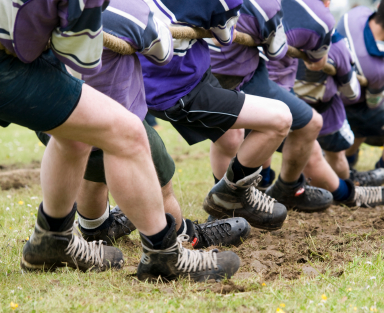 Does your class believe and act like they are one unit? Do you treat them like a team? Creating a team spirit among your participants can have tremendous effects on their commitment, effort, and desire to return to your class. Read on to learn how you can take advantage of your indoor cycle class so that they exert more effort and everyone has more fun.
Social Support: Often the most meaningful praise and encouragements comes from people who are in similar situations working towards similar goals. Encourage your participants to offer one another reassurance and companionship.
(more…)
by Dr. Haley | Sep 24, 2009 | Mental Toughness

[firstname], how many athletes, in any sport, have you witnessed having a perfect performance in competition? We all know the answer ….perfect performances are extremely rare. How many golfers can maintain a perfect swing throughout an entire tournament? How many baseball pitchers have thrown a no-hitter? How many soccer players can kick every ball on net?
Olympic and professional athletes have high personal standards of performance and continue to push the boundaries in their sport. They consistently strive to be stronger physically, technically, strategically, and mentally. The difference between these top athletes and perfectionist athletes is the understanding that mistakes are a natural part of sport participation. In fact, many athletes, coaches, and sport psychologists look at sport as a constant recovery from error. Examples include the turnover in hockey, football or basketball or the unforced error in tennis. The winner of any competition is rarely the athlete with a perfect performance, but rather the athlete who continues to move forward and commits to personal excellence instead of perfection.
(more…)
