
by Joey Stabile | Jun 30, 2019 | Health and Wellness, Instructor Resources, Instructor Tech Help, Instructor Training
The following post is Adapted from the June 20, 2019 article by Joe Hamilton on TrainingPeaks
As a previously coached athlete (and that is what we are as instructors) and a coach myself, the nebulous “listen to your body” mandate once perplexed me. What exactly does listening to your body mean? And does everybody listen to their body the same way? As I have trained and coached, I have gained perspective on how and when to listen to your body to help achieve your goals. As indoor cycling instructors, this can be very important as many of us teach upwards of five classes a week in addition to other workouts that we may do for our own health.
While it can be tempting to focus only on the physiological aspects: Training Stress Score (TSS), heart rate and intensity factor (IF), we need to look at one of the most important (yet overlooked) metrics: how you feel when you wake up in the morning.
For example, there are days when I wake up, measure my morning heart rate, and crawl to the shower. As I make my way out the door, I feel agitated and grouchy. At work, I find that climbing the two flights of stairs is difficult. If I look at my Performance Management Chart, it will usually confirm what I’m feeling: my Training Stress Balance (TSB) is negative and/or my ramp rate is high. All of these indicators will help confirm what my body and mind are already telling me: to adjust my workout or rest for the day. But, that can be extremely tough if you have two classes to lead this afternoon.
For this reason I encourage all of my athletes to record their morning metrics daily, including their morning heart rate, Heart Rate Variability (HRV), and general sense of wellbeing. With the Performance Management Chart, it’s easier than ever to match an athlete’s “morning indicators” with training stress balance (TSB) and ramp rates to help decide whether or not to adjust a workout.
Of course, many athletes, including myself, either misinterpret or ignore their morning indicators in fear they will lose fitness or not gain results. But I would rather my athletes be rested for a hard workout than to go into that workout fatigued, which will ultimately negate the effect of the training stimulus and response. Learning to be honest with yourself and your coach about how you’re feeling will make you a happier and often stronger and faster athlete.
How to Track Morning Metrics
Each and every morning I have the athlete go into TrainingPeaks and input their morning metrics. I then compare this to their post-workout comments. Things I consider when reviewing morning metrics include resting heart rate variability, motivation to train, mood, sleep, appetite, and current stressors that the athlete faces during the day. I then compare the performance management chart in TrainingPeaks. If trends in the metrics charts show high stress and fatigue, TSB is negative, and post workout activity comments are negative, I then consider whether the next day’s workout is substituted for a rest day or adjusted to an easier workout. Here are some tips for logging your morning metrics:
- Don’t think too hard or overanalyze your morning metrics. When recording morning metrics, include what and how you immediately feel. Overanalyzing can make recording morning metrics more a chore and more likely inaccurate. For example, if you feel fatigued, click fatigued and in the comments explain to your coach what fatigued means for you.
- When in doubt leave it out. (“It” being your workout.) If all the signs indicate you are stressed and fatigued, then don’t push it. Either adjust your workout or take a recovery day. Most athletes are afraid to lose fitness if they miss a workout, but you can look at it as an opportunity to put your best foot forward for your next workout. Think long term. As an instructor, this means you may have to back off a bit during a class, or even teach off of the bike.
- Training and stress can and will impact your sleep. That’s why it is important to monitor how your sleep was the night before. Trends of sleepless nights not only add to daily stress, but can create a negative cumulative effect.
- Record your morning heart rate every morning in the pulse field. Do this right when you get out of bed. Heart rate variability can tell a coach or athlete a lot about how the athlete is doing in adapting and responding to training.
- Record and pay attention to your day-to-day psychology or sense of wellbeing. Record your moods, motivation, concentration, focus, even how agitated you are. Your mood is often the first indicator that rest and recovery are needed.
Consider Physical Stress
These are the demands we place on our body through workouts, mowing the lawn, cleaning the house, going to the grocery store, hiking with the family, even taking the dogs on a walk or short ride.
On a bike it’s easy to measure training stress through power and heart rate–but the stress we accumulate every day is less measurable. There are no TSS scores for mowing your lawn or repairing that deck–but that doesn’t mean you can ignore the physical stress these activities place on your body.
Mental Stress
Training for any sport does not happen in a vacuum. As an athlete and a coach, you have to be able to effectively manage your psychological stress with physical stress, because the two act in tandem.
Any athlete knows the psychological demand of completing high-intensity intervals after a very stressful workday, or even worse, a job loss, any other life set back.
Managing your training stress in relation to your existing physical and mental stress is the key to knowing how much you can handle before becoming overtrained or start logging counterproductive workouts. Remember, give yourself a break and understand that all stress plays into your capacity to train.
Managing Stress and Training
I have heard it said, and truly believe, that amateur athletes have the toughest jobs in the world. They don’t have the luxury of centering their lives around their athletic careers, so they have to have the ability to juggle the demands of training with their lifestyle, kids, jobs, marriage, travel, and finances. The athlete who can manage all of that is a superhero in my mind–but they’re also often the most stressed.
The key to managing that stress is to strike a balance between work and recovery. When it comes to that balance, the body never lies. It is perhaps the best tool we have to tell us when we move from overreaching to overtraining. Ignoring these critical signals from our bodies (which I often have) can lead to illness, injury, or just total burnout.
Remember, training and competing in your sport are (most likely) not what you do for a living. You train because you love it, it’s your passion, and you want to get better at something you love and that makes you a better and healthier person. So, listen to your body and mind and let it serve as just one tool of many tools available to help you effectively and efficiently train.
by Joey Stabile | Apr 7, 2019 | Health and Wellness, Instructor Training, Mental Toughness, New Instructor 101
Below is a summary of an outstanding article that I read on Training Peaks. The original article published on March 28, 2019 · By Maria Simone can be found HERE.
Many slogans that you find about doing work can inspire and motivate! However, it’s only through doing the right work that you will make our big dreams a reality. We can think about doing the right work in three ways: consistency; discipline with intensity and volume; and recovery.
Consistency
Consistency is the most important element of any training plan. In order to build your fitness and prepare your body for the demands of race day, or a really hard class, you need to be able to train daily.
To train consistently, we need to plan ahead in order to balance training with other life priorities. Of course, in some cases, it may not be possible to fit the scheduled training on a particular day. If you are self-coached, review the rhythm of the plan. Consider whether it’s possible to swap days, shorten or modify a workout, or skip the session when unexpected conflicts arise. When all else fails, remember one day here and there won’t ruin your overall consistency. Try not to regularly miss key workouts or rethink the flow of the plan and/or your life schedule to set yourself up for success.
Discipline with Volume and Intensity
A second area where athletes unknowingly sabotage themselves is in their discipline sticking to intensity and volume targets. It’s important to stick to the targets for how hard or easy a workout should be (intensity) as well as how long or short a workout should be (volume). All too often athletes like pushing their endurance-based workouts into a tempo or Zone 3 effort because they feel like they aren’t working hard enough. Unfortunately, by raising the intensity, the athlete no longer reaps the endurance benefits, and they are not working hard enough to reap the benefits of a high-intensity session. We often see this in our classes. This is where we are doing work, but not the right work.
Recovery
Recovery is central
to your body’s ability to adapt to the training sessions. Training
breaks you down – recovery lets your body put itself back together.
How can we enhance recovery? The most important recovery tool is sleep. According to the National Sleep Foundation, sleep deprivation or “sleep debt” increases the production of the stress hormone cortisol while decreasing the production of glycogen. This combination means you won’t wake up feeling ready to tackle the day’s training session.
Beyond sleep, you can enhance recovery with daily nutrition, as well as properly fueling and hydrating before, during, and after workouts. If you aren’t putting the right gas in your tank, your car won’t work the way you want it to. If you aren’t incorporating a consistent recovery protocol into your training plan, then your body won’t adapt to the training stimulus.
Proper training isn’t just about doing the work. It is about doing the right
work, which includes a focus on consistency, discipline with your
intensity and volume, and recovery. Get the mix right, and you will
continue to see your body and mind working properly towards your next
big dream.

by John | Mar 20, 2019 | Health and Wellness, Master Instructor Blog

Does your club or studio have a way to measure the volume level of the music you and the other Instructors are playing? I want to say that there's a sound meter floating around Life Time, but I've never used it… we do offer members free ear plugs 🙂
What got me thinking about this (beyond frequent complaints; “are you listing?” from Amy and daughters) was this very cool wall mounted sound meter I saw yesterday. It's called a SoundEar studio sound meter and it hangs on the back wall of the fitness studio, in full view of the Instructor. It changes colors as the volume in the room increases, displaying the Red dot when levels exceed the adjustable limit – in this case, 85 dBA.
According to the The National Institute for Occupational Safety and Health (NIOSH) the damaging effects of loud noises are cumulative and they have published these guidelines for the duration of exposure at specific levels. It's important to note that NIOSH is concerned with worker safety (that's you) – it's sister .org is the more familiar OSHA.
The National Institute for Occupational Safety – NIOSH – Recommended Exposure Limit – REL – for occupational noise exposure is
- 85 decibels, A-weighted, as an 8-hr Time-Weighted Average -TWA – (85 dBA as an 8-hr TWA)
Note! Exposures at and above this level are considered hazardous.
Exposure to continuous, varying, intermittent, or impulsive noise shall never exceed 140 dBA.

Chart from http://www.engineeringtoolbox.com/noise-exposure-level-duration-d_717.html
So how loud is the music in your studio? Do you even know?
I'm struck by the similarity between asking an Instructor; “Is your music too loud?” and asking someone; “Have you had too much to drink?” Without an objective form of measurement, both are completely subjective and the responses to both can be couched by ego, rather than honesty.
I'm very curious to know if you have some way of measuring and/or limiting the sound levels in your studio [wlm_firstname]. Please let me know below.
by Joey Stabile | Mar 7, 2019 | Correcting Form, Health and Wellness, Instructor Tips and Tricks, Off Season - Winter Training
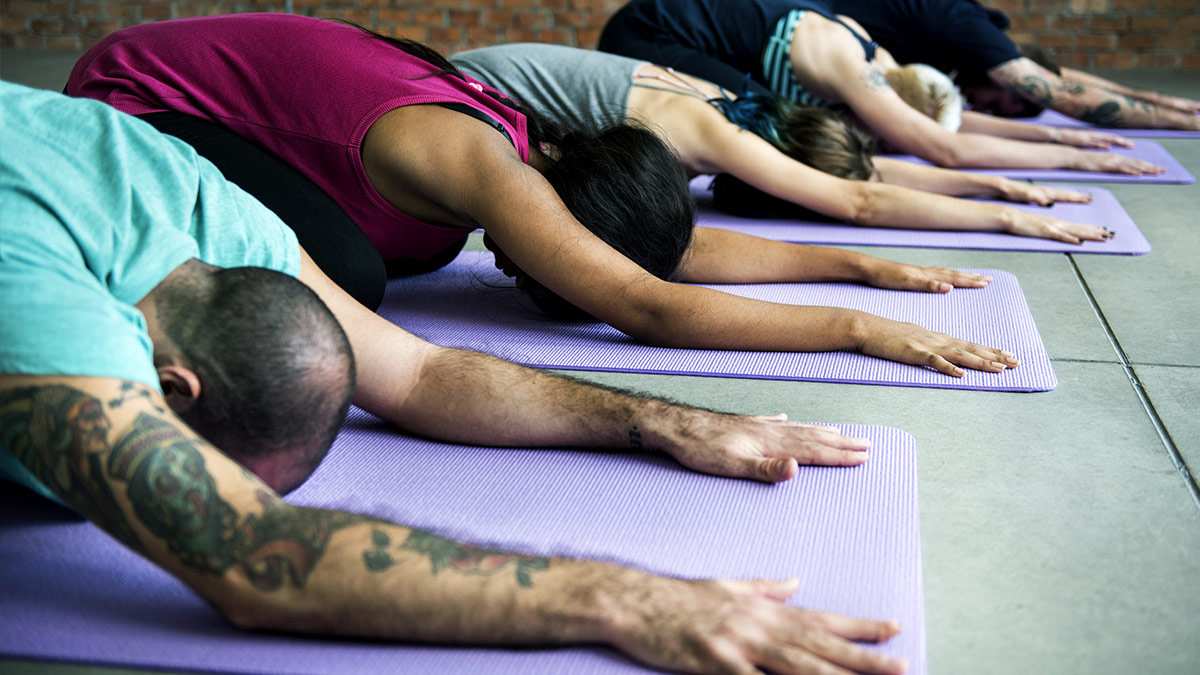
 Yoga can be a great addition to any endurance athlete’s training plan and overall health. It can improve your strength and balance, as well as give you a heightened sense of how your body moves. But like all aspects of fitness, it’s not without risks.
The Benefits of Yoga for Endurance Sports
Yoga helps develop strength through controlled movements and poses. In any sport, consistent movement is vital for efficiency and injury prevention. Consider running – the connection of your feet to the ground, where you toe-off, your body symmetry in dynamic movement, and your posture are all dependent on good core strength. Boat pose, downward facing dog, locust pose and plank are examples of poses that build strength and stability.
Yoga also develops balance. Cycling (cornering, descending, and out-of-the-saddle climbing), swimming (holding streamlined body alignment during rotation), and running (maintaining a limber, dynamic gait through technical cross-country courses) can all benefit from better balance. Tree pose, warrior, and side plank are good examples of poses that develop balance.
As you move through various poses, remember to breathe into the stretches and be mindful of how your body is feeling as you work through any discomfort. This will give you context in racing and training and help you hone in on imbalances. Simply slowing down your day and moving through a flow session with intent and focus can also be incredibly relaxing.
The Risks of Yoga for Endurance Athletes
If you are in the thick of training for a 100-mile century ride, an hour of strength-intensive vinyasa yoga at the end of the day may take away more than it provides. Even practicing yoga on your recovery day can be too much exercise. To continue yoga without adding fatigue during heavy training blocks, choose a beginner class, or opt for yin yoga, which is more regenerative.
Injury can be a concern in yoga as well. Athletes tend to be physically competitive in nature, which isn’t always ideal for deep stretching. To avoid going down with a yoga injury, try to err on the side of under-doing your poses. Remember, there’s no prize awarded at the end of class to the downward dog champion! Instruction quality is also important. An experienced instructor can help you avoid excessive soreness, a strained muscle, or joint injury.
It’s also a good idea to approach bikram (hot) yoga with caution. It’s a style of yoga enjoyed by many, and can help with heat adaptation for hot climate races. On the flip side though, it can also contribute to fatigue and dehydration. Additionally, the heat opens your joints and muscles for further range of motion, which may increase the risk of a strain or a tear.
Whether you are a yoga novice or a veteran returning after a break, adaptation is key. Yoga should be supplementary to your training, not deleterious. Be consistent and ease into it gradually over a span of three to four weeks. Learning new skills can benefit your main sport as well as overall long-term health and happiness. Be calm, consistent, and patient, and yoga will be a great supplement to your endurance training protocol.
By Lance Watson, LifeSport head coach, has trained a number of Ironman, Olympic and age-group Champions over the past 30 years. He enjoys coaching athletes of all levels. Contact Lance to tackle your first IRONMAN or to perform at a higher level. For more training tips, visit LifeSport Coaching on Facebook or on Twitter at #LifeSportCoach.
by Joey Stabile | Feb 19, 2019 | Health and Wellness, Instructor Tech Help, Instructor Training, Off Season - Winter Training, Strength Training
Exercises to Boost Hip Strength
When discussing muscles involved in the pedaling motion of cycling, most people think of quadriceps and hamstrings. While these muscles certainly play an important role, the many muscles of the hip also deserve attention, and the weight room is the perfect place to keep them functioning properly.
Before discussing different strength and mobility exercises, we should first look at activation exercises for your Gluteus Maximus (referred to as the glutes) muscles. The reason for needing to activate your glutes is simple–as a population, we spend way too much time sitting, and as a result, what happens is what noted spinal researcher Stuart McGill terms gluteal amnesia–your glute muscles can “go to sleep” and not function properly.
When your glutes aren't functioning properly, other muscles (hamstrings and lumbar extensors) are called in to do the job of the glutes, mainly hip extension. Think of hip extension as the downward action of pedaling.
The problem is that these muscles aren't designed to be prime movers–they're designed to support the action of the glutes. Inability of activating the glutes can result in low back pain (low back muscles compensating), hamstring strains (overacting hamstrings), hip pain (resulting from hamstring-dominant hip extension) and knee pain (poor glute medius strength).
So, to activate your glutes, try the Single-Leg Hip Lift. Here's how it's done: Lie down on the floor with your legs bent and lift one foot off the floor. Lift your hips up in the air, concentrating on contracting your glute muscles. Make sure you keep your toes of the working leg up as shown. Pause for a second or two and lower. Perform 2 to 3 sets of 8 to 12 reps on each side.
Hip Mobility: Keeping your hips mobile is important for overall hip function and athletic performance. Mobility refers to the ability of your joints to move through a pain-free, unrestricted range of motion. For cyclists, hip mobility is critical since pedaling occurs in one plane of motion, and after miles and miles in the saddle, hip tightness and restriction may develop. The following movements will help with hip mobility.
Split Squat: The traditional split squat is a great exercise to get started on hip mobility. To make this exercise even better, concentrate on contracting your glute on the trailing leg to help stretch your hip flexor.
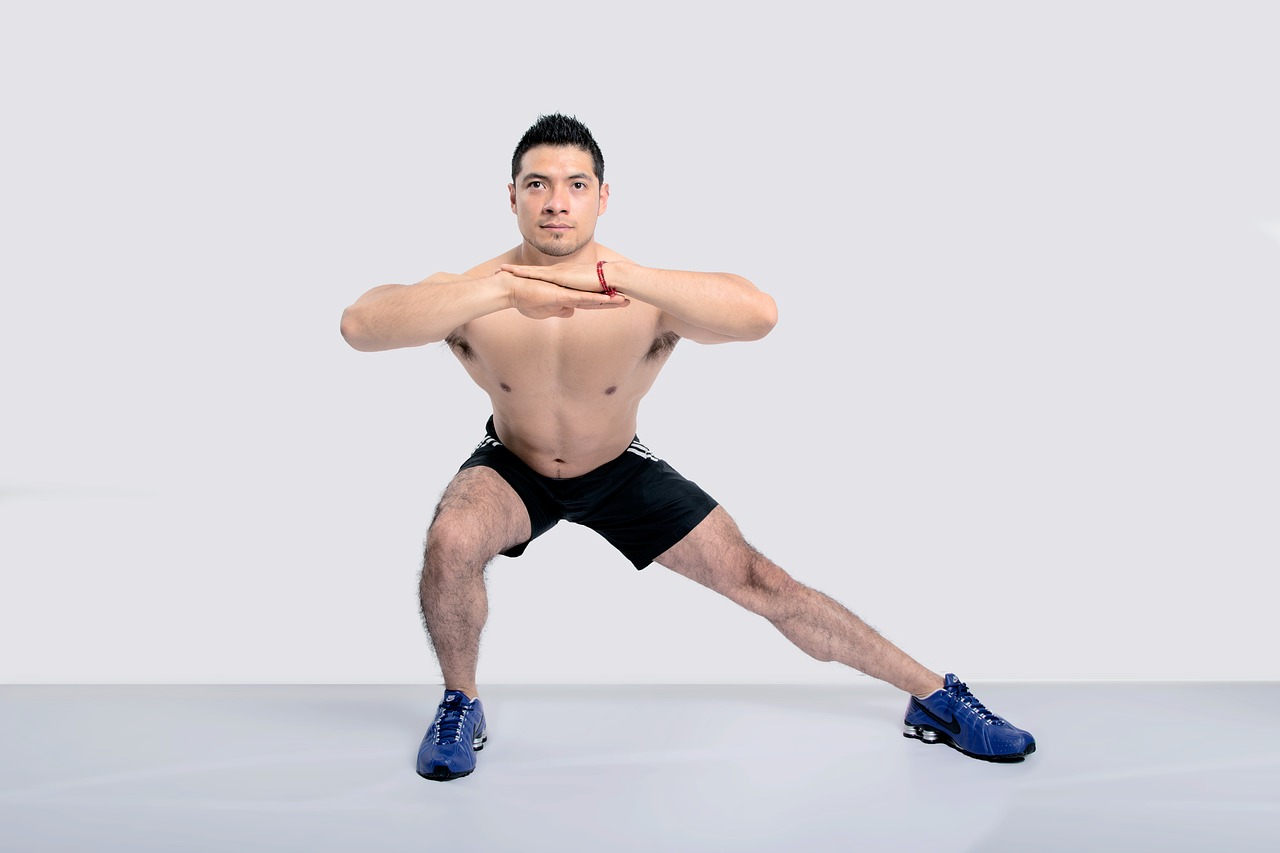
Lateral Squat: Stand with your feet approximately double shoulder-width apart. Shift your weight to one side and drop your hips down and back, keeping your knee over your toes and your weight over your bent leg. Pause for a 2-count, return to the starting position and repeat to the other side.
Hip Strength: If you are currently doing a regular strength-training program, chances are you're already doing some foundation exercises for your hips. Squats, lunges, leg presses, and step-ups all work the prime movers of your hips. Along with these exercises, it's also important to do some supplementary exercises to work your hip's supporting muscles. you've probably heard of your shoulder's rotator cuff. Well, your hip also has a cuff, or a group of muscles that help stabilize and support movement. For these exercises, you'll need a mini-band, a longer thera-band or tubing (both are sold at many sporting goods stores, or can be purchased online), and a cable-column unit.
4-Way Mini-Band: Place a mini band around your ankles and spread your feet about shoulder-width apart. Keeping your legs relatively straight (you want the motion to come from your hips) and toes pointing forward, walk forward 10 steps, then backward 10 steps. Take a short break and then walk to the right 10 steps, then to the left 10 steps. Again, focus on keeping your legs straight and toes pointing forward. It is very important to start with a light-resistance band. You'll be working the smaller hip stabilizers, so you don't need a lot or resistance.
X-Band Walk: For this one, you'll need a large band or piece of tubing. Step on the band and spread your feet shoulder-width apart. Form an “X” in front of you with the band and stand up tall with your shoulders down and back. Keeping your toes pointing forward, take 10 steps to the right, pause and then return.
4-Way Cable Hip: You'll need a resistance band for this one. With this exercise you're focusing on four movements: flexion, extension, abduction and adduction. Stand up straight while doing the exercise. If you have to lean excessively, step closer to the anchor point of your band to decrease resistance. You'll find that not only are you working the muscles of the leg that's moving, the muscles of your stance leg will work quite hard stabilizing and balancing.
Modifications to Traditional Exercises: Our hip joints are very mobile and allow for movement in three planes of motion: the sagittal plane (flexion and extension), frontal plane (lateral movements), and the transverse plane (rotation). Knowing that, here are several modifications you can make to your traditional exercises to work your hips through a more complete range of motion.
Lunge Variations: You can do traditional lunges, or even clock lunges where you keep one leg stationary for 12 to 6 and then the other leg stationary for 6 to 12. To make the movement a touch more difficult, hold weights in your hands while you perform the exercises. There are Lateral Lunges, Rotational Lunges, Lateral Step-Up, and Rotational Step-Up as well.
Please see the full article for complete descriptions and videos of the exercises: https://www.active.com/cycling/articles/11-exercises-to-boost-hip-strength?cmp=18N-PB2000-S20-T9-cycling-AR2&eps=title_1004667
by Amy Macgowan | Nov 21, 2018 | Health and Wellness, Melissa Marotta
 Pain sucks. When we get injured or sore or uncomfortable, we instinctually try to fix it. We reach into our medicine cabinets, pop some pills, and “get back out there.” But are we really doing ourselves a service? Can we actually be inadvertently putting ourselves at risk? Turns out, maybe so.
Non-steroidal anti-inflammatory drugs (NSAIDs), which include ibuprofen (Motrin, Advil), naproxen (Aleve), celecoxib (Celebrex) and a ton of others, are available over-the-counter and are widely used by the general population for, well, everything. Studies have found a disproportionately high use of NSAIDs amongst athletes, particularly elite athletes, as well as a lack of awareness of key dangerous side effects.
Standard care in medical practice is to discourage prophylactic use (taking medications in advance of preventing a problem, as opposed to treating an existing problem) of NSAIDs. But what about NSAID use after injuries? NSAIDs have traditionally been part of hallmark treatment, particularly for facilitating an early return to activity. But there is a controversy in sports medicine about whether NSAID use in the first few days after acute sports injuries can actually compromise the healing process. Let’s examine how that might be so. (more…)