No, MSP doesn’t stand for “My Secret Pal”, nor does it stand for “Mom’s Special Potion”, and I’ll stop right there before this gets really silly. MSP stands for Maximum Sustainable Power. It is the level of power once can sustain for a specific time interval. When you are referencing an hour interval (measured and estimated with 20 minute tests), most elite cyclists who train with power refer to this as FTP or Functional Threshold Power.
I prefer to reserve the term “Threshold” for that unique metabolic event that takes place with respect to the production of energy; the “cross-over” process between the aerobic and non-aerobic energy production systems. In my opinion, this term should be reserved for cardiovascular training (it has been used and researched with this term as the agreed upon nomenclature for years before power meters even existed). Therefore, to avoid confusing heart rate and power training terms, I do not refer to threshold with respect to power, but instead reserve its use solely to reference ones heart rate when this metabolic event occurs.
If you were to do a quick web search you would see that 3 is a very special number. It’s a favorite of storytellers; the three pigs, the the three blind mice, Goldilocks and the three bears and the Three Musketeers. It’s used in faith; the Father, Son and Holy Spirit as well as Mindy, Body, Spirit. You have the 3 olympic medals; gold, silver and bronze. In geometry the three sided triangle is considered the most stable shape. Photographers, artists and designers use the rule of thirds.
In strength training, many believe, three sets are optimal for strength gains. When participating in an indoor cycling class there are only three riding positions; seated with a fast cadence, seated with a slower cadence and standing. Numerous studies have shown that the brain responds to 3 in a positive way.
When writing my class profiles I like to take advantage of the “Power of 3”. I often use 3 song sets, the 3 riding positions and repeat intervals 3 times. I find the “Power of 3” to be, a POWERFUL technique.
[wlm_private ‘PRO-Platinum|PRO-Monthly|PRO-Gratis|PRO-Seasonal|Platinum-trial|Monthly-trial|PRO-Military|30-Days-of-PRO|90 Day PRO|Stages-Instructor|Schwinn-Instructor|Instructor-Bonus|28 Day Challenge']
I invited Cameron Chinatti and Doug Rusho from Stages Indoor Cycling back to the Podcast to learn how they communicate the concepts of Power in ways that reach the different learning styles and personalities in your classes.
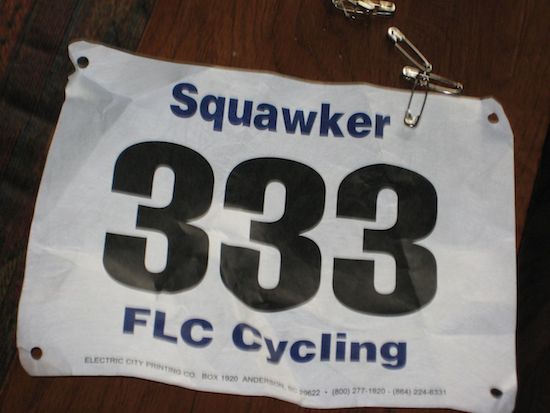
While there are lots of local races throughout the season, there is only one “in my back yard”. So naturally, I like to do either the MTB race, or the Road race. I did both one year, and well…let’s not go there. Since I took the entire year off my normal MTB schedule, and our Road Team won last year’s team category, it seemed like the right thing to do, even though it was the longest, “experienced” race route of the group.
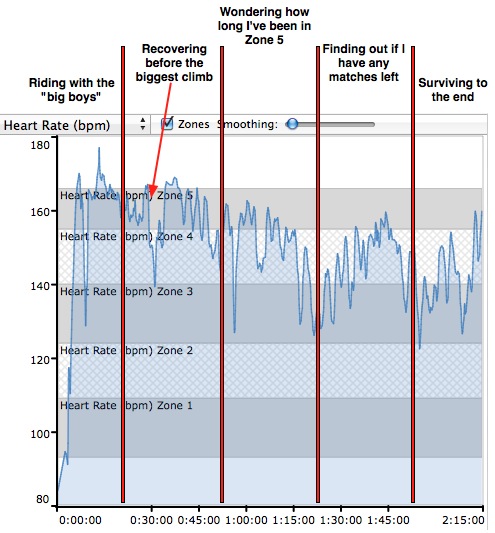
If you’ve read my previous 2 blogs however, you’ll recall that I am training for the “unrace” – the Dirty Dozen where just finishing will be counted as something I didn’t think possible – thus this new training focus. So the race wouldn’t be consistent with this plan, except for one thing. I am on a mission to raise my Threshold to give me more cieling and expand my VO2 in the process – thereby raising the two biggest limiters of power, and climbing hills that average 18% and higher will be ALL ABOUT power.
From that perspective, I guess I accomplished my objectives, but I’m just not sure getting all of the required time in Zone 5 (the real work that has to be done to raise ones Threshold) in the first hour of riding was actually the best way to go about it. What WAS I thinking!?!
We are less than 60 days from our ride around the Cabot Trail. The group has been very active – increasing distance to 55 km for morning rides, grades to 7+% for hill repeats and making lots of connections between the indoor and outdoor efforts in my classes.
We closed the opportunity to join us last week so that we’d have a consistent group with whom to train over the next two months. Twelve people will ride the Trail. At a maximum we had 17 people on one of our Sunday training rides. As word got out, friends of friends started to attend and we welcomed their interest. They will be invited to re-join us for some weekend jaunts this fall.
Here are some highlights relevant to the indoor/outdoor cycling interface.
We did a quick reconnaissance of the route last weekend and some of the descents are daunting. As I negotiated the road in a car I became painfully aware that no amount of indoor cycling can help people learn how to descend. We have been working on those skills outdoors but can’t reproduce the Trail experience nearby. I have contracted a Can-Bike educator to give the group a lecture and clinic. Meanwhile we’ll content ourselves with the knowledge that less prepared people ride the Trail every year and none of them have ended up in the ocean.
The transformation of individuals from bikers to cyclists is noticeable. I am most thrilled by Judy who panicked and bailed on her first attempt at a road ride last fall. She was the first to buy a new bike this spring, always turns in her training logs and is now one of our strongest riders. Better yet, when the group organizes its own trips during the week, she consistently chooses the one that will give her the greatest challenge. I am writing up an interview with her which I think will interest you as she describes the indoor to outdoor experience.
I teach in a facility with a mixture of non-power and power bikes. That precludes classes which are entirely focussed on power. Recently, though, I have been able to let everyone re-visit their FTP (60 min). The numbers range from 1.4 to 1.9 watts/lb (measured over 20 minutes and corrected for 60 minutes (x .90)) for the group who is doing the Trail. Remember – these were non-exercisers/non-cyclists a few months ago. They have all seen a huge increase in their power over that period. Better yet, their results are completely consistent with what they see in one another on the road. The power info has really helped the weaker riders understand the connection between indoors and outdoors.
You can read my earlier posts about preparing a group of Indoor Cycling students for our trip to ride the Cabot Trail here.


 No, MSP doesn’t stand for “My Secret Pal”, nor does it stand for “Mom’s Special Potion”, and I’ll stop right there before this gets really silly. MSP stands for Maximum Sustainable Power. It is the level of power once can sustain for a specific time interval. When you are referencing an hour interval (measured and estimated with 20 minute tests), most elite cyclists who train with power refer to this as FTP or Functional Threshold Power.