This Podcast is was originally published on March 15, 2009, I have updated it with our new Podcast host information and I am representing it now. I hope you enjoy it, Joey
Graeme Street, the owner of Cyclo-Club (an online bicycle training service) offers you; Three steps to monetizing your passion for Indoor Cycling and turn it into cash!
This is a must listen! Graeme offers us some excellent ideas on how you can help your students reach their personal fitness goals while you create additional income for you and your club.
By using the training resources available at Cyclo-Club you can create systemized, fee based, training programs that you can offer to your participants.
Listen to the Podcast below or subscribe for free using iTunes or Zune.
Do you have noise problems / complaints from neighboring businesses? Have you changed class times or cancelled classes to keep the peace with another class in your club? This maybe a solution…
Message from Facebook this morning:
Hi there!
My name is Naomi and I have a summer internship at N2Shape My boss has recently given me a project to implement headset use in all spinning classes as there have been noise complaints in the studio we use. She wants to have it so in addition to the instructor having a headset, all people in the class have wireless earphones or headphones as well so that they can hear the music and the instructor. I have been looking online at a couple different websites such as Iqua Products, AV Now, Amazon, etc, to get ideas but it seems that most places only sell transmitters for the instructor headset. My boss told me you guys have a lot of information regarding spinning and I thought I'd contact you for help! Thank you so much in advance!
My response was easy:
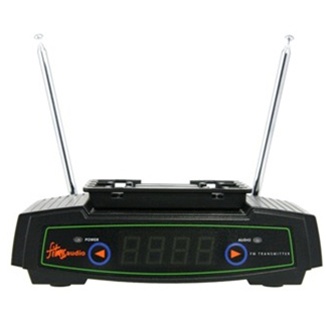
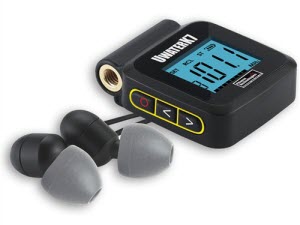
Hi Naomi – thanks for your question. We actually did this back in the late 90's when we first added Spinning classes. What you need is a FM transmitter like this http://www.avnow.com/WES_FM_Broadcast_System_p/wes-t-fm.htm and then have everyone tuned in with a FM radio receiver (old walkmans were FM) – your folks will need to dig into the back of their junk drawers.
Is that enough to get you going?
John
Back in the day (mid 1990's) when our club first introduced Spinning® classes, they employed this exact system. They had installed 24 Schwinn Johnny G Spinners (the original version) in a secluded corner of the fitness floor. A loud sound system with speakers was out of the question, so the Instructor's mic and music played through a FM transmitter. Everyone wore headphones connected to a Walkman tuned to the correct FM radio station.
This transmits both your music and voice to FM radios near by, tuned to the correct station.
Surprisingly it worked well. As long as you hadn't forgotten to turn off your Walkman the day before and were now scurrying around the club, looking for a pair of AAA batteries.
Talking between members was never a problem and there were no volume complaints with everyone having control of their own levels. The effect of having the Instructor's voice delivered directly into our heads was quite intimate as I remember. I'll never forget the classes lead by a particularly instructor (she's still an active Instructor and ICI/PRO member) who was very “breathy” in her class presentation 🙂
Working under the “everything new was once old” school of thought, could this be something you could offer in your studio? I'll bet if you asked, you'd find many of your members have an old Walkman shoved in the back of their junk drawer at home. Or you could buy a bunch to have for rental.
How much planning did you do (or should you do), before launching your new cycling studio?
What research did you complete to understand the difference between successful studios and those that are struggling?
Fitness entrepreneur Callie Bowling has completed an exhaustive planning process in anticipation of opening a new Indoor Cycling Studio in Boise Idaho next fall. Callie interviewed over a dozen studio owners and she shares what's working… what's not and what she sees as the future of boutique Indoor Cycling studios.
This interview is an hour long, and needed to be to record much of what Callie has learned.
If you own a studio, or are considering opening one, I suggest grabbing a pen and paper, find a quiet spot (maybe with a hot tea) and listen to the podcast below in it's entirety, while taking notes – I consider this one of my top five episodes ever, it's that good 🙂
[wlm_private ‘PRO-Platinum|PRO-Monthly|PRO-Gratis|PRO-Seasonal|Platinum-trial|Monthly-trial|PRO-Military|30-Days-of-PRO|90 Day PRO|Stages-Instructor|Schwinn-Instructor|Instructor-Bonus|28 Day Challenge']
Update: This episode wasn't showing up in the podcast feed = I republished it and it appears fixed 🙂
[/wlm_private]
I was originally alerted to Callie Bowling by Amy – she had talked with her and was very impressed by how thorough she was in her business planning and the amount of research she had done via interviews with other studio owners.
So I reached out to Callie about possibly appearing on the show. This was her response 🙂
Let me give you a little background, so you can be thinking of questions on your end:
I have learned quite a bit actually, so much that just when my business plan and financials were all buttoned-up and ready to go – I was literally sitting across the table from my lender – I decided to go back to the drawing board to lay some more ground work (A MUST) and further examine my goals for my business and a smarter implementation strategy solely based on the experiences I obtained from interviewing eight indoor cycling studios across the nation. I learned a lot, the owners of these businesses were extremely generous with their time and the truly sensitive information they were divulging (the scary icky stuff like money)… lol, perhaps it's my degree in Psychology, but I've usually never had a problem getting people to open up around me… it's a double-edged sword 😉
I've learned this “dream” for us who wish to open these studios is always opened with the best intentions and out of a passion for the “sport”; we're all fitness enthusiasts who wanted to bring our passion to our communities and also make a fortune at it! I mean why not, the preliminary financials reflect success, which is a super simple function of attendance… it seems like a no-brainer right!? Get people in the door and become profitable… minimal overhead, no accounts receivables, cash based service industry, no inventory, etc. … the business model is set up for instant success! I'm sure you see I'm being simplistic and sarcastic, because nothing in life is ever that easy, and if it looks easy… take a deeper look, because you're probably missing something 🙂
With that said, there have definitely been some strong and shared commonalities amongst the failures and the successes amongst studio owners that can't be ignored… but, they're probably taboo to talk about so no one ever does, because no one likes to admit they've failed or fallen flat on their face… but, the truth is the truth, and in the same token no wants to invest their life's savings or nest egg into a business that might be doomed from the get-go, so we need to talk about it.
I will say, I don't know what came over me, but I emailed studios in XX, YY, ZZ, BB, NN, RR, and FF (on the podcast I won't disclose which states though to respect and maintain the anonymity of these studios, because in some states there is literally just one studio, so that would probably give it away, and the information they shared is certainly sensitive – we can just accurately say I reached out to studio owners across the nation) and I didn't know what to expect. I was equipped with my generic list of questions, but those soon fell to the wayside and the conversation became personal and very much a theoretical conversation about what it takes to survive as an entrepreneur in our industry and what those basic principles are.
Alas, we can go over all of this & more on the podcast, I'm loaded with info, lol, and honestly I think the things I am ready to touch on will be useful information not just for others in the “pre-startup” phase, but also for any studio owner in general that is perhaps struggling or “hemorrhaging” (as one studio owner stated) and can draw even the smallest parallels in their own business with what I have understood has also been choke holding others.
What do you think!??! 🙂
P.S. Here's the juiciest part… I think I see the future of our industry!!! lol… that may be a bit pompous for me to predict, but I've done a lot of research and there are signs and clues I'd love to cover!
Callie Kelley Bowling
Founder & CEO
CKB Fitness, Inc.
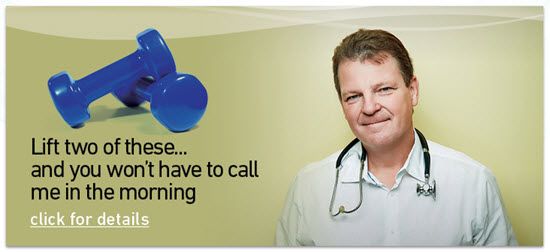
How cool would it be if your insurance company paid for indoor cycling classes?
A national policy of Prescriptive Exercise would be the holy grail* for small studio owners.
Imagine; A new client walks in with her doctor specified exercise regimen for you to “fill”, just like at a pharmacy. As an approved provider, you and your studio would provide the required exercise and then bill the clients insurance company… and not at your normal class rate – at a much higher rate in recognition of your fitness expertise.
A fantasy? Nope**, not if you're near The Wellness Institute in Winnipeg Canada. Doctors there are actually writing detailed prescriptions for exercise. How cool is that?
Doctors at a unique medical facility in Winnipeg are starting to write some unusual prescriptions.
“A lap a day keeps the doctor away” is one of the mottos at the Seven Oaks Wellness Institute (SOWI), a fitness facility attached to the Seven Oaks General Hospital on Leila Avenue, where doctors have started prescribing exercise instead of pills.
Dr. Kevin Saunders is one of the founders of the SOWI and the medical director. He said exercise is an effective treatment for all kinds of illnesses, including hypertension, Type 2 diabetes, high cholesterol and even some forms of cancer.
The facility offers clients a more holistic approach to fitness, helping people from all walks of life to understand what kinds of exercise they should be doing, and what they need to avoid if it puts their health in jeopardy.
You'll note that what Dr. Sanders is targeting with this program are Special Populations of people who would benefit from physical activity. I'm guessing you'd have a little trouble getting a prescription for a USAT Triathlon coach to get you ready for your next Ironman 🙂
What has me most excited here is the potential for prescriptive exercise for people suffering from Parkinson's Disease. It's been shown repeatedly that people of all ages with PD respond well to Indoor Cycling classes. Especially classes that are designed and taught by a Parkinson's Cycling Coach. Indoor Cycling studios already have the necessary tools to conduct this hugely beneficial classes. They're best held around 10:30 – 11:30 in the morning, which is normally a time without a scheduled class
I did some research and found an excellent article here at emedicine.medscape.com that explains in detail what Perscriptive Exercise is (different from physical rehab) and includes a number of areas where exercise is typically prescribed by a physiian.
Background
Exercise prescription commonly refers to the specific plan of fitness-related activities that are designed for a specified purpose, which is often developed by a fitness or rehabilitation specialist for the client or patient. Due to the specific and unique needs and interests of the client/patient, the goal of exercise prescription should be successful integration of exercise principles and behavioral techniques that motivates the participant to be compliant, thus achieving their goals.[1, 2, 3, 4, 5, 6, 7]
Components of exercise prescription
An exercise prescription generally includes the following specific recommendations:
Type of exercise or activity (eg, walking, swimming, cycling)
Specific workloads (eg, watts, walking speed)
Duration and frequency of the activity or exercise session
Intensity guidelines — Target heart rate (THR) range and estimated rate of perceived exertion (RPE)
Precautions regarding certain orthopedic (or other) concerns or related comments
Note that a properly structured, Power based Indoor Cycling class would easily include all of the stated components.
Consider this simple prescription:
Type of exercise or activity – Indoor Cycling class.
Specific workloads – Below, @ and Above riders observed 4 minute Best Effort PTP Watts or FTP if known
Duration and frequency of the activity or exercise session – 3 x 60 min classes weekly
Intensity guidelines — each 60 class to include: 5 x 5 min intervals @ PTP, 3 x 1 min intervals Above PTP, that remainder of class Below PTP and Above VT1 (staying aerobic) + adequate recovery after each @/Above interval.
Precautions – None
What you'd have is essentially an endurance training program, written by an MD.
Taking this further. If you were to incorporate the rider's performance data capture, from a Display Training system like Performance IQ or Spivi, your doctor could review your progress = make informed recommendations for future exercise prescriptions. Wouldn't that be awesome?
If you can offer any additional information about prescriptive exercise, I'd love to hear from you!
*Yes, I'm aware that many insurance programs offer a discount/rebate for club dues – if you attend a speciaf number of days a month. This is very different.
** I don't know the specifics of Canada's reimbursement system, but I'm looking into it. I have asked for a representative join me on the Podcast to discuss all of this.
Social Media has grown to become the primary method of marketing for Indoor Cycling Studios. Which makes sense. Many of your prospective customers are active on Facebook, Twitter and Instagram – and you can't beat the cost. All it takes is posting a few pretty pictures or clever sayings and SHAZAM! you get a bunch more loyal customers… right?
OK, it's really not that easy. I talk with studio owners every week who feel completely lost, with no clear strategy about how they should be using Social Media.
One common question I get is; “how can I know if my efforts at attracting, engaging and then converting followers are actually working?”
Instructor Cassie Piasecki is what I would describe as a Social Media Expert. She's responsible for all of the social promotions for Grit Cycle – a year old studio in Costa Mesa. CA that's crushing it. Part of their success, I'm guessing, comes from Cassie's obsession with everything social.
You can check out and then steal many of Cassie's ideas by following her blog | Facebook | Grit's Facebook That picture of Cassie is a fabulous idea all by itself – from Cassie's Instructor profile. Notice how it communicates some of her personality and personal interests? Check out all the other Grit Instructor profiles here.
I was excited to record this episode of the podcast with Cassie and share it with you.
[wlm_private ‘PRO-Platinum|PRO-Monthly|PRO-Gratis|PRO-Seasonal|Platinum-trial|Monthly-trial|PRO-Military|Schwinn-Instructor|PRO-Visitor|PRO-Studio|28 Day Challenge'] Enjoy!
Are these interviews helpful to you? Please let me know what else you'd like to learn by posting a comment below[/wlm_private]
I coach a four month long winter training camp that offers 14 indoor cycles and 6 bicycle trainers. This allows participants to bring their own bikes, mount them on the trainers and ride alongside the stationary bikes. Everyone gets a fantastic experience with this mix. But there are a few things to know about mixing trainers and spinners.
Why offer Road Bike Trainers? Having bike trainers as part of your program will expand your market, increase your class capacity with a small budget, and give new interest and challenge for instructors and riders alike.
There are three important things to consider if you are mixing spinners and trainers in the same room: Why BYOBike, Location/Set-Up/Noise, and Cueing for Instruction. 1.) Why BYOBike?
Why would someone want to bring their own bike in the first place? For a number of reasons, using your bike on a trainer is a more realistic experience.
It’s About Fit.
The fit is just better on a “real” bike. Owners of bikes have the seat/handle bar location adjusted, a saddle that they are accustomed to, and crank positions that fit their body. If not, this is a great opportunity to help your riders with a proper bike fit.
Vital to fit is that the spread of the pedals on your own bike is the right width. I find that on some brands of spinners, the pedals are set much wider apart than you’d find on a road bike. This can cause knee pain. We tested the Kaiser M3 bikes at my Club and several riders (me included) experienced knee pain. While I like many features on the Keiser M3, I discovered that the pedals are set 1” wider than the Lemond Revmaster. This can be a make or break in comfort and dissuaded us from purchasing the bikes.
Practice with Changing Gears
While it is not quite like riding outside, riding your own bike on a trainer does give you practice in shifting gears and learning your own gear ratios related to work effort. We’ve had many riders who bring in a new bike and want to try it out to “learn the bike” before taking it outside.
It’s a Harder Ride
On your own bike, there is no help from a weighted flywheel. If you are not pedaling on a bike, the wheel stops going around. That means every pedal stroke counts a little bit more. It is 100% your own effort.
Spinning bikes are a “fixed gear” with a weighted fly wheel that retains energy which means you are getting assistance with every pedal stroke from the momentum of the flywheel, especially at high RPM.
Trainers are 20% the Price
Bicycle trainers are about $350 compared to a spinning bike at $1800 (of course, prices vary wildly for both of these options). If you want to add more bikes to a room, you could add 5 trainers for the price of one Spinning® bike.
I use Kurt Kinetic Fluid trainers because they are fairly indestructible and give a very smooth, quiet ride. All you need is the trainer, a mat, and the front wheel cup. When you mount a bike to a trainer, the rear wheel has now been lifted off the floor by several inches. To avoid feeling like you are riding “downhill” (since the front wheel is lower than the back), you need to raise the front wheel. Most brands of trainers come with a front wheel support. I like the supports that offer a variety of tire sizes and heights — sometimes you may want to even raise the front tire higher than the rear if you are going to focus on a hill climbing workout. This will help to put the rider’s body in a more realistic climbing position.
In a pinch, if I don’t have a front wheel support, I’ll use a riser from a step aerobics bench. They are about the right height to level the bike.
Who you Attract
You want your program to meet the needs of a variety of participants. With trainers, you will attract riders who may otherwise never consider a “spinning” class. The cyclists who want to go through the trouble of bringing their own bikes to a class are usually the ones who are avid outdoor riders. This will expand your market — with a low cost – to a whole new group of cycling enthusiasts. Of course it will be up to you, as an instructor, to make it worth their while. And your spinning participants may see the bikes on trainers and develop the interest to take up biking outdoors. This makes your members much more likely to continue with bike related fitness programs.
2.) Location, Set-up, and Noise
OK, let’s say you are going for the mix of indoor cycles and trainers in you class. What can you expect?
Location
Where, oh where, do you put the BYOBers? Near the entry door.
With years of experimentation on where to physically put them in the room, I have found that it is simplest to group them nearest to the entry door. This makes it easier for navigating the bikes in and out of the room. Plus you want all the trainers in one area. Close proximity makes it easier to give specific cues to the trainers vs. the others. I can look at the group on trainers, give the cue, and know they are staying on track with the rest of the group.
Dirt
Bikes can be dirty. We require that the riders bring clean bikes and clean shoes to class. Plus we always have them wipe down their mats after class. This helps everything stay clean. If you can set up a bike cleaning station outside of your facility, you will win the hearts and admiration of cyclists.
Set-Up
We provide the trainer, on a mat, with a front wheel cup. A bike on a trainer takes up about 30% more length than the foot print of a spinning bike. I usually set the trainer off the back of a typical bike mat with the front wheel cup at the front of the mat. This way the sweat from the rider still falls on the mat.
As an instructor, you need to know how to attach the bike to the trainer. There are several steps to be aware of. I usually let the rider set up their own bike, but if they haven’t done it before, you’ll need to give them help. We always have a floor tire pump on hand because tires should be filled to the correct pressure to have the best ride on a trainer.
1. Rear Skewer
Most trainers have some sort of screw on cup that attaches to the rear wheel skewer on the bike. Some bikes have skewers that will not fit in these attachment points. It is a good idea to have loaner skewers on hand (Kurt Kinetic Trainers come with a skewer that will fit the trainer) and you can swap it out for the rider. It is simple to do, but you should be confident in what you are doing. If you have any questions about how to swap out a skewer, go to your local bike shop and have them show you how before you do it on someone else’s bike. Chances are that your rider will know how to do this.
2. Jiggle Test
Once the bike is mounted to the trainer and before you add the tension to the rear wheel, make sure the bike is stable. I simply grab the frame and give it a jiggle. If the bike seems a little wiggly, increase the tension on the axel mount. If the bike is stable, you are good to go.
3. Skid Test
After adding tension with the resistance roller to the rear wheel, grab the wheel and give it a tug to spin the wheel. Does it skid on the resistance roller? If it does, then apply more resistance to the rear tire. Tug it again. When there is no skidding or squealing, you are ready.
Before class starts, it is a good idea as an instructor to give each bike the jiggle and skid test.
Noise
Yes, bikes on trainers are louder than the stationary bikes. That sound, the revving of the bike tires on the trainers, gives added “feel and fuel” for everyone as you increase/decrease speeds through your workout. If you aren’t used to wearing a microphone when you teach, you may want to start.
The noise level of the trainer will depend on two things: the trainer model and the tread on the bike wheel. Some models of trainers are simply noisier. That is why I like the fluid trainers — they tend to be quieter.
More tread (and wider tire) = more friction = more noise. A smooth tire will be much quieter than a knobby one. If you notice a rider with a noisy tire, suggest for the purposes of the class that they switch out their tire to a narrow smooth one. This will also reduce the wear and tear on their regular tire.
I'll follow up next week with how I actually teach one of my BYOB (Bring your Own Bike) Indoor Cycling Classes.
John's note: We're excited to have Coach Robin (AKA CycleMole) on the ICI/PRO Team and I can't wait for her to share her story about where the name CycleMole came from and I'm super interested in learning exactly what it takes to ride around the world on a bicycle!
Robin Robertson
Creator of Cycle Moles: Indoor Cycling for Outdoor Adventure
USAC Level 2 Coach, ACE Personal Trainer www.cyclemoles.com www.powertopedal.com